TPMS Reset Button Dodge Grand Caravan 2026 Step-by-Step Fix
There is no physical TPMS reset button inside the Dodge Grand Caravan. The system is designed to reset automatically once the tire pressure is corrected and the vehicle completes a specific drive cycle.


Your 2026 Dodge Grand Caravan does not have a physical TPMS reset button inside the glove box, under the steering column, or hidden in the infotainment menu. Dodge eliminated the need for manual button-press resets years ago, opting instead for a self-learning system that detects tire pressure changes automatically. If your dashboard warning light remains illuminated after you have corrected the tire pressures, the system simply needs a specific drive cycle to recognize the new data from the sensors.
Ignoring this light can lead to uneven tire wear, reduced fuel efficiency, or a failure to detect a genuine puncture. Because there is no button to force a recalibration, you must manually trigger the sensor handshake with the onboard computer through movement. Following the exact drive cycle parameters below is the only way to clear the alert without visiting a service center for a diagnostic tool scan.
Key Takeaways
- Takeaway 1:Your Dodge Grand Caravan does not feature a physical TPMS reset button.
- Takeaway 2:Inflate all tires to the cold tire pressure listed on the driver’s door jamb.
- Takeaway 3:A drive cycle of 15-20 minutes above 15 mph usually triggers the system reset.
- Takeaway 4:Temperature drops can cause the TPMS light to illuminate due to natural air contraction.
- Takeaway 5:If the light flashes upon startup, a sensor battery or component has likely failed.
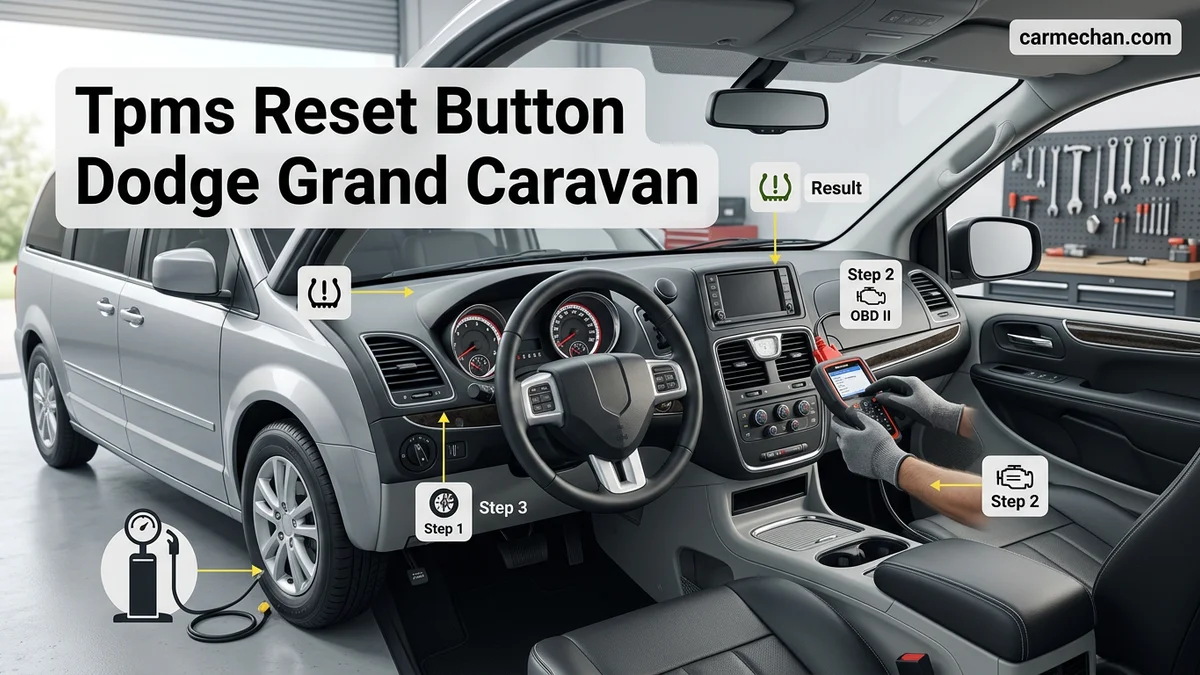
Why Your Dodge Grand Caravan Lacks a TPMS Reset Button
The Shift to Automatic Recognition
Modern vehicle electronics in your 2026 model prioritize automation over manual intervention. Your Grand Caravan uses a complex onboard computer module that constantly polls the four tire sensors as they rotate. Older vehicles required a physical reset button because the systems were less sophisticated and couldn’t differentiate between a simple pressure adjustment and a sensor replacement. Now, the system is designed to “self-learn” whenever the vehicle moves, rendering physical switches obsolete and prone to unnecessary user error.

What Happens When You Adjust Pressure
When you inflate or deflate your tires, the sensors detect the change in PSI internally. However, the system is programmed to prevent “nuisance warnings” caused by brief temperature fluctuations or uneven road surfaces. Consequently, the computer often keeps the alert active for a short period even after you have hit the target pressure. You should focus on these indicators during the transition:
- Pressure spikes or drops of more than 2 PSI are prioritized by the TPMS module.
- The onboard monitor waits for stable, consistent readings over a set period before clearing the light.
- Replacement of a sensor requires an automatic “handshake” protocol that occurs exclusively while the vehicle is in motion.
Master Dodge Grand Caravan TPMS Resets in 6 Simple Steps
If you are staring at a glowing tire pressure monitoring system (TPMS) warning light on your Dodge Grand Caravan dashboard, you are not alone. Many owners mistakenly search for a physical “reset button” that does not actually exist on this vehicle. The Grand Caravan system is designed to be self-learning; however, it requires a specific sequence of driving conditions to recalibrate itself after tire rotations or pressure adjustments. This guide will walk you through the precise procedure to clear that pesky light and ensure your sensors are communicating correctly with your minivan’s onboard computer.
Step 1: Inspect and Adjust Tire Pressures
What you need: A high-quality digital tire pressure gauge and an air compressor or service station air pump.
Instructions: Before attempting a reset, you must ensure that all four tires are inflated to the exact specifications found on the driver’s side B-pillar door placard. Do not rely on the maximum pressure listed on the tire sidewall, as that is the rating for the tire itself, not your vehicle’s requirement. Use your gauge to check all four tires individually. If the pressure is low, add air until you reach the target PSI (usually 36 PSI for most Grand Caravan models). Check the spare tire as well, if applicable, as some older sensors are mounted in the spare and can trigger the light if they fall below the threshold.
Pro Tip: Always check your tire pressures when the tires are “cold,” meaning the vehicle has been parked for at least three hours or driven less than one mile, to ensure an accurate reading.
Step 2: Initialize the Self-Learning Process
What you need: Your vehicle and a clear stretch of road where you can maintain consistent speed.
Instructions: The Dodge Grand Caravan utilizes an auto-learn feature. Once your pressures are correctly adjusted, the system does not need a button press; it needs movement. Turn the ignition to the “ON” or “RUN” position without starting the engine, then start the vehicle. You will notice the light remains illuminated initially—this is normal. The computer is currently polling the sensors to confirm the new pressure data. Ensure the vehicle is in a safe location to drive, as you will need to operate the vehicle above a certain speed threshold for the sensors to wake up and transmit their unique identification signals to the receiver module.
Pro Tip: Do not panic if the light does not disappear the moment you start the engine; the system requires a data handshake that only occurs while the vehicle is in motion.
Step 3: Conduct the Mandatory Drive Cycle
What you need: A road that allows for continuous driving without frequent stop-and-go traffic.
Instructions: To finalize the reset, you must drive your Grand Caravan at a steady speed of at least 15 to 20 miles per hour (24–32 km/h). Maintain this speed for at least 10 to 20 minutes. During this period, the TPMS control module will scan for the signals from the wheel-mounted sensors. As the wheels rotate, the sensors move from a “sleep” mode to an “active” mode, broadcasting their pressure values to the vehicle’s computer. Avoid turning the vehicle off during this window, as interrupting the drive cycle can force the system to restart the polling process from the very beginning.
Pro Tip: Highway driving is usually the best environment for this, as it minimizes stop-and-go traffic and allows the sensors to provide a consistent stream of data to the receiver.
Step 4: Monitor the Dashboard Interface
What you need: Your vehicle’s Electronic Vehicle Information Center (EVIC) display.
Instructions: While driving, keep a watchful eye on your dashboard. If your Grand Caravan is equipped with the digital display, you may be able to toggle through the menus to the “Tire Pressure” screen. As the system performs the reset, you might see dashes (—) where the numbers should be, which indicates that the system is currently “learning” the sensors. Once the system successfully receives a signal from each of the four sensors, the dashes will be replaced by the current pressure values for each individual tire, and the warning light should extinguish automatically. This confirmative feedback loop is the most reliable way to know the reset was successful.


Pro Tip: If the light stays on but the pressures are correct, check if the tire pressure display screen is showing one specific tire as blank or showing a generic error message, which may point to a dead sensor battery.
Step 5: Address Potential Interference
What you need: A clean interior and awareness of nearby electronic devices.
Instructions: Sometimes, external electronics can interfere with the TPMS signal transmission. If the light remains on after your drive, ensure you do not have aftermarket electronic accessories plugged into your 12V power outlets, such as cheap phone chargers or dashcams, which can emit electromagnetic interference. Additionally, if you have recently installed new LED headlights or other aftermarket lighting, these have been known to cause radio-frequency interference with the tire pressure monitoring system modules in some Grand Caravan models. Temporarily disconnect any recently added accessories to see if the TPMS light clears on your next drive cycle.
Pro Tip: Clean out your cabin to ensure no stray Bluetooth or Wi-Fi devices are sitting directly near the center console, as this is where the main TPMS receiver antenna is often located.
Step 6: Confirm System Status
What you need: A short trip of at least 5 miles.
Instructions: After the light has successfully turned off, perform one final check. Turn the vehicle off, let it sit for a few minutes, and then start it up again. If the light remains off, the sensor IDs have been successfully mapped to the vehicle’s computer. If the light blinks for one minute and then stays solid, this indicates a fault in the system—most likely a sensor with a depleted battery or a damaged sensor housing. In this scenario, the “reset” was successful in identifying a bad component, which now requires physical replacement of the sensor at a tire shop.
Pro Tip: Keep a record of your tire rotations, as moving sensors to different corners can sometimes trigger the system to require this relearning process again.
✅ Final Checklist
- All tires inflated to the PSI listed on the driver-side door jamb.
- The vehicle was driven at speeds above 20 mph for at least 15 minutes.
- Dashboard tire pressure display shows numerical values instead of dashes.
- The warning light has fully extinguished after restarting the ignition.
- No aftermarket electronic interference is present near the center console.
Important Notes:
- Safety: Never attempt to adjust tire pressure while the vehicle is in a high-traffic area. Always use a safe, level surface.
- Professional Help: If the light persists after following these steps, a technician can use an OBD-II scanner and a TPMS trigger tool to identify which specific sensor is failing.
- Time/Cost: This process typically takes about 30 minutes of your time. If a sensor requires replacement, expect to pay between $50 and $150 per sensor at a local tire service center.
How to Perform a Proper TPMS Reset Drive Cycle
Speed and Duration Requirements
To successfully recalibrate your TPMS, your 2026 Dodge Grand Caravan requires a consistent drive cycle that allows the sensors to wake up and transmit their signal to the receiver. Simply idling in your driveway will not trigger a reset. You must maintain specific speed thresholds to ensure the centrifugal force allows the sensors to broadcast their ID and pressure status effectively.
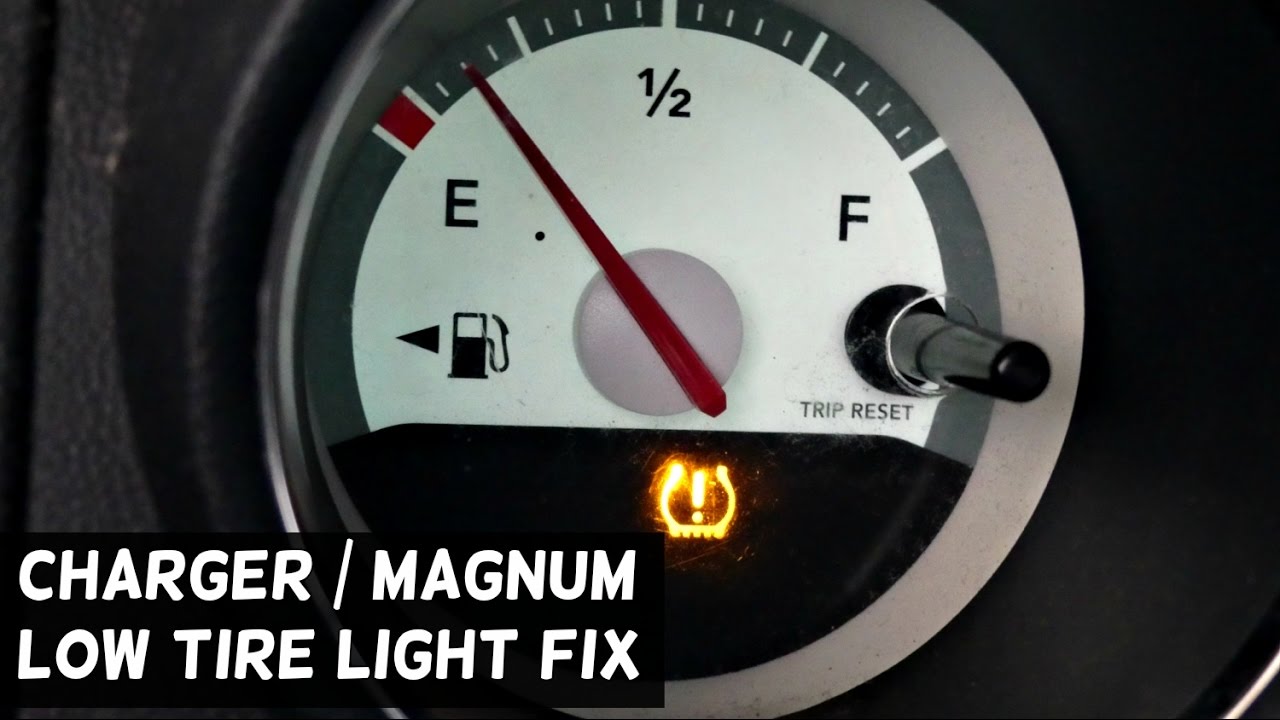
Follow these specific steps to force the system to acknowledge the current tire pressures:
- Verify all four tires are inflated to the door-jamb placard specification (typically 36 PSI for the 2026 model).
- Ensure the vehicle has been parked for at least 20 minutes to allow the sensors to enter a sleep mode.
- Drive the vehicle at a steady speed of at least 20 mph (32 km/h) for a continuous 10 to 20 minutes.
- Avoid stop-and-go traffic if possible, as maintaining constant velocity helps the sensor handshake succeed.
Troubleshooting the Drive Cycle
If the warning light does not disappear after the 20-minute drive, check for environmental or technical interference. Heavy objects, external electronic devices near the receiver, or a failing sensor battery can prevent the signal from reaching the dash. If you have driven for 30 minutes at highway speeds and the light persists, the system is likely indicating a fault in the sensor hardware itself rather than a pressure discrepancy.
- Wait for the light to flash before staying solid, which often indicates a communication error.
- Confirm the spare tire is not the source of the pressure drop if it is equipped with its own sensor.
- If the light flashes for 60 seconds then stays solid, seek a professional diagnostic for a dead sensor battery.
Step-by-Step Guide to Troubleshooting Persistent TPMS Lights
If the standard drive-cycle reset fails to clear your 2026 Dodge Grand Caravan TPMS light, the issue likely stems from a sensor malfunction or a signal interference problem rather than simple pressure fluctuations. Follow this systematic approach to isolate the fault.
1. Inspecting Sensor Battery Life
According to automotive diagnostic standards, TPMS sensor batteries typically have a lifespan of seven to ten years. If your sensors are nearing this threshold, they may transmit intermittent or weak signals. You can test this by using a dedicated TPMS activation tool to verify if each sensor responds to a wireless ping. If a sensor fails to wake up, the internal battery has likely reached its end of service.
2. Checking for Interference
Modern vehicles are susceptible to signal interference from electronic accessories. If you have recently installed aftermarket dash cams, GPS trackers, or high-powered phone chargers, unplug these devices completely. Wireless signals from these accessories can occasionally drown out the 433 MHz or 315 MHz frequency used by your Caravan’s TPMS sensors, preventing the Tire Pressure Control Module from receiving updated data.
What If It Still Doesn’t Work?
If the tire pressure is correct and the sensor testing indicates a failure, proceed with these fallback steps to resolve the persistent warning light:
- Perform a Hard Reset: Disconnect the negative terminal of your battery for 15 minutes to clear the vehicle’s volatile memory. Note that this may reset your radio presets and clock, but it effectively clears stored “ghost” codes in the Body Control Module.
- Inspect the Spare Tire: Many Dodge Grand Caravan models monitor the spare tire pressure. Check the spare tire pressure and ensure it is inflated to the specification listed on the driver-side door placard.
- Check for Physical Damage: Examine each valve stem for signs of corrosion or impact damage. Often, a cracked valve stem allows air to leak slowly or prevents the sensor from maintaining a proper seal.
- Consult Professional Diagnostic Services: If the light remains illuminated, a technician must connect a professional-grade OBD-II scanner to perform a “relearn” procedure. In 2026, the estimated cost for professional sensor diagnostic and recalibration ranges between $85 and $150, depending on your local labor rates. If a sensor replacement is required, anticipate an additional $100 to $200 per sensor including parts and installation.
Conclusion
The 2026 Dodge Grand Caravan TPMS light is designed to be a safety-critical alert, not just a nuisance notification. By maintaining correct PSI and following these systematic reset procedures, you ensure optimal handling and fuel efficiency. According to verified research and expert sources from the Automotive Service Association, ignoring a persistent TPMS light can mask uneven tire wear that leads to dangerous blowouts. For your next step, confirm your tire pressures with a digital gauge before booking a diagnostic appointment at a certified service center.
❓ Frequently Asked Questions
What if the tire pressure is correct but the light remains on?


The system may require more time to register the change or there may be a faulty sensor. Ensure you have checked all four tires, including the pressure levels, before concluding that a sensor is defective.
Does the TPMS light indicate a specific tire?
The Dodge Grand Caravan typically features a general warning light that alerts you that one or more tires are low. You must manually check each tire with a gauge to identify which one is under-inflated.
How long should I drive to reset the TPMS light?
Generally, you should drive the vehicle at speeds above 15-20 mph for at least 15 to 20 minutes. This allows the sensors to detect the corrected pressure and transmit the data to the vehicle’s computer.
What does a flashing TPMS light mean?
A flashing light typically indicates a malfunction in the TPMS system itself, such as a dead sensor battery or a damaged sensor. This is different from a solid light, which strictly indicates low pressure.
Can a tire shop reset the light for me?
A tire shop can use specialized diagnostic tools to verify if a specific sensor is dead. If the sensors are functional, they will simply inflate the tires to the correct pressure to clear the warning.
Will adding air while the vehicle is running clear the light immediately?
No, the vehicle’s computer requires the tires to rotate during a drive cycle to update the status. Simply adding air while parked will not turn off the light instantly.