wrx check engine light flashing cruise control: Solved
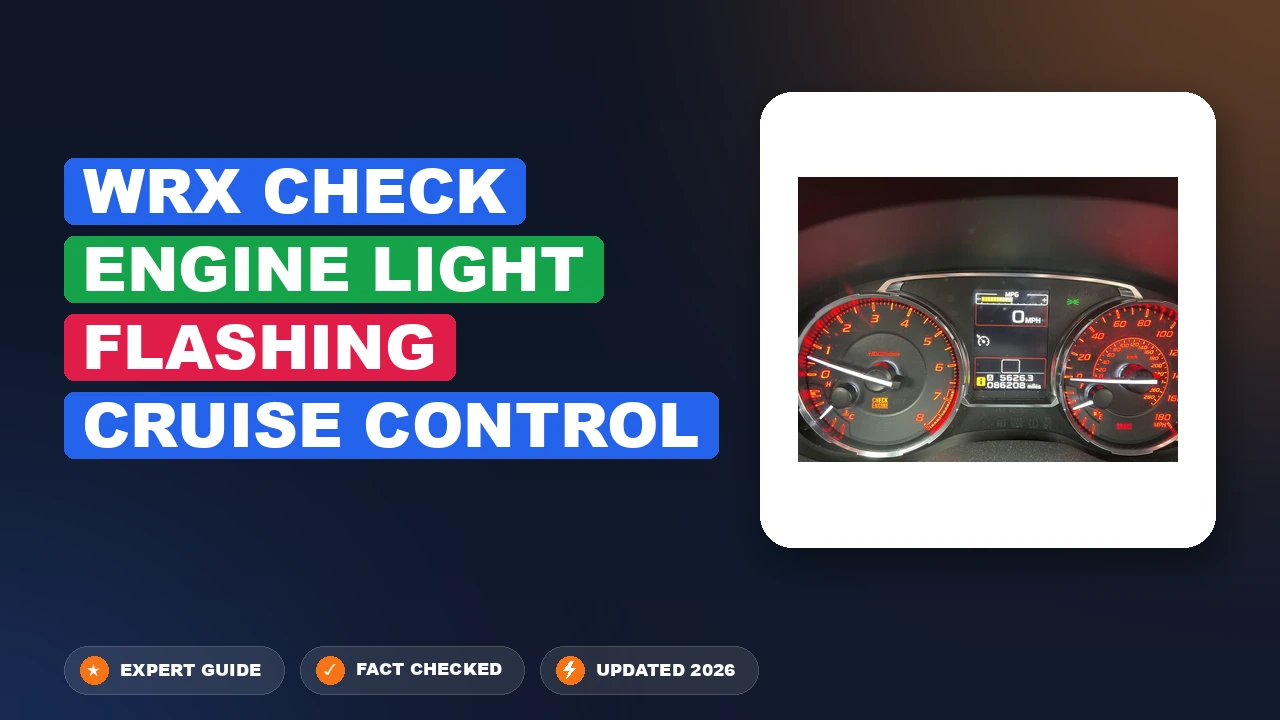
Nothing kills the joy of a drive faster than seeing your dashboard light up like a Christmas tree. For many Subaru WRX owners, the sight of a solid check engine light accompanied by a flashing cruise control light is an immediate source of anxiety. In this guide, we will clear up the confusion, explain why your cruise control has been sidelined for your safety, and provide a roadmap to identifying the exact cause of your vehicle’s fault.
Understanding the Relationship in the Wrx Check Engine Light Flashing Cruise Control
Recommended Best Deal Products


📤 Share Image
Why the ECU Disables Cruise Control Automatically
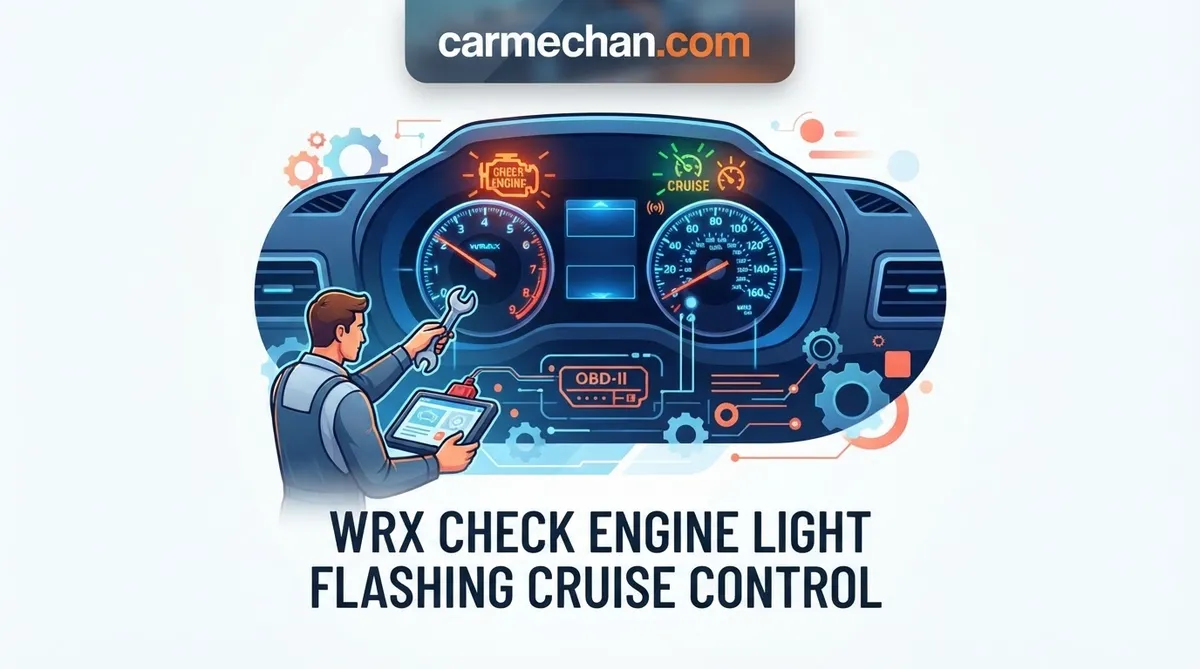
When your Subaru WRX detects a fault, the Engine Control Unit (ECU) acts as the central brain of the vehicle. In many modern Subaru platforms, the ECU is programmed to disable the cruise control system immediately upon detecting a Diagnostic Trouble Code (DTC). This is a safety protocol designed to ensure that if the engine is struggling, you do not use electronic cruise control, which could potentially mask performance issues or lead to unsafe driving conditions. The cruise light blinking is a secondary notification—a “look here” signal—meant to get your attention because the standard check engine light might be overlooked in certain lighting conditions.

Differentiating Between Steady and Flashing CEL Warnings
It is critical to understand the distinction between a solid check engine light (CEL) and a flashing one. A solid CEL usually indicates a non-critical emissions or sensor fault. However, a flashing CEL—often accompanied by the blinking cruise light—is a red alert. This specifically indicates an active engine misfire. A misfire allows unburnt fuel to enter the exhaust stream, which can overheat and permanently damage the catalytic converter in a matter of minutes. If you see a flashing CEL, you must pull over safely and limit engine load immediately.

Common Triggers for Wrx Check Engine Light Flashing Cruise Control
By The Numbers
Commonly caused by sensor faults vs. hardware
Primary system areas (MAF, EVAP, TGV)
Common Engine and Emissions System Triggers
The diagnostic system on the WRX is highly sensitive to vacuum leaks and sensor inconsistencies. The most common triggers include:
- Tumble Generator Valves (TGV): Common in older EJ-series engines; these valves regulate air intake at low speeds. When they stick, they trigger the CEL/Cruise light combo.
- Mass Air Flow (MAF) Sensor: A dirty or failing MAF sensor causes the ECU to miscalculate air-fuel ratios, often leading to rough idling and secondary light illumination.
- EVAP System Leaks: Small leaks in the fuel vapor recovery system are frequent culprits that trigger emissions-related codes.
The Role of the Mass Air Flow (MAF) Sensor
The MAF sensor is the “lungs” of your WRX. If it reports inaccurate data due to oil from an aftermarket intake filter or simple age-related degradation, the ECU will default to a map that does not support cruise control. This often presents as sluggish acceleration before the dashboard lights appear.
Checking for EVAP System Leaks and Gas Cap Issues
A loose or worn-out gas cap is the most easily overlooked “professional” fix. The EVAP system needs to maintain a pressurized environment to prevent fuel vapors from escaping. If the cap is not tightened, the system detects a pressure loss, throws an EVAP code, and disables your cruise control. Always check this first before replacing expensive components.
How to Diagnose Your Wrx Check Engine Light Flashing Cruise Control
Recommended Best Deal Products


📋
Diagnostic Procedure
The OBD-II diagnostic port is located under the driver-side dashboard, near the hood release lever. It is a 16-pin connector accessible without tools.
Use a high-quality OBD-II Bluetooth dongle paired with a trusted smartphone app, or a standalone professional-grade code reader. Avoid “budget” readers that may fail to read Subaru-specific sub-codes.
Retrieve the code (e.g., P0300). Research the specific code for the Subaru WRX platform. Remember, engine performance may be restricted by the ECU to prevent further damage.

Prime for Young Adults — 6 Months Free
Students and 18–24s get six months of Prime free, then half price.
Start 6 Months FreeReliable Fixes for Wrx Check Engine Light Flashing Cruise Control
Recommended Best Deal Products


When to Consult a Subaru Specialist
While many emissions-related codes can be resolved with basic maintenance, persistent electrical faults or “ghost” codes often require professional intervention. A specialist utilizes Subaru-specific software that can read deep-level data, such as live TGV sensor voltages or long-term fuel trim variations, which basic scanners often overlook. Do not attempt to bypass these systems using unauthorized tuning software, as this can exacerbate mechanical issues.
Avoiding Common Diagnostic Pitfalls
The most significant mistake is simply clearing the codes to make the lights go away. This is not a fix; it is a temporary reset that allows the ECU to start monitoring the fault again. Without addressing the underlying issue, the lights will return, often with greater severity. Furthermore, if you are experiencing a misfire (flashing light), do not drive the vehicle. The potential for irreversible damage to your exhaust system far outweighs the inconvenience of a tow.
Never ignore a flashing check engine light. It signals an active engine misfire that can destroy your catalytic converter, leading to a multi-thousand dollar repair bill that is entirely preventable by stopping the vehicle immediately.
Summary and Professional Recommendations
The flashing cruise light is a secondary warning from the ECU, not a failure of your cruise control hardware. Always prioritize the primary CEL code to identify the engine or emissions issue. By using a reliable scanner and checking the common sensor triggers discussed, you can effectively diagnose most issues. Never clear codes without diagnosing the root mechanical or electrical cause, as doing so masks symptoms rather than solving problems. If the CEL is flashing, avoid driving the vehicle to prevent permanent catalytic converter damage. If your scan tool reveals a code you do not recognize, reach out to a trusted local Subaru specialist to ensure your vehicle returns to peak performance.
Wrx Check Engine Light Flashing Cruise Control: Frequently Asked Questions
Is it safe to drive with the cruise light flashing?
Driving with the light flashing is generally discouraged, especially if the check engine light is also blinking. A blinking CEL indicates an active engine misfire that can cause permanent damage to your catalytic converter. While the vehicle may remain operational, you should drive it conservatively to a professional or your home and minimize load until the underlying fault is identified and addressed.
How do I read the code without a mechanic?
You can read the code using an affordable OBD-II scanner that plugs into the port located under the dashboard near the steering column. Once connected, turn the ignition to the ‘on’ position without starting the engine. The scanner will display alphanumeric codes (e.g., P0301). You can then cross-reference these codes using an online database or the official Subaru service manual for your specific model year.
Can a loose gas cap cause this?
Yes, a loose or damaged gas cap can trigger a P0442 or P0457 evaporative emission system (EVAP) code. Because the Subaru ECU monitors emissions closely, a leak in the fuel tank pressure system will illuminate the check engine light and disable the cruise control. Always ensure your gas cap clicks firmly when tightened; if the light persists, a new OEM cap is a cost-effective first repair.
Will resetting the battery fix the issue?
Disconnecting the battery may temporarily clear the codes and turn off the lights, but it does not fix the underlying mechanical or sensor failure. The ECU will eventually detect the fault again once the monitor run-cycle completes, and the lights will return. Clearing codes via battery disconnect also deletes “freeze frame” data, which experts need to accurately diagnose the intermittent issues that cause these lights to appear.
Does this issue always indicate a major engine failure?
Not necessarily. While it can be alarming, many triggers for this light configuration are minor, such as a loose gas cap, a dirty MAF sensor, or a tired spark plug. However, because it is an electronic warning, it should never be ignored. Consistent, professional diagnostics will differentiate between a simple sensor glitch and a more significant mechanical problem, preventing unnecessary panic and protecting your engine’s longevity.

Audible Premium Plus — Annual Membership
12 audiobook credits up front, plus the full Audible catalogue.
See Annual Plans