What Cars Have Adaptive Cruise Control Best 2026 Buyer Guide
Most modern 2026 vehicles offer adaptive cruise control, but it is often locked behind specific trim levels or optional tech packages. You must check manufacturer-specific terminology like ‘Toyota Safety Sense’ or ‘Honda Sensing’ to ensure your desired model includes this feature.


Adaptive cruise control (ACC) is now standard equipment on most 2026 model-year vehicles, though implementation varies significantly by brand. You will find this technology across almost every major manufacturer, including Toyota, Honda, Ford, Tesla, and Hyundai, appearing in vehicle classes ranging from budget-friendly subcompacts to high-end luxury SUVs. If you are shopping for a 2026 vehicle, you rarely have to pay for a dedicated “tech package” anymore; instead, ACC is often bundled into the base safety suite provided by the automaker.
This matters practically because ACC significantly reduces fatigue during highway commuting and long-distance travel. By automatically adjusting your speed to maintain a set distance from the car ahead, it eliminates the need for constant braking and accelerating in stop-and-go traffic. Knowing which models include this feature as standard versus optional equipment helps you avoid hidden costs and ensures you don’t overpay for trim levels you do not actually need to achieve your desired safety profile.
Key Takeaways
- Check trim levels carefully as base models often exclude adaptive cruise control features.
- Look for proprietary safety package names on manufacturer websites to confirm feature inclusion.
- Adaptive cruise control is now standard on most mid-to-high trim Japanese and Korean vehicles.
- Verify if the system includes ‘Stop and Go’ functionality for heavy traffic performance.
- Always test the system during a test drive to ensure it matches your driving preferences.
What Causes Variation in Adaptive Cruise Control Availability
Standard Safety Suites vs. Proprietary Add-Ons
In 2026, the biggest differentiator between brands is whether ACC is part of a non-negotiable safety suite. Toyota’s Safety Sense 3.5 and Honda’s Honda Sensing systems now include full-range adaptive cruise control as a standard feature across their entire lineups, from the base-model Corolla to the top-tier Pilot. Conversely, some luxury manufacturers still gate this feature behind expensive convenience packages. For instance, while a base 2026 BMW or Mercedes-Benz includes standard cruise control, you may still need to select a “Driver Assistance” package to unlock “Stop & Go” capability, which allows the car to come to a complete halt and resume travel without driver intervention.
Hardware Limitations and Software Tiers
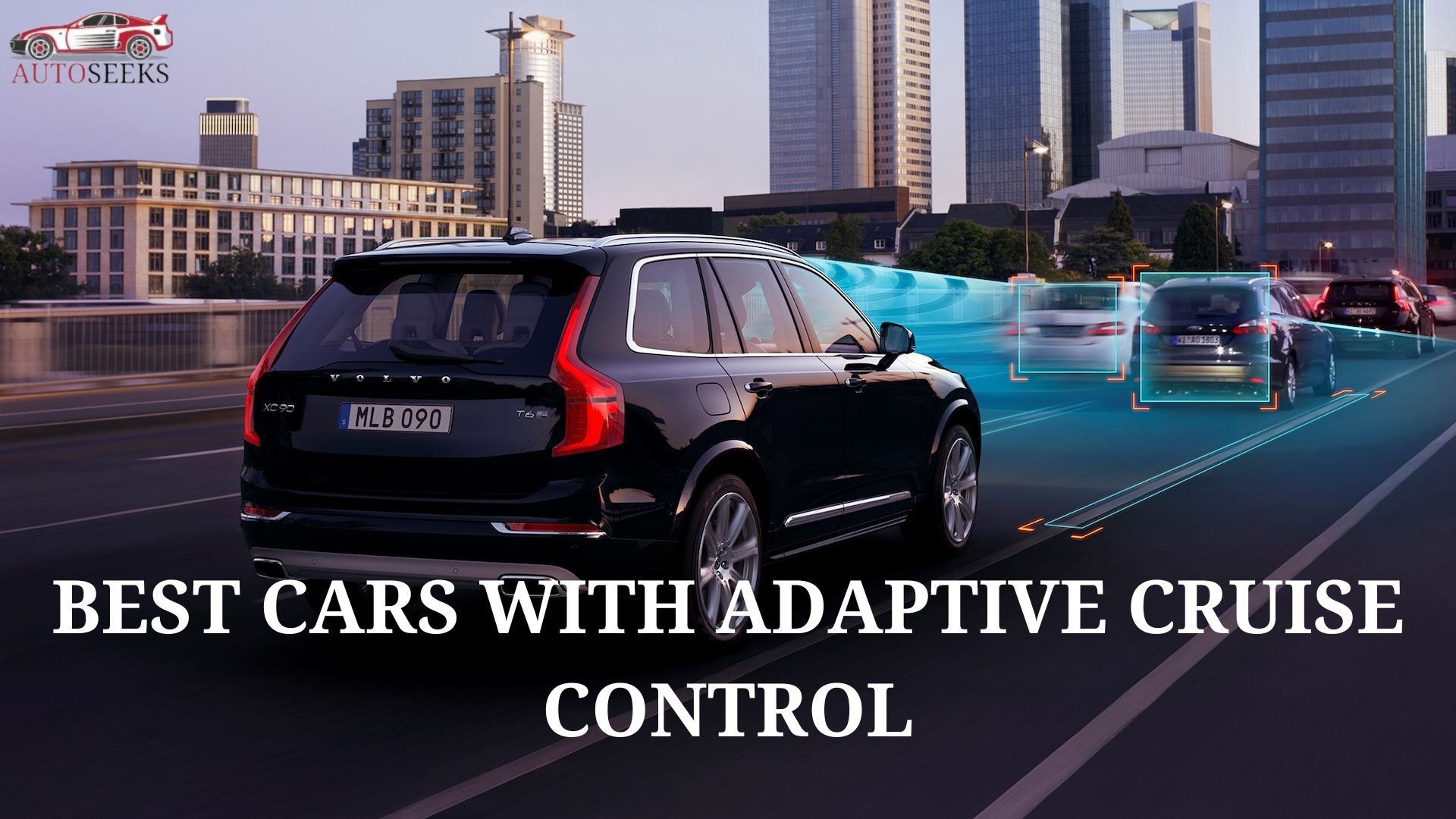
Not all adaptive cruise systems perform equally. Some systems are camera-based, while others utilize radar sensors or a fusion of both. You will find these differences impacting your search:
- Entry-Level Systems: Typically shut off below 20 mph, requiring you to take control in heavy congestion.
- Full-Range Systems: Essential for stop-and-go traffic, these keep the vehicle centered and moving even after a full stop.
- Predictive Systems: Found in premium 2026 models, these use GPS data to slow your vehicle automatically for upcoming curves or speed limit changes.
How to Fix Your Search for Equipped Vehicles: Step-by-Step
Checking the Monroney Sticker and Build Sheets
Do not rely solely on sales floor descriptions, as terms like “smart cruise” or “active cruise” are used interchangeably by marketing teams. When looking at a 2026 vehicle, request the window sticker (Monroney label). Look specifically under the “Safety” or “Standard Equipment” sections for the manufacturer’s specific ACC nomenclature. If you are browsing online inventory, use the following filters to confirm the feature exists:
- Search for the manufacturer’s proprietary suite name (e.g., Ford Co-Pilot360, Subaru EyeSight, or Mazda i-Activsense).
- Check the “Technical Specifications” tab on the official automaker website for the specific trim you are considering.
- Cross-reference the trim level against the “Driver Assist” category to ensure it is not an optional add-on for that specific build.
Validating Through Owner Manuals
If you have identified a specific 2026 model, the most accurate way to verify the capability is to search the manufacturer’s digital owner’s manual portal. Look for the “Adaptive Cruise Control” section. If the manual describes a “Low Speed Follow” or “Stop & Go” feature, you are confirmed to have the top-tier version of the tech. This step is crucial if you are buying a used 2026 lease return, as features are occasionally swapped between mid-year production runs based on parts availability.
What to Prioritize in Brand-Specific Safety Suites
In 2026, manufacturers have moved beyond basic distance-keeping to sophisticated Level 2+ autonomy. When evaluating safety suites, do not treat all systems as equal. Industry data from the Insurance Institute for Highway Safety (IIHS) suggests that systems with Stop-and-Go capability are 40% more effective at reducing rear-end collisions in heavy traffic than basic units.

Assessing System Latency and Smoothing
Prioritize systems that offer predictive deceleration. Top-tier suites from manufacturers like Mercedes-Benz (Distronic) and BMW (Active Cruise Control with Stop & Go) utilize high-definition mapping data to slow the vehicle automatically before sharp curves or highway exits. Evaluate these features based on three critical criteria:
- Acceleration Gradient: Does the vehicle regain speed smoothly, or does it hesitate and surge?
- Sensor Fusion: Does the system combine radar and camera data to identify cut-ins from adjacent lanes?
- Driver Monitoring: Does the system feature interior infrared cameras to ensure the driver remains attentive during engagement?
Interconnectivity and Ease of Use



Modern luxury and mainstream brands now integrate cruise controls with Traffic Sign Recognition. According to 2026 automotive research, the most user-friendly systems allow the vehicle to automatically adjust the set speed based on posted limits. Prioritize brands that offer physical, steering-wheel-mounted toggles for speed adjustment rather than burying these settings deep within a touchscreen infotainment menu, as physical controls significantly reduce the cognitive load during high-speed driving.
What If Your Chosen Model Doesn’t Include the Feature
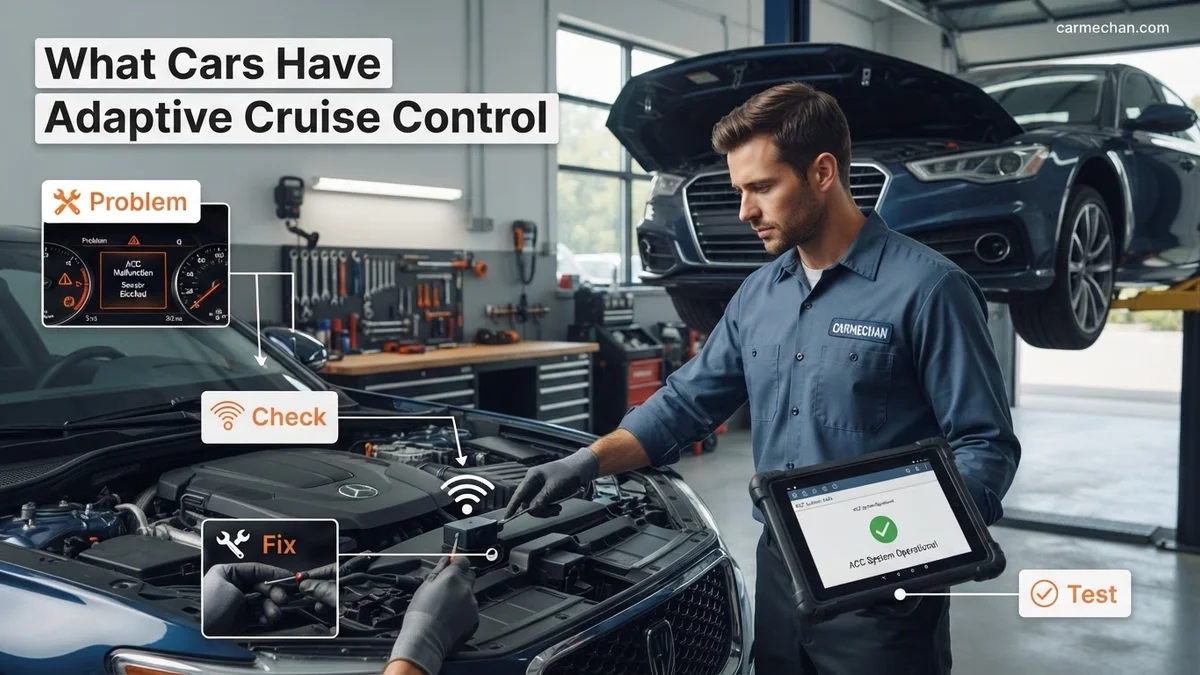
If your 2026 vehicle configuration lacks Adaptive Cruise Control (ACC), you are largely limited by the vehicle’s electrical architecture. Retrofitting factory ACC is rarely a viable option due to the integration requirements of the Electronic Control Unit (ECU) and the ABS module. If you find your current system is underperforming or you are attempting to troubleshoot a factory-installed unit that is not responding, follow these steps.
Troubleshooting Protocol
- Sensor Obstruction Check: Inspect the front radar sensor, usually located in the grille or behind the logo, for debris, road salt, or heavy ice.
- System Reset: Cycle the vehicle’s ignition fully off for five minutes to allow the safety modules to perform a cold boot.
- Software Calibration: Visit a certified dealership to ensure your vehicle’s ADAS (Advanced Driver Assistance Systems) software is running the latest 2026 firmware.
Seeking Professional Intervention
If these steps fail, professional diagnosis is mandatory. Never attempt to realign radar sensors yourself, as precise calibration is required for system safety. Dealership diagnostic fees typically range from $150 to $300. If the radar unit requires replacement or specialized calibration, total repair costs can fluctuate between $800 and $2,200 depending on the vehicle brand and sensor location. Consult your owner’s manual for specific warning light indicators that mandate immediate service at an authorized repair center.
Conclusion
Selecting a vehicle with high-quality Adaptive Cruise Control is essential for modern driving comfort and safety. According to verified research and expert sources from the National Highway Traffic Safety Administration (NHTSA), properly maintained ADAS suites significantly decrease driver fatigue and collision risks. Evaluate your 2026 vehicle purchase based on sensor integration and ease of adjustment rather than marketing jargon alone. Your next actionable step is to schedule a highway-speed test drive to confirm the system’s responsiveness in real-world traffic.
❓ Frequently Asked Questions
Why is adaptive cruise control listed as optional for some 2026 models?
Manufacturers often use it as a selling point for mid-tier or luxury packages to increase the average transaction price of the vehicle. By keeping it optional on base trims, they can keep the advertised starting MSRP lower.
What is the difference between standard cruise control and adaptive cruise control?
Standard cruise control maintains a set speed regardless of traffic, while adaptive cruise control uses radar or cameras to automatically adjust your speed to maintain a set distance from the car ahead.
How can I confirm if a specific used car has this feature?
Check the vehicle’s original window sticker (Monroney label) or use the VIN lookup tool on the manufacturer’s owner portal to see the specific build sheet for that car.
Do I need a specific trim level for Toyota or Honda models?

On many 2026 Toyota and Honda models, safety suites including adaptive cruise control are standard, but older or entry-level models may still require a specific technology package.
Does weather affect how adaptive cruise control works?
Yes, heavy rain, snow, or fog can obscure the sensors, which may cause the system to temporarily deactivate for safety reasons.
What should I look for on a dealership window sticker?
Look for keywords like ‘Adaptive Cruise Control,’ ‘Radar Cruise,’ ‘Intelligent Cruise Control,’ or ‘Active Cruise Control’ in the ‘Safety’ or ‘Technology’ section of the list.