Where is the TPMS Reset Button on Hyundai: Solved by Model Year
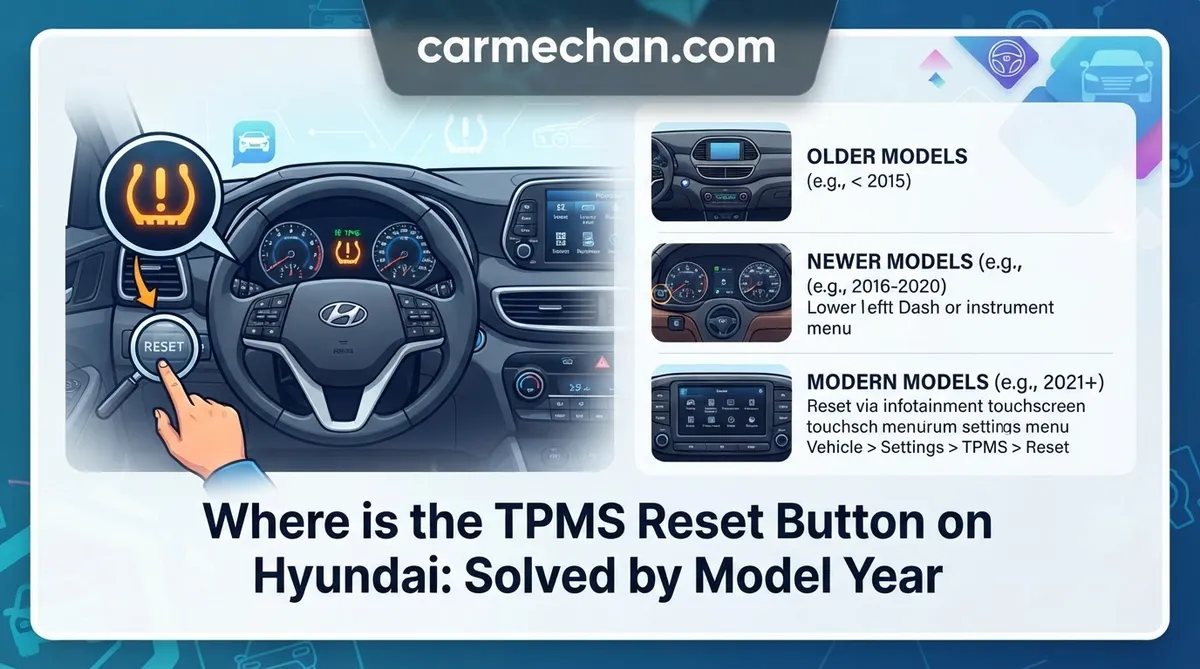
You’ve filled your tires to the perfect pressure, but that pesky light is still glowing on your dashboard. You are likely tearing apart your glovebox and searching under the steering wheel for a “reset” button that simply does not exist. For many owners of modern vehicles, this hunt is a common point of frustration. In this guide, we will clear up the confusion about where the TPMS reset button is on a Hyundai—and how to properly initialize your system without one.

The Evolution of Why You Cannot Find a TPMS Reset Button on Hyundai
Recommended Best Deal Products


📤 Share Image

The Shift Toward Automatic Tire Pressure Calibration
In the automotive industry, engineering trends have moved steadily away from manual driver intervention. Older vehicles, typically pre-2015, often featured physical “relearn” or “reset” buttons hidden under the steering column or inside the glovebox. However, the modern standard relies on a fully automated TPMS control module. This system is designed to provide a fresh start by continuously polling the sensors in each wheel for data, eliminating the need for the driver to perform a manual reboot.
Why Your Dashboard Lacks a Manual Reset Switch
Manufacturers removed these buttons to prevent user error and to ensure that the system remains accurate throughout the vehicle’s lifespan. By automating the initialize process, Hyundai ensures the system is always cross-referencing live data from the wheel-mounted sensors against the internal software parameters. If a button were present, drivers might inadvertently force a reset while a fault was active, potentially masking a critical safety warning.

Distinguishing Low Pressure From Sensor Malfunction
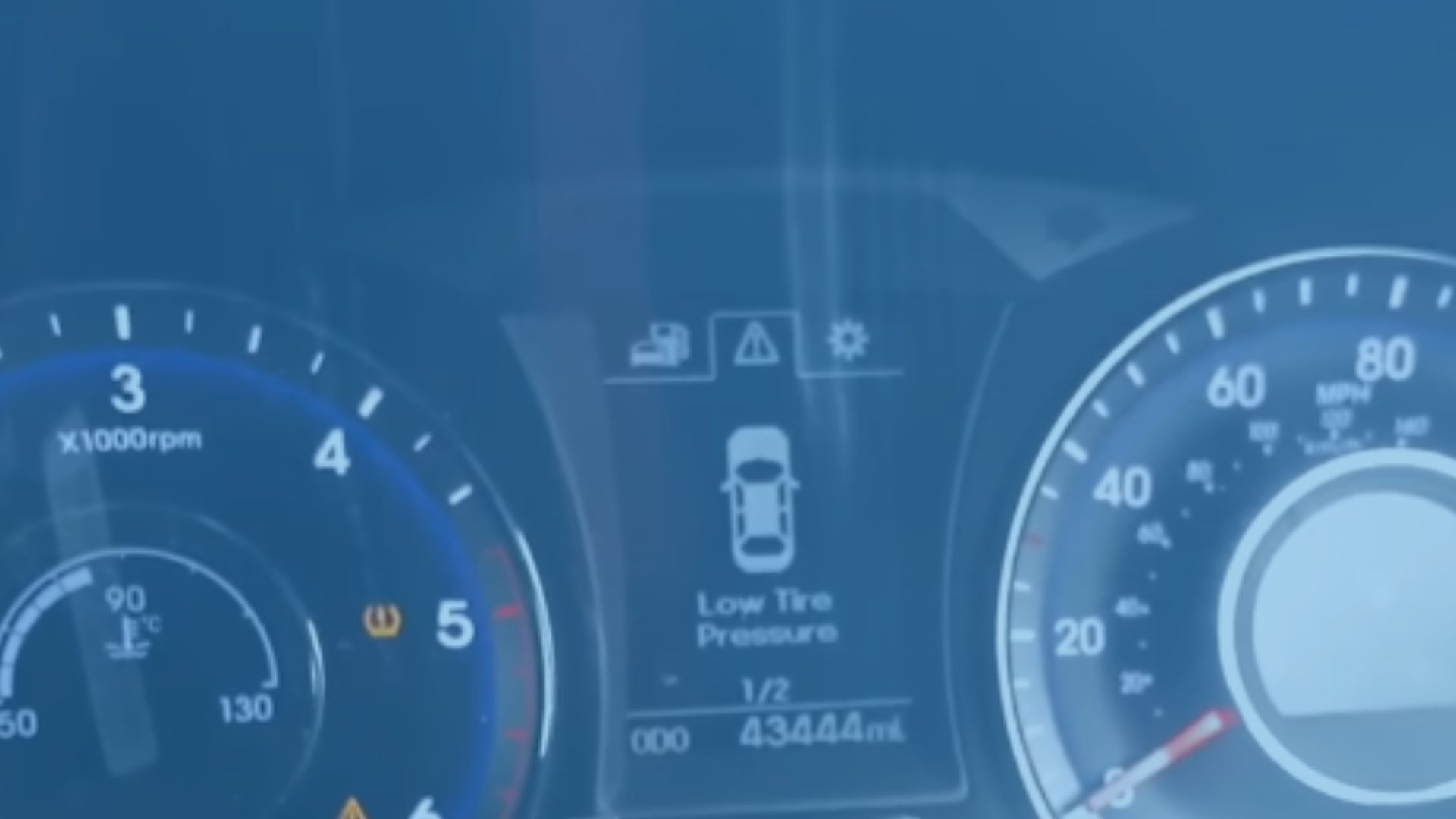
Understanding your dashboard indicators is vital. A static (solid) light typically signals that one or more tires have dropped below the recommended threshold. Conversely, a flashing TPMS light is a diagnostic indicator that the system itself has encountered an error, such as a dead sensor battery or a communication break. Research indicates that approximately 80% of TPMS light complaints are resolved simply by achieving the correct cold tire inflation pressure, not by searching for a phantom reset button.
By The Numbers
Required Drive Time
Auto-Calibration Rate
Correcting Tire Pressure to Trigger the Relearn Process
📋
Step-by-Step Guide
Recommended Best Deal Products


Open the driver-side door and look at the pillar/jamb. Use this placard value rather than the maximum PSI printed on the tire sidewall, which is often misleading.
Gas station pumps are notoriously inaccurate. Use your own calibrated gauge to restore pressure to the exact factory specification to ensure a clean reading.
After adjusting air, drive the vehicle at speeds above 20 mph for at least 10–30 minutes. This allows the sensors to update the module and complete the sync process.
Navigating System Settings and Diagnostic Misconceptions
Navigating The Hyundai Infotainment System Settings
Some premium Hyundai models allow you to view individual tire pressures through the instrument cluster’s settings menu. However, this is a visualization tool, not a command center for a reset. You cannot force a factory reset of the system through these menus, as the sensors must trigger the update themselves by broadcasting their status while the vehicle is in motion.
When An OBDII Diagnostic Tool Becomes Necessary
If you have replaced a sensor, sometimes the system requires a specialized tool to pair the unique sensor ID to your vehicle’s backup memory. If a new sensor was installed and the light remains on after an extended drive, the sensor ID may not have been registered by the car’s computer. In these cases, an OBDII diagnostic tool is the only way to successfully initialize the new component.

Audible — Listen Free for 30 Days
One free credit a month and thousands of titles included.
Listen Free for 30 DaysIf you have recently had your tires rotated, wait at least one full drive cycle. Modern Hyundai TPMS modules are highly efficient at detecting the new position of each tire automatically without manual input.
Troubleshooting When the TPMS Light Won’t Turn Off
Recommended Best Deal Products

If the light persists despite correct pressures and a long drive, consider these common pitfalls:
- Flashing vs. Solid Light: A flashing light for 60-90 seconds upon startup signifies a communication failure (e.g., a broken sensor or module error). A solid light signifies low pressure.
- Cold Weather Anomalies: Air contracts in cold weather. A 10-degree drop in ambient temperature can result in a 1 PSI decrease in tire pressure. This is normal and requires topping off the air.
- Sensor Battery Lifespan: Most TPMS sensors have a sealed battery that lasts between 5 and 7 years. Once depleted, the sensor can no longer transmit data, and the entire unit must be replaced.
- Over-inflation Errors: While keeping tires at the correct pressure is key, extreme over-inflation can sometimes trigger a secondary warning depending on the vehicle’s diagnostic threshold.
Never ignore a flashing TPMS light. If the system cannot establish a connection with the sensors, it cannot alert you to a sudden flat tire, which presents a significant safety risk during highway operation.
Final Recommendations
To summarize, modern Hyundais are engineered to be self-sufficient regarding tire pressure monitoring. There is no manual reset button to toggle. By maintaining your tires at the recommended door-jamb PSI and engaging in a standard 20–30 minute drive, you allow the vehicle to recalibrate itself automatically. A solid light is usually a simple maintenance reminder, whereas a blinking light is a system fault that requires professional attention. If your pressure is correct and the warning persists after several days of driving, visit your local Hyundai service center for a diagnostic check to ensure your sensors are functioning properly.
Where Is the Tpms Reset Button on Hyundai: Frequently Asked Questions
Do I need to visit a dealer to reset my tire pressure light?
In most cases, no. If your tires are properly inflated to the factory-recommended PSI, the system is designed to reset itself automatically after you drive for several miles. You only need to visit a dealer if the light continues to blink or remains illuminated, which suggests a sensor battery failure or a malfunctioning receiver module that requires specialized diagnostic equipment.
How long do I need to drive for the TPMS light to go off?
To successfully trigger the auto-learn or reset sequence, you should drive your Hyundai at speeds consistently above 20 to 25 mph. Most systems require between 10 and 20 minutes of continuous driving to update the sensor data and extinguish the light on the dashboard. Avoid stop-and-go traffic if possible during this process for the most accurate sensor calibration.
Will replacing my tires require a TPMS reset?
Generally, no. Since the TPMS sensors are typically mounted to the wheel itself, they do not need to be replaced when changing tires. If the technician does not damage the sensors during the tire change, the system should recognize the new tires and current pressure automatically. If they rotate the tires, the system may need a few miles of driving to update the new positions.
Why does my TPMS light stay on after adding air?
The light often stays on because the system requires the vehicle to be in motion to verify the new pressure readings. Additionally, ensure you are inflating to the door jamb placard value rather than the maximum pressure listed on the tire. If the light remains on, verify that you didn’t miss the spare tire, which sometimes contains a sensor on older models.
What is the difference between a solid light and a flashing TPMS light?
A solid light indicates that one or more of your tires has fallen below the recommended pressure threshold, which is easily corrected by inflating your tires. A flashing light, which typically lasts for about one minute before turning solid, is a sign of a system malfunction. This indicates that a sensor is dead, damaged, or the TPMS control module has lost communication with the sensors.
Audible Premium Plus — Annual Membership
12 audiobook credits up front, plus the full Audible catalogue.
See Annual Plans