Jeep Wrangler TPMS Reset Guide for Every Owner
Last Updated on June 24, 2026 by Albert Duke


A Jeep Wrangler TPMS reset usually starts with correcting tire pressure, not pressing a reset button. TPMS means Tire Pressure Monitoring System, and most Wrangler owners should think of it as a pressure and sensor recognition system rather than a simple service reminder.
Many Jeep Wrangler models do not have a dedicated TPMS reset button. If the light came on after cold weather, tire service, a wheel swap, or aftermarket tire changes, the right fix depends on what triggered the warning.
This guide walks through the four real reset paths: tire pressure correction, drive relearn, sensor relearn, and fault diagnosis. The right reset path depends on what triggered the light in the first place.
What Jeep Wrangler TPMS Monitors While Driving
TPMS is not a manual reminder light. It monitors tire pressure through sensors mounted in the wheels and warns you when pressure falls below the safe threshold for your Wrangler.
Jeep owner manual language says the TPMS warning stays active until tire pressure reaches the recommended cold placard pressure. The placard is the tire and loading label inside the driver door area, not the maximum pressure printed on the tire sidewall.
Key points to understand:
- Cold tire pressure means pressure checked before driving, or after the Wrangler has been parked long enough for the tires to cool.
- Placard pressure is the pressure Jeep recommends for factory tire size and load.
- Tire sidewall pressure is the tire’s maximum rating, not the normal daily pressure target.
- Temperature changes matter because Jeep manual language notes tire pressure can change about 1 psi for every 12°F temperature change.
That is why TPMS lights often appear on cold mornings. NHTSA tire safety guidance also tells drivers to inspect tires and check pressure when the warning light turns on.
Once you know what the system is watching, the reset process becomes easier to choose.
Does Jeep Wrangler Have a TPMS Reset Button
Most Wrangler owners should not begin by looking under the dash for a reset button. Many generic Jeep TPMS pages mention a reset button, but that advice does not match how many Wrangler systems behave.
No Dedicated Button
On many Jeep Wrangler JK and JL models, there is no simple TPMS reset button you press for three seconds. The system normally updates after the tires are set to the correct cold pressure and the vehicle receives updated sensor data while driving.
This is why a Wrangler owner may check under the steering wheel, glove box, and dashboard menus without finding anything useful.
Generic Advice Problem
Generic TPMS reset instructions often come from pages written for many vehicle brands at once. Those instructions may say to turn the key on, hold a button, and wait for the light to blink.
That may work on some vehicles, but it can send Wrangler owners in the wrong direction. In Jeep owner forums, a common answer to “where is the TPMS reset button” is that many modern Jeep models do not have one for this purpose.
When a Tool Helps
A TPMS tool helps when the issue is sensor recognition, not simple low tire pressure. This can happen after replacing a tire pressure sensor, installing another wheel set, or dealing with a sensor that stopped transmitting.
If there is no button to press, the next step is choosing the correct reset path.
How To Reset Jeep Wrangler TPMS In 4 Paths
Use the path that matches what happened before the warning light appeared. A Jeep Wrangler TPMS reset is not one universal procedure.
Jeep Wrangler TPMS Reset Decision Flow
Match the warning light to the most likely cause before you try a reset. Start with pressure, then move to relearn or diagnosis only when needed.
Light After Cold Weather
Tire pressure likely dropped below the warning threshold as temperature changed.
Light Stays On After Air
Pressure may still be low, a tire may be leaking, or the system has not updated yet.
New Sensor or Wheel Swap
The Wrangler may not recognize the new sensor ID or wheel sensor position.
Flashing Light or Fault Message
This usually points to a TPMS malfunction rather than normal low tire pressure.
| Situation | Best First Action | What Usually Happens Next |
|---|---|---|
| Light came on after cold weather | Check all tires cold and inflate to door placard pressure | Drive until the system updates |
| Light stays on after adding air | Recheck pressure with an accurate gauge | Drive again and inspect for leaks |
| New sensor or wheel swap | Perform TPMS relearn with a tool if needed | Sensor IDs may need to be written to the ECU |
| Flashing TPMS light or fault message | Stop trying pressure-only resets | Diagnose sensor or system fault |
For many Wrangler situations, the pressure correction path is enough. Inflate the tires to the driver-door placard pressure, then drive long enough for the sensors to report updated data.
ATEQ’s Wrangler TPMS procedure database says Jeep Wrangler 2007–2020 uses a direct TPMS system, meaning sensors are installed in the wheels. ATEQ also lists a Wrangler relearn process that can include adjusting tires to placard pressure, activating sensors with a TPMS tool, and driving up to 20 minutes above about 15 mph.
ATEQ Wrangler TPMS relearn data supports using tool-based procedures when sensors are replaced.
The simplest path starts with tire pressure because that is the most common cause.
How To Fix Low Jeep Wrangler Tire Pressure First


Do not clear the TPMS light before you check the tires. A reset that hides a real low-pressure condition can create poor handling, uneven tire wear, or a tire failure risk.
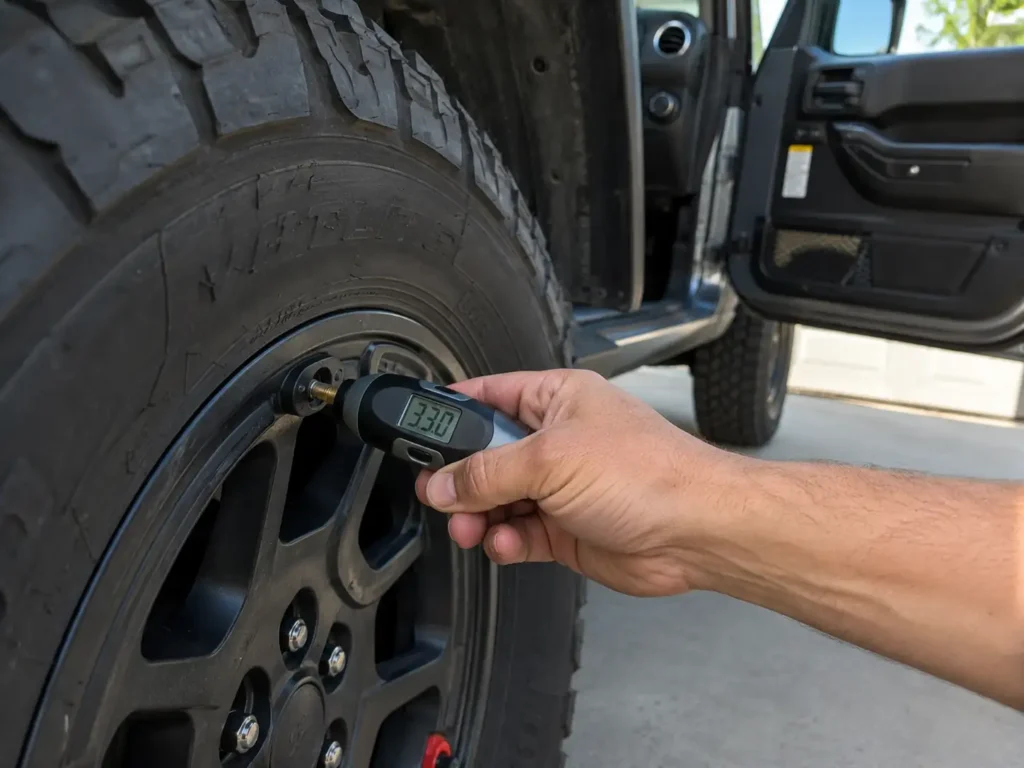
Follow this first:
- Park the Wrangler and let the tires cool.
- Find the tire and loading label inside the driver door area.
- Check all four tires with a reliable tire pressure gauge.
- Inflate each tire to the recommended cold placard pressure.
- Check the spare if your Wrangler year and setup monitors it.
- Drive the Jeep and watch for the warning light to update.
Do not use the tire sidewall number as your target pressure. That number is the tire’s maximum pressure rating, not Jeep’s normal driving recommendation.
If your gauge is old, cheap, or inconsistent, replace it before blaming the TPMS system. Our guide to the best tire pressure gauge can help if you want a more accurate tool for home checks.
If correct pressure does not clear the light, the Wrangler may need a relearn instead of more air.
When Jeep Wrangler TPMS Needs Sensor Relearn
A relearn is different from adding air. Adding air fixes a pressure problem, while relearn helps the Wrangler recognize sensor IDs.
After New Sensors
If you replaced one or more TPMS sensors, the Jeep may need to learn the new sensor IDs. ATEQ states that when a sensor is replaced in one or more Wrangler tires, an OBD TPMS relearn is recommended to write the IDs to the vehicle ECU.
This is where a shop-grade TPMS tool, OBD connection, or compatible scan tool becomes useful.
After Wheel Changes
Wheel swaps can confuse owners because the tire pressure may be correct, but the system may not immediately recognize the sensor positions or sensor IDs.
Some Wrangler systems can update after driving. Mitchell1’s TPMS tip for 2011–2015 Chrysler and Jeep Wrangler models says the vehicle may need to be driven up to 10 minutes above 15 mph to receive updated tire pressure information. Mitchell1 Wrangler TPMS service guidance also describes tire pressure sensor retraining through RF signal communication.
After Sensor Failure
TPMS sensors have batteries sealed inside them. When a sensor battery dies, the sensor usually needs replacement because the battery is not normally serviced separately.
A dead sensor, damaged valve stem sensor, or wrong-frequency replacement sensor will not be fixed by adding air. It needs diagnosis and proper sensor matching.
A relearn solves sensor recognition problems, but it will not fix a pressure threshold problem.
Why Oversized Wrangler Tires Trigger TPMS Problems
Oversized tires can make a normal Wrangler TPMS reset feel impossible. Many Wrangler owners install larger tires and run lower pressure than the factory placard for ride comfort, trail use, or tire wear patterns.
The problem is that factory TPMS thresholds may still expect factory-style road pressure. If your new tire setup runs below that threshold, the system may keep warning even when the tire pressure is intentional.
Use this logic:
- If the tires are factory size, start with the door placard pressure.
- If the tires are oversized, verify safe on-road pressure with tire load data or a qualified tire shop.
- If you air down off-road, expect the TPMS light to come on until pressure is restored.
- If you want to change TPMS thresholds, verify tool compatibility and local safety requirements first.
For broader Wrangler ownership context, our Jeep Wrangler years to avoid guide covers reliability patterns beyond tire pressure warnings.
Pressure and relearn issues are common, but some TPMS lights point to an actual fault.
When Jeep Wrangler TPMS Light Means a Fault
A flashing TPMS light is not the same as a low-pressure warning. A steady light usually points to low pressure, while a flashing light or TPMS fault message often points to a system malfunction.
Common fault causes include:
- Dead TPMS sensor battery
- Damaged valve stem sensor
- Wrong replacement sensor
- Sensor not programmed correctly
- TPMS receiver or antenna issue
- Wiring or module communication problem
A recall also matters for some newer Wranglers. NHTSA Campaign 25V527 covers certain 2024–2025 Jeep Wrangler vehicles because a pinched remote start antenna cable may cause the TPMS warning light not to illuminate as intended. The NHTSA recall notice lists 78,989 potentially affected vehicles and FCA recall number 56C. NHTSA Recall 25V527 says dealers will inspect and replace the antenna cable as needed at no charge.
If your Wrangler also shows ABS or traction control warnings, do not assume every dashboard light is caused by TPMS. Our guide on Jeep Wrangler ABS and traction control light reset explains a separate warning-light path.
Once the fault signs are clear, the final decision is whether to handle it yourself or involve a shop.
When To Use a Jeep TPMS Tool or Shop
You do not need a shop for every Wrangler TPMS light. If the light came on after a cold morning or slow leak, start with a pressure gauge and an air compressor.
Use a TPMS tool or shop when:
- You replaced a TPMS sensor.
- You installed aftermarket wheels.
- The light flashes before staying on.
- The display shows no reading from one tire.
- The warning returns after correct pressure and driving.
- Your 2024–2025 Wrangler may fall under Recall 25V527.


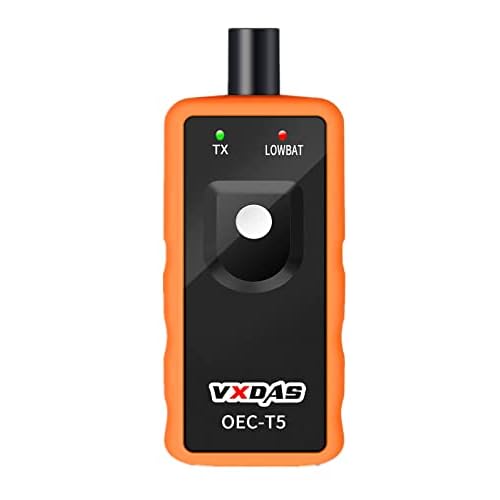
A tire shop can trigger each sensor, check sensor IDs, confirm battery status, and perform relearn if the vehicle does not self-update. A dealer or qualified shop is the safer choice when the issue may involve a recall, antenna problem, or module communication fault.
With the decision clear, the reset process comes down to matching the fix to the trigger.
Best Next Step for Jeep Wrangler Owners
The right Jeep Wrangler TPMS reset depends on the cause of the warning. Start with cold tire pressure, use the driver-door placard as your target, and drive long enough for the system to receive updated sensor data.
If the light stays on after correct pressure, think sensor relearn or sensor failure. If the light flashes, shows a fault message, or your newer Wrangler may be part of a recall, stop treating it like a simple reset problem.
The smart path is simple: verify pressure first, relearn after sensor changes, and diagnose faults instead of clearing warnings blindly.
Jeep Wrangler TPMS Reset Questions Owners Ask
Where Is the TPMS Reset Button on a Jeep Wrangler
Many Jeep Wrangler models do not have a dedicated TPMS reset button. The system usually updates after the tires are inflated to the correct cold placard pressure and the vehicle is driven long enough to receive updated sensor data.
How Long Does Jeep Wrangler TPMS Take To Reset
Some Wrangler systems may update after 10 to 20 minutes of driving above about 15 mph, depending on model year and system condition. If the light stays on after correct pressure and driving, check for sensor or relearn issues.
Why Is My Jeep Wrangler TPMS Light Still On
The TPMS light may stay on because pressure is still below the placard target, a sensor is not transmitting, a new sensor has not been learned, or the system has a fault. Recheck cold pressure before replacing parts.
Can I Reset Jeep Wrangler TPMS Without a Tool
Yes, you can often reset a low-pressure warning without a tool by inflating the tires correctly and driving. You may need a TPMS tool when sensors are replaced, wheels are changed, or the system cannot recognize sensor IDs.
Do Bigger Tires Affect Jeep Wrangler TPMS
Yes, bigger tires can affect TPMS behavior if they are run at pressures below the factory warning threshold. Verify safe pressure for your tire size and load before changing thresholds or ignoring the light.
Does a Flashing TPMS Light Mean Low Tire Pressure
A flashing TPMS light usually points to a malfunction, not just low tire pressure. Check pressure first, but if the flashing continues, diagnose the sensor, receiver, wiring, or recall status.