
Where is the tpms reset button on a kia sportage: Solved
Seeing a glowing ‘TPMS’ light on your Kia Sportage dashboard can be stressful, especially when you are looking for a button that does not seem to exist. Many owners spend time searching through the glovebox or scrolling through digital menus for a “reset” command that remains elusive. The truth is that the system operates far more autonomously than drivers often realize.

Understanding the Kia Sportage TPMS Warning Mechanics
Recommended Best Deal Products


To effectively manage your vehicle’s tire pressure, you must first understand how the onboard technology differentiates between a simple air loss event and a mechanical failure.

📤 Share Image

What a Solid Warning Light Means
A solid, steady yellow horseshoe-shaped light with an exclamation point in the center indicates that one or more of your tires have fallen below the recommended pressure threshold. In the vast majority of cases, this is not a system fault, but an environmental or maintenance issue—such as a temperature drop causing air contraction or a small puncture.

Decoding a Flashing Tire Pressure Light
If your TPMS light flashes for approximately one minute before staying illuminated, the system is signaling an electrical fault. This indicates that the vehicle’s ECU can no longer communicate with one or more of the wheel-mounted sensors. Unlike a solid light, a flashing light cannot be cleared by adding air; it points to a dead sensor battery, a damaged receiver, or signal interference.
The Role of Direct TPMS Sensors
Modern Kia Sportages utilize “Direct” TPMS. This system employs actual pressure sensors mounted inside each tire valve assembly. These sensors transmit real-time data to the car’s computer. It is vital to ignore the “Max PSI” printed on the tire sidewall, which is a structural limit of the tire itself, and instead follow the specific PSI requirements listed on the B-pillar placard on the driver’s side door frame.
By The Numbers
Automated Calibration
MPH Speed to Initialize
Where Is The TPMS Reset Button On A Kia Sportage? The Truth
There is a persistent misconception among vehicle owners that a “hidden” reset button exists, possibly located under the steering column or inside the glovebox. In older vehicle designs from two decades ago, this was common, but it is absent from the modern Kia Sportage platform.
Dispelling the Myth of the Physical Button
If you are scouring your dash for a button, you are looking for a component that does not exist in your vehicle. Kia engineers moved toward automated self-learning systems precisely to prevent user error. The vehicle is programmed to perform a “fresh start” by continuously scanning for the presence of the wheel sensors while the vehicle is in motion.
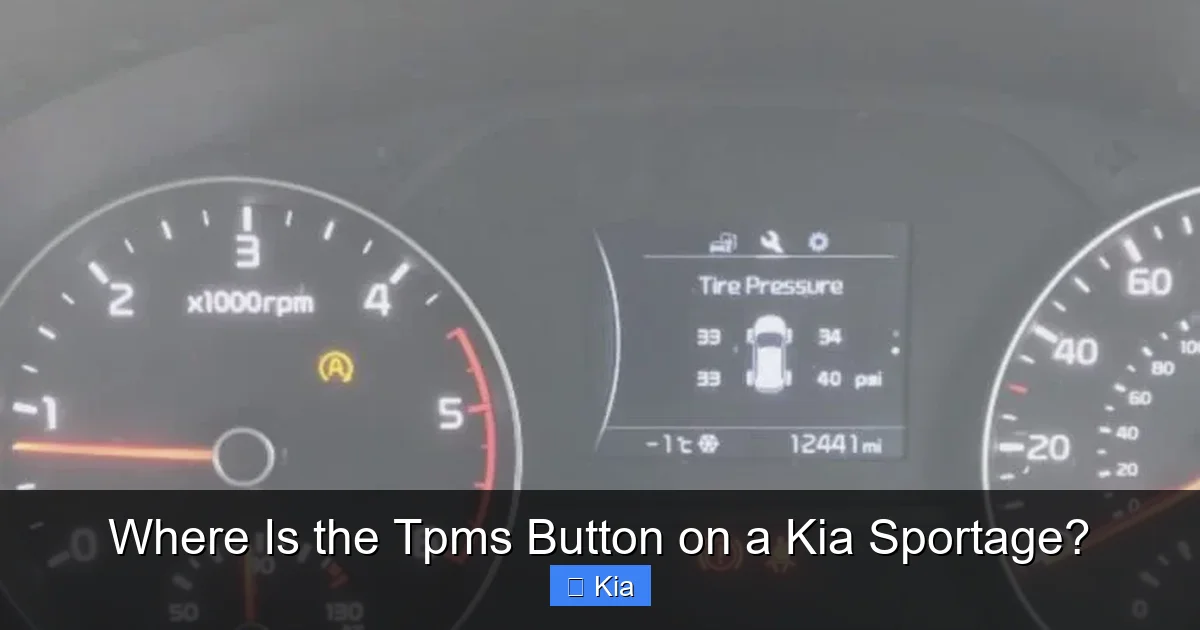
Accessing System Status via the Instrument Menu
While there is no “reset” button to press, you can often view the current status or tire pressure readings through your instrument cluster. Using the steering wheel menu controls, you can navigate to the “Service” or “Tire Pressure” tab. If the sensors are functional, they will display individual tire readings here. If the display shows dashes or an error message despite having correct tire pressure, it is a definitive sign that a sensor is failing to report data.
📋
How to Restore the System
Recommended Best Deal Products


Use a high-quality, calibrated digital tire pressure gauge to check each tire. Inflate all tires to the cold-tire PSI specified on the driver’s side door jamb sticker. Do not guess; accurate pressure is the only way to trigger a successful system factory reset.

Audible — Listen Free for 30 Days
One free credit a month and thousands of titles included.
Listen Free for 30 DaysOnce inflated, the TPMS requires a “reboot” cycle. Drive the vehicle for at least 15 to 20 minutes at speeds consistently above 20-30 mph. This sustained motion allows the sensors to awaken and transmit the new, correct pressure data to the control unit.
The warning light should turn off automatically during your drive once the computer acknowledges the correct pressures. If the light remains on, verify the tires again; even a 2-3 PSI discrepancy can prevent the system from clearing the warning.
What To Do If The TPMS Light Stays On After Reset
If you have confirmed that all tire pressures are at the factory recommended levels and you have completed the required drive cycle, but the light remains, you are likely facing a hardware issue rather than a calibration issue.
- Failed Sensor Batteries: TPMS sensors are powered by non-replaceable internal lithium batteries. These typically last 7 to 10 years. If your Sportage is within this age range, a dead battery is the most common culprit.
- OBD-II Diagnostic Scan: A professional-grade OBD-II scanner is required to pull “C” or “TPMS” specific diagnostic trouble codes (DTCs). This will identify exactly which wheel position is failing to transmit.
- Sensor Damage: Physical damage from a previous tire change or road debris can crack the sensor housing or damage the valve stem, leading to intermittent connectivity.
- Professional Inspection: If the scanner confirms a failed sensor, it must be physically replaced. This involves dismounting the tire, installing a new sensor, and re-initializing the system through the vehicle’s communication port.
Never attempt to force the TPMS light off by over-inflating tires. This increases the risk of tire blowout, uneven tread wear, and compromised vehicle handling. Always stick to the door placard values.
In summary, the modern Kia Sportage has eliminated the need for manual button intervention. By maintaining your tire pressure according to the door placard and ensuring you drive the vehicle at the required speeds, you allow the system to perform an automated initialization. If you have verified the pressures and the light persists—especially if it is flashing—the issue is electrical, and a diagnostic scan at a service center is the next logical step to restore your vehicle to full functionality.
Where Is the Tpms Reset Button on a Kia Sportage: Frequently Asked Questions
Recommended Best Deal Products


Do I need to visit the dealer to reset the TPMS?
Not necessarily. Most TPMS issues are resolved by simply adjusting tire pressure to the levels listed on your driver-side door jamb. However, if the TPMS light flashes for 60 seconds at start-up, it indicates a hardware failure, such as a dead sensor battery or faulty module. In those specific mechanical cases, a dealer or tire shop visit is required to diagnose and replace the damaged components.
How long do I need to drive to reset the light?
Once the tires are correctly inflated, the system needs to re-establish a handshake with the sensors. You typically need to drive the vehicle at a steady speed of at least 15 to 20 mph for approximately 10 to 15 minutes. This continuous rotation allows the sensors to awaken and transmit stable, accurate pressure data to the vehicle’s computer, which then satisfies the system and extinguishes the warning light.
Why won’t my TPMS light turn off after adding air?
This usually happens because the tires are not yet at the exact required PSI, or the spare tire is also low and triggering the system. Alternatively, if the sensors have been recently replaced, they may not have been properly ‘re-learned’ to your vehicle’s ECU. If the light remains on despite correct pressure, it is likely that the system is detecting a fault with a specific sensor rather than a pressure issue.
Does cold weather affect my TPMS accuracy?
Yes, ambient temperature significantly impacts tire pressure. For every 10 degrees Fahrenheit the temperature drops, your tire pressure typically decreases by about 1 PSI. In cold climates, this drop is often enough to dip below the factory threshold, triggering the warning light even if there is no physical leak. Always check your tire pressures during major seasonal temperature shifts to avoid nuisance alerts.
Audible Premium Plus — Annual Membership
12 audiobook credits up front, plus the full Audible catalogue.
See Annual PlansCan I replace the TPMS sensor battery myself?
No, you cannot replace the battery in an individual TPMS sensor. These units are sealed, water-resistant components designed for long-term durability. When the internal battery reaches the end of its lifespan, the entire sensor must be replaced. This involves breaking the tire bead, removing the old sensor, installing a new one, and having it programmed to communicate with your specific vehicle’s ECU by a professional technician.