Ford Maverick Towing? Hybrid vs EcoBoost Comparison with specs, 2K vs. 4K Explained 2026
Last Updated on September 1, 2026 by Ryan
The Ford Maverick’s towing capacity ranges significantly from 2,000 lbs to 4,000 lbs, depending on its engine and the crucial 4K Tow Package. Hybrid models are limited to 2,000 lbs, while the 2.0L EcoBoost can reach 4,000 lbs with the specialized package.
Ready to use your Ford Maverick’s tow rating? Start with the right gear:
 Class 3 trailer hitch — Ford / Universal” style=”width:90px;height:90px;object-fit:contain;border-radius:8px;flex-shrink:0;” loading=”lazy”>

As an Amazon Associate we earn from qualifying purchases.
🎯 Key Takeaways
- Hybrid Mavericks tow 2,000 lbs maximum.
- EcoBoost Mavericks without the package tow 2,000 lbs.
- EcoBoost with 4K Tow Package achieves 4,000 lbs.
- The 4K Tow Package is critical for max capacity.
- Always adhere to tongue weight and payload limits.
If you’re eyeing a Ford Maverick and wondering about its towing capabilities, the short answer is it can tow either 2,000 pounds or 4,000 pounds. The specific capacity depends entirely on the engine you choose, whether you have front-wheel drive (FWD) or all-wheel drive (AWD), and most critically, if your truck is equipped with the factory-installed 4K Tow Package. This distinction is crucial because 2,000 pounds handles very light loads, while 4,000 pounds opens up a much wider range of recreational and utility possibilities.

Understanding these different capacities isn’t just about raw numbers; it dictates what types of trailers you can safely pull, from small utility carts to pop-up campers or even some small boats. Getting this wrong can lead to serious safety issues, vehicle damage, or even legal problems. Let’s break down exactly what each Ford Maverick configuration offers in terms of towing strength, ensuring you pick the right truck for your hauling needs.
Ford Maverick Towing Capacity: Configuration Breakdown
Hybrid FWD Models: Standard 2,000 lbs
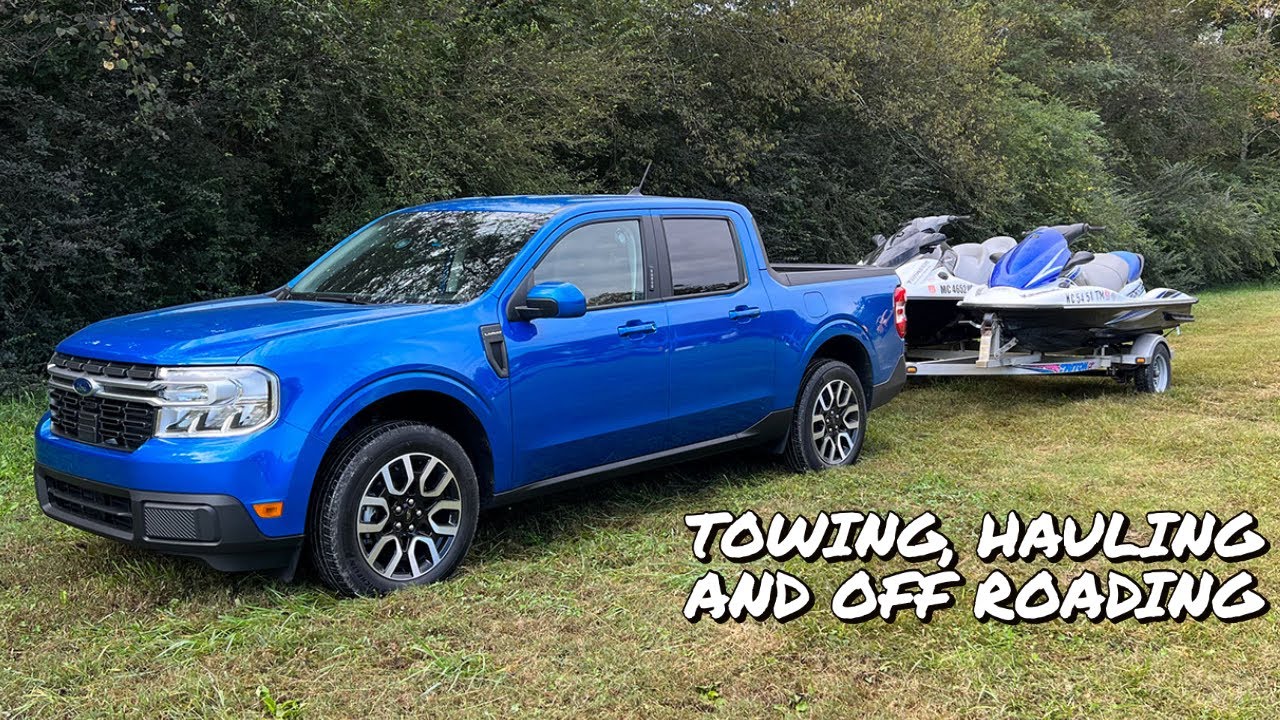
Every Ford Maverick Hybrid model, from its debut in 2022 to the current model year, comes standard with a maximum towing capacity of 2,000 pounds. This is a consistent rating across all Hybrid FWD configurations. It’s important to note that the optional 4K Tow Package is not available for the hybrid powertrain. This means if you opt for the Maverick Hybrid, your towing ceiling will always be 2,000 pounds.
- Suitable for:
- Small utility trailers for yard work or errands.
- Jet ski trailers.
- Very compact teardrop campers.
- Small aluminum fishing boats.
While 2,000 pounds is perfect for many light-duty hauling tasks, it requires careful attention to the Gross Trailer Weight (GTW) to avoid exceeding the limit, especially when factoring in trailer contents and gear.
2.0L EcoBoost FWD/AWD Without Tow Package: Also 2,000 lbs Standard
Choosing the more powerful 2.0L EcoBoost engine doesn’t automatically grant you the highest towing capacity. If your 2.0L EcoBoost Maverick, whether in Front-Wheel Drive (FWD) or All-Wheel Drive (AWD) configuration, does not have the factory-installed 4K Tow Package, its maximum towing capacity is also capped at 2,000 pounds. This is a common point of confusion for new buyers.
This means the base towing capacity for any Ford Maverick is 2,000 pounds, regardless of engine, unless the specific 4K Tow Package is added. For casual hauling and light recreational trailers, this capacity remains adequate. However, it severely limits your options compared to a Maverick equipped for heavier tasks.
2.0L EcoBoost FWD/AWD With 4K Tow Package: The Maximum 4,000 lbs
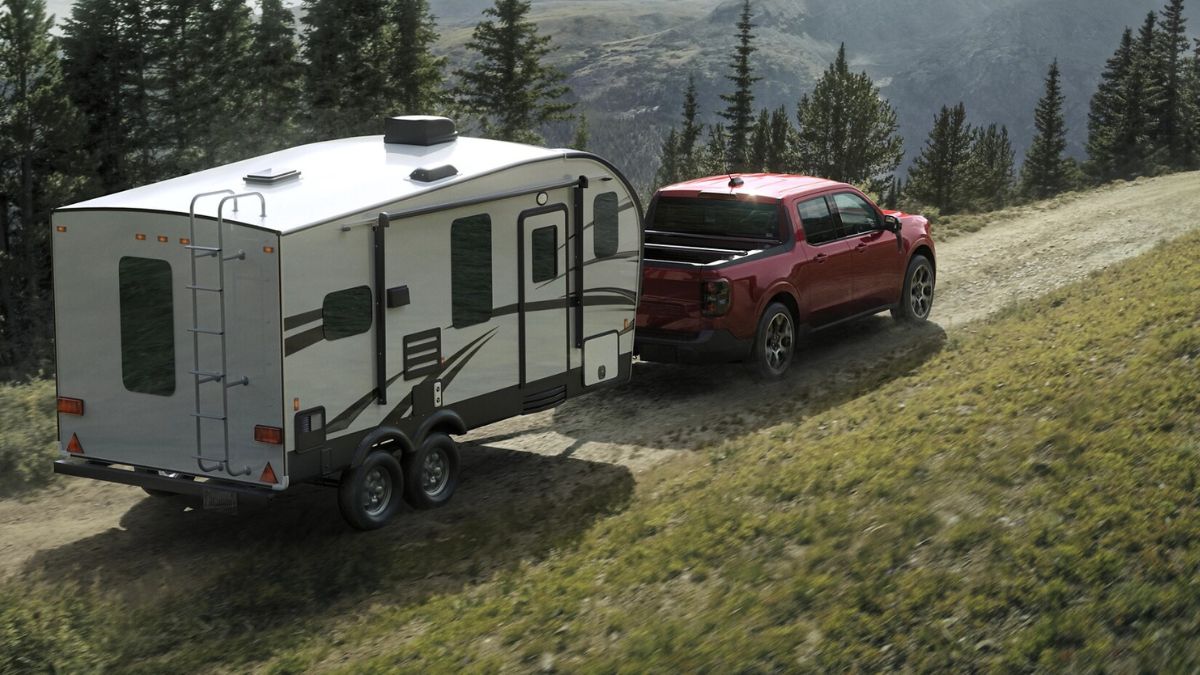
This is where the Ford Maverick truly punches above its weight class. To achieve the impressive 4,000-pound maximum towing capacity, your Maverick must meet two critical criteria: it needs the 2.0L EcoBoost engine and it must be equipped with the optional 4K Tow Package. This applies universally to both the FWD and AWD versions of the EcoBoost Maverick across all model years (2022, 2023, 2024, and beyond).
- Unlocks capabilities for:
- Small to medium travel trailers or pop-up campers.
- Utility trailers with heavier loads like landscaping materials or ATVs (up to two).
- Various small to medium boat trailers.
- Small car dollies with compact vehicles.
The jump from 2,000 pounds to 4,000 pounds makes a significant practical difference, allowing for much more versatility for both recreational adventures and work-related hauling.
Everything You Need to Know About Ford Maverick Towing Capacity
Understanding your Ford Maverick’s towing capacity isn’t just about knowing a single number; it’s about a comprehensive approach to safety, performance, and legal compliance. This detailed guide will walk you through every critical step, from identifying your vehicle’s specific capabilities to calculating real-world loads and setting up your rig for a safe journey. Following these steps meticulously will ensure you tow confidently and efficiently, protecting both your Maverick and your cargo.
Step 1: Identify Your Maverick’s Powertrain and Tow Package
What you need: Your Ford Maverick’s VIN (Vehicle Identification Number), owner’s manual, or original vehicle purchase documentation.
Instructions: The Ford Maverick comes with two primary powertrain options: the 2.5L Hybrid and the 2.0L EcoBoost. Crucially, the towing capacity varies significantly between these. The Hybrid model has a standard towing capacity of 2,000 lbs. The 2.0L EcoBoost offers a base capacity of 2,000 lbs, but can be equipped with the optional 4K Tow Package, which increases its capacity to 4,000 lbs. You must confirm if your EcoBoost model has this factory-installed package. Check your window sticker, owner’s manual, or FordPass app for the “4K Tow Package” option (usually listed as 53Q).
Pro Tip: The 4K Tow Package is a factory-installed option and cannot be added after purchase to achieve the 4,000 lb rating. If your EcoBoost Maverick doesn’t have it, its maximum capacity remains 2,000 lbs.
Step 2: Locate Your Vehicle’s Specific Weight Ratings
What you need: Your Ford Maverick, its owner’s manual.
Instructions: Open your driver’s side door and look for the Safety Compliance Certification Label (often called the door jamb sticker). On this label, you’ll find crucial weight ratings specific to YOUR vehicle, including Gross Vehicle Weight Rating (GVWR), Gross Axle Weight Rating (GAWR) for both front and rear axles, and the vehicle’s Payload Capacity. While not always explicitly stated on the door jamb, the Gross Combined Weight Rating (GCWR) – the maximum allowable weight of the loaded vehicle and the loaded trailer combined – is typically found in your owner’s manual’s “Towing” section. Jot these numbers down as they are the ultimate limits for safe operation.
Pro Tip: Always refer to your specific vehicle’s door jamb sticker and owner’s manual, as these ratings can vary slightly even between seemingly identical models due to manufacturing tolerances or specific factory options.
Step 3: Understand Gross Combined Weight Rating (GCWR) and Payload Limitations
What you need: Your Maverick’s specific GCWR and Payload capacity (from Step 2).
Instructions: Your Maverick’s maximum towing capacity (2,000 lbs or 4,000 lbs) is a component of its GCWR, not the sole limit. GCWR is the maximum weight of your fully loaded Maverick (passengers, cargo, fuel, accessories) PLUS the fully loaded trailer. Your vehicle’s payload capacity is another critical factor. Payload includes the weight of all occupants, all cargo in the truck bed and cabin, and the trailer’s tongue weight. Many drivers exceed payload capacity before reaching towing capacity. For example, if your Maverick has a 1,500 lb payload and you load 500 lbs of passengers/gear, only 1,000 lbs remains for tongue weight.
Pro Tip: Payload capacity is often the first limiting factor. Remember that every pound of tongue weight from your trailer directly reduces your available payload capacity.
Step 4: Determine Your Trailer’s Actual Loaded Weight
What you need: Your loaded trailer, access to a commercial weigh station (e.g., truck stop, landfill scale).
Instructions: Never rely solely on a trailer’s “dry weight” or manufacturer-listed empty weight. These figures do not account for your gear, water, propane, batteries, or any other items you load into or onto the trailer. To accurately determine your trailer’s actual weight, load it exactly as you would for a trip, then take it to a certified commercial weigh station. Drive the tow vehicle (without the trailer) onto the scale first to get its loaded weight (if you want to calculate your vehicle’s exact payload usage), then weigh the entire rig (truck and trailer), and finally weigh the trailer detached from the truck. This provides a precise Gross Trailer Weight (GTW).
Pro Tip: Many truck stops (look for CAT Scales) offer public weighing services for a small fee. This is the most accurate way to confirm your loaded trailer weight before hitting the road.
Step 5: Calculate and Manage Tongue Weight
What you need: Your loaded trailer, a tongue weight scale (recommended) or a commercial scale, a tape measure.
Instructions: Tongue weight is the downward force exerted by the trailer coupler onto the hitch ball. For optimal stability, tongue weight should typically be 10-15% of your total loaded trailer weight. Too little tongue weight can cause dangerous trailer sway, while too much can overload your Maverick’s rear axle and significantly reduce its payload capacity. Use a dedicated tongue weight scale for precision, or weigh just the trailer’s tongue on a commercial scale (ensure the rest of the trailer is off the scale). Adjust cargo placement within the trailer to achieve the ideal 10-15% ratio.
Pro Tip: If your trailer’s loaded weight is 2,000 lbs, aim for a tongue weight between 200-300 lbs. For a 4,000 lb trailer, target 400-600 lbs. Improper tongue weight is a leading cause of unstable towing.
Step 6: Select the Correct Hitch and Accessories
What you need: A Class III hitch receiver (if not factory installed), appropriate hitch ball mount, hitch ball (2″ or 2-5/16″ depending on trailer), locking pin.
Instructions: If your Maverick has the 4K Tow Package, it comes with a Class III 2-inch hitch receiver. If not, and you’re planning to tow up to 2,000 lbs, you may need to install an aftermarket Class I or II hitch receiver. Always ensure your hitch ball mount and hitch ball are rated to meet or exceed your trailer’s loaded weight and tongue weight. Match the ball size to your trailer’s coupler (most commonly 2-inch for lighter trailers, 2-5/16-inch for heavier). Ensure all components are securely fastened and rated for the load.
Pro Tip: For trailers approaching the 4,000 lb limit, consider a weight distribution hitch (WDH). A WDH helps distribute tongue weight more evenly across all axles, improving stability and leveling the tow vehicle. Consult your owner’s manual for specific WDH recommendations for your Maverick.
Step 7: Install and Calibrate an Electric Brake Controller (If Applicable)
What you need: An aftermarket electric trailer brake controller, basic wiring tools (e.g., wire strippers, crimpers), possibly a Maverick-specific wiring harness adapter.
Instructions: If your trailer weighs over 1,500 lbs (or as mandated by local laws, often 2,000 lbs) and is equipped with electric brakes, you are legally required and safety-bound to have an electric brake controller in your Maverick. The Ford Maverick (especially with the 4K Tow Package) typically comes pre-wired for a brake controller, making installation simpler. Follow the manufacturer’s instructions for your specific brake controller to install and calibrate it. Calibration involves finding the right sensitivity and power output to ensure smooth, synchronized braking between your Maverick and the trailer.
Pro Tip: Test the brake controller thoroughly in a safe, open area before heading out on the road. Adjust the gain setting until the trailer brakes firmly without locking up when activated.
Step 8: Perform Comprehensive Pre-Towing Checks
What you need: Tire pressure gauge, flashlight, basic tool kit, clean cloths, mirror for checking lights.
Instructions: Before every tow, conduct a thorough walk-around and check. Ensure all lights (brake, turn signals, running lights) on both the Maverick and trailer are working correctly. Verify tire pressures on both the tow vehicle and trailer are set to the manufacturer’s recommendations for towing. Check all fluid levels in your Maverick (oil, transmission fluid, coolant). Confirm the trailer is securely hitched, the safety chains are crossed and attached, and the breakaway cable is connected. Secure all cargo inside both the Maverick and the trailer to prevent shifting during transit.
Pro Tip: Always double-check your rearview mirrors and side mirrors are properly adjusted to give you the best possible view of your trailer and surroundings. Consider aftermarket towing mirrors for improved visibility with wider trailers.
✅ Final Checklist
- Confirmed Maverick powertrain and 4K Tow Package (if applicable).
- Verified all vehicle weight ratings (GVWR, GAWR, GCWR, Payload).
- Calculated actual loaded trailer weight and confirmed it’s within limits.
- Ensured tongue weight is 10-15% of GTW and within Maverick’s payload capacity.
- Installed and verified proper hitch, ball mount, and ball for the load.
- Confirmed electric brake controller is installed and calibrated (if required).
- Completed all pre-towing light, tire, and fluid checks.
Important Notes:
- Safety considerations or warnings: Always drive slower, allow significantly more braking distance, and take wider turns when towing. Be mindful of crosswinds and passing vehicles, as they can cause sway. Never exceed any of your vehicle’s stated weight ratings (GVWR, GCWR, GAWR, Payload, or Towing Capacity).
- When to seek professional help: If you’re unsure about installing a hitch, wiring a brake controller, or accurately weighing your setup, consult a qualified mechanic or towing specialist. They can ensure your setup is safe and compliant.
- Estimated time and cost range:
- Time: Researching vehicle specs (1-2 hours), weighing trailer (1-3 hours), hitch/brake controller installation (if needed, 2-6 hours DIY or 1-3 hours professional).
- Cost: Aftermarket hitch installation ($200-$500), electric brake controller ($100-$300 plus installation if professional), tongue weight scale ($50-$150), commercial weigh station fees ($10-$20 per weigh).
Understanding the Ford Maverick 4K Tow Package Essentials
Key Components of the 4K Tow Package
The Ford Maverick’s 4K Tow Package is much more than just a hitch; it’s a comprehensive upgrade designed to safely handle double the standard towing capacity. These are critical components that work together to ensure your vehicle can manage heavier loads without undue stress or safety concerns:
-
Class III 2-inch Trailer Hitch Receiver: This heavy-duty hitch is robust enough for increased loads and compatible with a wider range of accessories.
-
7-pin diagram recipe.webp“>Trailer Wiring Harness: Beyond basic lighting, this harness provides crucial power for trailer brake controllers, reverse lights, and auxiliary power for trailer batteries.
-
Transmission Oil Cooler: Essential for preventing the transmission fluid from overheating during sustained heavy towing, which can cause significant wear and damage.
-
Upgraded Radiator: A larger or more efficient radiator helps the engine maintain optimal operating temperatures when working harder to pull a heavy trailer.
-
Unique Trailer Brake Controller Wiring: While the actual trailer brake controller is usually an aftermarket addition, the necessary wiring is pre-installed, simplifying the setup for proper trailer braking.
These components are not mere accessories; they are fundamental engineering enhancements.
Why This Package is Non-Negotiable for 4,000 lbs
It’s crucial to understand that simply adding an aftermarket hitch to a standard 2.0L EcoBoost Maverick will not increase its official towing capacity beyond 2,000 pounds. The 4K Tow Package integrates structural, cooling, and electrical enhancements that are factory-engineered and tested to handle the specific stresses of a 4,000-pound load. Without these integrated upgrades, attempting to tow more than 2,000 pounds can severely risk:
- Overheating your engine or transmission.
- Compromising your vehicle’s stability and braking performance.
- Potentially voiding your warranty if you exceed the rated capacity without the proper equipment.
The package provides the essential foundation for safely and reliably managing heavier trailers, ensuring both vehicle longevity and peace of mind on the road.
Critical Towing Considerations for Your Ford Maverick
Understanding your Maverick’s raw towing capacity is a great start, but it’s just one piece of the puzzle. Safe and effective towing requires a grasp of several other crucial factors that influence your overall setup.
Understanding GVWR, GCWR, and Tongue Weight
Beyond the simple tow rating, terms like Gross Vehicle Weight Rating (GVWR), Gross Combined Weight Rating (GCWR), and Tongue Weight are vital. Your GVWR is the maximum allowable weight of the fully loaded Maverick itself, including passengers, cargo, and a portion of the trailer’s weight. The GCWR is the maximum combined weight of your loaded Maverick and the fully loaded trailer. Finally, Tongue Weight is the downward force the trailer’s tongue exerts on the hitch ball – ideally 10-15% of the total trailer weight. Overlooking these can lead to unsafe conditions, even if your trailer seems “light enough.” For instance, a small utility trailer might be well within your 2,000-pound limit, but if it’s poorly loaded and puts excessive tongue weight on your Maverick, it can compromise steering and braking.
The Impact of Accessories and Passengers
Remember, your Maverick’s towing capacity is calculated with a standard setup. Anything you add to the truck itself, whether it’s aftermarket accessories, a bed full of camping gear, or extra passengers, directly subtracts from the available payload and, consequently, the effective towing capacity. Every pound you put inside or on your Maverick reduces the weight it can comfortably and safely pull. For example, if you’re taking your family of four, their luggage, and a cooler in the bed, you might be surprised how quickly you eat into your available payload, thus lowering the maximum trailer weight you can safely manage. Always consider the total weight of everything in and on your Maverick when calculating your safe towing load.
- Every pound counts: Passengers, cargo, and vehicle accessories reduce available towing capacity.
- Check your door jamb: Look for the yellow sticker that specifies your specific Maverick’s payload capacity.
- Stay within limits: Never exceed your truck’s GVWR or GCWR for safe operation.
Maximizing Safety and Performance While Towing with a Maverick
Towing isn’t just about hooking up and going. With a few smart practices, you can ensure a smoother, safer, and more efficient towing experience with your Ford Maverick.
Pre-Towing Checks and Proper Loading
Before you even hit the road, a thorough inspection and proper loading are paramount. Ensure your Maverick’s tires are inflated to the recommended “cold” pressure for towing (check your owner’s manual), and that trailer tires are also properly inflated. Verify all lights (running, brake, turn signals) on the trailer are working correctly. Most importantly, how you load your trailer makes a huge difference. Aim for about 60% of the trailer’s cargo weight to be placed in the front half of the trailer, keeping the center of gravity low and slightly forward of the axle(s). This creates the optimal tongue weight, crucial for stability and preventing dangerous trailer sway. A poorly loaded trailer can quickly turn a simple trip into a stressful, unstable ordeal.
Driving Techniques for a Smooth Tow
Driving with a trailer requires a mindful approach. Your Maverick will behave differently, so adjust your habits accordingly. Plan for wider turns, as your trailer will track inside your truck’s path. Braking distances will increase significantly, so allow much more following distance than usual. Accelerate gradually and maintain a steady speed. If your Maverick is equipped with a specific “Tow/Haul” mode, engage it; this often adjusts transmission shift points to optimize power delivery and reduce strain. On inclines and descents, anticipate changes and downshift earlier to maintain control and leverage engine braking, reducing reliance on your service brakes. Think smooth and deliberate in all your maneuvers.
- Increase following distance: Give yourself ample room to react and stop.
- Slower speeds: Reduce speed, especially in windy conditions or on uneven roads.
- Wider turns: Account for the trailer’s path to avoid curbs or obstacles.
- Check mirrors frequently: Stay aware of your trailer and surrounding traffic.
Conclusion
The Ford Maverick is a remarkably versatile compact truck, offering practical towing capabilities that range from a robust 2,000 pounds standard to an impressive 4,000 pounds with the optional 4K Tow Package. The key takeaway is to know your specific Maverick’s configuration and understand that the “number” is just the beginning. Always consider your actual cargo, passenger weight, and the critical factors of GVWR, GCWR, and tongue weight to ensure a safe and enjoyable towing experience.
Before your next tow, we encourage you to consult your Maverick’s owner’s manual for precise specifications and to weigh your loaded trailer at a certified weigh station if you’re unsure of its actual weight. With the right preparation, your Ford Maverick is more than ready to help you haul your adventures along. Happy towing!
❓ Frequently Asked Questions
What are the specific towing capacities for each Ford Maverick engine and drivetrain combination?
For recent model years, the Ford Maverick 2.5L Hybrid (FWD only) is rated for 2,000 lbs towing. The 2.0L EcoBoost engine (FWD or AWD) has a standard towing capacity of 2,000 lbs, which increases to 4,000 lbs when equipped with the optional 4K Tow Package.
What components are included in the 4K Tow Package and why is it crucial for higher capacities?
The 4K Tow Package includes a Class III 2-inch trailer hitch receiver, a 7-pin connector, a trailer brake controller wiring, and importantly, an upgraded transmission oil cooler and radiator. These components are crucial because they ensure the vehicle’s powertrain and electrical systems can handle the increased stress and heat generated when towing heavier loads safely.
How do tongue weight and Gross Combined Weight Rating (GCWR) factor into safe Ford Maverick towing?
Tongue weight, which is the downward force exerted by the trailer on the hitch, should typically be 10-15% of the loaded trailer weight, with the Maverick’s limit usually around 400 lbs for the 4K package. The GCWR is the maximum allowable weight of the fully loaded vehicle and its attached trailer, which must never be exceeded to ensure safe braking, acceleration, and handling.
Are there any specific limitations on trailer types or sizes the Ford Maverick can tow?
The Ford Maverick is best suited for light-to-medium duty trailers such as small utility trailers, jet ski trailers, small pop-up campers, or teardrop trailers. While it can tow up to 4,000 lbs, it’s crucial to consider the frontal area of the trailer and its aerodynamics, as larger or bluff trailers can significantly impact performance and fuel economy even if within weight limits.
What are the key safety tips for towing with a Ford Maverick, especially when nearing its maximum capacity?
When towing with your Maverick, especially near max capacity, always ensure your trailer’s brakes are functioning, check tire pressure on both the truck and trailer, properly distribute the load on the trailer to maintain correct tongue weight, and perform regular pre-trip checks of lights and connections. Drive cautiously, allow extra stopping distance, and be mindful of crosswinds.
Does the Ford Maverick offer any integrated towing technologies or features to assist drivers?
Yes, Ford Mavericks equipped with the 4K Tow Package come with a factory-installed 7-pin connector, allowing for trailer brake controller integration (often an aftermarket add-on). Some models may also offer features like trailer sway control, which uses the vehicle’s brakes to help mitigate dangerous trailer sway, enhancing stability and safety while hauling.
Ford Maverick Hybrid vs EcoBoost: Towing Head-to-Head
The Maverick’s two powertrains are built for very different buyers. The Hybrid prioritizes city fuel economy. The EcoBoost is the choice for anyone who needs to actually haul something meaningful. Here is the full comparison so you can make the right call.
2025 Ford Maverick specs per Ford.com Build & Price and owner’s manual. The 4K Tow Package is a factory-order option on EcoBoost FWD and AWD; it cannot be added aftermarket.
What Can You Actually Tow at 4,000 lbs?
Four thousand pounds opens up a meaningful range of real-world towing. Here are common trailers and their approximate weights for reference:
- Small pop-up camper (e.g., Jayco Jay Series): 1,800–2,800 lbs ✅ fits within 4K limit
- Small aluminum fishing boat + trailer: 1,200–2,500 lbs ✅
- 12-foot utility trailer with landscaping load: 1,500–3,500 lbs ✅ (watch tongue weight)
- Side-by-side UTV + open trailer: 2,000–3,800 lbs ✅ tight but workable
- Small travel trailer (e.g., Airstream Bambi): 3,200–4,300 lbs ⚠️ at or over limit
- Full-size jet ski + trailer: 1,400–2,200 lbs ✅
2025 Maverick Updates That Affect Towing
The 2025 Maverick added the Lobo trim as a new Mexico-market option, but US buyers saw updates primarily in tech features (BlueCruise availability, upgraded screens). Towing ratings did not change from 2024. The 4K Tow Package remains the most important factory option for anyone buying a Maverick to haul.
⚖️ See Also: Vehicle Weight Guides
Looking for weight specs on other vehicles? Here are our detailed weight guides with curb weight, GVWR, payload, and towing data by trim and year.
- See also: Ford F-250 Weight Guide — Curb weight, GVWR & payload by trim level (2024–2025)
- See also: Ford Maverick Towing & Weight Guide — Hybrid vs EcoBoost specs compared
- See also: Ford Explorer Weight Guide — Weight by trim level and towing capacity by year
- See also: Mazda MX-5 Miata Weight Guide — Lightest sports car compared by generation