Ford Explorer Weight, Trim Level, Towing Capacity by Year 2023-2026
Last Updated on September 1, 2026 by Ryan
The Ford Explorer’s weight varies significantly by model year, trim level, engine, and drivetrain (2WD vs. 4WD). Understanding both its curb weight (empty vehicle) and Gross Vehicle Weight Rating (GVWR) (max loaded weight) is crucial for towing, payload, and safe operation.

Prime for Young Adults — 6 Months Free
Students and 18–24s get six months of Prime free, then half price.
Start 6 Months FreePlanning to tow with your Ford Explorer? These accessories are built for the job:


As an Amazon Associate we earn from qualifying purchases.
🎯 Key Takeaways
Recommended Best Deal Products


- Weight varies by Explorer year, trim, engine, and drivetrain.
- Curb weight is empty vehicle; GVWR is max loaded.
- Always check specific model year for accurate data.
- 4WD models are generally heavier than 2WD versions.
- Vehicle weight impacts fuel economy and towing capacity.
Understanding the exact weight of your Ford Explorer is more crucial than you might think, whether you’re planning to tow, hauling gear, or simply concerned about your vehicle’s performance and efficiency. Ford Explorer models exhibit significant weight variations, with curb weights generally ranging from around 4,300 pounds to over 5,000 pounds, and Gross Vehicle Weight Ratings (GVWR) often pushing well beyond 6,000 pounds. These differences stem from factors like model year, trim level, engine type, and drivetrain.

Knowing your Explorer’s weight specifications directly impacts its towing capacity, payload limits, and even fuel economy. It ensures you operate your vehicle safely and within its engineered limits, preventing potential damage or unsafe driving conditions. This guide provides a detailed look at the curb weight and GVWR for various Explorer configurations, helping you make informed decisions.
Understanding Ford Explorer Curb Weight
What is Curb Weight?
Curb weight refers to the total weight of a vehicle in its standard operating condition. This includes all standard equipment, fluids like engine oil, coolant, and a full tank of fuel. What it does not include is the weight of passengers, cargo, or any aftermarket accessories. Essentially, it’s how much your Ford Explorer weighs when it’s ready to drive, but completely empty otherwise.

📤 Share
💾 Download
This measurement is foundational. It provides the baseline for calculating how much additional weight you can safely add to your vehicle before reaching its maximum capacity.
Ford Explorer Curb Weights: A Detailed Look
The curb weight of a Ford Explorer can differ significantly due to several factors. The most prominent influences include the chosen trim level (e.g., XLT, Limited, ST, Platinum), which adds varying amounts of features and materials, and the drivetrain configuration (2WD versus 4WD/AWD). Models equipped with 4WD/AWD systems naturally weigh more due to the additional components like transfer cases and extra differentials. Engine size and type (e.g., standard gasoline vs. hybrid) also play a role, with hybrid models often incorporating heavier battery packs.
Below is a comprehensive table outlining the approximate curb weights and corresponding Gross Vehicle Weight Ratings (GVWR) for popular Ford Explorer models from recent years. Keep in mind that specific options and packages can cause slight variations from these figures, so always consult your vehicle’s exact specifications.

Audible — Listen Free for 30 Days
One free credit a month and thousands of titles included.
Listen Free for 30 Days| Model Year | Trim Level | Drivetrain | Approx. Curb Weight (lbs) | GVWR (lbs) |
|---|---|---|---|---|
| 2023 | Explorer XLT | 2WD | 4,345 | 6,000 |
| 2023 | Explorer XLT | 4WD | 4,502 | 6,160 |
| 2023 | Explorer Limited | 2WD | 4,524 | 6,000 |
| 2023 | Explorer Limited | 4WD | 4,682 | 6,160 |
| 2023 | Explorer ST | 4WD | 4,763 | 6,160 |
| 2023 | Explorer Platinum | 4WD | 4,795 | 6,160 |
| 2022 | Explorer XLT | 2WD | 4,345 | 6,000 |
| 2022 | Explorer XLT | 4WD | 4,502 | 6,160 |
| 2022 | Explorer Limited | 2WD | 4,524 | 6,000 |
| 2022 | Explorer Limited | 4WD | 4,682 | 6,160 |
| 2022 | Explorer ST | 4WD | 4,763 | 6,160 |
| 2022 | Explorer Platinum | 4WD | 4,795 | 6,160 |
| 2021 | Explorer XLT | 2WD | 4,345 | 6,000 |
| 2021 | Explorer XLT | 4WD | 4,502 | 6,160 |
| 2021 | Explorer Limited | 2WD | 4,524 | 6,000 |
| 2021 | Explorer Limited | 4WD | 4,682 | 6,160 |
| 2021 | Explorer ST | 4WD | 4,763 | 6,160 |
| 2021 | Explorer Platinum | 4WD | 4,795 | 6,160 |
| 2020 | Explorer XLT | 2WD | 4,345 | 6,000 |
| 2020 | Explorer XLT | 4WD | 4,502 | 6,160 |
| 2020 | Explorer Limited | 2WD | 4,524 | 6,000 |
| 2020 | Explorer Limited | 4WD | 4,682 | 6,160 |
| 2020 | Explorer ST | 4WD | 4,763 | 6,160 |
| 2020 | Explorer Platinum | 4WD | 4,795 | 6,160 |
Everything You Need to Know About Ford Explorer Weight
Recommended Best Deal Products


Understanding the weight of your Ford Explorer is more than just a trivia fact; it’s crucial for safe towing, loading cargo, optimizing fuel efficiency, and ensuring compliance with various regulations. The weight of a Ford Explorer can vary significantly based on its generation, model year, trim level, engine type, drivetrain (2WD vs. 4WD), and even optional features like a third-row seat or heavy-duty towing package. This comprehensive guide will walk you through a detailed, step-by-step process to accurately determine the relevant weight specifications for your specific Ford Explorer, helping you make informed decisions and maintain optimal vehicle performance.
Step 1: Understand Key Weight Terminology
What you need: A basic understanding of automotive terms.
Instructions: Before diving into numbers, familiarize yourself with crucial weight-related terms. Curb Weight is the weight of a vehicle with standard equipment, all fluids (fuel, oil, coolant), but without passengers or cargo. Gross Vehicle Weight Rating (GVWR) is the maximum permissible total weight of your fully loaded vehicle, including itself, passengers, and cargo. Gross Axle Weight Rating (GAWR) specifies the maximum weight that can be supported by a single axle (front or rear). Payload Capacity is the maximum allowable weight of cargo and passengers your vehicle can carry, calculated as GVWR minus curb weight. Towing Capacity is the maximum weight your vehicle can safely tow. Understanding these distinctions is vital for safe operation.
Pro Tip: Don’t confuse “curb weight” (the vehicle itself, empty) with “GVWR” (the vehicle fully loaded). Exceeding GVWR is dangerous and illegal.
Step 2: Identify Your Specific Ford Explorer Model Details
What you need: Your Ford Explorer’s Vehicle Identification Number (VIN), knowledge of its model year, trim level, engine size, and drivetrain (2WD or 4WD).
Instructions: Vehicle weight is highly specific. Locate your Explorer’s VIN – it’s typically on the driver’s side dashboard (visible through the windshield) or on a sticker inside the driver’s side door jamb. Note down your vehicle’s exact model year (e.g., 2018), trim level (e.g., XLT, Limited, Platinum), engine size (e.g., 2.3L EcoBoost, 3.5L V6), and whether it’s two-wheel-drive (2WD) or four-wheel-drive (4WD). These details are paramount, as even minor variations can lead to significant weight differences. For instance, a 4WD model will almost always be heavier than its 2WD counterpart due to the additional drivetrain components.
Pro Tip: Your vehicle registration or insurance card also lists the model year, make, and often the trim level. Double-check these against your vehicle for accuracy.
Step 3: Consult Your Owner’s Manual
What you need: Your vehicle’s physical owner’s manual or a digital version.
Instructions: The owner’s manual is often the most authoritative source for your specific vehicle’s specifications. Navigate to the “Specifications,” “Capacities and Weights,” or “Dimensions” section, typically found towards the back of the manual. Here, you should find a table detailing curb weight, GVWR, GAWR, and sometimes even front/rear axle weights for various configurations of your model year. Pay close attention to the specific engine and drivetrain matching your vehicle. If you don’t have a physical manual, you can usually download a PDF version directly from Ford’s official website by entering your vehicle’s model year and/or VIN.
Audible Premium Plus — Annual Membership
12 audiobook credits up front, plus the full Audible catalogue.
See Annual PlansPro Tip: Digital manuals are searchable, making it quicker to find specific weight information using keywords like “weight,” “capacity,” or “specifications.”
Step 4: Utilize Ford’s Official Website Resources
What you need: Internet access, your Explorer’s model year and trim details.
Instructions: Ford’s official website can be an excellent resource for historical vehicle data. Visit the Ford Support or Owner section, or navigate to past model archives. Many manufacturers retain specifications for older models on their sites. Look for downloadable brochures, specification sheets, or “build and price” tools for your specific model year. These resources often provide comprehensive tables breaking down weights by trim, engine, and drivetrain. For current models, the “build and price” tool will show live specifications as you select options, allowing you to see how different features impact the curb weight.
Pro Tip: Use the search function on Ford’s site with terms like “20XX Explorer specifications” to narrow down your results quickly.
Step 5: Leverage Reputable Online Automotive Databases
What you need: Internet access, your Explorer’s model year and trim.
Instructions: Websites like Edmunds.com, Kelley Blue Book (KBB.com), MotorTrend.com, Car and Driver, or NADAguides are excellent third-party sources for vehicle specifications. Enter your Ford Explorer’s exact model year and trim level into their search bars. Once on the vehicle’s dedicated page, look for sections labeled “Specifications,” “Specs & Features,” “Dimensions,” or “Weights.” These databases typically compile curb weight, GVWR, and other relevant figures. For maximum accuracy, cross-reference the information found on at least two different reputable sites to confirm consistency. Be wary of unverified forum posts for critical data.
Pro Tip: These sites often include a range of curb weights for a given year/model, reflecting variations due to different engine options or AWD systems. Look for the closest match to your vehicle’s configuration.
Step 6: Check the Driver’s Side Door Jamb Sticker
What you need: Your Ford Explorer vehicle.
Instructions: Open the driver’s side door and locate the “Tire and Loading Information” label. This sticker is legally required and unique to your specific vehicle as it left the factory. It provides critical weight limits, including the Gross Vehicle Weight Rating (GVWR) and often the Gross Axle Weight Rating (GAWR) for both the front and rear axles. While it typically doesn’t list the curb weight directly, these ratings are indispensable for understanding your vehicle’s maximum safe operating weight and payload capacity. It will also specify tire sizes and recommended tire pressures, which are indirectly related to weight distribution and safety.
Pro Tip: This sticker is especially important because it reflects your vehicle’s factory-installed options that affect weight ratings, such as a heavy-duty towing package or specific interior configurations, which may slightly alter limits from base models.
Step 7: Search for Specific Model Year Brochures or Reviews
What you need: Internet access.
Instructions: For more detailed or nuanced information, particularly for older or less common trims, conduct targeted web searches for original sales brochures or detailed automotive reviews from your Explorer’s model year. For example, search “2015 Ford Explorer Limited 3.5L V6 AWD brochure PDF” or “2010 Ford Explorer XLT review specs.” Official press releases at the time of the vehicle’s launch or scans of original dealership brochures are highly reliable. These documents often include exhaustive specification tables that might contain specific curb weights for a wide array of configurations that general databases might overlook.
Pro Tip: Forums dedicated to Ford Explorer enthusiasts can also be a good source of community-shared information, but always cross-verify data found on forums with official or reputable sources before relying on it.
Step 8: Consider a Public Scale for Actual Curb Weight (If Necessary)
What you need: Your Ford Explorer (empty of cargo and passengers), a public weigh station.
Instructions: If you need the precise, real-world curb weight of your specific vehicle, perhaps due to significant aftermarket modifications or for specific legal/commercial purposes, visit a certified public weigh station. These are commonly found at truck stops, recycling centers, moving and storage facilities, or material supply yards. Ensure your Explorer is empty of all cargo, passengers, and optional equipment not considered standard for its curb weight measurement (e.g., remove roof racks, heavy tools). Drive onto the scale and ask for a “certified weight ticket.” This will give you the most accurate curb weight for your vehicle in its current state.
Pro Tip: For the most accurate “factory-equivalent” curb weight, ensure your fuel tank is full, as this is how manufacturers typically measure it. If measuring for payload, ensure the tank is full and then subtract this measured weight from your vehicle’s GVWR.
✅ Final Checklist
- ✅ Confirmed precise model year, trim level, engine type, and drivetrain (2WD/4WD) for your Explorer.
- ✅ Consulted the vehicle’s owner’s manual for stated weight specifications.
- ✅ Checked Ford’s official website or archived specifications for your model year.
- ✅ Cross-referenced weight data with at least two reputable online automotive databases (e.g., Edmunds, KBB).
- ✅ Examined the driver’s side door jamb sticker for your vehicle’s specific GVWR and GAWR.
- ✅ Clearly understand the difference between Curb Weight, GVWR, GAWR, and Payload Capacity.
Important Notes:
- Safety Considerations: Never exceed your Ford Explorer’s Gross Vehicle Weight Rating (GVWR) or Gross Axle Weight Rating (GAWR). Overloading can lead to dangerous handling characteristics, increased braking distances, premature wear on tires, suspension, and brakes, and potential legal penalties.
- When to Seek Professional Help: If you are unsure about interpreting weight data, planning to tow near your vehicle’s maximum capacity, or have made significant modifications to your vehicle that might affect its weight or ratings, consult a certified mechanic or a professional at a public weigh station. For legal or commercial purposes requiring certified weight, always use a public weigh station.
- Estimated Time and Cost Range: Researching weight specifications using manuals and online resources typically takes between 15 to 45 minutes and is generally free. Visiting a public weigh station to get an actual vehicle weight will take about 10-20 minutes and usually costs between $10 to $20, depending on the facility.
Gross Vehicle Weight Rating (GVWR) Explained for Explorers
Decoding GVWR: Why It Matters for Your Explorer
The Gross Vehicle Weight Rating (GVWR) is a critical safety specification. It represents the maximum permissible total weight of your fully loaded Ford Explorer. This total includes the vehicle’s curb weight, plus the combined weight of all passengers, cargo, and any tongue weight from a connected trailer. The manufacturer sets the GVWR based on the vehicle’s design and component strength, encompassing the chassis, axles, suspension, and tires.

📤 Share
💾 Download
Exceeding your Explorer’s GVWR can compromise its handling, braking performance, and overall stability, creating dangerous driving conditions. It also puts undue stress on mechanical components, potentially leading to premature wear and costly repairs. Always adhere to your vehicle’s specified GVWR for safe operation.
Understanding Your Explorer’s Payload Capacity
GVWR directly correlates with your Explorer’s payload capacity – how much weight you can safely add to the vehicle. To calculate your specific Explorer’s payload capacity, simply subtract its curb weight from its GVWR. For example, if your Explorer has a GVWR of 6,160 lbs and a curb weight of 4,700 lbs, its payload capacity is 1,460 lbs (6,160 – 4,700 = 1,460 lbs).
This payload capacity must account for everyone and everything inside your vehicle, including the driver, passengers, luggage, groceries, roof rack contents, and even modifications like running boards. You can typically find your Explorer’s exact GVWR and a more precise payload capacity figure on a sticker located on the driver’s side door jamb. This placard is specific to your vehicle’s factory configuration and is the most reliable source for these crucial numbers.
As illustrated in the table above, GVWR also varies significantly with the Explorer’s trim and drivetrain, reflecting the different structural reinforcements and component ratings across the model lineup. Higher GVWRs generally indicate a more robust vehicle capable of handling heavier loads.
Factors Influencing Ford Explorer Weight Variations
Recommended Best Deal Products
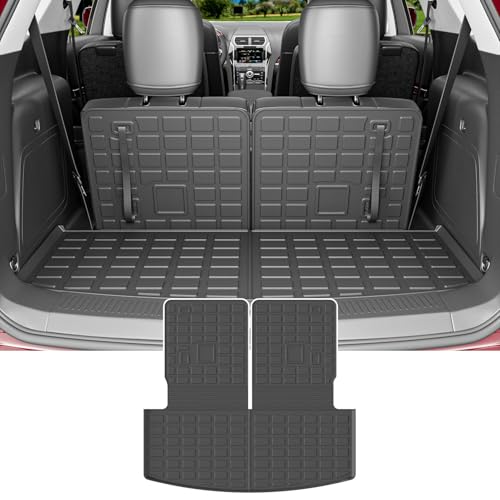


While the base curb weight offers a good starting point, not all Ford Explorers are created equal when it comes to their final weight. Several factors can significantly alter the numbers, reflecting the customization and capability options available across different models and generations.
Trim Levels and Optional Features
The trim level you choose for your Ford Explorer plays a substantial role in its overall weight. Higher trims often come with more standard features that add heft. For instance:
- Luxury and Convenience: Features like a panoramic sunroof, premium sound systems, power-folding third-row seats, and larger infotainment screens all contribute to extra pounds.
- Advanced Technology: Sophisticated driver-assistance packages, multiple camera systems, and enhanced interior materials found in top-tier trims (like the Platinum or King Ranch) can push the weight up.
- Heavy-Duty Components: Optional towing packages, which might include beefier radiators, transmission coolers, and reinforced hitches, are also significant weight adders.
A base Explorer XLT will naturally weigh less than a fully loaded Platinum or high-performance ST model, which boasts heavier engines and more extensive amenities.
Powertrain and Drivetrain Choices
The engine, transmission, and drivetrain configuration you select also have a direct impact on the Explorer’s weight:
- Engine Size and Type: Larger displacement engines, like the powerful EcoBoost V6 found in ST models, are inherently heavier than smaller four-cylinder options or the naturally aspirated V6s. Hybrid powertrains, while fuel-efficient, introduce the weight of the battery pack and electric motor components, often making them heavier than their gasoline-only counterparts.
- Drivetrain: Choosing an All-Wheel Drive (AWD) system over a standard Rear-Wheel Drive (RWD) setup adds the weight of the extra differential, driveshafts, and transfer case. This can amount to an increase of 100-200 pounds or more, depending on the specific system.
So, an AWD Explorer with a powerful V6 engine and numerous luxury options will predictably tip the scales significantly more than a base RWD model with a standard engine.
Why Ford Explorer Weight Matters: Practical Implications
Understanding your Ford Explorer’s weight isn’t just for car enthusiasts; it has tangible, real-world implications for its performance, safety, and utility. These numbers directly influence how your vehicle behaves on the road and what it can safely carry or tow.
Performance, Fuel Economy, and Handling
The weight of your Explorer affects its driving dynamics in several critical ways:
- Fuel Economy: A heavier vehicle requires more energy to move, accelerate, and stop. Consequently, heavier Ford Explorers (especially when fully loaded) will generally achieve lower miles per gallon (MPG) compared to lighter configurations. Every extra pound translates to slightly more work for the engine.
- Acceleration and Braking: More mass means slower acceleration times and, crucially, longer braking distances. It takes more force and distance to bring a heavier vehicle to a complete stop, a critical safety consideration.
- Handling and Ride Quality: While heavier vehicles can sometimes feel more planted on the highway, excessive weight can compromise agility and responsiveness. The suspension system works harder, and the vehicle may exhibit more body roll in turns.
For everyday driving, being mindful of the weight of passengers and cargo can help optimize your Explorer’s performance and efficiency.
Towing Capacity and Payload Limitations
Perhaps one of the most significant reasons to understand Explorer weight specs is for towing and hauling. GVWR and curb weight directly determine your practical limits:
- Payload Capacity: This is the maximum weight your Explorer can carry, including passengers, cargo, and any tongue weight from a trailer. It’s calculated by subtracting the curb weight from the GVWR. Exceeding this limit can dangerously strain your vehicle’s tires, suspension, brakes, and chassis.
- Towing Capacity: Your Explorer has a maximum tow rating, but remember that the weight of passengers and cargo inside your Explorer directly reduces the amount of weight you can safely tow. For example, if your Explorer has a 1,500-pound payload capacity and you load it with 500 pounds of people and gear, you only have 1,000 pounds of payload remaining for the trailer’s tongue weight.
- Safety and Legality: Overloading a vehicle is not only dangerous (risking loss of control, tire blowouts, and brake failure) but also illegal in many jurisdictions. Always check your Explorer’s specific payload and towing limits, typically found on a sticker in the driver’s side door jamb or in the owner’s manual.
Knowing these limits ensures you operate your Ford Explorer safely and effectively, whether you’re moving furniture, taking a family road trip, or pulling a boat.
Conclusion
Understanding the Ford Explorer’s weight specifications, from its fundamental curb weight to the critical Gross Vehicle Weight Rating (GVWR), is far more than just knowing a number. It’s about safety, performance, and maximizing the utility of your SUV. We’ve explored how various factors like trim levels, optional features, and powertrain choices contribute to these weight variations, and critically, why these numbers directly impact everything from fuel efficiency to your ability to safely tow and haul.
Before you load up for a journey or hitch a trailer, always consult your specific Explorer’s owner’s manual or the vehicle’s door jamb sticker for the exact weight ratings. Armed with this knowledge, you can ensure your Ford Explorer continues to deliver optimal performance, efficiency, and safety for all your adventures.
❓ Frequently Asked Questions
How much does a Ford Explorer typically weigh across different generations?
Modern Ford Explorers (2020-present) generally range from 4,300 to 4,700 lbs curb weight, while older generations like the 5th gen (2011-2019) were often between 4,400 and 4,900 lbs, showcasing evolution in design, materials, and features like electrification over time.
What’s the difference between curb weight and GVWR for a Ford Explorer?
Curb weight is the weight of the empty vehicle, including all standard equipment, fluids, and a full tank of fuel, but without passengers or cargo. GVWR is the maximum total weight allowed for the fully loaded vehicle, encompassing the curb weight plus passengers, cargo, and any accessories, ensuring safe operation.
Which Ford Explorer trims or engine types are the heaviest?
Generally, higher trims with more luxury features, larger engines (like the 3.0L EcoBoost in ST/Platinum models), and especially hybrid variants tend to be heavier. 4WD configurations also add weight compared to their 2WD counterparts due to the extra drivetrain components and associated hardware.
How does the weight of a Ford Explorer impact its towing capacity and payload?
The GVWR directly determines the maximum payload capacity (GVWR minus curb weight), which is how much weight you can add in passengers and cargo. The overall vehicle weight, combined with engine power and chassis strength, is a key factor in its maximum towing capacity; a heavier base can sometimes provide better stability for towing.
Can I find the exact weight of my specific Ford Explorer model?
Yes, the precise curb weight and GVWR for your specific Ford Explorer model can typically be found in your owner’s manual, on a sticker located inside the driver’s side door jamb (often labeled ‘Tire and Loading Information’), or by checking Ford’s official specification sheets for your exact model year and trim configuration online.
What are the fuel economy implications of a heavier Ford Explorer?
Heavier vehicles generally require more energy to move and accelerate, which can lead to slightly lower fuel efficiency (MPG) compared to lighter vehicles with the same engine and driving conditions. While the difference per trim might seem small, cumulative weight from features and drivetrains can noticeably impact overall fuel consumption over time.
Ford Explorer Weight by Trim Level (2020–2025)
The Explorer’s trim level is one of the biggest factors in its weight — the Platinum and ST trims carry significantly more equipment than the base XLT. Here is the breakdown by trim across the current generation.
Specs based on 2022–2025 Ford Explorer (7th gen) owner’s manual and Ford.com specifications. Weights include standard equipment and full fluids. Check your door jamb sticker for your exact vehicle’s GVWR.
Ford Explorer Towing Capacity by Year (2011–2025)
Towing capacity changed significantly across Explorer generations. The 6th gen (2020+) brought major upgrades. Here is how it broke down across model years.
⚖️ See Also: Vehicle Weight Guides
Looking for weight specs on other vehicles? Here are our detailed weight guides with curb weight, GVWR, payload, and towing data by trim and year.
- See also: Ford F-250 Weight Guide — Curb weight, GVWR & payload by trim level (2024–2025)
- See also: Ford Maverick Towing & Weight Guide — Hybrid vs EcoBoost specs compared
- See also: Ford Explorer Weight Guide — Weight by trim level and towing capacity by year
- See also: Mazda MX-5 Miata Weight Guide — Lightest sports car compared by generation