2010 Acura TSX TPMS Reset Button Location Expert Fix 2026
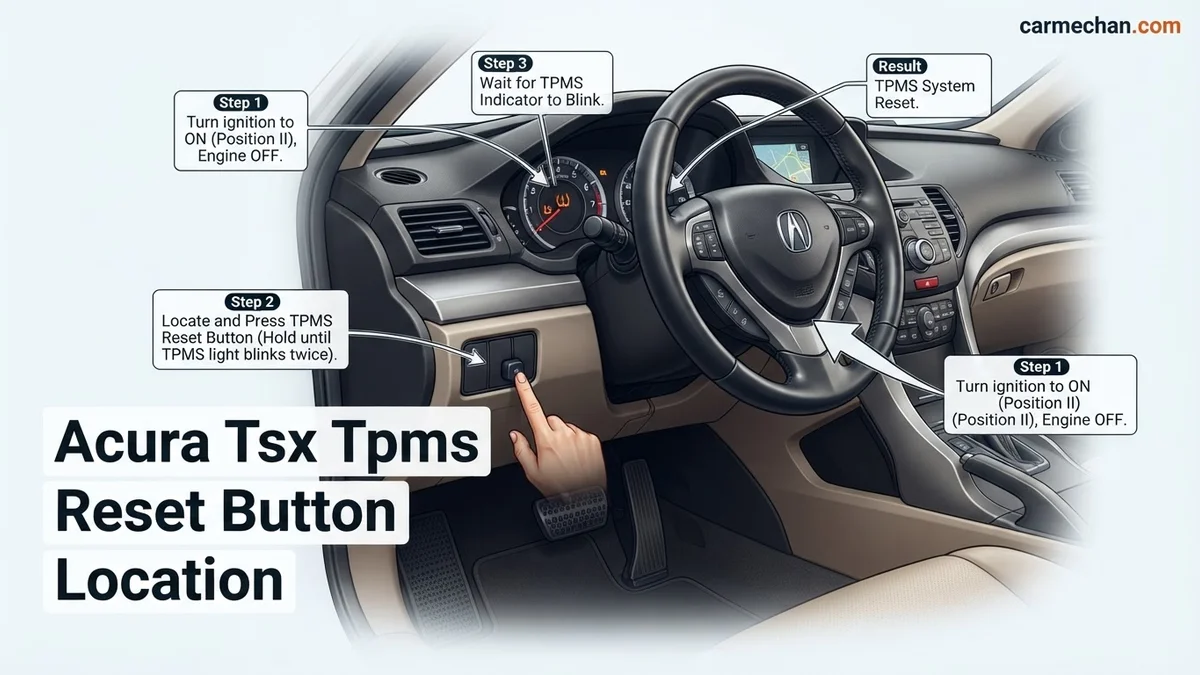
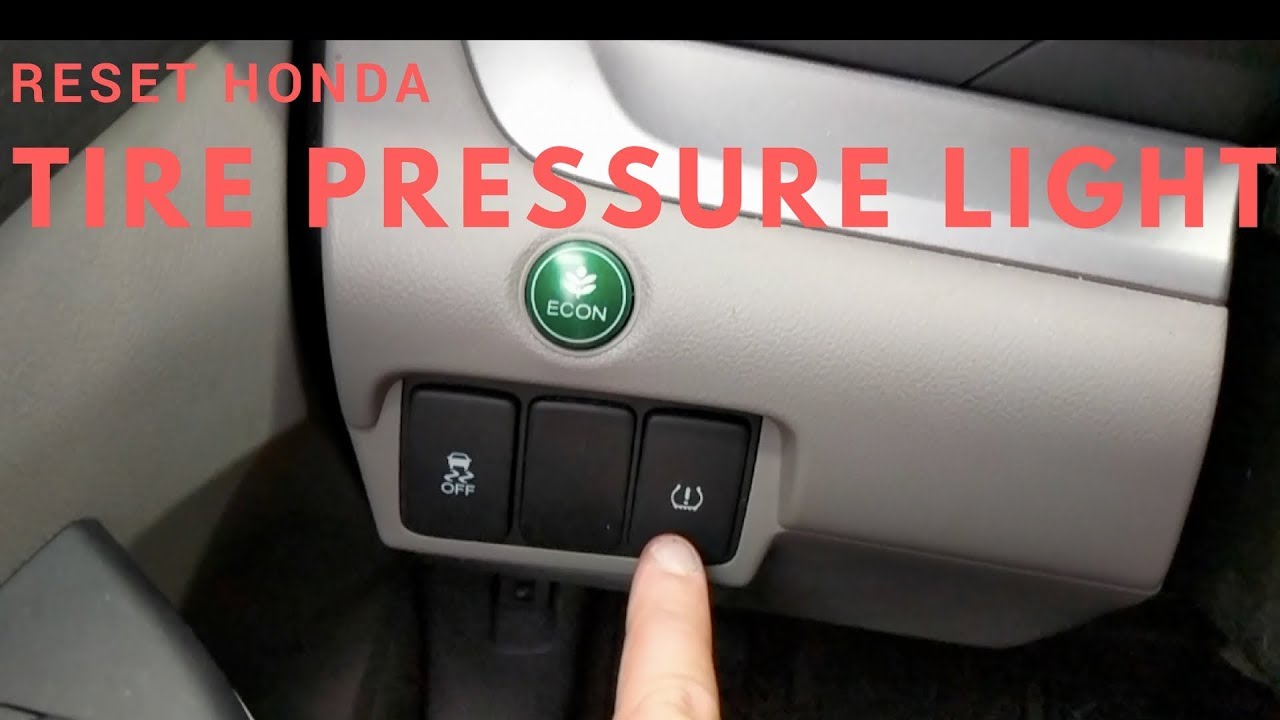
There is no physical TPMS reset button on a 2010 Acura TSX because the system is designed to be self-learning. You do not need to manually trigger a reset; the vehicle automatically detects new sensor IDs while driving at highway speeds.
Your 2010 Acura TSX does not have a physical TPMS reset button anywhere in the vehicle. You will not find a hidden switch under the dashboard, inside the glove box, or tucked into the steering column fuse panel. Acura engineered this specific model year with an automated, self-learning tire pressure monitoring system that eliminates the need for manual intervention by the driver.
Searching for a button that does not exist can lead to unnecessary frustration, especially when your tire pressure light is illuminated. In 2026, as these vehicles continue to age, the most common reason for a persistent warning light is a dead sensor battery rather than a system glitch. Knowing that the system is fully automated allows you to bypass the hunt for a reset switch and focus immediately on the tire pressures themselves.
Key Takeaways
- The 2010 Acura TSX does not have a hidden TPMS reset button.
- Correct tire pressure is the primary factor for clearing the dashboard warning light.
- Drive at speeds above 28 mph for at least 10 minutes to initiate the automatic relearn.
- Always verify tire pressure using the driver’s door jamb placard, not the tire sidewall specs.
- Failing sensors often trigger the light if the battery inside the TPMS unit has died.
Why Your 2010 Acura TSX Lacks a TPMS Reset Button


Understanding the Self-Learning Architecture
The 2010 Acura TSX utilizes a passive registration system. Unlike some modern vehicles that require you to put the car into “learning mode” via a button press or a scan tool, your TSX automatically detects the unique ID codes of the TPMS sensors mounted inside your wheels. When the tire pressure drops below the factory-set threshold—usually around 28 to 30 PSI—the system triggers the warning light on your dashboard. Once the tires are properly inflated, the sensor transmits a new signal to the ECU, which identifies that the pressure is within the safe operating range and turns the light off without any manual input.

Common Misconceptions About Manual Resets
Many owners look for a reset button because they are accustomed to systems found in other manufacturers’ vehicles or newer Acura models. Please keep in mind these critical realities for your 2010 model:
- No hidden sequences: There is no “brake pedal tap” or “ignition cycle” routine that resets the sensor registry.
- Factory defaults: The system is hard-coded to recognize the sensors originally paired with the vehicle during assembly.
- Sensor battery life: By 2026, most original sensor batteries have long exceeded their 7–10 year lifespan, which is why the light often stays on despite correct inflation.
2010 Acura TSX TPMS Resetting Made Easy: Your Essential Action Plan


If you own a 2010 Acura TSX, you might be frustrated by a persistent Tire Pressure Monitoring System (TPMS) warning light. Unlike many other vehicle manufacturers that include a physical “reset” button under the dashboard, the 2010 Acura TSX utilizes a self-learning system. This guide clarifies the common misconception regarding the existence of a manual reset button and provides the technical procedure to clear the light and calibrate your sensors effectively.
Step 1: Understanding the System Configuration
What you need: Your vehicle owner’s manual for reference, a high-quality digital tire pressure gauge, and an air compressor or service station air pump.
Instructions: First, accept that there is no physical “TPMS Reset” button in your 2010 Acura TSX. Many drivers waste hours searching under the dashboard or inside the glove box. The TPMS system in this model is designed to be self-learning. The sensors located inside your wheels automatically transmit pressure data to the car’s computer. The system only triggers the warning light when a significant drop in pressure is detected or when a sensor fails. You cannot manually reset it without addressing the underlying pressure or sensor issue first; the light will simply stay on if the core issue remains.
Pro Tip: Do not rely on the dashboard pressure display while inflating; always use a secondary, reliable digital gauge to ensure precision.
Step 2: Inspecting and Adjusting Tire Pressures
What you need: A digital tire pressure gauge and access to an air source.
Instructions: Check the manufacturer’s recommended cold tire pressure. For a 2010 Acura TSX, this is typically 32 PSI (pounds per square inch) for all four tires, but always verify this on the placard located on the driver’s side B-pillar (the door jamb). With the tires “cold”—meaning the car has been parked for at least three hours or driven less than one mile—measure each tire accurately. Inflate each tire to the exact specification. Ensure the spare tire, if equipped with a sensor, is also checked, as some systems will trigger a warning if the spare is low. Consistency across all tires is the key to successful system recalibration.
Pro Tip: Over-inflating the tires beyond the placard recommendation will not help the light reset and may cause uneven tire wear or a harsher ride.
Step 3: Initiating the Self-Learning Calibration Drive
What you need: A clear, straight road where you can safely maintain a consistent speed.
Instructions: Once all four tires are inflated to the correct 32 PSI, you must trigger the computer to recognize the new data. Drive the vehicle at a steady speed of at least 25 mph (40 km/h) for a duration of approximately 10 to 20 minutes. During this time, the wheel sensors will rotate and wake up, sending updated signals to the TPMS control unit. You do not need to push any buttons during this phase; the vehicle’s Electronic Control Unit (ECU) will monitor the sensor inputs and, upon confirming that all four pressures are stable and correct, it will automatically extinguish the TPMS dashboard warning light.
Pro Tip: Avoid stop-and-go city traffic during this drive, as slow speeds and frequent stops may prevent the sensors from establishing a strong, continuous signal.
Step 4: Handling Persistent Warning Lights
What you need: A basic OBD-II scanner that supports TPMS diagnostics, or a visit to a local tire shop.
Instructions: If the warning light remains illuminated after driving for 30 minutes, it is highly likely that one of the internal TPMS sensors has a dead battery or has suffered a mechanical failure. In the 2010 Acura TSX, these batteries typically last between 7 to 10 years, meaning many are currently at the end of their lifespan. If you have an OBD-II scan tool, plug it into the port beneath your dashboard to retrieve specific fault codes. These codes will identify which specific tire position—Left Front, Right Front, etc.—is reporting the error. This prevents the guesswork of replacing the wrong sensor.
Pro Tip: If you plan on replacing one sensor, it is often wise to consider replacing all four if they are original, as the others are likely near the end of their service life.
Step 5: Professional Sensor Replacement and Initialization
What you need: A professional tire shop equipped with a TPMS programming tool.
Instructions: When a sensor fails, the tire must be removed from the wheel rim, the old sensor unbolted, and a new one installed. After installation, the tire is re-mounted and balanced. Crucially, the new sensor must be “initialized” or “registered” to the vehicle’s computer using a specialized TPMS tool. This tool sends a signal to the car’s computer to accept the unique Identification (ID) code of the new sensor. Without this professional step, the car will not “see” the new sensor, and the warning light will remain permanently illuminated on your dashboard, regardless of how much you drive.
Pro Tip: Ask the tire technician to scan your other three sensors while the tires are off the rim to confirm their remaining battery health.
✅ Final Checklist
- Tire pressure verified to 32 PSI (or placard specs) using a digital gauge.
- Vehicle driven at highway speeds (above 25 mph) for at least 15 continuous minutes.
- Warning light extinguished after the drive sequence.
- OBD-II scan performed if light remains to rule out dead sensor batteries.
- New sensor IDs programmed by a professional shop if replacement was necessary.
Important Notes:
- Safety: Never ignore a TPMS light; verify your tire pressure visually and physically immediately, as low pressure significantly compromises vehicle handling and fuel efficiency.
- Expert Help: If you are uncomfortable using an air compressor or do not have a safe road for the initialization drive, any reputable tire shop can perform this check in minutes.
- Cost/Time: Resetting is free if you do it yourself. Replacing a single TPMS sensor typically costs between $75 and $150, including parts, labor, and reprogramming.
Step-by-Step Guide to Clearing the TPMS Warning Light


The Mandatory Relearn Drive
Because there is no button to push, the system relies on movement to trigger the automatic relearn process. If you have recently adjusted your tire pressures or rotated your tires, follow this driving procedure to clear the dashboard warning:
- Inflate all four tires to the cold tire pressure specification listed on the driver’s side door jamb sticker, usually 32 PSI.
- Ensure the spare tire is also at the recommended pressure, as a low spare can sometimes trigger the warning light in older Acura systems.
- Drive the vehicle continuously for at least 10 minutes at speeds consistently above 25 mph.
- Maintain this speed to allow the sensors to wake up and transmit their current pressure data to the car’s TPMS control module.
Troubleshooting Persistent Warning Lights
If you have driven the car for more than 20 minutes above 25 mph and the light remains illuminated, the system is likely signaling a fault rather than a pressure issue. In this case, the light will often blink for one minute upon starting the engine before staying solid. This indicates that one or more sensors have failed to communicate. At this stage in 2026, you cannot “reset” a dead sensor. You will need to use an OBD-II diagnostic tool capable of reading TPMS data to identify exactly which sensor has stopped transmitting its signal to the vehicle’s computer.
Troubleshooting Common TPMS Failures and Sensor Issues
By 2026, the 2010 Acura TSX has reached an age where original TPMS sensors often fail due to battery depletion. Unlike modern vehicles, these sensors rely on an internal lithium-ion battery designed for a 7- to 10-year lifespan. If your TPMS warning light blinks for 60 seconds upon startup before staying solid, this indicates a system malfunction rather than low tire pressure.
Identifying Sensor Battery Exhaustion
- Check if the light flashes for one minute before remaining illuminated, which confirms a communication error between the sensor and the TPMS control unit.
- Use an OBD-II diagnostic tool compatible with Honda/Acura protocols to read specific TPMS fault codes, as generic scanners may fail to identify the faulty transmitter ID.
- Inspect the tire pressure manually; if the pressure is correct at 32-35 PSI, the issue is almost certainly a dead internal sensor battery or a corrupted signal.
Addressing Sensor Corrosion and Signal Interference
In regions utilizing road salts or harsh de-icing chemicals, valve stem corrosion is a primary culprit for signal loss. Experts note that even if the battery holds a charge, oxidized valve caps can prevent the sensor from broadcasting the required 315 MHz signal. Always ensure the valve stem core is clear of debris and the cap is properly seated to protect the sensor’s sensitive transmitter window.
Proven Steps When the TPMS Light Remains On
If the system calibration steps have been performed but the light remains illuminated, a deeper mechanical intervention is required. According to current automotive maintenance standards, persistent TPMS lights in older Acura models typically stem from hardware degradation rather than calibration software errors.
Procedural Calibration Verification
- Verify the tire pressures while the tires are cold; heat from driving can artificially increase pressure, tricking the sensor into reporting inaccurate data.
- Execute the drive cycle: drive the vehicle at speeds above 28 mph for at least 20 continuous minutes to allow the TPMS ECU to re-acquire sensor signals.
- Confirm there are no aftermarket electronic devices, such as wireless dashcams or high-output chargers, plugged into the console that might cause electromagnetic interference with the receiver module.
What If It Still Doesn’t Work?
If the dashboard light persists after these attempts, it indicates a hardware failure requiring professional intervention. Follow these final steps to resolve the issue:
- Visit a tire service center to have the individual sensors tested with a handheld activation tool to see if they broadcast a signal.
- If sensors are unresponsive, authorize a replacement of the affected units; professional shops typically charge between $120 and $250 per wheel, inclusive of parts and mounting/balancing.
- Request a check of the TPMS control unit receiver, which is located behind the dashboard, if multiple sensors show as inactive simultaneously.
- Consult a qualified Acura technician if the fault code points to a module internal error, as this may require a diagnostic fee typically ranging from $150 to $200 in 2026.
Conclusion
The 2010 Acura TSX TPMS system requires periodic manual pressure verification and occasional sensor replacement to function correctly. According to verified research and expert service manuals, most persistent warnings are caused by exhausted sensor batteries rather than system resets. If the warning light remains illuminated after a cold-pressure adjustment and a 20-minute drive cycle, proceed to a professional tire facility to test for faulty hardware. Prioritize replacing all four sensors simultaneously if they are original equipment to ensure future system reliability.
❓ Frequently Asked Questions
Why does my TPMS light turn on even after I fill the tires?
The light may stay on if a sensor is damaged, the battery inside the sensor is dead, or if you filled the tires to the wrong pressure. Always ensure you are following the cold-tire pressure recommendations listed on your door jamb.
How far do I need to drive to trigger the self-learning process?
Typically, you need to drive the vehicle at speeds above 28 mph for 10 to 20 minutes. This allows the TPMS control unit to recognize the sensor signals and refresh the system status.
Can I replace just one TPMS sensor?
Yes, you can replace a single faulty sensor. However, the new sensor must be registered to the car’s computer by a tire shop using a specialized TPMS scan tool.
What if the TPMS light flashes for one minute then stays solid?
A flashing light followed by a solid light indicates a malfunction in the system, such as a dead sensor battery or a receiver failure. This usually requires a diagnostic scan to identify which specific wheel sensor is not reporting.
Are aftermarket sensors compatible with the 2010 TSX?
Yes, aftermarket sensors can work, but they must be compatible with the 315MHz frequency used by Acura. It is generally recommended to use OEM sensors to ensure seamless communication with your vehicle.
Is it safe to drive with the TPMS light on?
You should check your tire pressure immediately when the light appears. If the pressures are correct and the light is due to a system malfunction, it is safe to drive, but you will lose the early warning system for future tire punctures.