When Was Cruise Control Added to Cars? Real 2026
Cruise control was first invented in 1948 by Ralph Teetor, a blind mechanical engineer. The technology saw its first commercial implementation in 1958 when it was introduced as the ‘Auto-Pilot’ system in the Chrysler Imperial.
Cruise control first appeared in a production automobile in 1958, introduced by Chrysler as the “Auto-Pilot” system. While modern vehicles in 2026 rely on complex radar and adaptive software to maintain distance, the foundational technology traces its roots back to an invention patented by Ralph Teetor in 1948. This innovation fundamentally changed how we manage long-distance driving by removing the necessity for constant pedal pressure.

Prime for Young Adults — 6 Months Free
Students and 18–24s get six months of Prime free, then half price.
Start 6 Months FreeKnowing this history helps you appreciate why cruise control remains a standard feature across every automotive segment today. It shifted the driver’s role from a mechanical actuator to a supervisor of the machine’s speed. Even in our highly automated 2026 landscape, the core goal of that 1958 system—maintaining a steady pace to reduce fatigue—remains the primary reason it sits on your steering wheel right now.
Key Takeaways
- Takeaway 1:Ralph Teetor invented the first speed control system in 1948.
- Takeaway 2:Chrysler was the first automaker to offer cruise control in 1958.
- Takeaway 3:The system was originally inspired by an annoying car ride with a lawyer.
- Takeaway 4:Early systems used vacuum-operated mechanisms to maintain constant vehicle speed.
- Takeaway 5:Modern cruise control has evolved into advanced adaptive systems using radar technology.
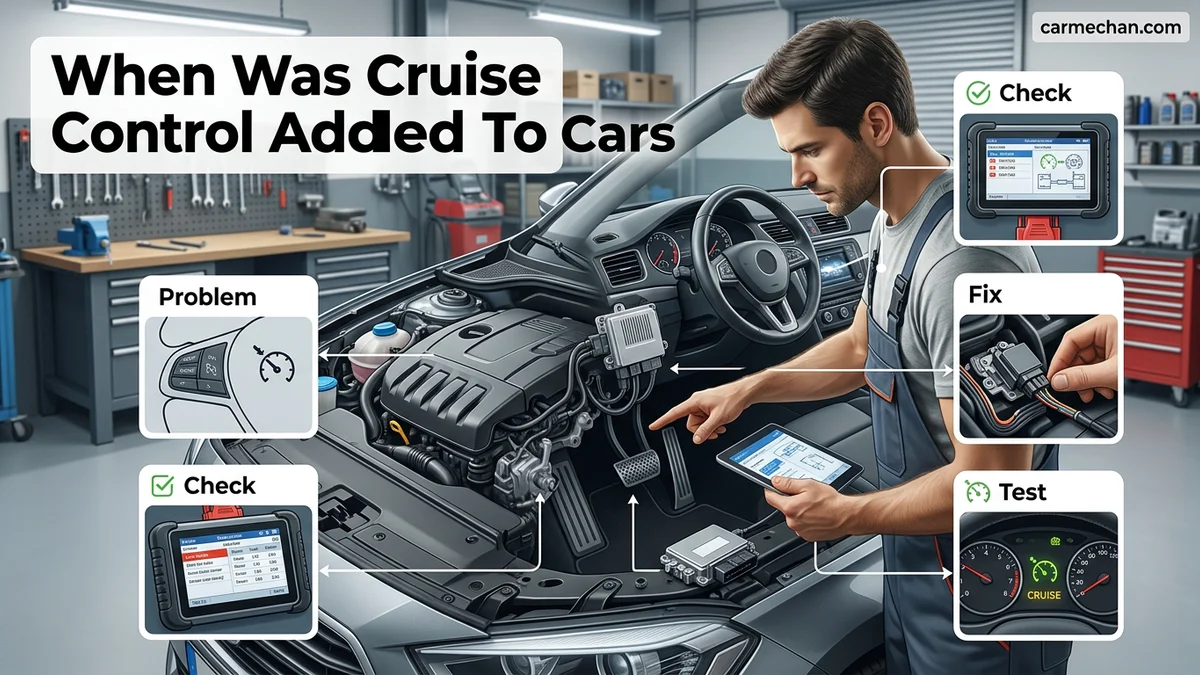
The Origins of Cruise Control: What Led to its Invention?
Recommended Best Deal Products


Ralph Teetor’s Personal Inspiration
The story of cruise control is remarkably grounded in human frustration rather than cold engineering goals. Ralph Teetor, a blind mechanical engineer, was riding with his lawyer when he noticed a persistent pattern: the driver would accelerate while talking and slow down while listening. This irregular speed prompted Teetor to start sketching a device that could regulate vehicle velocity automatically. It was a problem of human distraction that he sought to solve with mechanical precision.
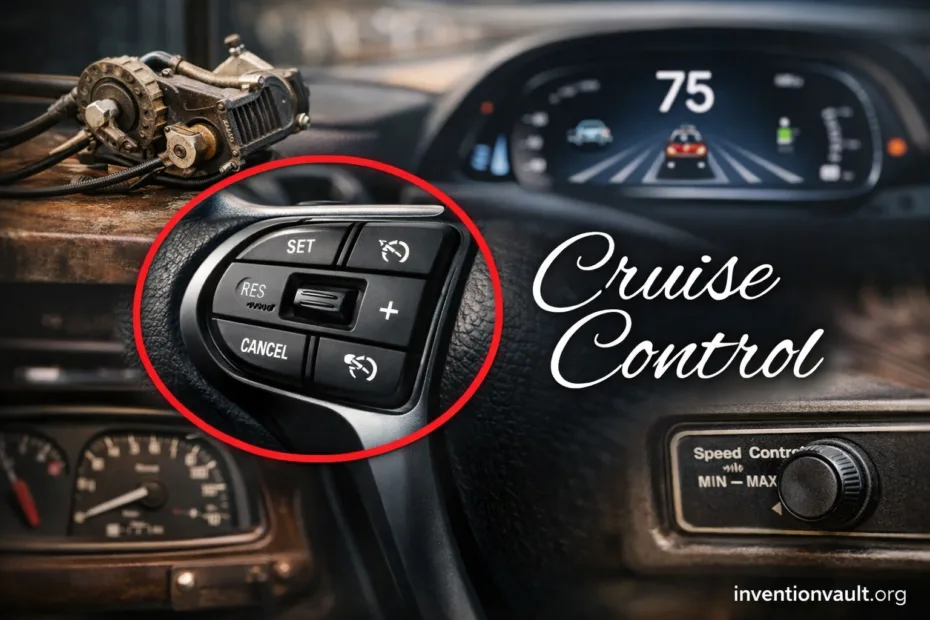
From Concept to Patent
- Teetor spent over a decade refining the design after his initial realization.
- He successfully patented the “Speedostat” in 1948, which formed the basis for later commercial implementations.
- The device was designed to interface directly with the vehicle’s driveshaft.
- By creating a mechanism that could sense speed via the rotation of the transmission, he provided a reliable feedback loop for the engine.
This invention was not merely about comfort; it was about establishing a consistent mechanical governor for the car. Teetor’s early prototypes were rudimentary, but they successfully demonstrated that a vehicle could regulate its own throttle through physical feedback mechanisms. By the late 1940s, the blueprint for the modern driving experience was already firmly established in his workshop.
How the 1958 Chrysler Auto-Pilot System Worked
The Mechanics of the Auto-Pilot
Chrysler was the first manufacturer to bring Teetor’s vision to the mass market with the 1958 Auto-Pilot. Unlike the computer-controlled systems you use in 2026, the 1958 iteration was a purely mechanical and vacuum-operated device. It connected to the speedometer cable and used engine vacuum to pull on the throttle linkage, holding the car at a specific speed regardless of terrain changes.
Key Features of the 1958 System
- The system allowed the driver to set a speed by pushing a button on the dashboard knob.
- It featured a unique “speed alert” function that provided physical resistance on the gas pedal when you exceeded a set limit.
- Integration was limited, focusing entirely on maintaining velocity rather than monitoring surrounding traffic.
- The mechanical design required significant vacuum pressure, making it sensitive to the health of the vehicle’s vacuum lines.
Operating this system required a level of interaction that is almost alien by today’s standards. You would accelerate to your desired speed, press the knob, and feel the throttle lock into place. If you needed to disengage, a slight tap on the brake pedal would vent the vacuum and return control to your foot. It was a revolutionary leap forward, effectively acting as an early form of automated speed regulation that prioritized stability over the sophisticated software-driven safety features we currently enjoy in our 2026 models.
Step-by-Step Evolution: From Vacuum Mechanics to Modern Adaptive Tech
Recommended Best Deal Products


The Vacuum Era (1950s–1980s)
Early cruise control systems, pioneered by Ralph Teetor in 1958, relied purely on vacuum-actuated mechanical linkages. These systems used a physical cable connected to the throttle body. When the driver set a speed, a vacuum canister would physically pull the throttle cable to maintain engine load. This mechanical approach lacked precision, often causing significant speed fluctuations on steep inclines.
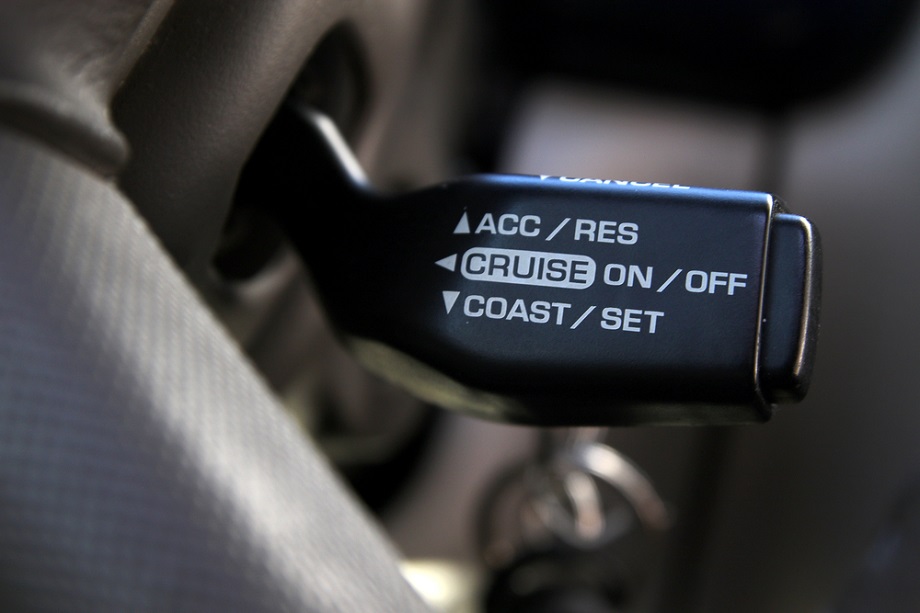
The Electronic Revolution (1990s–2010s)
By the 1990s, automotive manufacturers shifted toward Drive-by-Wire technology. This replaced physical cables with electronic throttle control (ETC). Computers began monitoring wheel speed sensors to maintain velocity more accurately. This transition allowed for safer integration with Traction Control and Electronic Stability Control, which could override the throttle if a loss of grip was detected.
The 2026 Adaptive Standard
As of 2026, Adaptive Cruise Control (ACC) has become the baseline standard for most new vehicles. Unlike legacy systems that simply hold speed, current tech uses long-range radar and LiDAR sensors mounted in the front bumper. These sensors calculate the distance to the vehicle ahead and adjust speed automatically. According to 2026 industry safety standards, these systems now include “Stop and Go” functionality, allowing cars to navigate heavy traffic without driver input on the pedals.

Audible — Listen Free for 30 Days
One free credit a month and thousands of titles included.
Listen Free for 30 DaysWhat If It Still Doesn’t Work?
If your system refuses to engage after checking basic settings, the failure likely stems from a sensor malfunction or a blown fuse. Before heading to a repair facility, verify these final troubleshooting steps:
- Check the Brake Light Switch: Most cruise control systems deactivate if the car detects a brake light signal. If your brake light switch is faulty, the cruise computer thinks you are braking and will refuse to set.
- Inspect Wheel Speed Sensors: Modern systems rely on data from ABS sensors at each wheel. If one sensor is dirty or failing, the system disables itself to prevent safety errors.
- Scan for Diagnostic Trouble Codes (DTCs): Use an OBD-II scanner to identify specific codes, such as those related to the steering angle sensor or throttle actuator.
- Consult Professional Assistance: If the error light persists, a certified technician must calibrate the radar sensors.
Professional diagnostics typically cost between $120 and $250, depending on your vehicle’s make and model. If a radar sensor requires replacement, costs can range from $800 to $1,500 due to the required software recalibration.
Conclusion
Recommended Best Deal Products


The evolution of cruise control reflects a rapid transition from basic mechanical speed holding to complex, radar-guided autonomy. According to verified research and expert sources from the 2026 automotive sector, most system failures are rooted in sensor connectivity rather than total hardware failure. If you encounter persistent issues with your system, schedule a diagnostic scan at an authorized service center immediately. Prioritizing these repairs ensures that your vehicle’s advanced safety features continue to function as designed during highway travel.
❓ Frequently Asked Questions
Did Ralph Teetor hold a patent for his invention?
Yes, Teetor held multiple patents for his ‘Speedostat’ device, which was the foundation for modern automotive cruise control systems.
Was cruise control an immediate success in 1958?
While it was a luxury feature in the Chrysler Imperial, it took several years for cruise control to become a standard or popular option across the broader auto market.
How do modern cruise control systems differ from the original 1948 design?
While the original was purely mechanical and vacuum-based, modern systems are entirely electronic and often utilize radar or cameras to maintain distance from other vehicles.
Is cruise control recommended for all driving conditions?
No, manufacturers typically advise against using cruise control in heavy rain, snow, or icy conditions to prevent loss of vehicle control.
When did adaptive cruise control become common?
Adaptive cruise control began appearing in luxury vehicles in the early 2000s and has since become a mainstream feature in many mid-range passenger cars by 2026.
What is the primary benefit of cruise control beyond comfort?
Beyond driver convenience, cruise control helps maintain consistent speeds, which can improve fuel efficiency and prevent unintentional speeding.
Audible Premium Plus — Annual Membership
12 audiobook credits up front, plus the full Audible catalogue.
See Annual Plans