How To Transfer Car Title After Death Of Owner 2026 2026
Last Updated on September 1, 2026 by Ryan
Transferring a car title after an owner’s death involves identifying the owner’s legal status, gathering necessary documents like the death certificate and original title, and then following state-specific Department of Motor Vehicles (DMV) or probate court procedures.
The exact process hinges on factors such as whether a will exists, if there was joint ownership, or if the estate qualifies for a small estate affidavit.
Navigating how to transfer a car title after the death of an owner can feel overwhelming during a difficult time. We understand the sensitivity of this situation. This guide provides a clear, step-by-step process to simplify title transfer for you in 2026.
Our aim is to provide practical steps and clarity for bereaved family members, executors, or those assisting them. We will address common scenarios and provide guidance on necessary documentation.
Transferring the title correctly ensures legal ownership and avoids future complications. We will begin by outlining the essential steps involved in transferring a vehicle title.
Key Takeaways


- State laws for title transfer vary greatly.
- Probate is not always necessary for vehicles.
- Gather all required documents diligently.
- Joint ownership simplifies the transfer process.
- Be aware of potential fees and taxes.
What 7 Steps Transfer a Car Title After Death?


Transferring a car title after an owner’s death involves several critical steps to ensure legal compliance and a smooth transition of ownership.
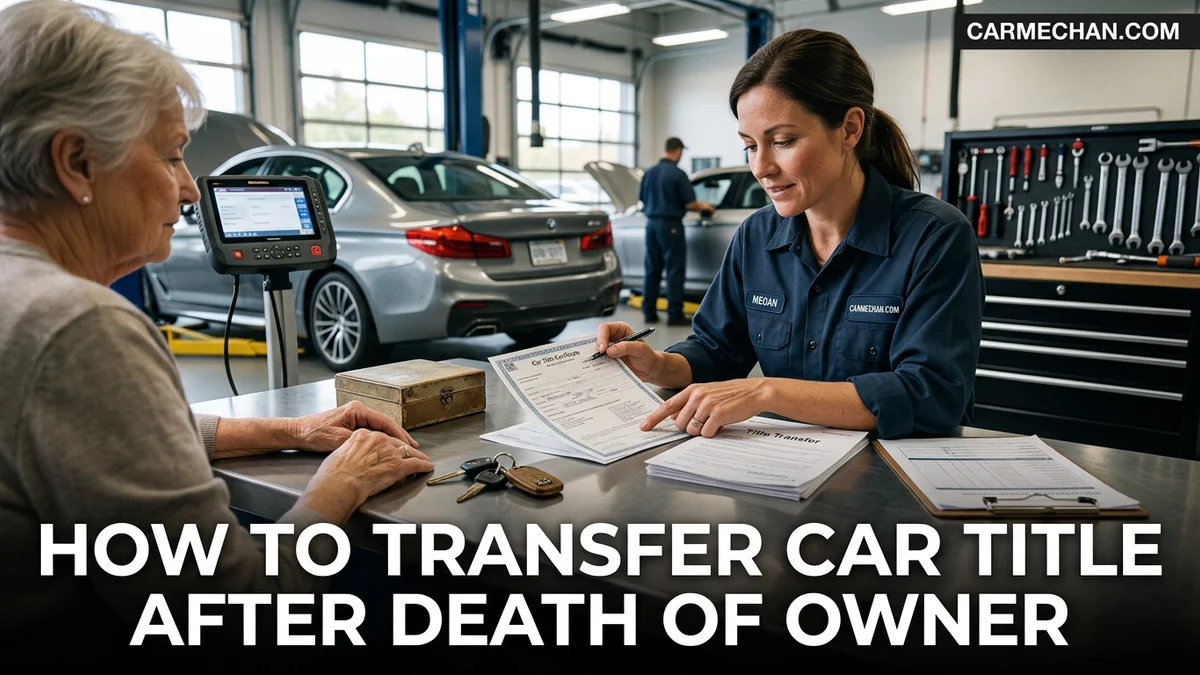
-
Determine Ownership Status
First, identify if the deceased was the sole owner, a joint owner, or if the vehicle was part of a trust. This initial check dictates the subsequent transfer path.
-
Gather Essential Documents
You will need the death certificate, the original car title, and potentially the owner’s will or court documents. Having these ready expedites the process.
-
Understand Estate Type
Determine whether the estate will go through probate or qualifies for a non-probate transfer, such as a small estate affidavit. This significantly impacts required paperwork.
-
Contact Local DMV
Reach out to your state’s Department of Motor Vehicles (DMV) or equivalent agency. They provide specific forms and instructions tailored to your state’s laws.
-
Complete Necessary Forms
Fill out all required state-specific forms accurately. This may include an application for title, odometer disclosure, and potentially an affidavit of heirship.
-
Submit Required Paperwork
Present the completed forms, all supporting documents, and applicable fees to the DMV or probate court. Ensure you have copies of everything submitted.
-
Obtain New Title
Once processed, the state agency will issue a new car title in the name of the new legal owner. This officially completes the transfer.
To properly execute these steps, you will need to assemble a specific set of documents.
What Documents Transfer a Car Title After Death?
The successful transfer of a car title after an owner’s passing depends heavily on having all the correct documentation readily available.
-
Official Death Certificate
You will need one or more certified copies of the death certificate. The DMV typically requires an official copy for their records when processing the transfer [EXTERNAL LINK: Learn about obtaining death certificates from the CDC].
-
Original Vehicle Title
The original car title is crucial as it proves prior ownership. If lost, you might need to apply for a duplicate title first [INTERNAL LINK: Steps for replacing a lost car title].
-
Owner’s Last Will
If a will exists, it dictates who inherits the vehicle. The will, along with probate court orders, will guide the title transfer to the rightful beneficiary.
-
Court Orders Letters
For estates going through probate, “Letters Testamentary” (if there’s a will) or “Letters of Administration” (if no will) empower the executor or administrator to act on behalf of the estate.
-
Affidavit of Heirship
In some states and for smaller estates without a will, an Affidavit of Heirship or Small Estate Affidavit may be used. These state-specific documents legally identify the rightful heirs to the vehicle.
-
Valid Identification Proof
The new owner or the executor of the estate will need to provide valid government-issued identification. This confirms their identity for the transfer process.
The specific combination of these documents will depend greatly on the individual circumstances surrounding the owner’s estate.
How Do 4 Scenarios Affect Title Transfer?
The path to transferring a car title can vary significantly depending on the legal specifics of the deceased owner’s estate.
If Owner Had Will
When the deceased owner had a valid will, the vehicle typically passes to the beneficiary named in the will. The executor, appointed in the will and approved by the probate court, uses “Letters Testamentary” to sign the title over to the heir. This process ensures the owner’s wishes are fulfilled.
If Owner Had No Will
If the owner passed away without a will (intestate), state intestacy laws determine who inherits the vehicle. Generally, the car goes to the surviving spouse or closest next of kin. The probate court issues “Letters of Administration” to an appointed administrator, who then facilitates the title transfer according to state law.
With Joint Ownership
A vehicle jointly owned with “rights of survivorship” is usually the simplest transfer. The surviving joint owner automatically assumes full ownership upon presentation of the death certificate to the DMV. The title often explicitly states “Joint Tenants with Right of Survivorship” or similar phrasing.
Using Small Estate Affidavit
Many states offer a simplified process for small estates, which often includes vehicles. If the total value of the deceased’s estate falls below a certain threshold, heirs can use a Small Estate Affidavit. This avoids full probate, making the transfer quicker. For example, some states allow this if the personal property value is under .
While these scenarios provide general guidance, it is crucial to remember that state laws dictate the precise procedures.
Where to Find State Specific Title Laws?
Because vehicle title transfer laws vary considerably, finding accurate state-specific information is a non-negotiable step.
Visit Your State DMV
The Department of Motor Vehicles (DMV), or its equivalent like the Bureau of Motor Vehicles (BMV) or Motor Vehicle Division (MVD), is your primary resource. Their official website often provides detailed instructions, downloadable forms, and contact information for local offices. Always look for documentation specific to deceased owners.
Consult Probate Court
If the estate is going through probate, the local probate court where the estate is being administered can provide guidance. They can clarify the necessary court orders and documents like Letters Testamentary or Letters of Administration required for the title transfer. They handle all formal legal processes.
Check State Attorney General
The State Attorney General’s office may offer consumer information regarding estate administration and vehicle transfers, though they typically do not handle individual cases. Their websites often provide general legal overviews. This can be a useful secondary resource for understanding legal frameworks.
Review Official State Websites
Many state government websites have portals dedicated to navigating various legal and administrative processes. Look for sections on estate planning, probate, or motor vehicle services. These sites often link directly to the specific forms and regulations you will need for a deceased owner car title transfer.
As you gather the necessary information and prepare to complete the transfer, be mindful of potential costs and timelines involved.
What Fees Apply to Title Transfers?
Transferring a car title after an owner’s death often involves more than just paperwork; it can also incur various fees and taxes.
Title Transfer Fees
Most states charge a basic fee to transfer a vehicle title into a new owner’s name. These fees vary significantly by state, typically ranging from . You can find the exact amount on your state’s DMV website.
Applicable Sales Taxes
Sales tax typically applies when a vehicle is purchased. However, whether it applies to an inherited vehicle depends on state law. Some states exempt inherited vehicles from sales tax, while others may apply it if the vehicle is subsequently sold by the heir.
Probate Court Costs
If the estate goes through probate, there will be court filing fees, and potentially attorney fees. These costs are part of the overall estate administration and can be substantial depending on the complexity of the estate. These fees are separate from the DMV title transfer fees.
Penalties for Delays
Many states impose penalties or late fees if a title transfer is not completed within a specific timeframe after the owner’s death. This period is typically . Checking your state’s deadline is essential to avoid extra charges.
General Processing Timeline
The time it takes to process a title transfer can vary. Simple cases, especially those with joint ownership, might be completed quickly at the DMV. Cases requiring probate court involvement will take longer due to legal processes. Allow for several weeks or even months in complex situations.
Understanding these details helps streamline the entire process, leading you to the final steps for title transfer.
How to Complete Your Car Title Transfer
Successfully navigating how to transfer a car title after the death of an owner requires diligence and attention to detail. We have covered the critical steps, necessary documents, and various scenarios you might encounter.
Remember that state laws are paramount. Always consult your local DMV or a legal professional for the most accurate and up-to-date information specific to your situation in 2026. This proactive approach ensures a smooth and legal transfer of vehicle ownership.
By following these guidelines, you can respectfully and correctly manage this important administrative task. Our goal is to empower you with the knowledge needed during a challenging time.
5 Common Questions About Car Title Transfer After Death
Can I Sell a Car If the Title Is Still in the Deceased Owner’s Name?
No, you generally cannot sell a car if the title is still in the deceased owner’s name. The title must first be transferred into the legal heir’s or estate’s name. Selling the vehicle prior to proper title transfer can lead to legal complications for both the seller and the buyer.
How Long Do I Have to Transfer a Car Title After Death?
The timeframe for transferring a car title after an owner’s death varies by state. Many states require the transfer to be completed within 30 to 90 days to avoid potential penalties or late fees. Always check your specific state’s DMV regulations for exact deadlines and requirements.
What If the Original Car Title Is Lost?
If the original car title is lost, the executor or legal heir will likely need to apply for a duplicate title. This process usually involves filling out a specific form, providing identification, and paying a fee to your state’s DMV. The duplicate title must be obtained before ownership transfer can occur.
Is Probate Always Required for a Car Title Transfer?
No, probate is not always required for a car title transfer. For jointly owned vehicles with rights of survivorship, the car can transfer directly to the surviving owner. Additionally, many states offer simplified small estate affidavit procedures if the deceased’s estate falls below a certain monetary threshold.
Who Pays the Taxes and Fees for the Transfer?
Typically, the new owner or the estate is responsible for paying the associated taxes and fees for the title transfer. These may include the title transfer fee, potential sales tax on the inheritance (depending on state law), and any probate court costs. It is important to budget for these expenses.