Kia Niro TPMS Reset Button Location: Solved by Model Year
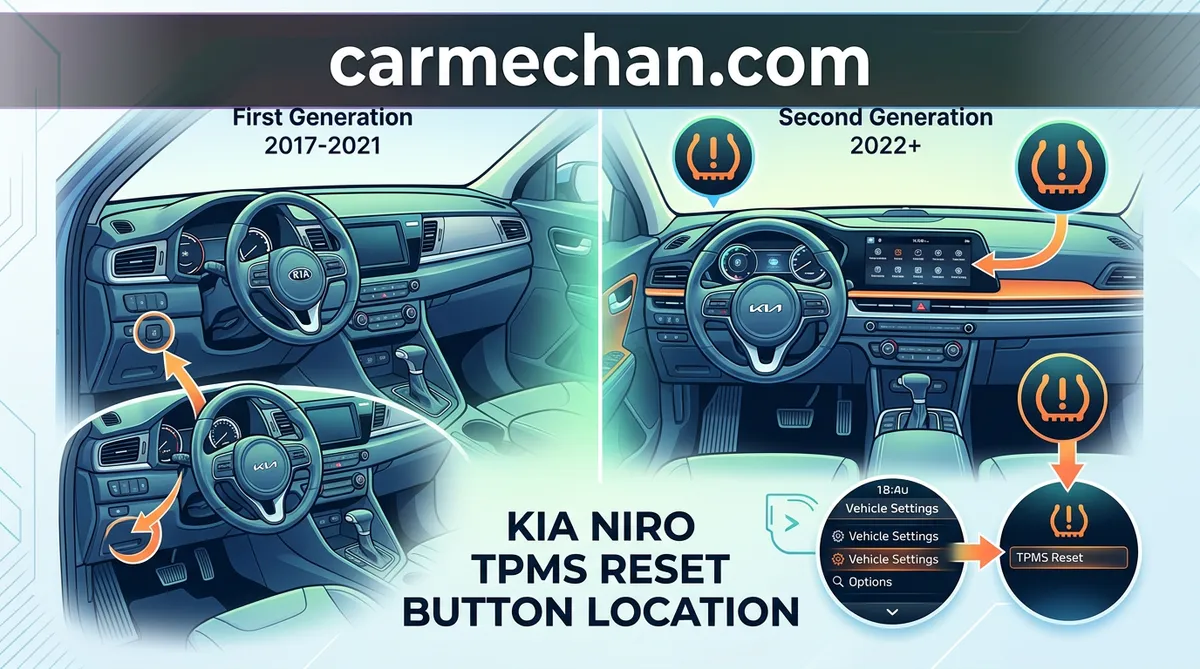
Seeing a Tire Pressure Monitoring System (TPMS) light glowing on your Kia Niro dashboard is a common frustration, often leading owners to hunt for a phantom reset button. If you have been searching your glove box, lower dash panels, or center console for a “TPMS Reset” switch, you are not alone—but you are looking for a component that does not exist.


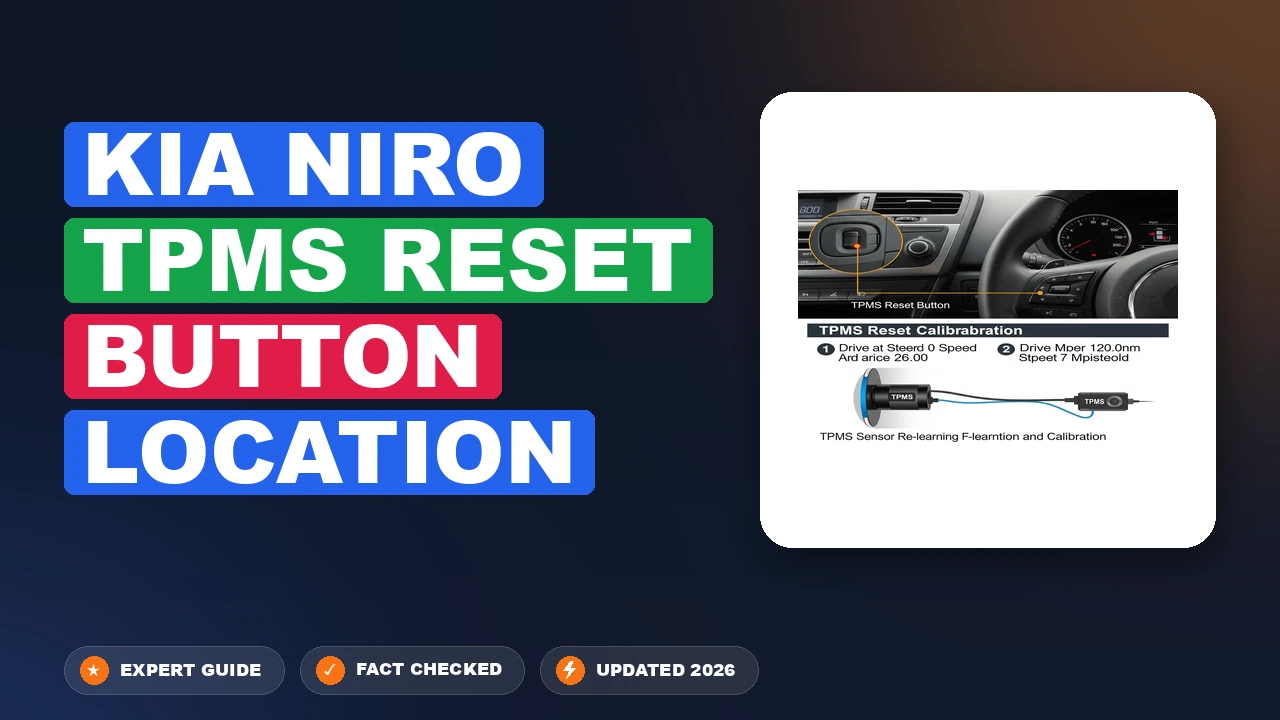
Debunking the Kia Niro TPMS Reset Button Location Myth
📤 Share Image

Why Modern Kia Niro TPMS Systems Lack a Manual Reset
In older vehicles, manufacturers often included a physical “TPMS Set” or “Reset” button under the steering column to force the system to relearn tire pressures. However, automotive engineering has shifted toward fully automated, “set-and-forget” systems. Kia Niro models utilize a sophisticated TPMS Module/ECU that continuously monitors wheel speed and individual tire sensor data. By removing the manual button, Kia has eliminated the risk of human error, ensuring that the system is always performing a fresh start based on real-time data rather than a manual, potentially inaccurate, baseline.
Direct TPMS vs. Indirect Systems Explained
The Kia Niro employs Direct TPMS, which is the gold standard for accuracy. In this system, each wheel contains a physical pressure sensor integrated into the valve stem. These sensors transmit data via radio frequency directly to the vehicle’s onboard computer.
Direct TPMS: Monitors actual pressure inside each tire. It is highly precise but requires sensor recognition.
Indirect TPMS: Monitors wheel speed via ABS sensors to infer pressure drops. It is less accurate and prone to false positives.
Because the Kia Niro uses the Direct method, it recognizes the new pressure state as soon as the signal is received and validated during a driving cycle. There is no need for a manual trigger to initialize the process; the car does the work for you.
How to Calibrate Your Kia Niro TPMS Properly
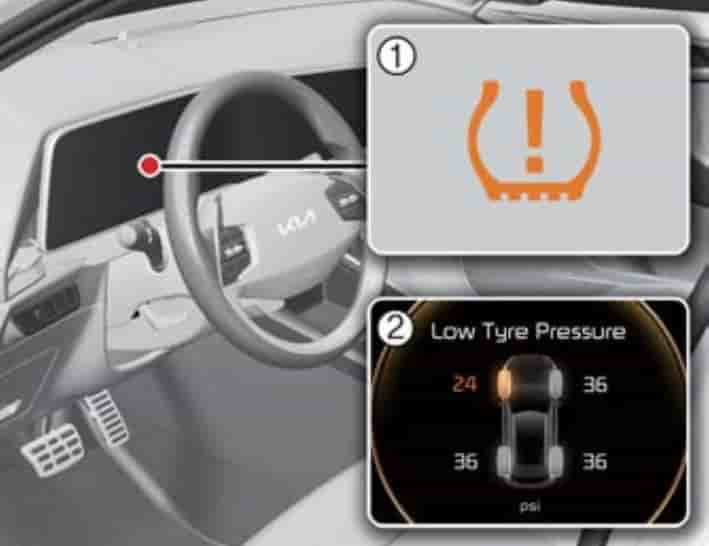
To clear the warning light, you do not need a tool to reset the system; you simply need to provide the sensors with the correct parameters to restore their functionality.
📋
Step-by-Step Calibration Process
Open the driver’s side door and locate the factory tire pressure placard. This specifies the exact PSI required for your specific vehicle configuration. Do not rely on the “Max PSI” printed on the tire sidewall.
Use a high-quality, calibrated pressure gauge to inflate each tire to the cold-tire PSI recommended on the door sticker. Ensure all four tires—and the spare, if applicable—are consistent to prevent sensor confusion.
Drive the vehicle at speeds above 25 mph for at least 15–30 minutes. This speed allows the valve stem sensors to broadcast their signal to the ECU, effectively clearing the light as the system updates to the correct, balanced pressure readings.
What Does a Blinking TPMS Light Mean on a Kia Niro?
A solid light indicates low tire pressure, but a blinking light is a signal of a system fault. If your TPMS light flashes for approximately 60 seconds upon startup before remaining solid, it is not an inflation issue—it is a hardware or software error.
Identifying Sensor Battery Failure


Each TPMS sensor is powered by a small internal lithium battery. With a typical lifespan of 5 to 10 years, these batteries will eventually deplete. When a sensor battery dies, it can no longer communicate with the TPMS module. If your vehicle is over five years old, a blinking light is statistically likely to be a failed sensor battery, requiring the replacement of the physical component.
When to Seek Professional Diagnostic Equipment
When the system indicates a fault, a standard tire pressure gauge will not resolve the issue. Professional technicians use OBD-II diagnostic tools to scan the system and identify the exact sensor ID that has stopped reporting. This is the only way to perform a reboot of the system if a sensor has completely failed.
By The Numbers
Minutes to Drive
MPH Speed Required
Troubleshooting Persistent TPMS Warning Light Issues
If you have verified the tire pressure and driven the car for the required duration, yet the light remains, you may be dealing with external factors or simple errors in the calibration environment.
Gas Station Gauge Inaccuracy: Many public air pumps use gauges that are not regularly calibrated. It is vital to use your own high-quality digital gauge as a backup to ensure accuracy.
Temperature Fluctuations: The Ideal Gas Law dictates that for every 10-degree Fahrenheit drop in temperature, tire pressure decreases by approximately 1 PSI. In winter, this can trigger the light even if the tires were properly inflated during the summer.
Sensor Interference: Heavy aftermarket electronics or portable charging devices placed near the center console can occasionally interfere with the signal transmission between the wheel sensors and the vehicle’s receiver.
Damaged Valve Stems: Impact with potholes or curbs can damage the sensor housing. If the unit is physically compromised, it must be replaced to restore the default factory state of the system.
Never ignore a blinking TPMS light. While a solid light is an annoyance, a blinking light indicates a loss of real-time monitoring, which means you will not be alerted to a genuine dangerous blowout or puncture.
The Kia Niro’s TPMS is designed to maintain a clean monitoring environment without unnecessary driver intervention. By avoiding the temptation to look for a physical reset button and instead focusing on proper inflation and sustained driving cycles, you ensure the system operates at its maximum potential. If your efforts to calibrate the system do not yield a fresh start for the warning light, it is time to have your local technician utilize a scan tool to determine if a hardware component has reached the end of its service life. Always prioritize the manufacturer’s recommended PSI found on the door jamb to ensure the best fuel economy and safety performance from your Kia Niro.
Kia Niro Tpms Reset Button Location: Frequently Asked Questions
Where is the TPMS reset button on a Kia Niro?
There is no physical TPMS reset button on any Kia Niro model. The vehicle is engineered to automatically detect tire pressure changes through the wheel-mounted sensors. Once the tires are inflated to the manufacturer’s recommended PSI, the system will recognize the correct pressure during operation and clear the warning light on its own without requiring any manual input from the driver.
Why is my TPMS light still on after filling tires?
The TPMS light often remains illuminated because the vehicle has not yet completed a drive cycle sufficient for the sensors to update the ECU. Simply inflating the tires is only the first step. You must drive the vehicle at speeds typically exceeding 20-25 mph for several minutes. This movement triggers the sensors to transmit new data, allowing the system to perform a clean and automatic reset.
Do I need a tool to reset my Kia Niro TPMS?


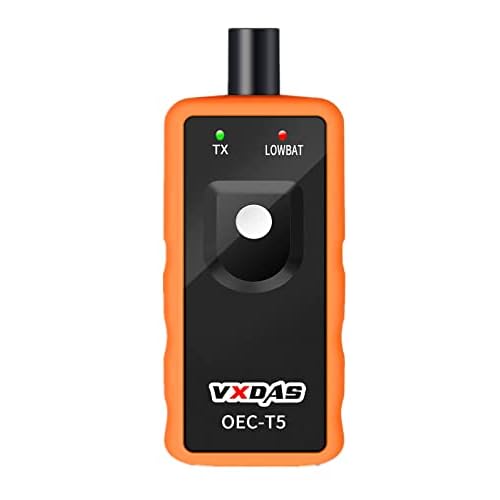
For routine pressure adjustments, you do not need any special tools. However, if a sensor is physically damaged or if the internal battery has reached its end of life, a professional diagnostic tool—such as an OBDII scanner or a TPMS activation tool—will be required. These tools are used by technicians to register new sensors to the vehicle’s onboard computer and verify that the system is functioning correctly.
How long does it take for the TPMS light to go off after driving?
After properly inflating your tires, the TPMS light typically turns off after 10 to 20 minutes of continuous driving. The speed and distance required can vary based on your specific trim and climate conditions. If the light remains on after an extended highway drive, it is a strong indicator that the pressure is still not within the required range or that one of the sensors is malfunctioning.
Can a tire rotation cause the TPMS light to turn on?
Yes, it is possible for a tire rotation to cause a temporary TPMS warning. While most Kia Niro systems are capable of re-learning the new position of the tires automatically, some systems may initially register a discrepancy. Ensure all tires are at the correct pressure following the rotation, and the system should perform a fresh start and recognize the new positions within a short driving session.