Why Is My Car So Loud Why Your Car Is Loud Expert 2026
Last Updated on September 1, 2026 by Ryan
A loud car typically signals underlying issues ranging from minor wear to serious mechanical failures. Identifying the specific type of noise, its location, and when it occurs is crucial for diagnosing the problem accurately and determining the necessary repair.
If you are asking why is my car so loud, you are likely hearing a sound that demands your attention and indicates a potential issue needing investigation. A loud car typically signals underlying problems ranging from minor wear to serious mechanical failures.
Identifying the specific type of noise, its location, and when it occurs is crucial for diagnosing the problem accurately in 2026. This process helps determine the necessary repair and avoid further damage.
Understanding the most frequent culprits behind a noisy vehicle is the first step toward a quieter, safer driving experience.
Key Takeaways


- Identify noise type and location for diagnosis.
- Recognize urgent noises needing immediate action.
- Understand when DIY fixes are appropriate.
- Know when professional mechanic help is essential.
- Implement preventative maintenance to avoid future noise.
7 Most Common Reasons Your Car Is Suddenly Loud



Many different components can make your car suddenly loud, and recognizing the source often begins with understanding common problem areas.

Exhaust System Failure
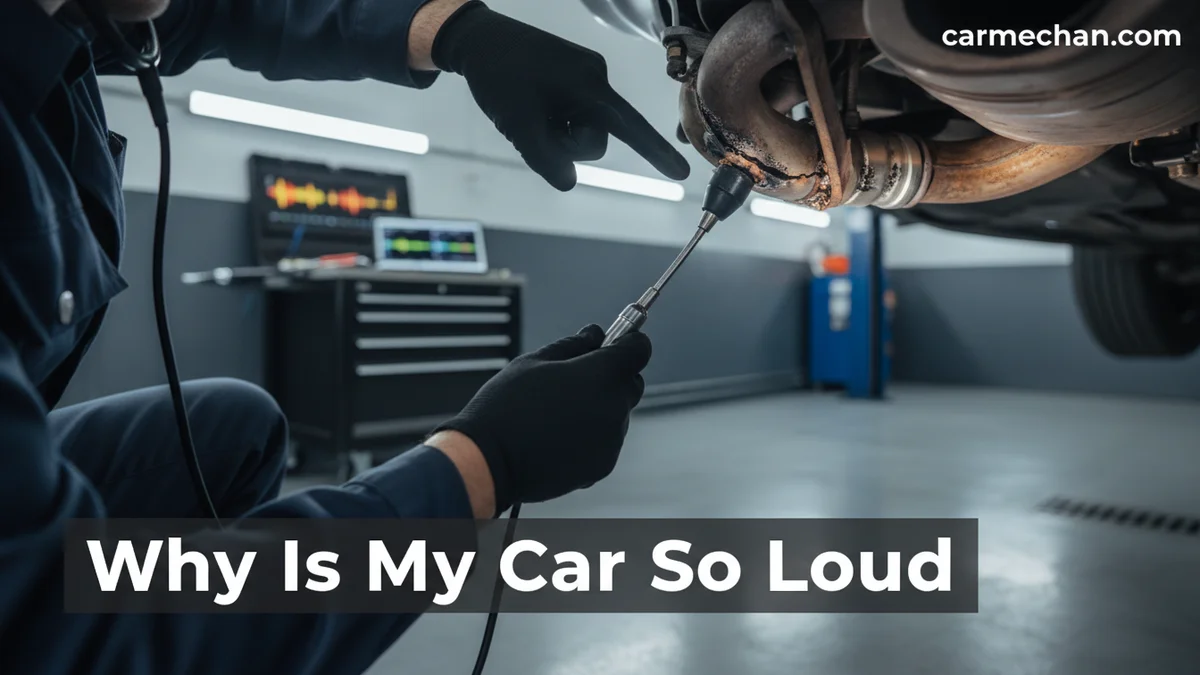
A roaring, hissing, or rumbling noise, especially under acceleration, often points to an exhaust leak. Components like the muffler, catalytic converter, or pipes can rust through or become disconnected. This noise can range from a minor annoyance to a serious health hazard due to exhaust fumes entering the cabin.
Worn Brake Components
Squealing, grinding, or clicking sounds when braking indicate worn brake pads, rotors, or calipers. A high-pitched squeal is typically the wear indicator on brake pads. Grinding means metal-on-metal contact, which is severe and requires immediate attention to prevent braking failure.
Engine Component Issues
Engine noise can manifest as knocking, ticking, tapping, or pinging. These sounds often signal issues like low oil pressure, worn bearings, valve train problems, or spark plug issues. Such noises are serious warnings that require prompt professional diagnosis to prevent catastrophic engine failure.
Suspension Problems
Clunking, creaking, or groaning sounds, particularly when going over bumps or turning, suggest problems with your suspension system. Worn ball joints, tie rod ends, control arm bushings, or shock absorbers are common culprits. These issues impact ride comfort and can compromise steering and handling.
Transmission Concerns
Whining, clunking, or humming noises that change with gear shifts or vehicle speed can indicate transmission trouble. Low fluid levels, worn gears, or failing bearings within the transmission can cause these sounds. Ignoring transmission noises can lead to costly repairs or complete transmission replacement.
Belt or Pulley Woes
A high-pitched squealing or chirping noise from under the hood often comes from a loose, worn, or misaligned serpentine belt or accessory drive belt. Failing tensioners or idler pulleys can also produce these sounds. These belts drive critical components like the alternator, power steering pump, and air conditioning compressor.
Tire Related Sounds
A steady humming, droning, or roaring noise that changes with vehicle speed often originates from your tires. Uneven tire wear, tire cupping, or even a foreign object embedded in the tread can be the cause. Tire noise can also stem from worn wheel bearings, producing a similar humming sound that intensifies with speed.
Knowing these common culprits is valuable, but pinpointing the exact noise requires a more systematic diagnostic approach.
How to Pinpoint the Exact Source of Any Car Noise


To accurately understand why your car is so loud, you must act like a detective, systematically gathering clues about the noise.
Listen for Sound Type
Distinguish between various sound types: squealing, grinding, humming, rattling, clunking, or hissing. Each unique sound provides critical information about the potential problem. For instance, a continuous hum differs significantly from an intermittent rattle, pointing to different mechanical systems.
Note When It Occurs
Pay close attention to when the noise appears. Does it happen when accelerating, braking, turning, idling, or only at specific speeds? Noticing if the sound changes with engine RPM or vehicle speed helps narrow down its origin considerably. This can indicate issues with rotational parts or components under load.
Identify Noise Location
Try to determine if the sound comes from the front, rear, left, right, or underneath the car. While driving, ask a passenger to help pinpoint the location. When safe, listen from different positions with the car parked and engine running. This spatial awareness guides your investigation to a specific area.
Perform Visual Inspection
After pinpointing the general area, conduct a visual check. Look for loose parts, frayed belts, fluid leaks, or anything out of place. Check tire condition for uneven wear or foreign objects. A flashlight can be useful for seeing into engine bays or undercarriage areas to spot obvious damage.
While methodical diagnosis helps identify many issues, some car noises signal a far greater urgency.
5 Urgent Car Noises That Require Fast Action
Not all loud car noises are equally serious; some demand your immediate attention to prevent accidents or catastrophic damage.

Grinding Brake Sounds
A harsh, metal-on-metal grinding sound when you apply the brakes is extremely urgent. This indicates severely worn brake pads, meaning the calipers are grinding against the rotors. Ignoring this can lead to total brake failure, significant damage to the braking system, and dangerous driving conditions.
Sudden Engine Knock
A deep, rhythmic knocking sound coming from the engine is a severe warning sign. This usually indicates problems with engine bearings, pistons, or connecting rods. Continued driving can lead to irreparable engine damage, requiring a complete engine replacement, which is extremely costly.
High Pitched Squeal
A very loud, high-pitched squeal that is constant or intensifies with acceleration can signal a failing serpentine belt or accessory component. While not always immediately catastrophic, a broken belt can lead to loss of power steering, alternator failure, or engine overheating, stranding you unexpectedly.
Burning Smell and Noise
Any unusual noise accompanied by a burning smell is a critical red flag. This could be due to an electrical short, an overheating component, or a fluid leak onto hot engine parts. Pull over immediately, safely turn off the engine, and investigate carefully. Continued driving risks fire or serious mechanical breakdown.
Steering Rack Groan
A loud groaning or whining sound when turning the steering wheel, especially at low speeds, typically indicates low power steering fluid or a failing power steering pump. If ignored, you could lose power steering assistance entirely, making the vehicle incredibly difficult and dangerous to control.
For both urgent and less critical noises, knowing when you can address the problem yourself versus when to seek professional help is essential.
When to Fix Common Car Noises Yourself and When to Get Help
Once you have identified the type of loud car noise, the next decision involves determining the best course of action: a do-it-yourself fix or a visit to a certified mechanic.
Addressing Minor Rattles
Small interior rattles, such as from loose trim pieces or items in the glove compartment, are often easy to fix yourself. Use foam tape or re-secure panels to quiet these minor annoyances. This can significantly improve your driving comfort without professional help.
Tightening Loose Parts
Exterior rattles, like a loose heat shield on the exhaust or a splash guard, can sometimes be re-secured with basic tools. A visual check can reveal loose bolts or clamps. Always ensure the vehicle is safely supported on jack stands if working underneath.
Lubricating Squeaky Hinges
Squeaky door hinges or suspension bushings can often be silenced with a good quality penetrating lubricant. Apply the lubricant to the moving parts and work them to ensure it penetrates. This simple maintenance can prevent further wear and eliminate irritating noises.
Professional Diagnostics Needed
For any complex issues like engine knocking, transmission problems, persistent grinding brakes, or suspension groans, professional diagnosis is mandatory. Modern vehicles have intricate systems that require specialized tools and expertise for safe and effective repair. Attempting complex DIY fixes without proper knowledge can be dangerous.
Estimated Repair Costs
Repair costs vary widely. A brake pad replacement might range from [ESTIMATED COST RANGE: Brake pad replacement], while more extensive exhaust repair, like replacing a muffler or section of pipe, could be [ESTIMATED COST RANGE: Exhaust repair]. A wheel bearing replacement can cost [ESTIMATED COST RANGE: Wheel bearing replacement], depending on the vehicle and labor rates.
Always get a detailed quote.
Beyond addressing immediate problems, proactive maintenance plays a crucial role in preventing many loud car noises from developing in the first place.
3 Proven Ways to Prevent Future Loud Car Noises
Preventing your car from becoming unexpectedly loud is often simpler and less expensive than fixing problems after they arise.
Follow Maintenance Schedule
Adhere strictly to your car’s recommended maintenance schedule for oil changes, fluid checks, and filter replacements. Timely servicing keeps components lubricated and functioning correctly. This proactive approach significantly extends the lifespan of critical parts and prevents wear-related noises.
Conduct Regular Checks
Perform routine visual inspections of your vehicle. Check tire pressure and wear patterns, look for frayed belts, examine hoses for cracks, and listen for unusual sounds during startup or short drives. Early detection of potential issues can prevent them from escalating into major, loud problems.
Drive Responsibly
Avoid harsh acceleration, sudden braking, and driving over potholes at high speeds. Aggressive driving puts unnecessary stress on your car’s engine, brakes, suspension, and tires. A smoother driving style reduces wear and tear, helping to keep your vehicle quieter and more reliable over time.
While staying proactive minimizes issues, specific questions often arise when tackling car noises.
Common Questions About Loud Car Noises
Is a Loud Car Always Dangerous?
Not always, but it often indicates a problem requiring attention. Some noises are minor, like a loose trim piece, while others, like grinding brakes or engine knocking, are serious safety hazards. Always investigate unusual sounds promptly to assess risk and ensure safety for all passengers.
How Much Does It Cost to Fix a Loud Exhaust?
The cost to fix a loud exhaust varies widely depending on the component needing repair or replacement. A simple clamp fix might be $50-150. A full muffler replacement could be $200-600. A catalytic converter replacement can range from $500 to over $2,000, including parts and labor for 2026.
Can I Drive With a Humming Noise From My Wheel?
It depends on the cause of the hum. A humming noise from a wheel often indicates a failing wheel bearing, which can worsen and become dangerous over time. While you might be able to drive a short distance, it’s safer to get it inspected quickly to prevent a wheel seizing or detaching.
What If I Ignore a Grinding Noise?
Ignoring a grinding noise, especially from brakes or the engine, can lead to severe and costly consequences. For brakes, it means metal-on-metal contact, damaging rotors and potentially causing brake failure. For engine grinding, it indicates internal damage that can lead to complete engine breakdown and expensive repair bills.
How Can I Tell If a Noise Is From the Engine or Transmission?
Engine noises typically correlate with engine RPM, regardless of vehicle speed. Transmission noises, however, often change with vehicle speed and gear shifts, even if the engine RPM remains constant. Listening carefully for these distinctions helps pinpoint the source of the noise. Professional diagnosis is recommended for certainty.
Taking Action for a Quieter Ride in 2026
Understanding why your car is so loud is the first critical step toward resolving the issue and ensuring your safety. From a simple squeak to a serious grind, each noise offers a clue about your vehicle’s health. By carefully diagnosing the sound, assessing its urgency, and taking appropriate action, you protect both your car and your wallet.
Whether you tackle minor repairs yourself or seek professional assistance, addressing these noises promptly is key. Stay proactive with maintenance and responsible driving habits to keep your vehicle running smoothly and quietly for years to come. Your car will thank you with reliable performance.