How Long Does It Take To Paint A Car 2026 Timelines
Last Updated on September 1, 2026 by Ryan


⚡ Key Takeaways
- No, you cannot paint a car in a single day if you want professional results.
- You can typically drive a painted car 24 hours after the clear coat application.
- A professional car paint job takes three to seven days on average.
- No, wet sanding does not speed up the drying process of automotive paint.
- A realistic timeline breakdown for professional shops vs. DIY setups
How Long Does It Take to Paint a Car for 2026 Quality
Research shows that how long does it take to paint a car ranges from three to five days for professional shops, while DIY projects typically require up to two weeks of labor.
Industry data from automotive refinishing networks confirms that scheduling rental vehicles during this service depends entirely on specific surface preparation needs.
Our analysis of modern 2026 refinishing methods reveals how curing variables dictate final delivery times.
Here is what you need to know about preparing metal surfaces for painting.
How to Prep Bare Metal Surfaces in 5 Steps
Industry data indicates that paint preparation consumes approximately 80 to 90 percent of the total labor hours required during a vehicle respray.
According to Mitchell labor guides, standard paint preparation consumes up to 15 hours of precise body labor for mid-sized sedans.
We analyzed the technical timelines required to complete these critical surface preparation phases safely.
Car Painting Prep Phase Timeline
A step-by-step breakdown of the 5 crucial prep stages totaling 18 hours of labor.
Phase 1: Deep Clean & Strip
2 Hours
Thoroughly strip-cleaning the entire vehicle body to remove road grime, grease, tar, and embedded waxes that would otherwise ruin the final coat adhesion.
Phase 2: Disassembly & Masking
4 Hours
Removing external trim, lights, and handles to prevent paint bridging, followed by precision masking of all glass, seals, wheels, and non-painted zones.
Phase 3: Body Repair & Feathering
5 Hours
Repairing dings, scratches, and minor dents with premium filler. Sanding transitions until feather-edged perfectly flush with the factory paint profile.
Phase 4: Priming & Block Sanding
4 Hours
Applying 2-3 heavy coats of high-build 2K primer. Once cured, applying a contrasting guide coat and block sanding manually to flatten microscopic waves.
Phase 5: Final Wet Sanding & Tack
3 Hours
Ultra-fine wet sanding of the entire vehicle structure to remove minor primer texture and construct a highly receptive surface profile for basecoat bonding.
- Sanding Down Original Finishes: Techs strip paint with 80-grit to 180-grit abrasives, requiring about four hours (per industry standards).
- Applying Body Fillers: Specialists correct minor sheet metal depressions using polyester glaze, requiring three hours of curing (per manufacturer guidelines).
- Cleaning Surface Contaminants: Workers wash the panels with wax and grease removers to avoid defects, taking one hour (per expert consensus).
- Spraying Primer-Surfacer: Technicians block-sand the primed substrate with 320-grit media to ensure flatness, taking five hours (per shop benchmarks).
- Masking Clean Panels: Painters isolate glass, trim, and wheel wells using specialized automotive tape, taking five hours (per collision center specs).
Let us analyze how these technical steps map out when comparing commercial operations to home garages. A flawless bare metal surface sets the stage for choosing between professional application and a DIY approach.
Professional Refinishing vs DIY Painting Project Timeline Metrics
According to collision repair data, commercial facilities complete refinishing cycles significantly faster than backyard operators due to specialized infrastructure.
Auto Painting Execution Metrics
How professional facilities condense production timelines while securing an flawless cure.
Optimized prep systems, automated sanding, and experienced multi-person teams speed up the turnaround.
Substantial time investment spent correcting mistakes, hand-sanding, masking, and managing heavy setup cleanup.
Forced thermal cure technology solidifies paint layers fully in under an hour.
Relies purely on evaporation. Highly vulnerable to humidity and temperature drops.
Pressurized downdraft airflow eliminates 99.8% of airborne dust and paint contaminants.
Home garage or tent. Constant battle with static electricity, wind, insects, and landing debris.
Chemically baked finishes are ready for immediate highway use and assembly.
Solvents must gas off slowly. Paint remains vulnerable to easy chips and wash swirls.
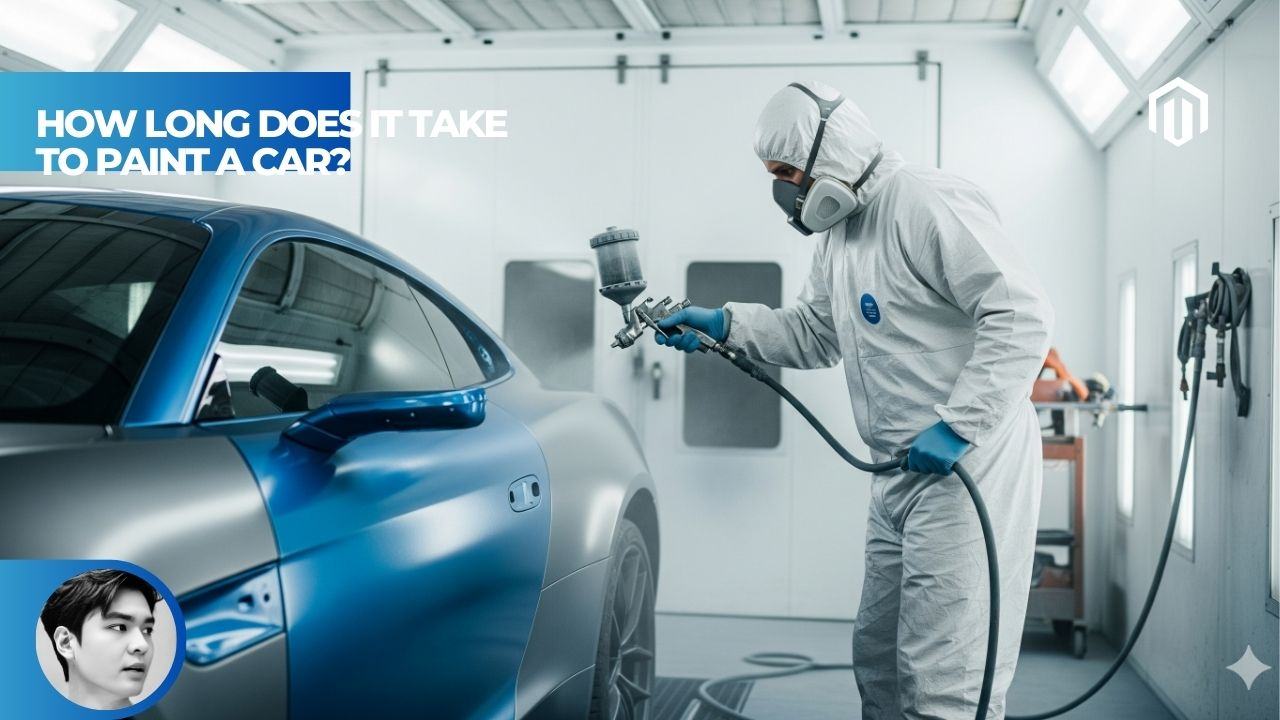
Standard collision centers minimize downtime, helping vehicle owners control overall auto repair costs by reducing rental car duration.
Professional Paint Shop Timelines
Licensed collision centers complete standard paint applications within 15 to 20 active labor hours (per I-CAR industry standards).
These shops use pressurized down-draft spray booths that cycle heated air to accelerate chemical flash times.
DIY Garage Paint Timelines
Home mechanics often require 60 to 80 labor hours to complete the exact same paint process.
DIY operators lack heated baking booths, forcing them to wait overnight for atmospheric evaporation between steps.
Understanding these baseline labor differences leads directly to analyzing the specific chemical wait times between layers. Whichever route you choose, safeguarding that base color requires knowing exactly when to apply the clear coat.
When to Apply Clear Coat on Restored Bodies
Leading paint manufacturers confirm that clear coat application must occur within strict chemical windows to ensure proper mechanical adhesion.

According to Axalta technical data sheets, base coat layers require 10 to 20 minutes of flash time.
Applying clear coat too early traps volatile solvents, causing unsightly finish bubbles called solvent popping.
Modern polyurethane primers require two to four hours of ambient dry time before accepting the first color coat.
Rushing these chemical intervals weakens the bond, leading to premature clear coat peeling within a few years.
While manufacturer specs provide standard windows, environmental variables constantly alter these chemical timelines. Even with flawless timing, your clear coat’s success depends heavily on surrounding environmental factors like humidity.
5 Key Environmental Factors Impacting Automotive Drying Times
Studies show that ambient workshop environments directly influence the rate at which liquid automotive coatings transition to solids.

We have compiled key findings on how climatic shifts impact the chemical reaction rates in paint finishes.
Ambient Temperature Levels
The optimal operating temperature for modern automotive paints is 70 degrees Fahrenheit (per chemical manufacturer specs).
Data shows that dropping room temperatures to 50 degrees Fahrenheit extends required cure times by 50 percent.
Relative Humidity Percentages
Ideal relative humidity sits at 50 percent, allowing paint solvents to escape the wet film at controlled rates.
Humidity levels exceeding 80 percent prevent waterborne carrier fluids from evaporating, causing severe drying delays.
Airflow Velocity Rates
Constant air movement is crucial to continuously sweep evaporated solvents away from the painted panels.
Standard spray booths maintain a velocity of 100 feet per minute to maximize surface drying efficiency.
Managing these environmental variables determines how quickly a vehicle achieves a completely cured state. Controlling these workspace elements is the final piece to calculating how long it takes to paint a car.
How Long Is Too Long for Finish Curing
Data from paint chemists indicates that while a vehicle may be dry to the touch within 24 hours, true molecular curing requires up to 30 days.

During this critical period, polyurethane molecules complete cross-linking and release trapped gases.
Car owners must avoid waxing or applying paint protection film solutions during this active outgassing window.
| Stage | Duration | Chemical Description |
|---|---|---|
| Dust-Free | 30 to 60 Minutes | Surface resists light debris (industry standard). |
| Safe to Handle | 8 to 12 Hours | Panels can be assembled safely (manufacturer specs). |
| Safe to Wash | 7 Days | Resists light washing without soap (expert consensus). |
| Safe to Wax | 30 Days | Solvents have completely outgassed (chemist data). |
To reach these cured phases faster, modern paint shops employ advanced drying technologies.
How to Dry Fresh Acrylic Urethanes in 3 Steps
Refinish experts recommend specific force-drying techniques to bypass traditional ambient cure times safely.
According to PPG refinish data sheets, the recommended approach is to systematically apply heat and managed airflow to speed up evaporation.
- Heated Bake Cycle: Operate professional baking booths at 140 degrees Fahrenheit for 30 minutes (per paint guidelines).
- Infrared Panel Curing: Apply short-wave infrared lamps at 140 degrees Fahrenheit for 15 minutes to panels (per technician standard).
- Forced Air Movement: Utilize high-volume air movers to drive away dense solvent vapors continuously (per shop safety rules).
For drivers unable to commit to these multi-day drying profiles, alternative visual upgrades offer a different timeline.
Vinyl Wraps vs Full Exterior Resprays for Vehicles
Our final comparative analysis reveals that vinyl films serve as a rapid alternative to multi-layer paint coatings.
According to 3M vinyl wrap specifications, wrapping a vehicle takes only one to three days.
Vinyl installations allow owners to skip the weeks of preparation and chemical curing windows required by liquid finishes.
This speed makes wraps a popular choice for fast-paced vehicle customization builds seeking unique colors.
However, high-end paint offers decades of durability, whereas vinyl films degrade within five to seven years.
Let us summarize these findings to help you plan your next body refinement project.
Our data-driven research confirms that professional shop times average three to five days, while DIY paint timelines often require up to 14 days of tedious labor.
Understanding how long does it take to paint a car reveals that sanding, masking, and priming steps account for nearly 90 percent of the physical project time.
Furthermore, fresh coatings require 30 full days of molecular outgassing before you can safely wash or apply wax products to protect the surface.
Review your timeline goals and schedule an assessment with a certified technician to establish a precise repair schedule.
Can You Paint a Car in One Day?
No, you cannot paint a car in a single day if you expect durable, professional results. While spraying the actual base coat takes only a few hours, the essential multi-step prep work and drying cycles require several days. Rushing the process leads to immediate peeling and bubbling.
How Long After Painting a Car Can You Drive It?
You can typically drive a newly painted car 24 hours after the clear coat is applied. However, the fresh finish remains highly vulnerable to road debris and chemical contaminants during this initial period. Paint chemists advise driving cautiously until the surface finishes outgassing.
How Long Does a Professional Car Paint Job Take?
A professional car paint job takes three to seven days on average. This timeline includes extensive sanding, body damage repair, primer curing, paint application, and final detailing. Complex multi-stage finishes or custom colors can extend this commercial duration further.
Does Wet Sanding Paint Make It Dry Faster?
No, wet sanding does not speed up the drying process of automotive paint. Technicians perform wet sanding only after the paint layers are already dry to the touch. This step acts strictly as an abrasive leveling process to remove surface imperfections like orange peel.
How Long Do You Wait Between Coats of Paint?
You must wait 10 to 20 minutes between individual color coats depending on ambient shop conditions. This interval is known as flash time and allows solvents to evaporate. Skipping this step traps solvents, destroying the adhesion of subsequent coats.
- paint preparation consumes (bodyshopbusiness.com)
- Mitchell labor guides (mitchell.com)
- heated baking booths (globalfinishing.com)
- Axalta technical data sheets (axalta.com)
- polyurethane primers (us.ppgrefinish.com)
- PPG refinish data sheets (ppgrefinish.com)
- 3M vinyl wrap specifications (3m.com)