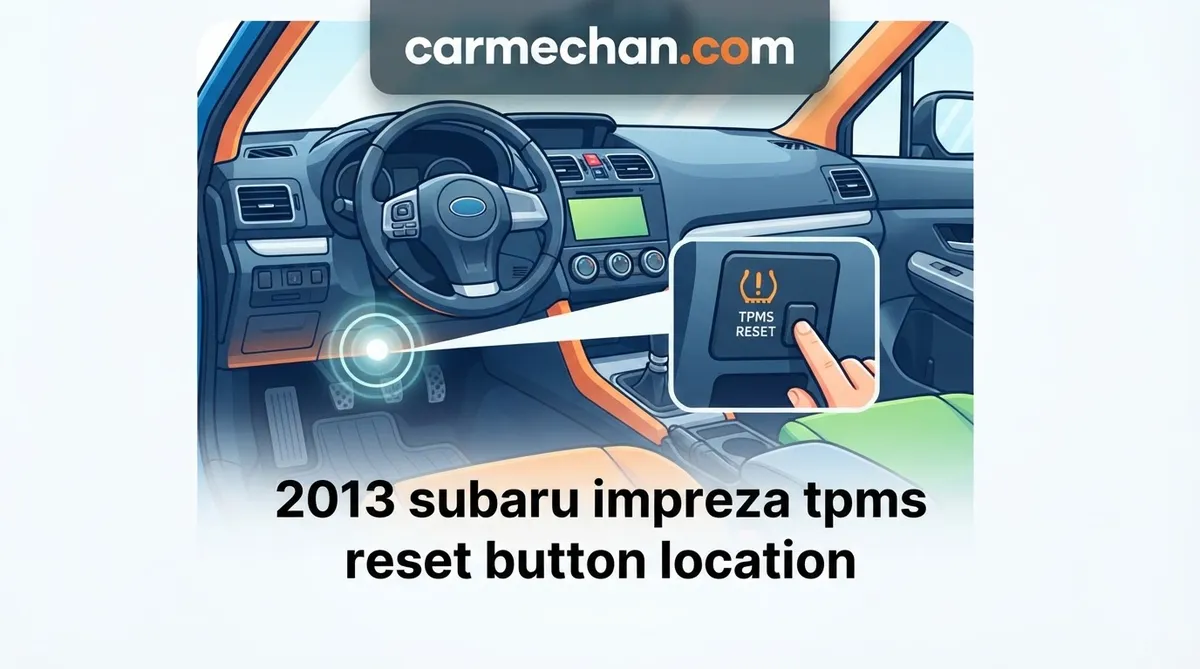
2013 Subaru Impreza TPMS Reset Button Location: Solved
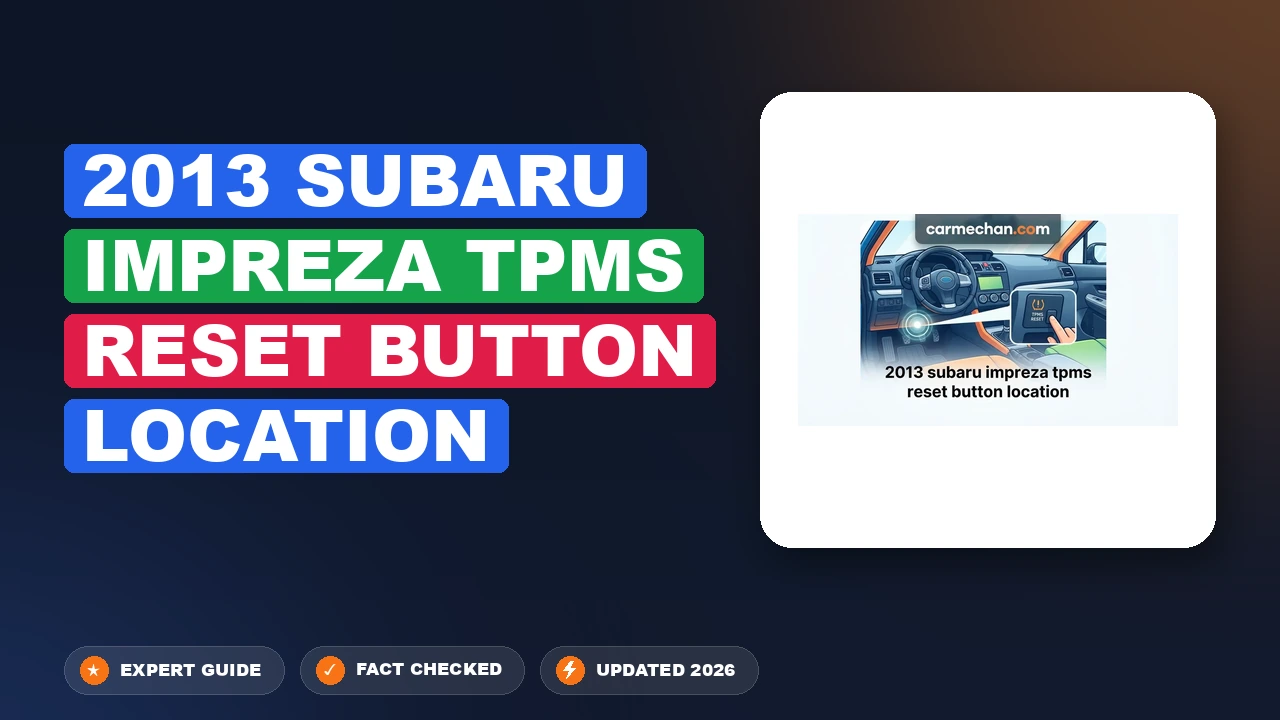
Is your tire pressure light haunting your dashboard, and you can’t find that elusive reset button in your 2013 Subaru Impreza? Many owners waste hours searching under the steering column, inside the glove box, or near the pedals for a switch that simply does not exist. In this guide, we clarify exactly why your vehicle manages its own Tire Pressure Monitoring System (TPMS) and walk you through the precise drive-cycle process to restore the system and extinguish that warning light for good.
Why Your 2013 Subaru Impreza TPMS Reset Button Location Search is Futile
Recommended Best Deal Products


📤 Share Image
Many drivers expect a manual interface to manage tire sensors, a feature common in many Toyota or Honda models from the same era. However, the 2013 Subaru Impreza utilizes a sophisticated, integrated architecture that prioritizes automation over manual user intervention.
Understanding Automatic TPMS Calibration
The 2013 Impreza uses a system where the Engine Control Unit (ECU) acts as the central brain for tire pressure monitoring. When you inflate your tires to the manufacturer’s recommended PSI, the sensors located inside each wheel assembly transmit a signal to the ECU. Because the system is designed to be self-learning, it does not require a “reboot” switch. Once the sensors detect a pressure change that aligns with the programmed thresholds, the ECU automatically interprets the “clean” data and shuts off the warning light on your instrument cluster.
Direct TPMS vs. Indirect Systems
It is important to distinguish that your vehicle employs a Direct TPMS. This means there are physical pressure-sensing modules mounted to the inner valve stems of your wheels. Unlike “Indirect” systems—which calculate pressure through ABS wheel-speed sensors—a Direct system requires a unique identifier (ID) handshake between the sensor and the car’s computer. The system is designed to identify these unique IDs automatically, effectively performing a “fresh start” whenever it detects a valid signal from the four tires that were previously paired to the vehicle.
How to Initiate the 2013 Subaru Impreza TPMS Relearn Procedure
Because there is no button to press, you must rely on a procedural “handshake” between the sensors and the vehicle’s onboard computer. This process is effectively a forced drive-cycle, allowing the ECU to re-initialize the connection.
📋
Step-by-Step Guide
Recommended Best Deal Products


Use a high-quality, calibrated digital tire pressure gauge. Inflate all tires to the exact specification found on the driver’s side door jamb sticker. Do not guess; the TPMS threshold is precise, and incorrect PSI is the most common cause of a persistent light.
To force the system to initialize, drive the vehicle at speeds consistently above 45 mph for approximately 15 to 20 minutes. This provides the TPMS sensors sufficient time to transmit their signal to the receiver and for the ECU to complete its self-test.
If the light persists, ensure the spare tire is properly inflated. While most 2013 Impreza models do not have a sensor in the spare, certain configurations or aftermarket setups can cause system confusion if the spare is significantly under-pressurized and stored in close proximity to the chassis-mounted receiver.
Interpreting Warning Light Signals and Hardware Failures
Understanding the behavior of your dashboard lights is critical to identifying whether you are dealing with a routine maintenance requirement or a genuine hardware fault.
Solid Light: Pressure Issues
A solid, non-flashing TPMS light is almost always an indicator of low pressure in one or more tires. Industry data suggests that a drop of just 25% below the factory-recommended PSI is enough to trigger the sensor, which then broadcasts a low-pressure warning to the ECU.
Blinking Light: Sensor Malfunction
A flashing or blinking TPMS light indicates that the system is unable to receive data from one or more sensors. This is rarely a pressure issue and usually points to:
- Battery Exhaustion: TPMS sensors have non-replaceable batteries that typically last 7–10 years. In a 2013 model, these are reaching their natural end-of-life.
- Signal Obstruction: After a tire rotation, if sensors were not placed in their original positions, the ECU might temporarily experience a handshake failure while it attempts to remap the sensor locations.
- Hardware Damage: Corrosion or physical impact during tire service can crack the sensor body, rendering it incapable of signal transmission.
By The Numbers
Avg. Years for TPMS Battery
Standard PSI Alert Threshold
Troubleshooting Potential System Faults
Recommended Best Deal Products


If you have confirmed your tire pressure is correct and completed the driving cycle without the light clearing, you may be facing a deeper system diagnostic requirement.
- OBD-II Scanning: Utilize a TPMS-capable OBD-II diagnostic scanner. These tools can “ping” each sensor individually to check if they are transmitting a signal. This will definitively identify if a specific sensor battery is dead or if the sensor is completely non-responsive.
- Spare Tire Inspection: While uncommon, check if your vehicle was equipped with a full-size spare featuring a sensor. If this sensor has failed or lost pressure, it can sometimes interfere with the vehicle’s primary TPMS antenna.
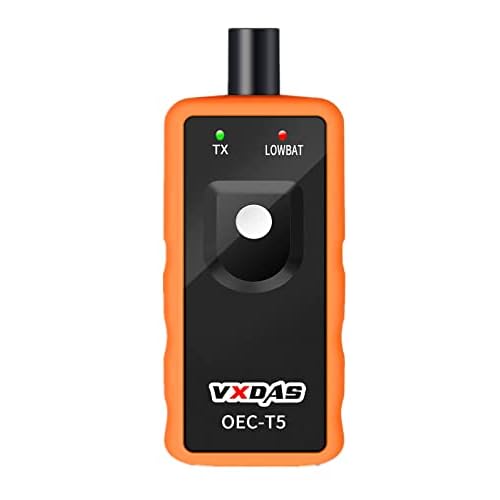
- Professional Relearn/Re-programming: If sensors were replaced recently, they must be “programmed” or cloned to the vehicle’s ECU. A simple drive cycle will not be enough if the ECU does not recognize the new unique ID codes. A local tire professional can handle this in minutes using an activation tool.
Never ignore a blinking TPMS light. While a solid light warns of low pressure, a blinking light indicates a system fault. Driving in this state prevents the system from warning you of future rapid pressure loss, which poses a significant safety risk during high-speed travel.
To summarize, the 2013 Impreza is engineered for convenience, relying on an automatic, self-learning TPMS system that operates without the need for manual inputs. By verifying your PSI levels and ensuring your sensors are functioning, you can maintain a clean, active monitoring system. If the warning persists, it is a clear indicator that the sensor hardware is failing rather than a need for a reset button. In such cases, consult a professional shop to scan and replace the faulty sensor modules to restore your vehicle’s safety monitoring capability.
2013 Subaru Impreza Tpms Reset Button Location: Frequently Asked Questions
Where is the TPMS reset button on a 2013 Subaru Impreza?
There is no physical TPMS reset button on the 2013 Subaru Impreza. Subaru designed this model with an ‘auto-learn’ system. The vehicle’s Engine Control Unit (ECU) automatically detects the tire pressure sensors once they are activated through driving. You do not need to manually trigger a reset; the system handles the recalibration process internally while the car is in motion.
Why does my TPMS light stay on after I fill the tires?
The light often stays on because the ECU has not yet received a new ‘OK’ signal from the wheel sensors. This usually requires a ‘drive cycle,’ which involves driving the vehicle above 20 mph for 10 to 20 continuous minutes. If the light remains on after this, one or more sensors may be failing, or the tire pressure may not have reached the correct threshold.
Do I need a tool to reset my TPMS?
For basic pressure alerts, you do not need a tool. However, if you have replaced a wheel sensor with a new unit, the vehicle may require an OBD-II programming tool to register the new sensor ID with the car’s computer. A tire shop can perform this ‘fresh start’ identification if the car fails to recognize the new sensor automatically after a long drive.
Will replacing a tire trigger the TPMS light?
Yes, replacing a tire can trigger the light if the technician accidentally damaged the sensor during mounting or if the new tire configuration differs significantly in pressure. Because the TPMS sensor is attached to the valve stem, it is susceptible to impact damage during tire changes. Always ensure your technician verifies that the sensor signal is still active after the new tire is installed.
Can I force a factory reset on the TPMS system?
A ‘factory’ reset in the traditional sense (like on some Toyota models) is not possible on a 2013 Subaru Impreza. You can perform a hard reset by disconnecting the negative battery terminal for 15 minutes, which clears the ECU’s volatile memory. Note that this may also reset other items like radio presets and clock settings, and it is usually unnecessary for simple TPMS light issues.