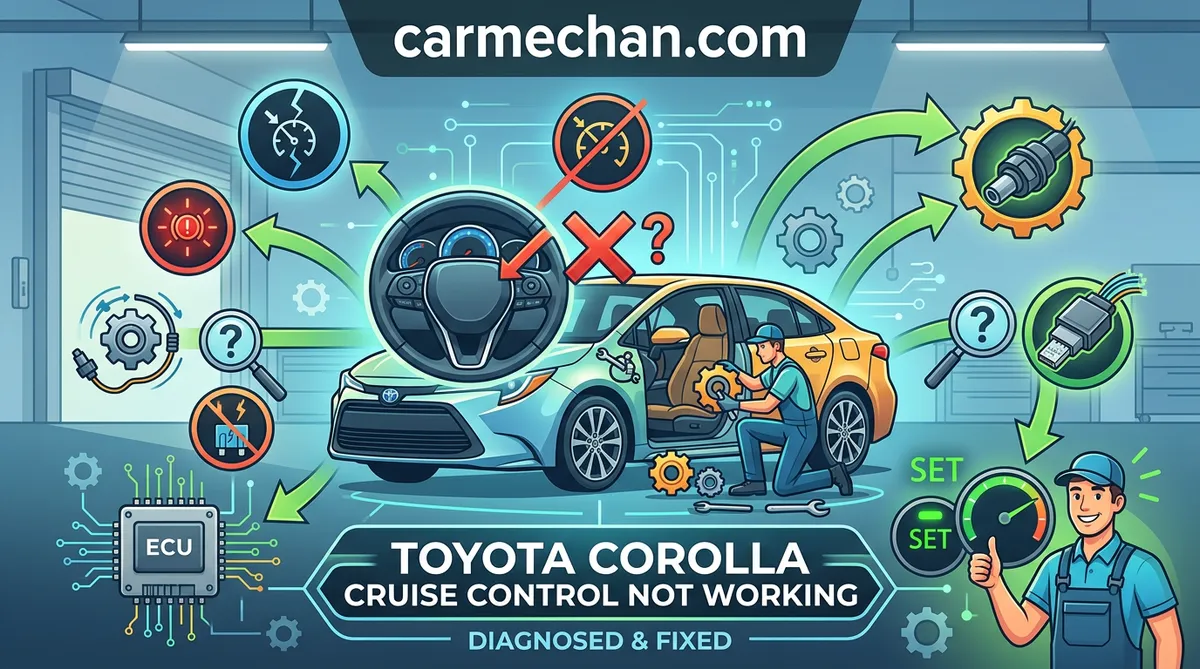
Toyota Corolla Cruise Control Not Working: Diagnosed & Fixed
Is your Toyota Corolla refusing to maintain speed on the highway? Few things are as frustrating during a long drive as cruise control that refuses to engage, especially when you suspect it’s a simple electrical glitch. Whether you are dealing with an older model or a late-model Corolla equipped with Toyota Safety Sense, a failure in this system often points to a specific safety override. This guide will help you isolate whether your Toyota Corolla cruise control not working is a simple blown fuse, a sensor-related obstruction, or an internal fault, saving you unnecessary time and effort.
Understanding the Root Causes of Toyota Corolla Cruise Control Not Working
Recommended Best Deal Products


Modern Toyota vehicles use a sophisticated network of sensors to manage cruise control. When a component fails, the system does not just stop—it enters a fail-safe mode. Understanding why this happens is the first step to a successful fix.
📤 Share Image

Why System Fail-Safe Modes Engage
The cruise control system is designed to prioritize driver safety above all else. If the Electronic Control Unit (ECU) detects an inconsistency—such as conflicting speed data from different wheels or a signal from the brake pedal when none is expected—it will instantly deactivate cruise control. This ensures the vehicle does not attempt to accelerate while the driver is actively slowing down or when there is an active fault in the drive-by-wire system.
The Role of the Check Engine Light
A common misconception is that cruise control issues are always independent. In reality, research confirms that engine management issues triggering a Check Engine Light (CEL) will force the cruise control to disable itself. Because cruise control relies on the throttle body to manage engine load, any emission or performance issue detected by the ECU renders the cruise system unreliable by default.

Brake Light Circuit Failures
A faulty brake light switch is one of the most frequent mechanical causes for cruise control failure. The cruise control module monitors this circuit; if your brake bulbs are blown or the brake light switch is stuck (constantly sending a “braking” signal), the car assumes you are trying to disengage the system, preventing it from activating in the first place.
Industry Data
Approximate occurrence of brake switch-related failures in older Corolla models.
Percentage of CEL-triggered faults that disable cruise control by design.
Step-by-Step Guide to Troubleshoot Toyota Corolla Cruise Control Not Working
1. Inspecting Cabin Fuses and Power Circuits
Before diving into complex diagnostics, verify the electrical integrity of the system. Check your owner’s manual to locate the specific fuse labeled “CRUISE” or “ECU.” If the filament inside the fuse is broken, the circuit is open. Replacing a blown fuse is often the simplest fix.
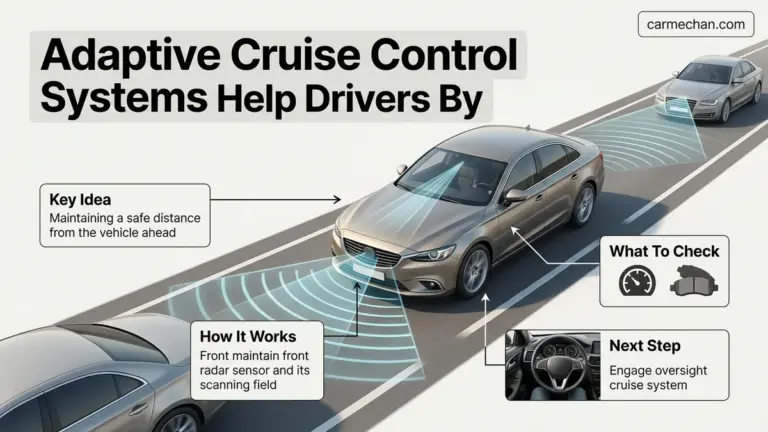
On vehicles with Adaptive Cruise Control (ACC), look at the front grille. Obstructions—mud, ice, or heavy road grime on the Toyota emblem housing—will block the sensor. Gently wipe this area with a microfiber cloth. If debris is thick, clear it carefully; modern sensors are sensitive to misalignment caused by pressure.
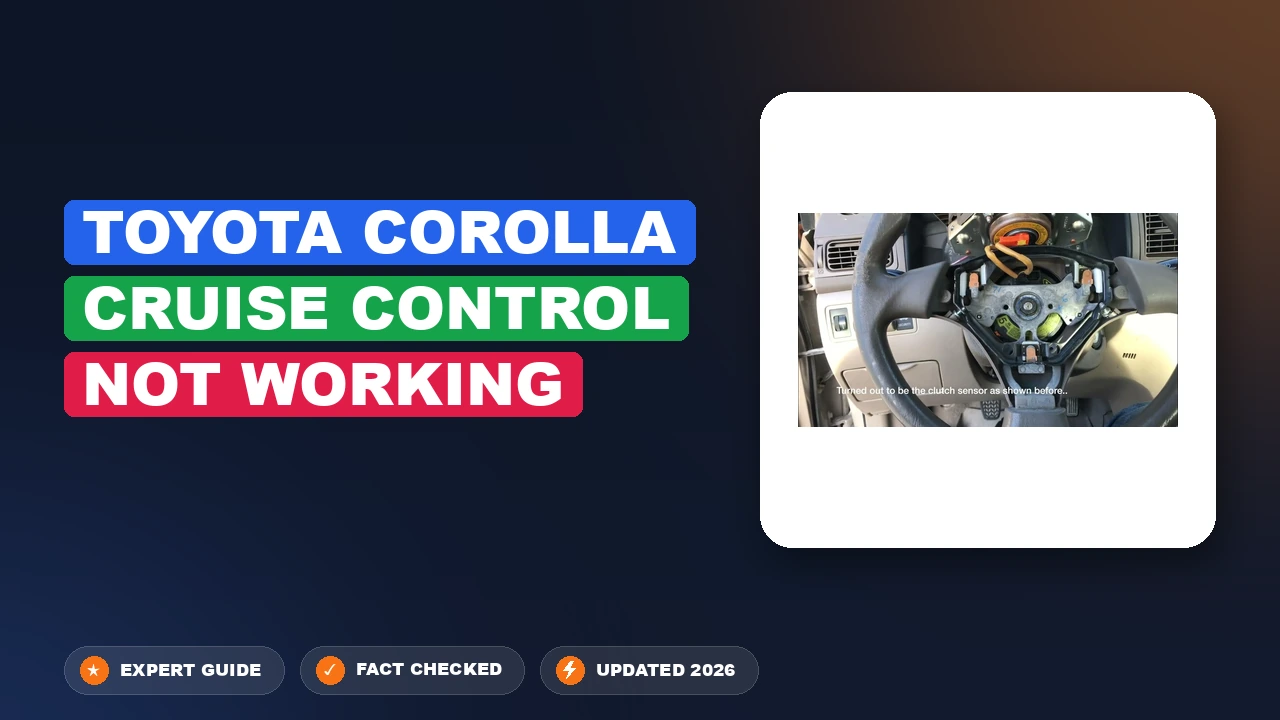
If the cruise light illuminates but fails to set, the issue may lie with the switch assembly. Try pressing the “Set” button while wiggling the switch slightly. If you feel any “stickiness” or lack of tactile feedback, the internal contacts may be worn, preventing the signal from reaching the ECU.
Advanced Diagnosis for Persistent System Failures
Recommended Best Deal Products


If basic checks do not resolve the issue, you are moving into the realm of deeper electronic diagnostics. At this stage, professional tools are required to decode the car’s internal communications.

Prime for Young Adults — 6 Months Free
Students and 18–24s get six months of Prime free, then half price.
Start 6 Months FreeReading Diagnostic Trouble Codes (DTC)
Use an OBD-II scanner to read your vehicle’s DTCs. Codes starting with “P” (powertrain) or “C” (chassis) often hold the key. For instance, a P0500 code indicates a vehicle speed sensor failure, which prevents the cruise system from knowing how fast the car is moving—forcing an immediate shutdown.
Assessing Throttle Body and Speed Sensor Health
The cruise control module communicates directly with the throttle body actuator. If there is carbon buildup or motor hesitation in the throttle body, the ECU will detect an “out of range” signal, killing cruise control to prevent unintended acceleration. Never attempt to manually force the throttle butterfly valve open with your fingers while the ignition is on; this can permanently damage the sensitive internal gears.
After any significant repair to the front end of your vehicle, such as a bumper replacement, the radar sensor must be electronically calibrated. Simply “plugging it back in” is not enough to restore full functionality.
When to Consult a Pro About Toyota Corolla Cruise Control Not Working
There is a clear distinction between a DIY fix and a service center requirement. Some systems are too tightly integrated with the car’s safety architecture to risk amateur repair.
- Handling Complex Radar Recalibration: If you suspect the radar sensor has been physically bumped or shifted, only a dealership with Toyota’s specific calibration targets and software can align it.
- Internal ECU and Wiring Harness Faults: If the diagnostic tool shows “lost communication” with the cruise control module, you are likely dealing with a broken wire or an ECU malfunction that requires a master technician to trace.
- Safety Sense Integrity: Toyota Safety Sense (TSS) is a critical safety system. Unauthorized attempts to “debug” these sensors can void warranties and, more importantly, create dangerous scenarios where the Pre-Collision System triggers incorrectly.
Never attempt to open or dismantle the cruise control module or radar housing. These components are sealed units; moisture intrusion from improper resealing will lead to permanent, irreparable corrosion.
Summary and Professional Recommendations
Recommended Best Deal Products


Diagnosing a Toyota Corolla cruise control issue requires a systematic approach, moving from the most simple external components to the complex internal electronics. Always check your fuse box and brake light status first, as these simple oversights account for a significant portion of service visits. Keep the radar sensor (integrated into the front Toyota emblem) clean and free of snow, mud, or heavy debris, as this is a common failure point for modern Corollas. Most importantly, do not ignore persistent dashboard warning lights; they are the primary clue in identifying the specific error code stored in the ECU.
When in doubt, use an OBD-II scanner to interpret your vehicle’s specific error codes. If your diagnostic steps reveal an internal ECU or deep-seated radar alignment issue, visit your authorized Toyota service center. They possess the precise calibration tools necessary to ensure that your vehicle’s cruise control and safety systems remain functional, reliable, and, above all, safe for daily driving.
Toyota Corolla Cruise Control Not Working: Frequently Asked Questions
Why does my cruise control light flash?
A flashing cruise control indicator in a Toyota Corolla typically indicates a fault within the system’s logic or a secondary failure. The Engine Control Module (ECM) has detected a discrepancy, such as a signal loss from the speed sensor or a fault in the brake light circuit. Because the system cannot ensure safe operation, it disables itself and flashes a warning light to alert the driver to seek maintenance.
Can a blown fuse cause cruise control failure?
Yes, absolutely. A blown fuse is one of the most common and easily fixed reasons for cruise control failure. Specifically, the ‘STOP’ fuse (which controls the brake lights) is often linked to the cruise control system. If the fuse is blown, the cruise control system cannot verify if the brake pedal is depressed, so it will prevent the cruise control from engaging as a mandatory safety precaution.

Audible Premium Plus — Annual Membership
12 audiobook credits up front, plus the full Audible catalogue.
See Annual PlansDoes a loose gas cap affect cruise control?
Yes, indirectly. A loose gas cap can trigger an ‘Evaporative Emission’ (EVAP) system fault, which illuminates the Check Engine Light (CEL). In most Toyota Corollas, the vehicle’s computer is programmed to disable the cruise control system whenever the Check Engine Light is active, regardless of the cause. By tightening the gas cap and clearing the engine code, your cruise control should return to normal functionality.
Why does my cruise control turn off when I hit a bump?
If your cruise control disengages when hitting a bump, you likely have a loose electrical connection or a mechanical switch issue. Common culprits include a worn-out brake pedal rubber stopper that allows the pedal to jiggle and trip the brake light switch, or a loose harness connector near the steering column or transmission speed sensor. These physical interruptions momentarily break the cruise control circuit, causing the system to default to ‘Off’.
Are there specific steering wheel buttons that fail most often?
The cruise control stalk or steering wheel buttons on older Toyota Corollas can develop internal resistance issues over time. If the contacts behind the button wear out, the signal sent to the ECM becomes inconsistent. If the car registers an ‘open’ or ‘short’ circuit when you press the button, the system will ignore the command. Testing for button continuity with a multimeter is the best way to confirm a faulty switch.