2022 Honda CR-V TPMS Reset: Expert Tips and Calibration
Last Updated on September 1, 2026 by Ryan
📋 Table of Contents
- 🎯 Key Takeaways
- Understanding the Indirect TPMS Technology in 2022 CR-Vs
- How to Reset Your 2022 Honda CR-V TPMS Like a Pro: A Practical Walkthrough
- Factors That Trigger False Tire Pressure Alerts
- Comparing Direct vs. Indirect TPMS Systems
- Expert Maintenance Tips for Long-Term Sensor Accuracy
- Conclusion: Keeping Your CR-V Safe and Efficient
- 💬 Quick Questions & Answers
- ❓ Frequently Asked Questions
To effectively manage a 2022 Honda CR-V TPMS reset, you must understand that this vehicle uses an indirect monitoring system. This means the car relies on wheel speed sensors rather than physical pressure sensors inside the tires to detect discrepancies.
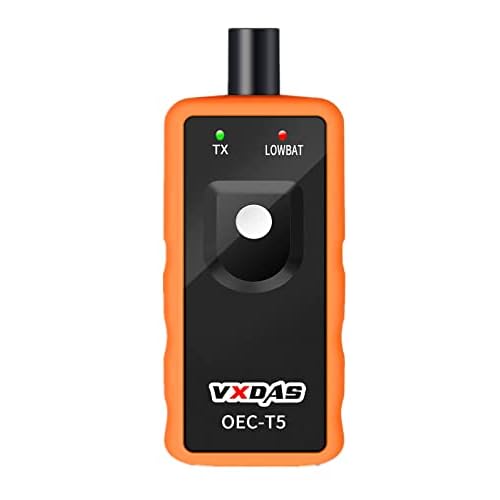
2022 Honda CR-V TPMS reset? These are the exact tools that get it done:
 TPMS relearn tool — All Makes & Models” style=”width:90px;height:90px;object-fit:contain;border-radius:8px;flex-shrink:0;” loading=”lazy”>

As an Amazon Associate we earn from qualifying purchases.
🎯 Key Takeaways


- Takeaway 1:Ensure tires are cold and properly inflated before initiating calibration.
- Takeaway 2:The 2022 model uses indirect TPMS via ABS wheel speed sensors.
- Takeaway 3:Recalibrate after every tire rotation, replacement, or air pressure adjustment.
- Takeaway 4:Driving 20-30 minutes at steady speeds is required to complete calibration.
- Takeaway 5:Persistent lights may indicate a faulty ABS sensor or uneven wear.
Did you know your 2022 information/manuals?year=2022&model=CR-V” target=”_blank” rel=”noopener noreferrer” title=”Official 2022 Honda CR-V Owner’s Manual and TPMS Instructions”>Honda
CR-V is actually smarter than it looks? Most drivers assume there is a tiny, battery-powered sensor tucked inside every tire to measure air pressure. However, Honda uses a clever piece of technology that works behind the scenes to keep you safe and efficient. When that little yellow horseshoe light pops up on your dashboard, it is not just a random annoyance. It is your car’s way of communicating a potential safety risk or a drop in fuel economy that could cost you money at the gas pump.Understanding why this light turns on is the first step toward a stress-free driving experience. You do not always need an expensive trip to the mechanic to solve the issue. Often, it is just a matter of knowing how your vehicle “thinks” about its tires. In this guide, we will dive into the logic behind the CR-V’s tire monitoring system. We will help you understand what triggers those alerts and how to maintain the perfect balance for your daily commute.
Understanding the Indirect TPMS Technology in 2022 CR-Vs


The 2022 Honda CR-V uses what is known as an “Indirect” Tire Pressure Monitoring System (TPMS). Unlike older cars that used physical sensors mounted on the wheel rims, your CR-V relies on the Anti-lock Braking System (ABS) and Vehicle Stability Assist (VSA) wheel speed sensors. It does not actually measure the air inside the tire. Instead, it measures how fast the tires are spinning while you drive. If one tire loses air, its diameter becomes slightly smaller. A smaller tire has to spin faster to keep up with the others. The car’s computer notices this speed difference and triggers the alert.

The Benefits of the Indirect System
There are several reasons why Honda chose this design for your CR-V. Since there are no physical sensors inside the tires, you do not have to worry about fragile electronics breaking during a tire change. You also save money in the long run because there are no sensor batteries to replace. This makes the system very durable and low-maintenance for the average owner. Here are a few key advantages of this technology:
- Lower Maintenance Costs: No need to buy expensive replacement sensors every few years.
- Durability: The system is less likely to be damaged by road salt, moisture, or potholes.
- Simplicity: It uses existing hardware that is already on the car for braking safety.
- Versatility: You can swap tires or rims without needing to reprogram new sensor IDs.
How Calibration Works Differently
Because the system is based on wheel speed, it needs a “baseline” to understand what a healthy tire looks like. When you fill your tires or rotate them, you are changing the physical setup. You must tell the car to start a new learning process. During this calibration phase, the computer tracks your driving patterns for about 20 to 30 minutes. It learns the specific rotation speeds of your tires at various velocities. It is a smart system, but it requires your input to ensure it is looking for the right data points.
How to Reset Your 2022 Honda CR-V TPMS Like a Pro: A Practical Walkthrough


The 2022 Honda CR-V uses an indirect Tire Pressure Monitoring System (TPMS). Unlike systems that use internal pressure sensors attached to the valve stems, your CR-V utilizes the Anti-lock Braking System (ABS) wheel speed sensors to monitor the rotational speed of each tire. When a tire loses air, its diameter changes, causing it to spin at a different speed than the others. This guide covers everything you need to know about recalibrating this system after you have adjusted your tire pressure, rotated your tires, or replaced them entirely. Failing to reset the system correctly will result in the warning light remaining on, even if your pressures are perfect, potentially masking a genuine puncture in the future.
Step 1: Verify and Adjust Tire Pressures
What you need: A high-quality digital or analog tire pressure gauge and access to an air compressor (at home or a gas station).
Instructions: Before you even touch the dashboard, you must ensure all four tires are inflated to the exact specifications listed on your vehicle’s placard. Open the driver’s side door and look for the white and red sticker on the B-pillar (the frame of the car). For a 2022 CR-V, the recommended pressure is typically 32 or 33 PSI, but this can vary based on your specific trim and wheel size. Check the tires when they are “cold”—meaning the car has been parked for at least three hours or driven less than a mile. This is crucial because driving heats up the air inside the tires, causing the pressure to rise and leading to an inaccurate “hot” reading that will interfere with the calibration process.
Pro Tip: Don’t forget to check your spare tire if you haven’t in a while! While the spare isn’t monitored by the TPMS, it’s better to discover it’s low on air in your driveway rather than on the side of a highway.
Step 2: Prepare the Vehicle for Calibration
What you need: Your key fob and the vehicle parked on a level surface.
Instructions: Safety first: ensure the vehicle is in “Park” and the parking brake is engaged. To begin the reset process, you need the vehicle’s electronics to be fully powered. You can either start the engine or press the “Start/Stop” button twice without pressing the brake pedal to enter “Accessory/On” mode. If you choose to keep the engine running, ensure you are in a well-ventilated area to avoid carbon monoxide buildup. The calibration menu will often be locked or greyed out if the vehicle is moving, so it is vital that the CR-V remains stationary during this initial setup phase. Take a moment to clear any other warnings on the dash so you have a clear view of the Driver Information Interface.
Pro Tip: If your battery is weak, it is recommended to have the engine running during this process to ensure the electronics receive a consistent voltage, preventing a “System Initializing” error.
Step 3: Accessing the Driver Information Interface (Standard Trim)
What you need: The left-hand steering wheel controls (the “Home” button and the selector wheel/buttons).
Instructions: For models like the CR-V LX that may not have the large touchscreen navigation, you will perform the reset through the instrument cluster. Press the “Home” button on the left side of the steering wheel. Use the selector wheel (the rolling dial) to scroll through the icons until you see the “Settings” icon, which usually looks like a gear or a small wrench. Press the selector wheel in to enter the menu. Once inside, scroll down to “Vehicle Settings” and select it. Within this submenu, you will find “TPMS Calibration.” This is the nerve center of the tire monitoring system where the software is told to forget old wheel speed data and begin learning the new parameters you have set.
Pro Tip: If you accidentally scroll past the menu, don’t panic. The menu loops back to the beginning, or you can press the “Back” button (the arrow icon) to return to the previous screen.
Step 4: Using the Infotainment Touchscreen (EX, EX-L, and Touring)
What you need: The 7-inch or 9-inch “Display Audio” touchscreen located in the center console.
Instructions: If your 2022 CR-V is an EX trim or higher, it is much easier to use the center touchscreen. Press the “Home” button on the bezel of the screen. Tap the “Settings” icon on the display. From the list of options, select “Vehicle.” Look for “TPMS Calibration” at the top of the list and tap it. The screen will then present you with two options: “Cancel” or “Calibrate.” This interface is generally more intuitive than the steering wheel buttons, but it requires the same stationary vehicle status. Ensure the screen is clean, as phantom touches from fingerprints can sometimes cause you to exit the menu prematurely before the command is sent to the ECU.
Pro Tip: If the “TPMS Calibration” button is greyed out, double-check that your parking brake is set and that you are not accidentally in “Reverse” or “Drive.”
Step 5: Initiating the Calibration Command
What you need: Confirmation of the previous steps and a steady finger.
Instructions: Once you have navigated to the “TPMS Calibration” screen (either via the dash or the touchscreen), select “Calibrate.” The system will ask for confirmation. Select “Calibrate” or “Initialize” once more. You should see a message stating “Calibration Started” or “Calibration Initialized.” On the instrument cluster, the TPMS warning light (the yellow horseshoe with an exclamation point) may blink or simply disappear. It is important to understand that the system has not actually finished calibrating at this moment; it has simply entered “learning mode.” The computer is now ready to gather data from the ABS sensors to determine the new “normal” rotational speed for your correctly inflated tires.
Pro Tip: If the screen says “Calibration Failed,” it usually means the tire pressures are significantly uneven. Re-check your PSI with a gauge and try again immediately.
Step 6: The Calibration Drive (The Most Important Step)
What you need: A clear road and approximately 20 to 30 minutes of driving time.
Instructions: This is where many owners fail. To complete the calibration, the 2022 CR-V must be driven. The system requires a specific set of data points to map the tire speeds. You should drive the vehicle at speeds between 30 and 65 mph (48–105 km/h). Ideally, you want a road where you can maintain a steady speed without constant stopping. The system needs about 20 minutes of cumulative driving time in this speed range to finalize the calibration. If you are stuck in heavy stop-and-go city traffic, the timer effectively pauses and will resume once you reach higher speeds. You do not need to do this all in one trip, but the light is more likely to stay off if the first drive is substantial.
Pro Tip: Avoid aggressive cornering or heavy braking during this 20-minute window, as these actions change wheel speeds and can prolong the learning phase or cause an error.
Step 7: Confirming Success and Troubleshooting
What you need: Observation of the dashboard icons during your drive.
Instructions: As you drive, keep an eye on the instrument cluster. If the TPMS light stays off, the calibration is proceeding as planned. If the light comes back on or flashes after your 20-minute drive, it indicates that the system detected an inconsistency. This usually happens if one tire was not filled to the same level as the others or if there is a puncture you missed. In rare cases, if you replaced only one tire with a different brand or tread depth, the system may struggle to calibrate because the outer diameter of that one tire is physically different from the others. If the light persists after three reset attempts and confirmed correct pressures, it is time to inspect for a slow leak (like a nail) or a faulty ABS sensor.
Pro Tip: In extremely cold weather, tire pressure drops naturally. If your light comes on during a cold snap, inflate the tires and recalibrate; otherwise, the light will stay on even after the tires warm up from driving.
✅ Final Checklist
- All four tires were checked “cold” and inflated to the PSI listed on the door jamb.
- The vehicle was in “Park” when the calibration was initiated through the menu.
- A “Calibration Started” message appeared on the display.
- The vehicle was driven for at least 20 minutes at speeds between 30 and 65 mph.
- The TPMS warning light remained off for the duration of the drive.
Important Notes:
- Safety First: Never ignore a TPMS light. Low tire pressure significantly increases braking distances and the risk of a high-speed blowout.
- System Limits: The indirect TPMS in the 2022 CR-V cannot tell you which tire is low or what the specific numerical pressure is; it only warns you that at least one tire is out of spec.
- Professional Help: If the light continues to flash or refuses to reset after following these steps, visit a certified Honda technician. There may be a fault in the ABS modulator or a software update required for the VSA (Vehicle Stability Assist) system.
- Cost & Time: This procedure costs $0 and takes about 5 minutes to set up and 20 minutes of driving.
Factors That Trigger False Tire Pressure Alerts
It can be frustrating when your TPMS light comes on even though your tires look perfectly fine. These are often called “false” alerts, but the system is usually reacting to a real physical change. Because the 2022 CR-V is sensitive to rotation speeds, anything that affects how the tire grips the road can trick the computer. Understanding these factors can help you stay calm the next time the light starts blinking on a clear afternoon.
Temperature Fluctuations and Seasonal Changes
The most common cause of a TPMS light is simply the weather. Physics tells us that air contracts when it gets cold. For every 10-degree drop in temperature, your tires can lose about one pound of pressure. On a very cold morning, all four tires might drop just enough to trigger the system. Once you start driving, the friction generates heat, and the pressure rises back up. However, the computer might have already locked in the low-pressure warning. This is especially common during the transition from autumn to winter when the nights get significantly colder.
Road Surface and Mechanical Factors
Sometimes, the light has nothing to do with the air in your tires. Since the system monitors wheel speed, uneven surfaces can cause temporary “phantom” alerts. If you spend a long time driving on a very bumpy gravel road or through heavy snow, your wheels might slip and spin at different rates. The computer sees this variation and assumes a tire must be low on air. Other common factors include:
- Uneven Tire Wear: If two tires are brand new and two are worn down, they will spin at different speeds.
- Heavy Loads: Carrying a lot of weight in the trunk can slightly compress the rear tires, changing their rotation.
- Using a Spare Tire: The “donut” spare is a different size and will always trigger the TPMS light.
- New Tire Installation: Fresh rubber has more tread and a larger diameter, which requires a fresh calibration.
By keeping these factors in mind, you can better diagnose why your CR-V is asking for attention. Most of the time, it is simply a sign that your vehicle is doing its job to keep you informed about the changing conditions of the road and the environment.
Comparing Direct vs. Indirect TPMS Systems
Understanding the technology behind your 2022 Honda CR-V is essential for proper maintenance. Unlike many vehicles that utilize physical sensors inside the wheel, Honda employs an indirect TPMS. This distinction changes how the vehicle “sees” tire pressure and why the calibration process is so vital to the car’s computer.
Why the CR-V Uses Indirect Monitoring
The indirect system in your CR-V doesn’t actually measure air pressure with a gauge. Instead, it utilizes the Anti-lock Braking System (ABS) wheel speed sensors. When a tire loses air, its diameter decreases slightly, causing it to spin at a different speed than the other tires. The onboard computer detects this discrepancy and triggers the warning light. This design is highly durable because there are no delicate electronic sensors inside the wheels to break, leak, or run out of battery power.
Key Differences You Should Know
Because the 2022 CR-V relies on software calculations rather than hardware measurements, it requires a “learning period” after every adjustment. Here is how the indirect system compares to traditional direct systems:
- No Sensor Replacement: You won’t have to pay for expensive sensor replacements when the internal batteries die after 5-7 years.
- Wheel Swaps: If you switch to winter tires or buy aftermarket rims, you don’t need to buy a second set of TPMS sensors.
- Calibration is Mandatory: Since there is no physical probe, the system must be told what “normal” looks like via the calibration process.
- Environmental Sensitivity: Changes in road conditions or heavy loads can occasionally trick the system, making manual pressure checks even more important.
Expert Maintenance Tips for Long-Term Sensor Accuracy
To keep your 2022 Honda CR-V’s TPMS functioning reliably, you need to look beyond the dashboard. High-tech monitoring is a fantastic safety net, but it is not a replacement for traditional tire care. Consistency is the secret to preventing “phantom” warning lights that seem to appear for no reason.
The Importance of Regular Pressure Checks
The indirect TPMS is most effective when it has a solid baseline. We recommend checking your tire pressure manually at least once a month with a high-quality digital gauge. Keep in mind that ambient temperature plays a massive role in tire physics. For every 10-degree drop in temperature, your tires can lose about one PSI of pressure. In many cases, a cold morning will trigger the TPMS light simply because the air condensed overnight, not because you have a puncture.
When to Re-Calibrate Beyond Tire Changes
Most drivers know to reset the system after a flat or a new set of tires, but there are other scenarios where a recalibration ensures long-term accuracy. To maintain a “clean” data stream for your CR-V’s computer, consider these tips:
- After Tire Rotations: Even if you didn’t add air, moving tires to different positions can change their rolling characteristics. Always run a calibration cycle after a rotation.
- Changing Load Weights: If you are planning a long road trip with a fully loaded cabin or a trailer, adjust your pressure to the recommended “heavy load” PSI and recalibrate.
- Suspension Alignments: Changes in your vehicle’s geometry can affect how the ABS sensors read wheel speed. A quick reset after an alignment keeps the system precise.
- Use the Door Placard: Always inflate to the PSI listed on the driver’s side door jamb, not the “Max PSI” listed on the tire sidewall.
Conclusion: Keeping Your CR-V Safe and Efficient
The TPMS in your 2022 Honda CR-V is a sophisticated piece of safety engineering that works silently to keep you safe on the road. By understanding that your vehicle uses an indirect system based on wheel speed, you can better manage those occasional warning lights and avoid unnecessary trips to the mechanic. Remember, the system is only as accurate as the data you provide; always ensure your tires are properly inflated before starting the calibration process.
Next Steps: Check your tire pressure this weekend while the tires are “cold” (driven less than a mile). If the light persists after proper inflation and calibration, it may be time to inspect for a slow leak or a small nail. Stay proactive with your maintenance, and enjoy the peace of mind that comes with a perfectly balanced CR-V!
💬 Quick Questions & Answers
Why does my TPMS light stay on after filling tires?
The system requires a calibration drive to sync the new pressure readings with the wheel speed sensors.
Does the 2022 CR-V have sensors in the tires?
No, it uses an indirect system that monitors tire rotation via the ABS sensors.
Can cold weather trigger the TPMS light?
Yes, dropping temperatures cause air to contract, lowering pressure and triggering the sensor threshold.
How long should I drive to finish calibration?
You should drive for about 20 to 30 minutes at speeds between 30 and 65 mph.
Will a TPMS reset fix a punctured tire?
No, it only clears the light; you must repair the leak to keep the light off permanently.
❓ Frequently Asked Questions
Why is my TPMS light flashing before staying solid?
A flashing TPMS light usually indicates a system malfunction rather than low pressure. In the 2022 CR-V, this often points toward a sensor communication error or an issue with the ABS module that needs professional diagnosis.
Do I need to reset the TPMS after every tire rotation?
Yes, because rotating tires changes their positions and wear patterns, which affects how the indirect system calculates wheel speed. Recalibrating ensures the system learns the new configuration for accurate monitoring.
Can I reset the TPMS while the vehicle is moving?
No, the initial calibration command must be sent via the touchscreen or steering wheel buttons while the vehicle is parked. Once initiated, the learning phase happens automatically while you drive.
What is the recommended PSI for a 2022 Honda CR-V?
Most 2022 CR-V models require 32 to 33 PSI, but you should always check the sticker on the driver-side door jamb. Correct inflation is the most critical factor for a successful system reset.
Does the spare tire have a TPMS sensor?
No, the 2022 Honda CR-V spare tire is not monitored by the indirect TPMS system. If you are driving on a spare, the light will likely remain on until the full-sized tire is repaired and replaced.
Why did my light come back on after a successful reset?
This usually happens if the tire pressure was adjusted while the tires were hot or if there is a slow leak. Ensure pressures are set when tires are cold for the most accurate calibration results.