Peterbilt 389 Cruise Control Not Working: Diagnosed & Fixed
Few things are more exhausting on a long haul than losing cruise control on your Peterbilt 389. Whether it’s an intermittent dropout on the highway or a total failure to engage, identifying if the culprit is a sensor, the ECM, or a simple wiring fault is crucial. In this guide, we’ll walk through the exact steps to diagnose and resolve your Peterbilt cruise control issues so you can get back to efficient, comfortable driving.
Understanding the Root Causes of Peterbilt 389 Cruise Control Not Working
Recommended Best Deal Products


Modern heavy-duty trucking relies on a complex web of sensors and logic gates. When you toggle the cruise switch on your 389, the Engine Control Module (ECM) initiates a “readiness” check. If any of the required parameters are missing or signal an “active” state—such as a depressed clutch or brake—the ECM will refuse to lock in your speed.

📤 Share Image

ECM Logic and Speed Signal Requirements
The ECM is the brain of the operation. It requires a valid, high-resolution speed signal, typically sourced from the Transmission Output Speed Sensor (VSS). If the ECM does not receive a consistent pulse count from the VSS, it cannot calculate road speed and will default to a “cruise disabled” state to protect the driveline. On trucks equipped with the PACCAR MX-13 engine, this is often tied to the controller’s ability to synchronize engine RPM with road speed. If the VSS signal is erratic or dropped due to wiring impedance, the cruise control will not engage.

The Role of Brake and Clutch Pedal Switches
The most common point of failure is a misaligned pedal switch. These switches are normally closed or open circuits that signal “activity” to the ECM. For example, if your clutch pedal switch has shifted slightly due to vibration, the ECM may receive a constant signal that the clutch is depressed. Even a fraction of an inch of clearance can prevent the cruise circuit from completing. The system is designed to disengage the moment it detects physical input to prevent mechanical damage.
Electrical and Grounding Path Failures
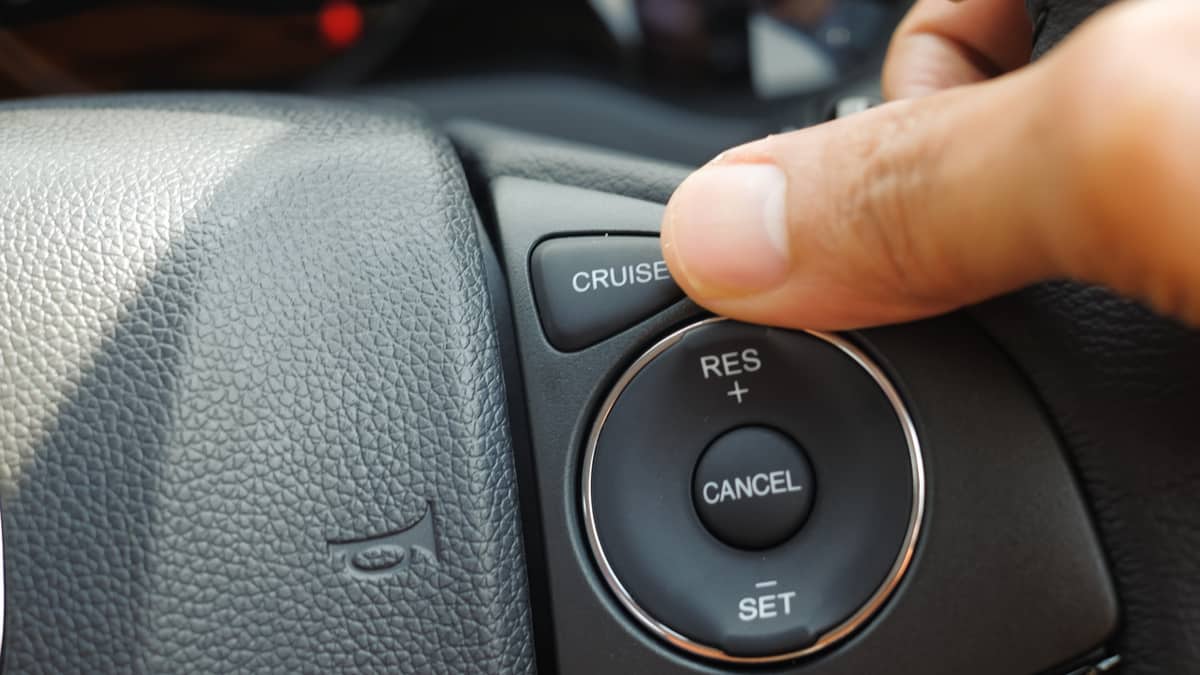
Because the Peterbilt 389 relies on a chassis-wide electrical network, a compromised ground can lead to intermittent signal drops. Steering column wiring is particularly susceptible to fatigue. Constant adjustments of the tilt wheel can fray the internal harness, leading to a loss of the signal from the cruise toggle switch itself. If the ground path is intermittent, the system may function perfectly on smooth asphalt but cut out immediately upon encountering high-impact road vibration.
By The Numbers
Operating Voltage
Failure Rate (Sensors/Wiring)
How to Diagnose and Fix Peterbilt 389 Cruise Control Malfunctions
Before you start replacing hardware, you must follow a methodical diagnostic flow to isolate the fault. Many operators mistakenly replace expensive sensors only to find the issue was a loose wire or an unaddressed software fault.
📋
Step-by-Step Guide
Recommended Best Deal Products



Use your PACCAR Davie tool or a standard J1939 diagnostic reader to check for active engine fault codes. Any active code related to the throttle position, engine brake, or VSS will inhibit cruise control. Clear them and see if the issue persists.
Inspect the brake and clutch switches. Ensure the button is fully depressed when the pedal is at rest. If the switch plunger is loose, use a multimeter set to continuity mode; if the circuit doesn’t open when the pedal is released, the switch needs physical adjustment or replacement.
Remove the steering column shroud. With the ignition in the ‘On’ position, verify that 12-14V is present at the cruise control switch harness. If you find low voltage or fluctuating readings, you have a damaged wire or a poor ground connection in the column.

Audible Premium Plus — Annual Membership
12 audiobook credits up front, plus the full Audible catalogue.
See Annual PlansTroubleshooting Persistent Peterbilt 389 Cruise Control Issues
If your initial diagnosis yields no results, you are likely dealing with deep-system nuances, such as software parameter conflicts or intermittent connection faults.
Road Vibration and Loose Connections
Intermittent cruise loss is the hallmark of a physical connection failure. A ground strap on the transmission or engine chassis that has become oxidized will lose contact when the truck encounters heavy vibrations. Over time, the vibration-induced wear at wire junctions—often found in the firewall grommets—can cause the signal to drop intermittently. Inspect all main chassis grounds for corrosion; a clean connection is essential for the ECM to maintain a stable cruise signal.
ECM Parameter Settings and Software Updates
Sometimes, the fix isn’t hardware at all. ECM parameter settings can restrict cruise control based on excessive idling or specific driver behavior profiles. If your truck has recently had work done, verify that the cruise control parameters are correctly set to your required operating speeds. On PACCAR MX-13 engines, older firmware versions have been known to cause “hiccups” in cruise engagement, which are easily solved by an authorized dealer software flash.
Standard vs. Adaptive Cruise Control Dynamics
It is vital to distinguish between standard cruise and Adaptive Cruise Control (ACC). If you have ACC, the radar unit mounted on the front bumper is a critical component. If this sensor is obstructed by dirt, ice, or damage, the system will disable cruise control entirely for safety. Always ensure your radar sensor is clean and properly aligned before troubleshooting the electrical path.
If your cruise works for exactly 5 minutes then cuts out, suspect an engine fault code that is “pending.” Use a high-quality scanner to watch live data while driving; often, a single sensor will trigger a temporary fault that disappears from memory quickly.
Peterbilt 389 Cruise Control Repair Safety and Pitfalls
Recommended Best Deal Products


Safety is the primary reason the cruise system is so sensitive. Bypassing these safety interlocks is dangerous and can lead to unintended consequences, such as starting the truck in gear if the clutch switch is incorrectly jumpered.
- Never Bypass Safety Switches: Do not “rig” the clutch or brake switches to stay engaged. These exist to prevent sudden engine torque from being applied while the clutch is partially engaged, which can result in catastrophic transmission damage.
- Scan Before Replacing: Resist the urge to replace the cruise switch or the ECM until you have verified the pedal sensor signals with a diagnostic tool. 80% of replacements are premature.
- Verify Grounds First: Always clean chassis grounds and battery terminal connections before investigating deep ECM faults. A bad ground often mimics a failed sensor.
- Know Your Limits: If your diagnostic tool indicates a failure internal to the ECM, do not attempt to open or modify the module. This is a task for a certified PACCAR technician with the necessary software authorization.
Do not operate the truck if the cruise control system is behaving erratically while the engine is also showing check-engine lamps. Intermittent electrical faults can lead to sudden, unintended throttle movements or loss of engine braking.
Resolving cruise control issues requires patience and a systematic approach to electrical diagnostics. By following these steps—scanning for codes, checking pedal alignment, and ensuring stable grounds—you can address the vast majority of failures on your Peterbilt 389. Always scan for codes before buying replacement parts and verify sensor alignment before assuming a mechanical failure. If these steps fail to resolve your cruise control issues, contact your nearest Peterbilt dealer to perform an ECM diagnostic and parameter check to ensure your safety and engine efficiency on the road.
Peterbilt 389 Cruise Control Not Working: Frequently Asked Questions
Why does my cruise control turn off when I hit a bump?
This is almost always caused by a loose connection or a misaligned safety switch, typically on the clutch or brake. When the truck hits a bump, the mechanical vibration causes the switch circuit to momentarily break, signaling the ECM to disengage cruise as a safety precaution. Check your switch brackets for play and ensure all wiring harnesses are secured tightly against the chassis.

Prime for Young Adults — 6 Months Free
Students and 18–24s get six months of Prime free, then half price.
Start 6 Months FreeCan a blown fuse disable Peterbilt cruise control?
Yes, absolutely. The cruise control system operates on a dedicated circuit that passes through the Power Distribution Center (PDC). If the fuse blows due to a short or power surge, the switch signals will never reach the ECM. Always inspect the fuse block in the passenger side dash panel for any open circuits specifically labeled for cruise control or engine electronics.
How does the clutch sensor affect cruise control?
The clutch sensor acts as a ‘kill switch’ for the cruise control. Because the cruise system must disengage the moment you change gears to prevent engine over-revving, the sensor must maintain a constant signal. If the sensor is stuck, faulty, or incorrectly adjusted, the ECM will perceive the clutch as being ‘in use’ and will permanently prevent the cruise control from activating.
Do I need a dealer to reset cruise control codes?
Not necessarily. If the fault is caused by a simple sensor or fuse issue, replacing the part will often allow the system to reset itself automatically once the engine is power-cycled. However, if the ECM has logged a persistent ‘hard code’ related to engine performance or speed signal integrity, you will likely need diagnostic software to clear the code and recalibrate the system.
Can low air pressure affect cruise control engagement?
While the air system primary pressure usually governs the parking brake, certain Peterbilt 389 configurations utilize an air-pressure-sensitive switch for the brake pedal. If your air pressure is critically low, or if the pressure switch is malfunctioning, the system may interpret the brake as being partially applied. Ensure your service brake air pressure is at normal operating levels and that the switch is not failing.