What Does A/C Mean In A Car What Does A C Mean In A 2026
Last Updated on September 1, 2026 by Albert Duke
In your car, A/C stands for Air Conditioning, a vital system designed to cool and dehumidify the passenger cabin. Its primary function is to enhance your driving comfort by regulating interior temperature and air quality.
The question ‘what does a/c mean in a car’ is common, and we are here to clarify that A/C stands for Air Conditioning. This seemingly simple button on your dashboard controls a sophisticated system designed to make your driving experience significantly more comfortable.
Understanding your car’s A/C is crucial for new car owners, curious drivers, and anyone looking to get the most out of their vehicle. We will demystify this essential feature, explaining not just its meaning but also its function and how it works.
We believe knowing these basics empowers you to use your car’s climate control effectively and maintain it properly. Let’s begin by breaking down this common abbreviation and its core purpose.
Key Takeaways
- A/C means Air Conditioning.
- Cools and dehumidifies car cabin.
- Works by cycling refrigerant.
- Uses dedicated dashboard controls.
- Essential for comfort and safety.
What Does a C Mean in Your Car?
Decoding the Abbreviation
When you see ‘A/C’ on your car’s dashboard or climate controls, it simply stands for Air Conditioning. This acronym universally refers to the system that actively cools and conditions the air inside your vehicle’s passenger cabin.

The term is consistent across all vehicle makes and models, ensuring a standardized understanding for drivers globally. We use it to initiate the process of climate control that goes beyond just blowing air.
Key Goal of Car a C
The primary goal of your car’s A/C system is twofold: to cool the air and to dehumidify the interior of your vehicle. It achieves this by removing heat and moisture from the cabin, creating a more comfortable environment.
This function is essential during hot summer months, but its dehumidifying power is equally valuable in damp or humid conditions. The A/C system effectively regulates the air quality and temperature for occupants.
A C Versus Fan Only
It is important to differentiate between running your car’s A/C and merely using the fan. The fan circulates air, either drawing it from outside or recirculating cabin air, without actively changing its temperature or humidity significantly.
When you press the A/C button, you activate the cooling and dehumidifying process. Without A/C engaged, the fan simply moves air that is ambient to the car’s surroundings, offering ventilation but not true climate control. This distinction ensures you understand what each setting accomplishes.
Now that we understand what A/C means and what it does, let’s explore the ingenious process behind its cooling power.
How Does Car Air Conditioning Work?
The process of cooling your car’s interior with A/C relies on a fundamental principle of physics, where a refrigerant changes state. It absorbs heat when it vaporizes and releases heat when it condenses, moving thermal energy from one place to another.
This cycle continuously repeats, transforming warm, moist cabin air into cool, dry air. We can simplify this complex system by focusing on its main components and their roles in this thermal transfer.
Key Components Explained
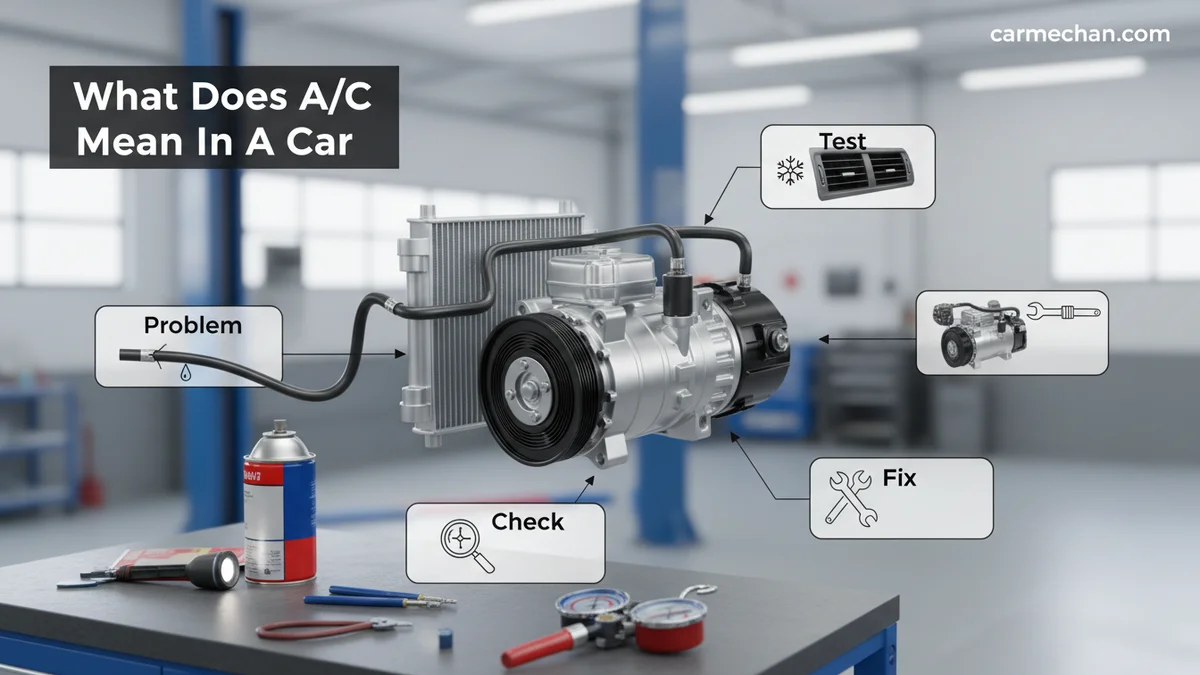
The car A/C system comprises several critical components working in harmony. These include the compressor, which pressurizes the refrigerant; the condenser, which dissipates heat; the expansion valve, which regulates refrigerant flow; and the evaporator, which absorbs heat from the cabin.
Each part plays a specific role in the refrigerant’s journey, from a low-pressure gas to a high-pressure liquid and back again. Understanding these components helps us grasp the system’s efficiency in cooling your vehicle.
Simple Cooling Process
Here’s a simplified breakdown of the cooling process: The compressor pumps refrigerant as a high-pressure gas to the condenser, located at the front of the car, where it releases heat and condenses into a high-pressure liquid.
This liquid then passes through an expansion valve, which lowers its pressure, causing it to flash into a cold, low-pressure gas. This cold gas then enters the evaporator coil inside the cabin, where it absorbs heat from the passenger compartment and simultaneously dehumidifies the air.
Finally, the now warm, low-pressure gas returns to the compressor, completing the cycle. This continuous loop efficiently transfers heat out of your car’s interior.
Refrigerant’s Essential Role
Refrigerant is the lifeblood of your car’s A/C system. It is a specialized chemical compound designed to easily change between liquid and gaseous states at specific temperatures and pressures. Common types in modern cars include R-134a and the newer, more environmentally friendly R-1234yf .
Without the correct amount and type of refrigerant, the A/C system cannot effectively absorb and release heat. It acts as the medium that facilitates the entire cooling process, making it indispensable for proper A/C function.
Understanding the ‘how’ behind your A/C makes using it more intuitive, especially when you know what dashboard controls you have at your fingertips.
4 Essential Car a C Controls
Operating your car’s A/C system involves understanding a few key controls typically found on your vehicle’s dashboard. These controls allow you to customize your cabin’s climate to your exact preferences.

We’ll walk you through the most common A/C functions, ensuring you can master your car’s climate control system. These basic adjustments provide maximum comfort and clarity.
Locating the a C Button
The A/C button is usually marked with the letters ‘A/C’ or a snowflake icon. Pressing this button activates or deactivates the air conditioning compressor, which is the core component responsible for cooling and dehumidifying.
When the A/C is active, an indicator light often illuminates, confirming its operation. Familiarizing yourself with this button is the first step to controlling your car’s internal climate.
Adjusting Cabin Temperature
Temperature control is managed by a dial or buttons, often marked with blue and red segments or specific degree markings. This control dictates how cool or warm you want the air to be inside the cabin.
We can select a precise temperature, and the system mixes cooled air from the A/C with heated air from the engine to achieve your desired setting. Modern cars may feature automatic climate control, where you set a temperature, and the system adjusts fan speed and air mix independently.
Managing Fan Speed
The fan speed control, typically represented by a fan icon with varying bars or a dial with numerical settings, determines the volume of air flowing into the cabin. Increasing the fan speed pushes more air through the vents.
We can adjust this based on how quickly you want to cool or warm the interior. A higher fan speed is useful for rapid climate changes, while a lower setting maintains a comfortable ambient flow.
Using Air Recirculation
The recirculation button, often depicted by a car icon with a circular arrow inside, closes the outside air intake and recirculates the air already present in the cabin. This mode is particularly useful on very hot days or in dusty environments.
It allows the A/C to cool the internal air more quickly and efficiently, as it doesn’t constantly draw in hot outside air. We find it also helps prevent outside odors or pollutants from entering the vehicle. Remember to switch it off periodically to bring in fresh air.
Knowing how to operate these controls is one thing, but understanding the best times and reasons to engage your A/C can further enhance comfort and system longevity.
When to Engage Your Car a C
While many drivers primarily engage their car’s A/C for immediate cooling on hot days, its utility extends far beyond simple temperature reduction. We use this system for various benefits that contribute to overall driving comfort and safety.
Knowing these diverse applications allows us to maximize the value of our car’s climate control. We explore the multifaceted reasons to activate your A/C.
For Cabin Cooling
The most obvious reason to use your A/C is to cool the cabin on warm days. The system actively removes heat from the interior, transforming a stifling car into a comfortable oasis. This makes long journeys much more pleasant.
We recommend engaging the A/C as soon as you feel too warm, especially after your car has been sitting in the sun. This direct cooling function is its primary and most frequently utilized purpose.
To Reduce Interior Humidity
Beyond cooling, the A/C system is highly effective at dehumidifying the air. This function is invaluable in humid climates or during rainy weather, as it significantly reduces moisture inside the car. Less humidity prevents that sticky, muggy feeling.
We often overlook this critical benefit, but it contributes immensely to occupant comfort. Drying the air makes even slightly cooler temperatures feel more refreshing.
For Effective Defrosting
A surprising but crucial function of your A/C is its role in defrosting foggy windows. By drying the air, the A/C system quickly removes moisture from the interior of your windshield and other glass surfaces, preventing them from fogging up.
We typically engage the defroster setting, which often automatically turns on the A/C compressor to leverage its dehumidifying power. This ensures clear visibility, which is paramount for safe driving.
Maintaining System Health
Regular use of your A/C system, even in cooler weather, is vital for its long-term health. The compressor requires periodic operation to circulate refrigerant and lubricant throughout the system.
This lubrication prevents seals from drying out and cracking, which can lead to refrigerant leaks. We recommend running your A/C for at least 10-15 minutes once a week, even in winter, to keep all components well-lubricated and ready for optimal performance in 2026 and beyond.
As beneficial as your A/C system is, it’s also surrounded by a few common misconceptions that we should clarify.
3 Common Car a C Myths Debunked
Numerous misconceptions circulate about car A/C systems, often leading to inefficient use or unnecessary worry. We want to provide you with accurate, factual information to help you use your system wisely.
By addressing these popular myths, we aim to ensure you have a clear understanding of how your car’s A/C truly functions. Let’s separate fact from fiction regarding your vehicle’s climate control.
Fuel Efficiency Concerns
A common myth suggests that running the A/C severely impacts fuel economy. While it’s true that the A/C compressor draws power from the engine, modern systems are far more efficient than older ones. The impact on fuel economy in 2026 models is generally modest.
Data suggests that for modern cars, A/C usage might reduce fuel efficiency by approximately 5-10% during hot conditions and urban driving . At high speeds, opening windows can sometimes create more aerodynamic drag than running the A/C, negating any fuel savings.
We find that comfort often outweighs a marginal fuel penalty.
Winter Usage Misconceptions
Many drivers believe there’s no need to use A/C in winter. However, as we discussed, the A/C system actively dehumidifies the air. This function is essential for quickly clearing foggy windows, especially during cold and damp conditions.
We also advise running the A/C periodically in winter to maintain its internal components. This practice keeps seals lubricated and prevents potential system failures down the line. It’s a proactive measure for longevity.
Instant Cooling Beliefs
Some people think setting the temperature to the lowest possible setting will cool the car faster. While this feels intuitive, the A/C system cools the air at a fixed rate, regardless of the temperature dial’s lowest setting. Setting it to “MAX A/C” or the coldest option simply tells the system to reach that temperature, not to get there quicker.
We recommend setting your desired comfortable temperature, and the system will work efficiently to achieve it. Blasting the coldest setting often leads to overcooling and wasted energy once the cabin reaches a comfortable level. Start with a reasonable temperature and adjust as needed.
Clearing up these myths helps us use our A/C systems more effectively and contribute to their longevity through proper care.
Frequently Asked Questions
Is Running Car a C Bad for Gas Mileage?
Yes, running your car’s A/C can slightly reduce gas mileage, typically by 5-10% depending on conditions and vehicle. Modern systems are more efficient than older ones. It uses engine power, which consumes more fuel. However, opening windows at high speeds can sometimes be less efficient due to aerodynamic drag.
How Often Should I Use My Car’s a C?
You should use your car’s A/C for at least 10-15 minutes every week, even in cooler weather. This regular operation helps to keep the compressor lubricated and maintains the integrity of the system’s seals, preventing refrigerant leaks and ensuring efficient performance when you truly need it.
What Is Refrigerant in a Car a C?
Refrigerant is a special chemical fluid that circulates through your car’s A/C system. It’s responsible for absorbing heat from the cabin and releasing it outside. Common types include R-134a and the newer, more environmentally friendly R-1234yf. Without refrigerant, the A/C cannot cool the air.
Can I Just Use the Fan Instead of a C?
Yes, you can absolutely use just the fan to circulate air within the cabin without engaging the A/C. The fan brings in outside air or circulates interior air. However, using only the fan will not cool the air below the outside temperature or dehumidify it. It provides ventilation, not active cooling or moisture removal.
Why Does My Car a C Smell Bad Sometimes?
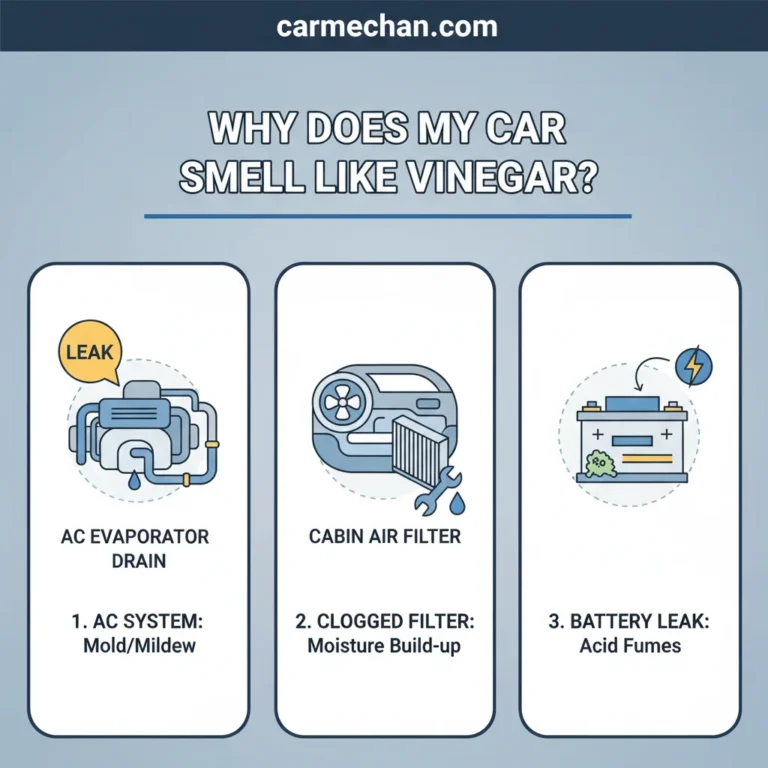
A musty or moldy smell from your car A/C often indicates bacterial or fungal growth on the evaporator core. This happens when moisture gets trapped in the system. Changing your cabin air filter regularly and running the fan on high for a few minutes before shutting off the car can help dry out the evaporator and prevent odors.
Final Thoughts on Your Car’s a C System
We’ve clarified that A/C means Air Conditioning, a vital component for both cooling and dehumidifying your car’s cabin. This system operates through a clever refrigeration cycle, employing key components and refrigerant to manage your vehicle’s internal climate.
Effective use of your A/C involves understanding its dashboard controls and recognizing its numerous benefits beyond just cooling, such as dehumidifying and defrosting. We’ve also debunked common myths, helping you use your A/C more efficiently.
Armed with this knowledge, you are now better equipped to use and appreciate your car’s air conditioning system in 2026. Prioritize regular usage and minor maintenance to ensure its optimal performance for years to come. Enjoy a more comfortable drive!