C4 Corvette Cruise Control Vacuum Lines Diagnosed & Fixed
Is your C4 Corvette losing its ‘cruise’ just when you hit the highway? You are not alone. Decades of engine heat have likely turned your rubber vacuum lines into brittle, leaking ruins, rendering the system incapable of maintaining the necessary pressure. This guide covers how to inspect, test, and repair your C4 Corvette cruise control vacuum lines to restore factory performance.


Understanding the C4 Corvette Cruise Control Vacuum Lines System Flow
📤 Share Image

The Vacuum Circuit Loop Explained
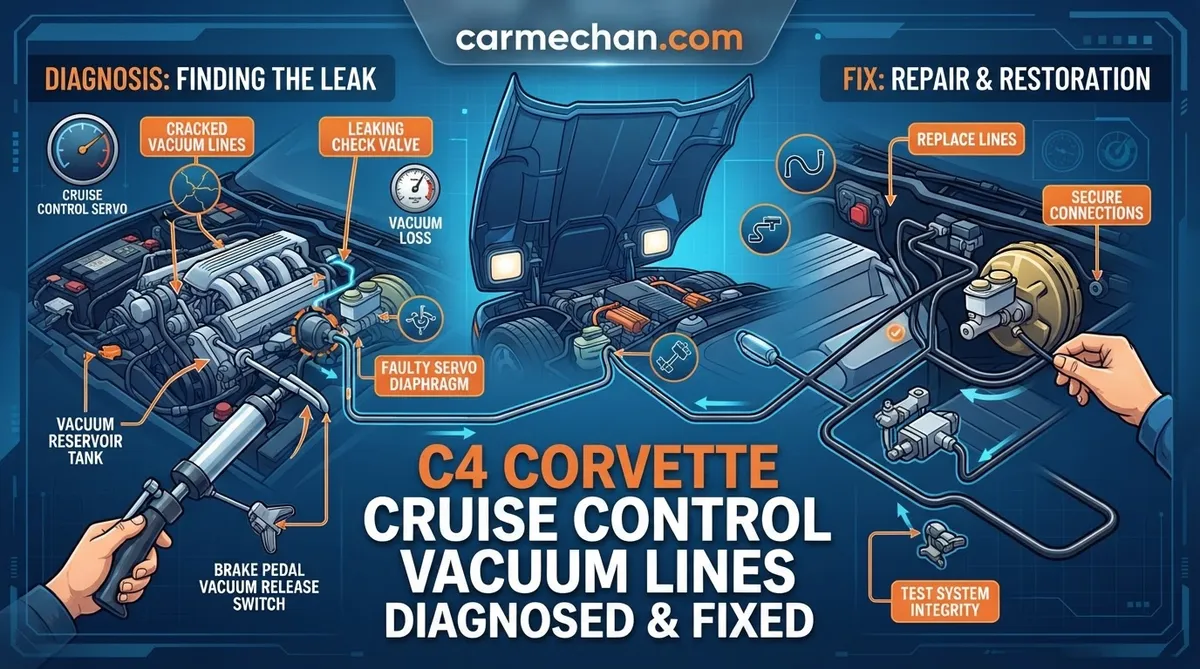
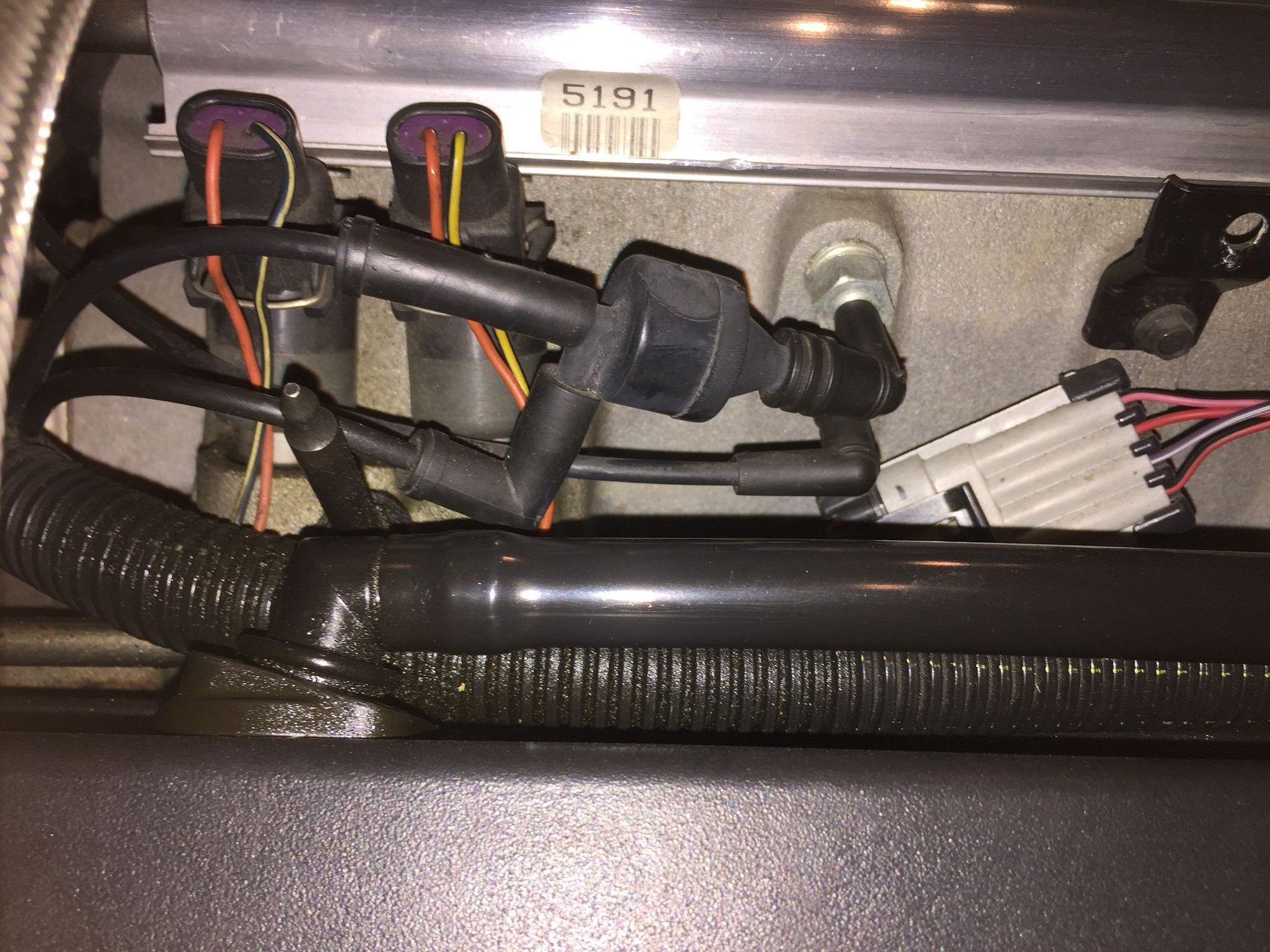
The C4 Corvette cruise control system relies on engine vacuum to physically pull the throttle linkage. Unlike modern electronic drive-by-wire systems, this analog setup uses a vacuum servo (actuator) mounted near the engine to manipulate the throttle body. The system pulls vacuum directly from the intake manifold, routes it through a vacuum check valve, stores it in a plastic vacuum reservoir, and feeds it to the servo. When you engage the cruise control, the servo diaphragm creates the necessary tension to move the linkage, effectively acting as your “electronic” foot.
Why Vacuum Stability Matters at Highway Speeds
Vacuum stability is the linchpin of a functioning system. During steady-state cruising, manifold vacuum is high. However, when you encounter an uphill grade, manifold vacuum drops significantly as the engine load increases. The vacuum check valve is essential here; it traps the vacuum inside the reservoir, preventing it from bleeding back into the intake manifold. Without this trapped reserve, the cruise control system will experience an ‘uphill drop-off’ and disengage because the servo lacks the stored pressure required to hold the throttle open.

Diagnosing Common C4 Corvette Cruise Control Vacuum Lines Leaks
Symptoms of Vacuum Pressure Loss
Identifying a failure in the C4 Corvette cruise control vacuum lines starts with recognizing the symptoms. A vacuum leak anywhere in the lines will prevent the system from engaging or holding speed. Common red flags include:
- The cruise system fails to engage entirely when the stalk switch is moved.
- The vehicle loses speed immediately upon hitting an incline.
- The system engages momentarily but disengages as soon as you release the button.
- Visible cracks or brittleness in the rubber hoses near the engine firewall.
Inspecting Rubber Connectors and Tubing
Rubber connectors often crack and dry-rot over time, causing hidden vacuum leaks that are difficult to spot visually. To diagnose these, use a hand-held vacuum pump (like a Mityvac) to pull 15–20 inHg on individual line segments. If the gauge needle drops, you have found a leak in that specific section of the C4 Corvette cruise control vacuum lines. Remember that engine vacuum leaks elsewhere can affect engine performance, but cruise-specific leaks are isolated to the lines running from the manifold to the reservoir and the servo.
By The Numbers
inHg Test Pressure
Standard Line ID
Step-by-Step Repair of C4 Corvette Cruise Control Vacuum Lines
📋
Step-by-Step Guide
Locate the reservoir (typically hidden behind the passenger side front wheel well or firewall). Disconnect the inlet line and use your vacuum pump to verify the reservoir holds pressure. If it bleeds down immediately, the reservoir is cracked and must be replaced.
Use quality, vacuum-rated hose. Do not use thin-walled windshield washer fluid tubing; it will collapse under engine vacuum. The standard diameter is typically 3/16 to 1/4 inch. Match the factory routing to keep the engine bay clean and prevent kinking.
The check valve should allow flow toward the reservoir but block it from returning. If you can suck air back through the valve from the reservoir side, replace it. A faulty check valve is the most frequent culprit in cruise control “cut-out” issues on hills.
Routing Tips for Factory Cleanliness
When replacing your C4 Corvette cruise control vacuum lines, take care to secure them away from hot exhaust manifolds or moving throttle linkage. Use factory-style plastic clips where possible to prevent the lines from chafing against the sharp edges of the fiberglass body or metal brackets. A tidy installation is not just for aesthetics; it prevents future vibration-induced fatigue of the tubing.
Testing the Brake Pedal Release Switch and Servo Circuit
Brake Release Switch Troubleshooting



Safety is paramount in the C4 design. The brake pedal release switch is a vacuum dump valve. When you touch the brake pedal, this switch opens a port to the atmosphere, instantly bleeding vacuum and disengaging the servo. If this switch is loose or misaligned, it may bleed vacuum constantly, preventing the cruise from engaging. Verify that the switch is firmly mounted and that the brake pedal arm presses the plunger tightly when the pedal is at rest.
Verifying the Cruise Control Actuator Diaphragm
The servo/actuator contains an internal rubber diaphragm. To test it, remove the vacuum line going to the servo and apply your pump directly to the port. If you cannot pull and hold vacuum, the internal diaphragm is torn. Unfortunately, these units are often sealed, meaning a total replacement of the actuator is required if the diaphragm has failed. Do not ignore the condition of the brake pedal vacuum dump valve, as it is just as likely to cause a “no-hold” condition as a leaking servo.
Professional Maintenance Tips for C4 Corvette Vacuum Systems
Long-term reliability of your C4 Corvette cruise control vacuum lines depends on proactive maintenance. Given the age of these vehicles, we recommend a complete inspection of the vacuum routing every two years, specifically focusing on the connections near the engine’s heat sources.
When troubleshooting, always verify the source vacuum at the intake manifold first. If your engine is not producing at least 17-20 inHg at idle, your cruise system will struggle regardless of the condition of your lines.
If you are uncomfortable working near the throttle linkage or brake booster, consult a professional. Incorrectly routed vacuum lines can interfere with throttle return springs, which is a major safety hazard.
The C4 vacuum system is straightforward, yet it demands precise assembly to perform reliably. Vacuum leaks remain the primary cause of cruise control failure in the C4 platform. By utilizing a hand-held vacuum pump to methodically isolate sections of the circuit, you can avoid unnecessary component replacement and effectively target the source of the leak. Always ensure you are using high-quality, vacuum-rated hose that can withstand the intense heat cycles of the engine bay. With a systematic approach, you can restore your Corvette’s long-distance comfort with confidence. Start your circuit inspection today to ensure your next road trip is effortless.
c4 Corvette Cruise Control Vacuum Lines: Frequently Asked Questions
Why does my cruise control stop working when I accelerate?
When you accelerate, engine manifold vacuum drops. A healthy system uses a vacuum reservoir to store pressure, allowing the cruise control to maintain speed. If your vacuum lines are leaking or the reservoir check valve is faulty, the system cannot maintain the required vacuum level under load, causing the cruise control to disengage immediately.
Where is the vacuum reservoir located on a C4?
On the C4 Corvette, the vacuum reservoir is typically integrated into the front bumper assembly or mounted near the front frame rail on the passenger side. It acts as a buffer to ensure consistent vacuum pressure is available to the cruise control transducer and HVAC controls, even when the engine is under higher throttle conditions.
How do I test if my cruise control vacuum lines are leaking?

The most professional way to test is by using a Mityvac or a similar handheld vacuum pump. Disconnect the vacuum line at the cruise control servo and attach the pump. Apply 15-20 in-Hg of vacuum and observe the gauge; if the pressure drops, you have a leak in that section of the line.
Will a bad brake release switch cause the cruise to not engage?
Yes, absolutely. The cruise control system includes a brake release switch that vents the vacuum system to atmosphere whenever the brake pedal is pressed. If the switch is misadjusted, broken, or if the rubber vacuum hose connected to it has failed, the system will never build enough vacuum to engage the cruise control.
Can I use standard rubber vacuum hose for replacement?
While standard rubber hose will work temporarily, it is not recommended for an expert-level repair. The engine bay of a C4 Corvette reaches high temperatures that cause standard rubber to harden and crack quickly. For a reliable, long-term fix, always use professional-grade silicone vacuum hose, which offers superior heat resistance and flexibility.