Some Vents Not Blowing Air In Car Fix Some Car Vents 2026
Last Updated on October 23, 2026 by Ryan


When some vents not blowing air in car, the issue often stems from specific components within your vehicle’s HVAC system like blend door actuators or vacuum lines, rather than a complete system failure.
Understanding these common culprits can help you diagnose the problem and determine if a simple DIY fix is possible or if professional assistance is required.
When some vents not blowing air in car, it’s a specific issue signaling that components within your vehicle’s Heating, Ventilation, and Air Conditioning (HVAC) system are malfunctioning, rather than the entire system being offline. This often points to specific mechanical or electrical failures affecting airflow distribution.
Understanding these common culprits can help you diagnose the problem. You can then determine if a simple DIY fix is possible or if professional assistance is required to restore full functionality.
Key Takeaways
- Specific vent issues differ from full AC failure.
- Blend door actuators cause many airflow problems.
- Vacuum leaks often disrupt air distribution.
- Simple tests can identify common issues.
- Professional help is best for complex repairs.
Key Takeaways
- Specific vent issues differ from full AC failure.
- Blend door actuators cause many airflow problems.
- Vacuum leaks often disrupt air distribution.
- Simple tests can identify common issues.
- Professional help is best for complex repairs.
7 Common Reasons Some Car Vents Stop Blowing Air
When only certain vents fail to deliver air, it points to localized issues within the car’s climate control system. Here are the most frequent culprits behind uneven air distribution in your vehicle as of 2026.

Actuator Malfunction
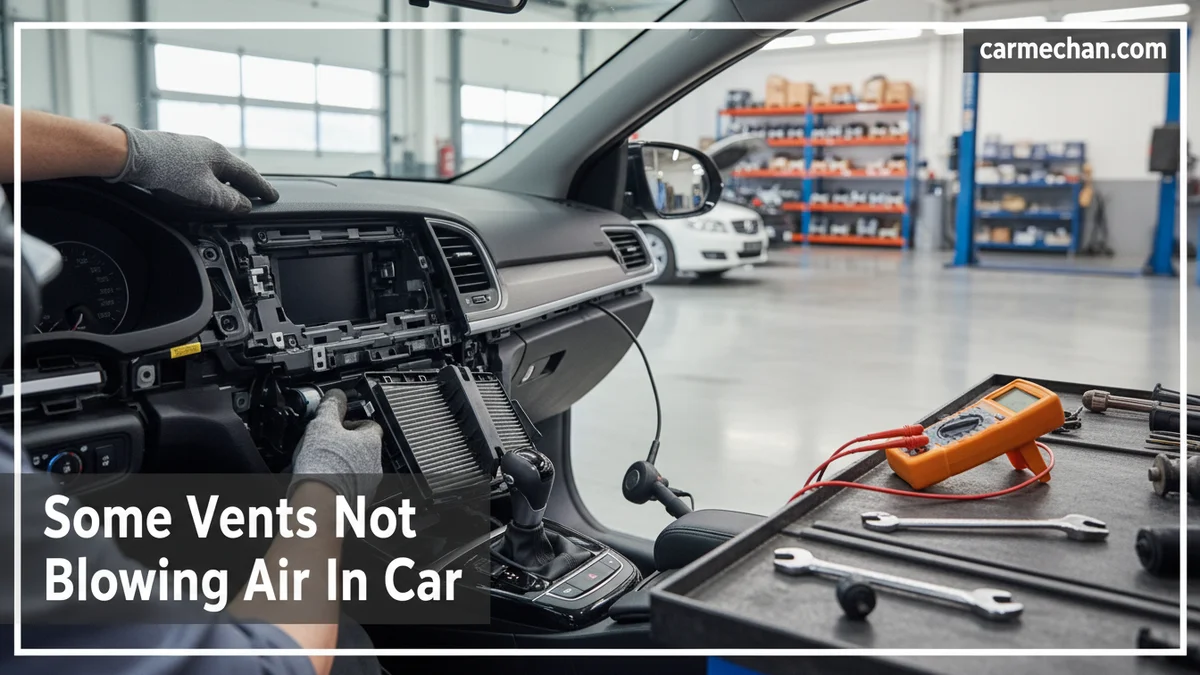
A blend door actuator controls the mix of hot and cold air and directs airflow to different vents. If an actuator fails or gets stuck, it can block air from reaching specific vents while others work normally. You might hear clicking noises from the dashboard.
Vacuum Line Leaks
Many older vehicles rely on a vacuum system to operate the blend doors and mode doors that control airflow. A crack or disconnection in a vacuum line can lead to specific vents losing air or air defaulting to the defrost setting. This often presents as erratic airflow changes.
Blocked Air Ducts
Over time, debris such as leaves, dirt, or even small toys can become lodged within the car’s air ducts. This physical obstruction prevents air from flowing freely to certain vents, leading to reduced or no airflow from those specific outlets. A visual inspection can sometimes confirm this.
Stuck Mode Doors
Similar to blend doors, mode doors direct air to specific outlets like the dash, floor, or defrost vents. If a mode door becomes jammed due to mechanical failure or a foreign object, air might be permanently redirected away from the affected vents. The mode selector switch might not feel right.
Damaged Blower Motor Resistor
While a faulty blower motor resistor typically affects fan speed for all vents, sometimes it can create inconsistent power delivery leading to uneven airflow. If air is weak from some vents but strong from others, it could indicate a specific electrical issue rather than a resistor failing across the board.
Faulty Control Unit
The HVAC control unit is the brain of your car’s climate system. If this unit malfunctions, it might send incorrect signals to actuators or mode doors. This leads to improper air distribution or specific vent failures without affecting the entire system. Other electrical components might also behave erratically.
Electrical Wiring Issues
Loose, corroded, or damaged electrical wiring can prevent power from reaching specific actuators or sensors. This localized electrical failure means only certain parts of the automotive AC system basics won’t respond to commands. For example, a blend door might not move if its power supply is cut. You can find common car electrical issues when addressing these problems.
Now that you understand the range of potential causes, let’s explore how you can begin to systematically identify the exact problem within your vehicle.
How to Pinpoint Your Car’s Vent Problem in 5 Steps
Identifying the precise cause of uneven airflow requires a methodical approach. Follow these steps to diagnose the issue in your car effectively before considering any repairs.
Listen for Sounds
Turn your car’s fan on high and listen carefully near your dashboard and under the hood. Clicking, whirring, or buzzing sounds often indicate a failing blend door actuator or mode door motor struggling to operate. A distinct hissing sound from the engine bay might suggest a vacuum leak.
Check All Settings
Cycle through all the HVAC control settings: fan speeds, temperature blend (hot to cold), and vent modes (dash, floor, defrost). Observe if the airflow changes for any vent. If one mode works for specific vents and another doesn’t, it points to a mode door or actuator issue.
Inspect Visible Vents
Physically inspect the vents that aren’t blowing air. Look inside with a flashlight for any visible obstructions like leaves, paper, or foreign objects. Also, check if the vent louvers are physically stuck or broken. Ensure they can move freely and are not damaged.
Test Airflow Strength


Compare the airflow strength from the working vents to the non-working ones. You can use a piece of paper or your hand to gauge the difference. If some vents have very weak air while others are strong, it suggests a blockage or a partially stuck door redirecting air. This can help you diagnose uneven airflow car AC.
Review Control Panel
Some modern vehicles might display error codes related to the HVAC system on the dashboard or through a diagnostic scan tool. While not always common for vent issues, it’s worth checking if your car’s control panel indicates any system faults. This is part of basic DIY car maintenance checks.
Once you’ve systematically observed and tested your car’s HVAC system, you might have a clearer idea of the problem. Many basic issues can be resolved with some practical DIY solutions.
3 Practical DIY Solutions for Uneven Airflow
For certain common vent problems, you might not need a mechanic. Some straightforward fixes can be performed at home with basic tools and a bit of patience. Always prioritize safety and consult your owner’s manual before attempting any repairs.
Reset Actuators
Often, a blend door actuator gets stuck due to a minor electrical glitch. You can sometimes reset it by disconnecting the car battery for 15-30 minutes, then reconnecting it. This recalibrates the HVAC system. Ensure you know your radio code beforehand. Alternatively, locate the specific actuator and disconnect its electrical connector for a few minutes, then reconnect.
Repair Vacuum Hoses
For vehicles with vacuum-operated climate controls, a simple vacuum leak can be the culprit. Visually inspect all accessible vacuum lines under the hood, especially those running to the firewall. Look for cracks, breaks, or loose connections. Often, a small piece of rubber hose can repair a compromised section. Listen for any hissing sounds with the engine running.
Clear Simple Obstructions
If your inspection revealed debris inside the vent ducts, you might be able to clear it yourself. Use a vacuum cleaner with a narrow attachment to reach into the vent. A long, flexible grabber tool can also help. Be gentle to avoid damaging the internal ductwork or flaps. Always ensure the car’s ignition is off before working near the vents.
While these DIY solutions can be effective for minor issues, many problems require a professional touch. Knowing when to call in an expert can save you time, money, and potential headaches.
When to Seek Professional Car AC Help
Not all car vent issues are suitable for DIY fixes. Recognizing when a problem exceeds your capabilities or requires specialized tools is crucial. Professional intervention ensures correct diagnosis and safe, effective repair.
Complex Diagnostics Needed
If your troubleshooting steps haven’t identified a clear cause, or if symptoms are intermittent and confusing, it’s time for a mechanic. Modern HVAC systems are intricate, and advanced diagnostic equipment is often required to pinpoint electrical or sensor failures that control air distribution.
Special Tools Required
Many HVAC repairs, such as replacing deeply embedded blend door actuators or repairing refrigerant leaks, necessitate specialized tools. These can include refrigerant recovery machines, vacuum pumps, or specific automotive trim removal tools. Attempting such repairs without the right equipment risks further damage.
Safety Concerns Arise
Working with refrigerant can be dangerous and harmful to the environment if not handled correctly. Also, disassembling parts of your dashboard can be complex and risky, potentially affecting airbags or other safety systems. If you’re unsure about any step, safety concerns arise, and professional help is recommended.
Repair Costs Estimated
Professional repair costs can vary significantly based on the issue. Replacing a blend door actuator, for instance, can cost anywhere from $200 to $600 for parts and labor, depending on the car model and accessibility .
Vacuum line repairs are usually less, around $100-$300. Always get a detailed estimate.
By understanding these situations, you can make an informed decision about when to tackle a repair yourself or when it’s best to consult a trusted mechanic for expert assistance.
Frequently Asked Questions
Why Are Only Certain Vents Not Blowing Air in My Car?
When only certain car vents stop blowing air, it often indicates a specific mechanical fault rather than a complete system failure. Common culprits include a stuck blend door actuator, disconnected vacuum lines, or physical obstructions within the air ducts affecting only those particular outlets.
Can a Faulty Blend Door Actuator Cause Specific Vents to Stop Working?


Yes, a faulty blend door actuator is a very common reason for specific vents to stop working. These actuators control airflow direction to different vents. If one fails, it might get stuck, diverting air away from certain vents while others continue to function normally.
How Can I Tell If a Vacuum Leak Is Causing My Car’s Vent Problems?
You might suspect a vacuum leak if your AC mode changes erratically or defaults to the defrost setting, especially during acceleration. Visually inspecting rubber vacuum lines for cracks, disconnections, or a hissing sound can help identify a potential leak causing specific vent issues.
Is It Safe to Drive My Car If Only Some AC Vents Are Not Blowing Air?
Generally, it is safe to drive if only some AC vents are not blowing air, as it rarely impacts vehicle operation or safety. However, ignoring the issue could lead to discomfort or mask a larger underlying HVAC problem that may become more costly to fix later.
What Is the Typical Cost to Fix a Blend Door Actuator in a Car?
The typical cost to fix a blend door actuator varies significantly by vehicle model and labor rates, often ranging from $200 to $600. This includes parts and several hours of labor, as reaching the actuator can be complex, sometimes requiring dashboard removal.
Conclusion
Addressing the issue of some vents not blowing air in car requires a systematic approach to diagnosis. We’ve explored that many causes, from blend door actuators to vacuum lines, are identifiable with careful observation. While some simple DIY fixes are possible for common problems like resets or minor obstructions, complex issues demand professional attention.
Apply these diagnostic steps, attempt basic DIY fixes if appropriate, or consult a trusted mechanic when necessary to restore your car’s full climate control functionality for a comfortable ride in 2026.