How Many Miles Can a Tesla Last? Lifespan & Battery Longevity Guide
Last Updated on September 1, 2026 by Ryan
Teslas are engineered for remarkable longevity, with many owners exceeding 200,000 miles and some even pushing 500,000 miles or more, often surpassing traditional combustion engines. Battery degradation is generally slow, ensuring usable range for hundreds of thousands of miles before significantly impacting daily driving.
🎯 Key Takeaways

- Expect 200,000-500,000+ miles total lifespan.
- Batteries typically last 300,000+ miles.
- Optimize longevity via smart charging habits.
- Fewer moving parts enhance EV durability.
- Tesla warranty covers major components.
How many miles can a Tesla actually last? This is a crucial question for anyone considering an electric vehicle, representing a significant investment. The good news is you can generally expect your Tesla to last significantly longer than traditional gasoline cars, with many owners comfortably exceeding 200,000 miles and strong indications of reaching 300,000 to 400,000 miles or more.
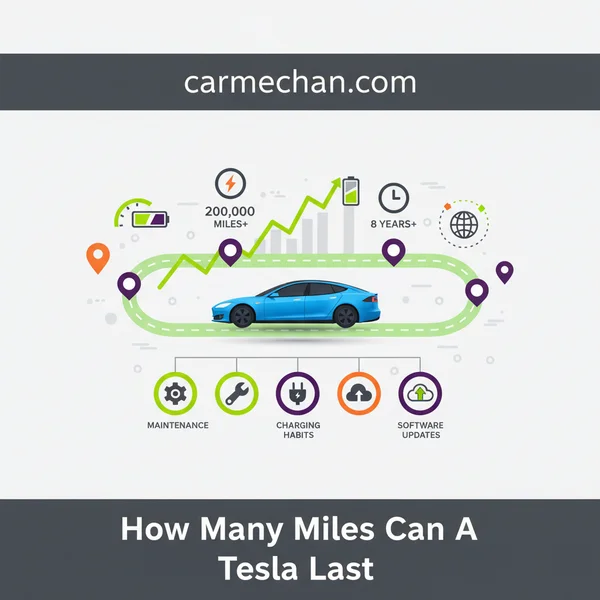
Understanding your Tesla’s potential lifespan, including its critical battery pack, is vital for long-term ownership planning and evaluating its total cost of ownership. This guide will delve into what determines this longevity, helping you maximize your vehicle’s journey and appreciate the durable engineering behind it.
The Lifespan of a Tesla: Overall Vehicle & Battery Expectations
When you invest in a Tesla, you’re buying into a vehicle designed for the long haul. Unlike internal combustion engine (ICE) cars with thousands of moving parts prone to wear, Teslas benefit from the inherent simplicity of electric powertrains. This significantly reduces maintenance needs and potential failure points, contributing to a longer overall lifespan.

Total Vehicle Lifespan Estimates
While definitive end-of-life data for early Teslas is still emerging, real-world examples and expert analyses paint an optimistic picture. You can reasonably expect:
- Most Teslas to comfortably achieve over 200,000 miles with minimal major component issues.
- Many high-mileage Teslas are routinely seen passing 300,000 miles, especially in ride-sharing or delivery fleets, demonstrating exceptional durability.
- Some early Model S and Model X vehicles have even surpassed 400,000 to 500,000 miles, often with original drive units and relatively strong battery performance.
Tesla itself has stated that their drive units are engineered for a million miles, further underscoring the robust design of their core propulsion systems.
Battery Pack Longevity and Degradation
The battery pack is arguably the heart of your Tesla, and its longevity is a common concern. Fortunately, modern EV batteries are remarkably durable. Tesla’s advanced battery management system actively optimizes charging and discharging cycles to minimize degradation.
Independent research and Tesla’s own data indicate:
- The average Tesla battery retains 90% or more of its original capacity after 100,000 miles.
- Degradation typically slows down significantly after the initial thousands of miles.
- Even after 200,000 miles, most Tesla battery packs still hold 80-85% of their original range.
This means your Tesla will maintain a very practical range for hundreds of thousands of miles before you might notice a substantial difference in daily usability.
Key Factors Influencing Tesla Longevity and Battery Health
While Teslas are built to last, your habits and environment play a significant role in how well your vehicle and its battery endure over time. Proactive care can extend both the battery’s useful life and the overall vehicle’s condition.
Charging Habits and Their Impact
How you charge your Tesla is one of the most critical factors influencing battery longevity. Small adjustments can make a big difference in slowing down degradation.
- Daily Charging Limits: For regular use, charging to 80-90% instead of 100% daily is highly recommended. Tesla’s software even guides you on this, suggesting you only charge to 100% for long trips. This practice reduces stress on the battery cells.
- Supercharging Frequency: While convenient for travel, frequent Supercharging (DC fast charging) can generate more heat and place higher stress on the battery compared to slower AC charging. Limiting Supercharger use to essential travel, rather than daily routine, helps preserve battery health over the long term.
- Avoiding Extreme States: Allowing your battery to sit at very low states of charge (below 10%) or at 100% for extended periods should be avoided when possible. The battery management system works best when the battery is within its optimal operating window.
Driving Style, Climate, and Software
Beyond charging, other aspects of ownership contribute to your Tesla’s lifespan.
- Driving Style: Aggressive driving, with frequent hard accelerations and decelerations, not only consumes more energy but also puts more strain on the powertrain and other components like tires and suspension. A smoother, more relaxed driving style extends the life of these parts and reduces stress on the battery.
- Climate Conditions: Extreme hot or cold temperatures can impact battery performance and accelerate degradation if the vehicle is frequently exposed without proper conditioning. Tesla’s thermal management system mitigates much of this, but consistently parking in shaded areas in summer or garaging in winter can offer additional benefits.
- Software Updates: Tesla continuously releases over-the-air software updates. These updates often include optimizations for battery management, charging algorithms, and powertrain efficiency. Keeping your software up to date ensures your vehicle benefits from the latest advancements designed to enhance longevity and performance.
<h2>Understanding Tesla’s Battery & Drive Unit Warranties</h2>
<p>While impressive real-world longevity statistics provide comfort, Tesla also backs its vehicles with comprehensive warranties. These warranties are crucial to understanding the minimum expected lifespan and provide peace of mind for significant components like the battery and drive units.</p>
<h3>Standard Warranty Coverage Explained</h3>
<p>Tesla’s battery and drive unit warranties are designed to protect against defects and excessive degradation. The terms vary slightly depending on your specific model:</p>
<ul>
<li><strong>Model S & X:</strong> 8 years or 150,000 miles, whichever comes first, with a minimum of 70% battery capacity retention over the warranty period.</li>
<li><strong>Model 3 & Y (Standard Range/Long Range RWD):</strong> 8 years or 100,000 miles, whichever comes first, with a minimum of 70% battery capacity retention.</li>
<li><strong>Model 3 & Y (Long Range AWD/Performance):</strong> 8 years or 120,000 miles, whichever comes first, with a minimum of 70% battery capacity retention.</li>
</ul>
<p>This means Tesla guarantees that your battery will not fall below 70% of its original capacity within the specified period. The drive unit warranty covers any failures of the electric motors within the same timeframe and mileage. This coverage is a strong indicator of Tesla’s confidence in the durability of these core components.</p>
<h3>What the Warranty Doesn’t Cover</h3>
<p>It’s important to note what these warranties generally <em>don’t</em> cover. They primarily address manufacturing defects or premature failures under normal use. They typically exclude:</p>
<ul>
<li>Damage caused by accidents, misuse, or improper maintenance.</li>
<li>Normal wear and tear on components like tires, brakes, and suspension.</li>
<li>Minor battery capacity degradation that stays above the 70% threshold.</li>
<li>Modifications to the vehicle not approved by Tesla.</li>
</ul>
<p>Always refer to your specific vehicle’s warranty documentation for the most accurate and detailed information. Understanding these terms helps set realistic expectations for your Tesla’s long-term ownership.</p>
<h2>Maximizing Your Tesla’s Mileage: Best Practices & Future Considerations</h2>
<p>While Teslas are engineered for longevity, your personal habits and choices can significantly impact how many miles your specific vehicle ultimately achieves. Adopting smart practices can help you get the absolute most out of your investment.</p>
<h3>Charging Habits for Longevity</h3>
<p>Battery health is paramount for mileage, and charging is where you have the most direct influence. Think of your Tesla’s battery like a muscle; it prefers to stay active and not be constantly pushed to its limits.</p>
<ul>
<li><strong>Daily Charging Range:</strong> For routine driving, aim to keep your battery’s charge level between 20% and 80%. This “sweet spot” minimizes stress on the battery cells and helps preserve their long-term capacity.</li>
<li><strong>Minimize 100% Charges:</strong> Only charge to 100% when you genuinely need the full range for a long trip. Once charged to full, try to begin driving soon after to avoid letting it sit at maximum state of charge for extended periods.</li>
<li><strong>Avoid Extreme Lows:</strong> Similarly, try to prevent your battery from frequently dropping below 10-20%, as this can also stress the cells.</li>
<li><strong>Limit Frequent Supercharging:</ok> While convenient, consistently relying on DC fast charging (Supercharging) for daily needs can generate more heat and lead to slightly faster degradation compared to slower AC charging at home. Use it for road trips or when time is critical.</li>
</ul>
<p>Small adjustments to your charging routine can add up to significant benefits for your battery’s health over hundreds of thousands of miles.</p>
<h3>Driving Style & Maintenance</h3>
<p>Beyond charging, how you drive and care for your Tesla plays a role in its overall lifespan, not just the battery.</p>
<ul>
<li><strong>Smooth Driving:</strong> Aggressive acceleration and hard braking don’t just consume more energy; they put more strain on drive units, tires, and other components. Smooth, consistent driving extends the life of mechanical parts and maximizes efficiency.</li>
<li><strong>Tire Maintenance:</strong> Proper tire pressure and regular rotations (every 6,250 miles or 10,000 km, as recommended by Tesla) are vital. This ensures even wear, optimizes range, and supports the vehicle’s handling.</li>
<li><strong>Software Updates:</strong> Always install software updates promptly. Tesla regularly releases updates that improve efficiency, optimize battery management, and enhance overall vehicle performance, contributing to longevity.</li>
<li><strong>Climate Control:</strong> While less impactful on core longevity, efficient use of climate control can preserve energy and reduce the load on the high-voltage battery. Pre-condition your cabin while plugged in.</li>
</ul>
<p>By combining these smart practices, you’re not just aiming for a long-lasting battery, but a well-maintained vehicle that can confidently rack up high mileage for years to come.</p>
<h2>Conclusion</h2>
<p>So, how many miles can a Tesla last? The evidence suggests that with proper care, Tesla vehicles are built to endure far beyond conventional expectations, easily surpassing 200,000 miles and often reaching 300,000 miles or more. Their robust battery technology, advanced drive units, and continuous software improvements contribute to remarkable longevity. Your charging habits, driving style, and adherence to maintenance recommendations are key factors in maximizing this potential. By understanding your warranty and adopting best practices, you can drive with confidence, knowing your Tesla is a durable investment designed to deliver an exceptional ownership experience for many years and countless miles.</p>
❓ Frequently Asked Questions
What is the estimated total lifespan of a Tesla vehicle in miles?
Many Teslas are projected to last between 200,000 and 500,000 miles, with well-maintained examples potentially surpassing these figures significantly. The simpler electric drivetrain, with fewer moving parts than traditional gasoline cars, contributes to this extended overall vehicle life.
-(1).jpg "Frequently Asked Questions")
How does battery degradation affect a Tesla’s usable range over time?
Tesla batteries typically experience an initial, slight degradation followed by a much slower decline, often retaining 80-90% of their original capacity after 100,000 miles. This means a usable range persists for hundreds of thousands of miles, rarely impacting daily driving significantly for most owners before the vehicle’s overall end-of-life.
What charging habits best extend a Tesla’s battery life?
For optimal battery health, aim to keep your charge level between 20% and 80-90% for daily driving. Minimize frequent charging to 100% and avoid letting the charge consistently drop below 10%. Prioritizing home Level 2 charging over frequent Supercharging also helps mitigate degradation.
Are Tesla’s electric motors designed for long-term durability?
Yes, Tesla’s electric motors possess significantly fewer moving parts compared to internal combustion engines, making them inherently more durable and less susceptible to wear and tear. They are generally expected to last the lifetime of the vehicle, often exceeding 500,000 miles with minimal maintenance.
What role does software play in managing a Tesla’s longevity and performance?
Tesla utilizes over-the-air software updates to continuously optimize battery performance, charging efficiency, and overall vehicle systems. These updates can proactively enhance longevity, improve safety, and even extend effective range through refined energy management throughout the car’s operational life.
What are the warranty protections for Tesla’s battery and drive unit?
Tesla’s battery and drive unit warranties typically cover 8 years or 100,000 to 150,000 miles (depending on the specific model) and guarantee a minimum of 70% battery capacity retention. This comprehensive coverage provides substantial peace of mind for owners regarding the most critical and expensive components over the long term.