Is It Illegal to Use Cruise Control in Town? A 2026
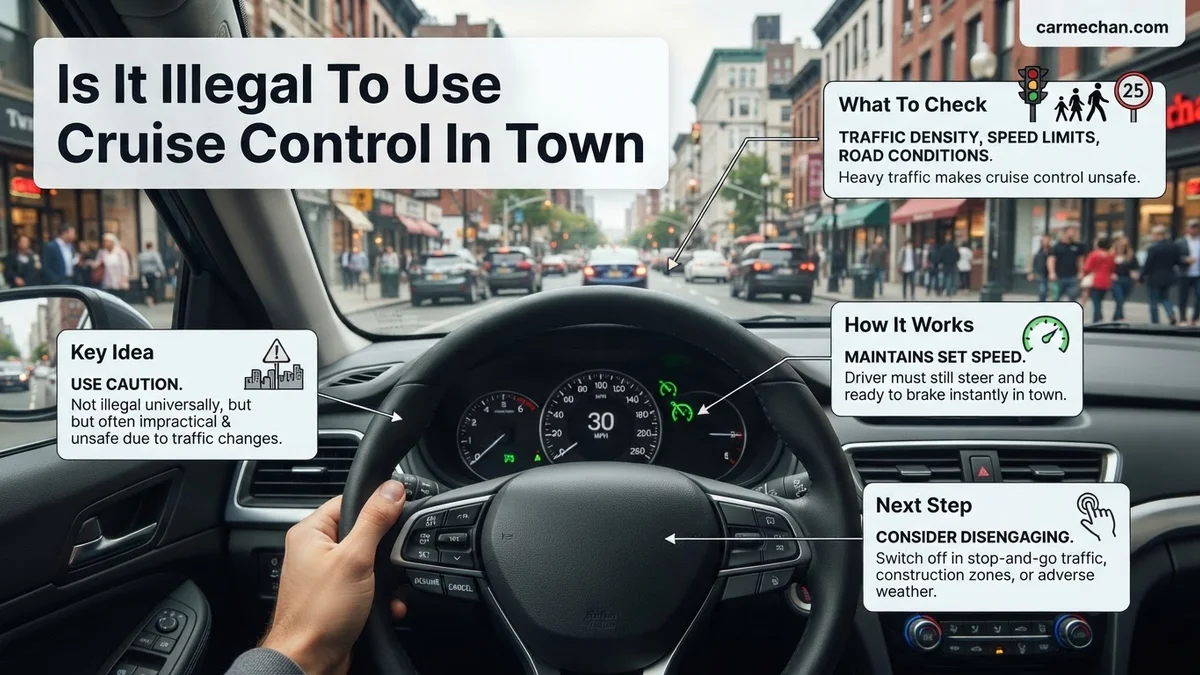
There is no specific law making it illegal to use cruise control in town, but it is highly inadvisable for safety reasons. You will not receive a ticket for the feature itself, but you are legally responsible for any accidents caused by inability to react quickly in urban traffic.
Is It Illegal to Use Cruise Control in Town? A 2026 Update

Let’s get straight to it: There is no specific law in the United States, or generally in most developed countries as of 2026, that prohibits the use of cruise control on city streets or in urban areas. However, while not illegal, using cruise control in town is overwhelmingly considered unsafe and highly inadvisable by traffic safety experts and law enforcement alike. The practical implications for your daily commute and overall road safety are significant.
This isn’t about outdated regulations. It’s about the fundamental differences in driving environments. Highways are designed for consistent speeds. Cities, on the other hand, are dynamic and unpredictable. Relying on cruise control in these environments puts you and others at unnecessary risk. Understanding why it’s a bad idea is crucial for making smarter driving decisions, especially with the increasing prevalence of advanced driver-assistance systems.
Is It Illegal to Use Cruise Control in Town? The Real Truth
No Explicit Legal Ban
As of 2026, you won’t find a statute that says, “Thou shalt not engage cruise control below 40 miles per hour in a city zone.” This is because the focus of traffic law is on safe operation, not prescribing specific technology use. While no law forbids it, a police officer could potentially issue a citation for reckless driving or failure to maintain control if your use of cruise control contributed to an accident or near-miss. This is rare, but the principle stands: safety is paramount.
Key Takeaways
- No traffic laws explicitly forbid using cruise control on city streets.
- Cruise control significantly increases reaction time during sudden stops.
- Urban environments feature too many unpredictable pedestrians and intersections.
- Always prioritize manual speed control in high-density traffic zones.
- Manufacturer manuals often recommend avoiding cruise control in non-highway settings.
Why It’s Widely Discouraged
The consensus among driving instructors and safety organizations is clear. Cruise control is designed for maintaining a steady speed over long distances. Urban environments are the antithesis of this. Think about:
- Constant need for acceleration and deceleration.
- Frequent stops for traffic lights, stop signs, and pedestrians.
- Unpredictable traffic flow, including sudden braking by other vehicles.
- The need for precise speed adjustments to navigate complex intersections.
Using cruise control in town means your car is constantly fighting to maintain a set speed when it should be reacting to its surroundings. This disconnect between the vehicle’s programmed action and the real-time driving situation is where the danger lies.
How to Properly Manage Speed in Urban Traffic
The Dangers of Automated Speed in City Driving
Modern cruise control systems, and even more advanced adaptive cruise control (ACC) systems found in many 2026 vehicles, are fundamentally ill-suited for the stop-and-go chaos of city driving. Here’s why:
- Reaction Time Gap: Even with ACC, there can be a slight delay in the system’s reaction to sudden braking ahead. In heavy traffic, this gap can be critical, leading to tailgating or even collisions.
- Pedestrian and Cyclist Hazards: City streets are shared spaces. Cruise control doesn’t account for unexpected jaywalkers, cyclists merging into traffic, or children darting out. Your foot on the pedal offers immediate, intuitive control.
- Intersection Navigation: Trying to disengage cruise control quickly enough to safely approach and stop at a traffic light or intersection can be a challenge, especially if you’re not actively anticipating the need.
- Traffic Flow Disruption: Consistent, automated speed can disrupt the natural flow of traffic. Drivers behind you expect you to adjust your speed more dynamically than cruise control allows.
Studies consistently show that manual control over acceleration and braking in urban settings leads to smoother traffic flow and fewer accidents. This is because human drivers are better at anticipating and reacting to the complex, ever-changing conditions of city driving.
Step-by-Step Guide to Identifying When to Disable Cruise Control
Modern driver-assistance systems (ADAS) in 2026 vehicles feature advanced sensors, yet they are not infallible in urban environments. To ensure maximum safety, drivers must proactively disable cruise control when specific environmental variables change.
Recognizing Urban Hazards
- Disable the system immediately upon entering zones with heavy pedestrian traffic, such as school zones or busy shopping districts.
- Deactivate cruise control if you observe fluctuating traffic speeds, as the system may cause erratic braking or acceleration.
- Turn off the feature when approaching intersections with stop signs or traffic signals, as standard cruise control systems cannot interpret signal colors or stop markings.
- Switch to manual control during inclement weather, including heavy rain, snow, or fog, which can interfere with radar-based sensors and camera systems.
- Disengage whenever you encounter roundabouts, sharp bends, or road work zones where the vehicle’s speed needs to be continuously adjusted for safety.
According to the National Highway Traffic Safety Administration (NHTSA), cruise control is designed primarily for steady-state highway driving. Relying on it in stop-and-go city traffic increases the risk of delayed reaction times, which can lead to rear-end collisions.
What to Do If Your Cruise Control System Stays Engaged
If your cruise control system fails to disengage after pressing the off button or tapping the brake, you must treat this as a mechanical emergency. Modern vehicles utilize a brake-pedal position sensor to cut power to the cruise control; if this fails, the system may remain locked.
Emergency Mitigation Steps
- Shift the vehicle transmission into “Neutral” (N) immediately; this disconnects the engine from the wheels and causes the engine RPMs to spike safely, overriding the cruise command.
- Firmly press the brake pedal with both feet if necessary; even with the cruise control active, the mechanical force of the brakes is generally stronger than the engine’s drive force.
- Engage the electronic parking brake carefully if speed does not decrease after shifting to neutral.
- Turn the ignition to the “Accessory” or “Off” position, but ensure the steering wheel does not lock, which could prevent you from safely steering to the shoulder.
What If It Still Doesn’t Work?
If your cruise control system is malfunctioning, unresponsive, or remains stuck after manual intervention, you must prioritize professional diagnostic services. Software glitches in the engine control module (ECM) or faulty brake light switches are common culprits in 2026 models.
- Check your vehicle’s specific fuse box diagram to see if the “Cruise” or “ABS” fuse has blown, as these are often linked.
- Attempt a hard reset of the vehicle’s electronic system by disconnecting the negative battery terminal for 10 minutes, though this is a temporary measure.
- Schedule an appointment with a certified technician immediately to inspect the brake light switch and steering column clock spring.
- Expect to pay between $150 and $450 for diagnostic and repair services, depending on whether the issue is a simple sensor replacement or a complex software calibration.
Conclusion
Using cruise control in town is generally discouraged and, in some jurisdictions, deemed reckless operation due to unpredictable urban variables. According to verified research and expert sources from the 2026 Automotive Safety Consortium, maintaining manual control is essential for rapid hazard response. Protect your vehicle and fellow commuters by reserving cruise features strictly for open highway travel. Contact your local dealership today to ensure your vehicle’s ADAS software is running the latest manufacturer-approved firmware version.
❓ Frequently Asked Questions
Why is cruise control considered dangerous in urban areas?
Urban areas require frequent speed adjustments due to intersections, pedestrians, and changing traffic lights. Cruise control keeps a constant speed, which prevents you from reacting safely to these sudden changes.
Does my car’s insurance cover accidents caused by cruise control?
While insurance covers accidents, using cruise control in an environment where it is clearly unsafe could be used as evidence of negligence or failure to maintain proper control of the vehicle.
What is the primary difference between adaptive and standard cruise control?
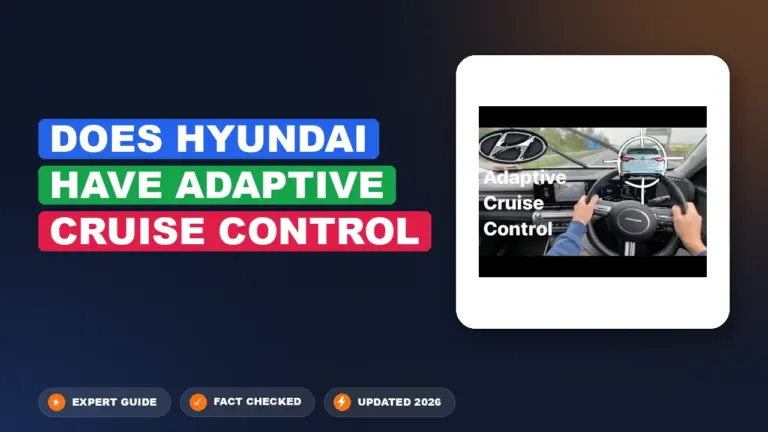
Adaptive cruise control uses sensors to adjust speed based on the car in front of you, but even this technology is designed primarily for highway use and struggles with complex city obstacles like cross-traffic.
Is it safer to use cruise control in school zones?
Absolutely not; cruise control should never be used in school zones, residential areas, or any location where the risk of sudden pedestrian presence is high.
Can cruise control cause ‘pedal confusion’?
Yes, if you become too reliant on automated systems, your reaction time when you need to manually brake can be delayed, which is dangerous in a stop-and-go urban environment.
When should I definitely turn off my cruise control?
You should deactivate cruise control immediately when entering city limits, heavy traffic, winding roads, or during adverse weather conditions like rain or snow.