Adaptive Cruise Control Problem Honda: Diagnosis, Common Issues, And Troubleshooting
Last Updated on June 25, 2026 by Ryan
Modern Honda vehicles offer cutting-edge driver-assist technologies, with Adaptive Cruise Control (ACC) standing out for its convenience and safety. However, like any complex electronic system, Honda’s ACC can encounter malfunctions, leading to frustrating and sometimes concerning operational issues for drivers. This expert guide will meticulously break down the common ACC problems reported by Honda owners, provide clear diagnostic indicators, outline effective troubleshooting steps, and detail professional repair solutions, ensuring you can confidently address these challenges.
Honda adaptive cruise control issue? Start your diagnosis with these:
 OBD2 scanner — Engine/ABS/SRS/Trans” style=”width:90px;height:90px;object-fit:contain;border-radius:8px;flex-shrink:0;” loading=”lazy”>

As an Amazon Associate we earn from qualifying purchases.
Understanding Honda’s Adaptive Cruise Control (ACC) System Functionality
Honda’s Adaptive Cruise Control system is a sophisticated driver-assist technology designed to enhance convenience and safety on the road. At its core, ACC automatically adjusts your vehicle’s speed to maintain a pre-set following distance from the car ahead. This advanced functionality relies on a seamless integration of multiple key components within the vehicle’s broader control architecture.

📤 Share Image
Core Components and Their Roles
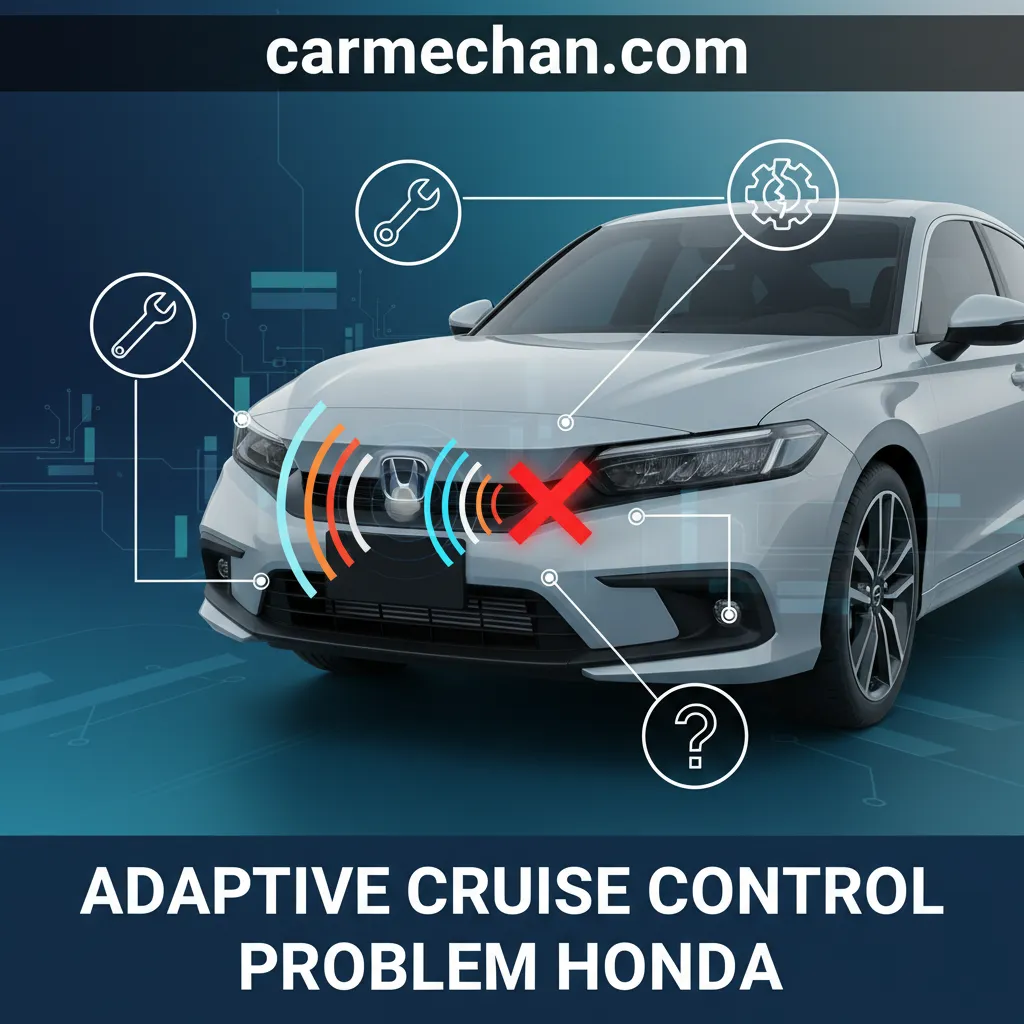
- Front Radar Sensor: Typically located behind the Honda emblem in the front grille, this sensor emits radar waves to detect the presence, speed, and distance of vehicles directly ahead. Its typical operational range extends up to 200 meters, providing critical input for maintaining following distance.
- Camera Unit: Integrated into the Honda Sensing suite, a windshield-mounted monocular camera works in conjunction with the radar. It provides visual data, helping to identify lane markings, detect pedestrians, and enhance the system’s ability to differentiate targets, particularly in complex scenarios.
- ECM/PCM Integration: The Engine Control Module (ECM) or Powertrain Control Module (PCM) acts as the central processing unit, interpreting data from the radar and camera. It calculates necessary speed adjustments and communicates with other vehicle systems.
- Brake System Interface: ACC actively controls the vehicle’s speed, often requiring light braking to maintain the set distance. This interface ensures smooth and safe deceleration without driver intervention.
Normal Operation Overview
When activated, the ACC system on a Honda like a 2022 Honda Accord or 2020 Honda Civic will display visual cues on the instrument panel, such as a green ACC indicator and often a graphical representation of a vehicle with selectable distance bars. The driver sets a desired cruising speed and following distance. The system then monitors traffic ahead. If a slower vehicle is detected, ACC automatically reduces the Honda’s speed, sometimes engaging the brakes, to maintain the selected gap. Once the path ahead clears, the system smoothly accelerates back to the set speed. This sophisticated interplay ensures a relaxed and safer driving experience.
ACC System Variations Across Honda Models
Honda’s ACC technology has evolved. Earlier models, such as the 2018 Honda CR-V, might have featured a radar-only ACC system. Newer models, particularly since 2021, integrate ACC as a core component of the comprehensive Honda Sensing suite, which is now standard on over 95% of new Honda vehicles. These newer systems leverage both radar and camera data for enhanced precision and reliability, often including features like Low-Speed Follow, allowing the system to operate effectively in stop-and-go traffic.
Identifying Common Malfunctions and Warning Indicators in Honda ACC Systems
Accurately identifying the symptoms and warning messages associated with Honda ACC system problems is the first critical step toward a solution. Drivers must be familiar with the various indicators that signal a malfunction, ranging from dashboard lights to unexpected operational behavior.
Dashboard Warning Lights and Messages
Your Honda’s instrument cluster is the primary communication hub for system status. Key indicators for ACC issues include:
- ACC Indicator: While usually green when active, if this light flashes, remains amber, or is accompanied by an exclamation mark, it suggests a fault.
- CMBS (Collision Mitigation Braking System) Indicator: Since ACC and CMBS share sensors, a problem with one often affects the other. If the CMBS light illuminates alongside an ACC warning without an impending collision, it strongly suggests a sensor or module issue affecting both systems.
- ‘ACC Unavailable’ or ‘Adaptive Cruise Control System Problem’ Messages: These explicit messages appear on the multi-information display and clearly indicate a system fault. Often, they are accompanied by a ‘Check System’ general warning light.
- General ‘Check System’ Warnings: These are less specific but signal a broader electronic fault that could encompass ACC.
Common Operational Anomalies
Beyond dash lights, drivers often experience tangible changes in how the ACC system performs:
- Erratic Braking or Acceleration: The vehicle may brake harshly when not necessary, or accelerate unexpectedly, failing to maintain the set speed smoothly.
- Sudden System Deactivation: The ACC system disengages abruptly on the highway with no apparent reason, often accompanied by an audible chime and a dash warning. This is a common and concerning issue.
- Failure to Engage: The system simply won’t activate when the ACC button is pressed, or it activates briefly only to immediately deactivate.
- Inability to Maintain Set Speed/Distance: The vehicle struggles to hold the desired speed or constantly changes the following distance despite clear road conditions.
Situational Failures and Diagnostic Trouble Codes (DTCs)
ACC problems often manifest under specific conditions. For example, some drivers report ACC problems occurring predominantly in heavy rain, snow, or fog, as precipitation can obstruct sensor visibility. Similarly, dirt, mud, or frost on the front grille or windshield can cause the system to fail to activate after clearing snow from the grille. These situational failures provide valuable clues for diagnosis.
When these issues arise, the vehicle’s onboard diagnostic system often stores specific Diagnostic Trouble Codes (DTCs). Technicians commonly encounter codes such as P258B – ACC Radar Sensor Malfunction or C1A60 – ACC System Error. These codes are crucial for professional diagnostics as they directly pinpoint the likely area of concern, guiding the repair process.
Root Causes of Honda Adaptive Cruise Control Problems: A Technical Breakdown
Understanding the underlying technical reasons behind ACC malfunctions is paramount for accurate diagnosis and effective repair. From physical obstructions to intricate electrical faults and software discrepancies, the cause of a Honda ACC problem can be multifaceted.
Sensor Obstructions or Damage
The most common and often simplest cause of ACC malfunction is related to the sensors. The front radar sensor, typically located behind the Honda emblem on the grille, is highly sensitive. Even minor obstructions can impede its functionality. Consider instances where significant bug splatter and debris buildup have completely blocked the sensor’s field of view, leading to an ‘ACC Unavailable’ message. Similarly, accumulated snow, ice, or mud on the emblem can prevent the system from engaging. Beyond obstructions, physical damage is a frequent culprit. Minor front-end collisions or even impacts from road debris can misalign or crack the radar sensor housing, requiring professional attention. The windshield-mounted camera unit can also be affected by dirt, cracks, or improper installation of aftermarket window tinting, impairing its visual input.
Electrical System Faults
The ACC system relies on a complex network of electrical signals. Any disruption can lead to intermittent or complete system failure. Common electrical issues include:
- Wiring Harness Damage: Frayed, pinched, or corroded wiring harnesses leading to the radar sensor or camera unit can interrupt data transmission. This might stem from rodent damage, poor routing during previous repairs, or general wear.
- Connector Corrosion: Exposure to moisture can cause corrosion in electrical connectors, leading to poor contact and intermittent system operation.
- Faulty Brake Light Switch: The ACC system requires input from the brake system. If the brake light switch malfunctions, the ACC may not engage or could disengage unexpectedly because it incorrectly perceives a brake application.
- Insufficient Battery Voltage: Modern Honda vehicles are highly sensitive to voltage fluctuations. A weak 12V battery or a struggling alternator can lead to intermittent ACC failures as control modules do not receive stable power.
Software and Calibration Issues
Digital components are equally critical. Software and calibration problems can significantly impact ACC performance:
- Outdated or Corrupted Firmware: Honda periodically releases software updates to enhance system performance or resolve known bugs. Outdated firmware can lead to erroneous readings or processing errors. In some cases, software can become corrupted, requiring a re-flash. Specific recall information related to ACC software updates for certain model years has been issued to address known glitches.
- Miscalibrated Sensors: After a front-end collision repair, a radar sensor replacement, or even a windshield replacement, the radar and camera units require precise calibration. If not performed correctly, or at all, the sensors will provide inaccurate data to the ECM/PCM, causing the ACC to misinterpret distances and speeds. Recalibration is a critical step to ensure optimal and safe system functionality.
By The Numbers
New Hondas with Sensing (2021+)
ACC Issues from Physical Damage
Initial Troubleshooting Steps and DIY Solutions for Honda ACC Malfunctions
Before seeking professional assistance, many Honda owners can effectively troubleshoot and even resolve ACC malfunctions through a series of safe and simple preliminary checks. These DIY solutions can often address the most common causes of system errors, saving time and diagnostic fees.
📋
Step-by-Step Guide
Locate the radar unit behind the Honda emblem on your front grille. Gently wipe it clean with a soft, damp cloth to remove any dirt, mud, snow, or bugs. Ensure no residue remains. For the windshield-mounted camera, clean the exterior windshield area in front of the camera and, if accessible, gently wipe the interior lens. Use only glass cleaner on the windshield and a clean, dry microfiber cloth for the lens. This simple step can resolve issues caused by obstructions, which account for a significant portion of ACC problems.
A soft reset can often clear temporary glitches. Turn off your vehicle, open and close the driver’s door, then lock the car and wait a few minutes before restarting. For a more comprehensive hard reset, carefully disconnect the negative battery terminal for 10-15 minutes. This drains residual power from control modules, often clearing persistent error codes. Reconnect the battery, ensuring a tight connection. Note that this may reset radio presets and other vehicle settings.
Visually inspect the front grille area around the radar sensor for any signs of physical damage, loose mounts, or visible wiring issues. Similarly, check the area around the windshield camera. Verify that all your brake lights are functioning correctly when the brake pedal is pressed, as a faulty brake light switch can interrupt ACC operation. If you identify any obvious damage, it’s best to seek professional advice.
Up to 30% of ACC issues can be resolved with simple cleaning and resets. Always start with these basic troubleshooting steps. For camera lens cleaning, use only Honda-approved solutions or a clean, dry microfiber cloth to avoid streaks or damage to sensitive coatings.
Never attempt to remove the radar sensor or camera unit yourself, or apply any harsh chemicals. These are precision components that are extremely sensitive to misalignment and damage. Improper handling can worsen the problem and lead to costly repair bills.
When to Seek Professional Honda Service: Advanced Diagnostics and Repair Solutions
While initial troubleshooting and DIY solutions can resolve many common ACC issues, persistent or complex malfunctions invariably require the expertise of a professional Honda service center or a trusted automotive technician. Advanced diagnostics and specialized repair solutions are often essential to debug the underlying cause and restore full system functionality.
Advanced Diagnostic Procedures
When simple fixes don’t work, technicians employ specialized tools and procedures:
- Honda Diagnostic System (HDS) Tool: Dealerships and well-equipped independent shops utilize Honda’s proprietary HDS. This sophisticated scanner can communicate directly with all control modules, reading specific DTCs (e.g., P258B, C1A60) that generic OBD-II scanners might miss. An HDS scan can pinpoint internal faults within the ACC radar unit, indicating a need for replacement.
- Live Data Analysis: Technicians can monitor live sensor data, module inputs, and outputs in real-time. This helps to identify intermittent electrical issues or incorrect sensor readings that aren’t severe enough to trigger a DTC.
- Pinpoint Testing: Using schematics and specialized testers, technicians will perform continuity and voltage drop tests on specific wiring harnesses and connectors to identify subtle electrical faults that could be causing module failures.
Professional Repair Options
Once the problem is accurately diagnosed, the appropriate professional repair can be implemented:
- Sensor Replacement: If a sensor is physically damaged or has an internal electronic fault, replacement is necessary. For example, if an HDS scan reveals an internal fault within the ACC radar unit, it will require replacement.
- Module Re-flashing/Reprogramming: For software-related issues, the vehicle’s control modules may need to be updated or re-flashed with the latest Honda firmware. This ensures the system runs on the most stable and optimized software version.
- Radar/Camera Unit Calibration: This is a critical step after any sensor replacement, windshield replacement, or even sometimes after significant front-end repairs. Specialized tools are used to precisely align the radar and camera units to the vehicle’s geometric center. Improper calibration can lead to dangerous system misbehavior, such as false detections or delayed braking. Independent shops may offer sensor cleaning but often lack the necessary calibration tools, necessitating a dealership visit for this crucial procedure.
- Complex Wiring Harness Repairs: Extensive damage to wiring harnesses often requires meticulous repair or complete replacement to restore electrical integrity.
Importance of Genuine Honda Parts and Certified Technicians
For ACC system repairs, always prioritize genuine Honda parts. Aftermarket sensors or components may not meet Honda’s strict specifications, leading to continued issues or even safety compromises. Furthermore, always rely on certified Honda technicians who possess the specific training, tools, and access to Honda service bulletins and factory software required for these complex systems. The average cost of a Honda radar sensor replacement can range from $800-$1500 for parts and labor, while recalibration fees typically range from $150-$300. Investing in proper, professional service ensures not only the optimal performance of your ACC but, more importantly, your safety and the safety of others on the road.
Accurate Diagnostics
Professionals use HDS to pinpoint exact causes and DTCs, avoiding guesswork.
Genuine Parts & Calibration
Ensures longevity and safety with factory components and precise sensor alignment, critical for a complete solution.
Software Expertise
Access to the latest firmware and specialized programming tools to debug software-related issues.
Honda’s ACC system, while advanced, can experience issues ranging from simple sensor obstructions to complex electrical faults. Many problems can be initially addressed through DIY troubleshooting like cleaning sensors and system resets. However, for persistent or severe ACC malfunctions, professional diagnostic tools and specialized calibration are often required to accurately diagnose and repair the problem. Prioritize your safety and the optimal performance of your Honda. If initial troubleshooting does not resolve your ACC issues, schedule a professional diagnostic appointment with a certified Honda service center or trusted automotive technician.
Frequently Asked Questions
Why does my Honda’s ACC light come on and turn off intermittently?
Intermittent ACC warnings often indicate a temporary obstruction to the radar or camera, such as heavy rain, snow, or mud. It could also point to a minor electrical fluctuation or a precursor to a more consistent fault. Cleaning the sensor areas thoroughly is the first step in diagnosing this common issue.
Can a dirty radar sensor really cause Adaptive Cruise Control problems?
Yes, absolutely. The radar sensor, typically located behind the Honda emblem or lower grille, relies on an unobstructed line of sight. Even a thin layer of dirt, ice, or insect buildup can significantly interfere with its ability to accurately detect vehicles, causing the ACC system to malfunction or deactivate.
Is it safe to drive my Honda if the ACC system is malfunctioning?
While the vehicle itself can still be driven, driving with a malfunctioning ACC system means you lose the automated safety and convenience features. More critically, if the malfunction also affects other Honda Sensing features like CMBS, it poses a safety risk. It’s advisable to address the issue promptly and avoid relying on the faulty system.
How much does it cost to repair Honda Adaptive Cruise Control problems?
Costs vary widely depending on the root cause. Simple sensor cleaning might be free, while a diagnostic scan could be $100-$200. Sensor replacement due to damage can range from $800 to $1500 or more, including parts, labor, and crucial recalibration. Always obtain a detailed quote after diagnosis.
Can I calibrate my Honda’s ACC system myself after replacing a sensor or windshield?
No, ACC system calibration requires specialized equipment (like Honda’s HDS system) and precise procedures that are not available to the average owner. Improper calibration can lead to significant safety hazards. Always have ACC sensors and cameras professionally calibrated by a certified technician after any related repair or replacement.