Does Hyundai Have Adaptive Cruise Control: Broken Down by Model
Ever wondered if your Hyundai can handle the stress of highway traffic for you? Many drivers find themselves navigating the confusion between legacy constant-speed cruise control and modern, radar-augmented systems, which can lead to improper use or misplaced expectations on the road. Understanding the capabilities of your vehicle is not just about convenience; it is a critical component of professional, defensive driving. In this guide, we provide the authoritative information you need to determine if your Hyundai model is equipped with advanced driver-assist technology and how to utilize it effectively.


Does Hyundai Have Adaptive Cruise Control: Features and Capabilities
📤 Share Image

Understanding Smart Cruise Control Technology
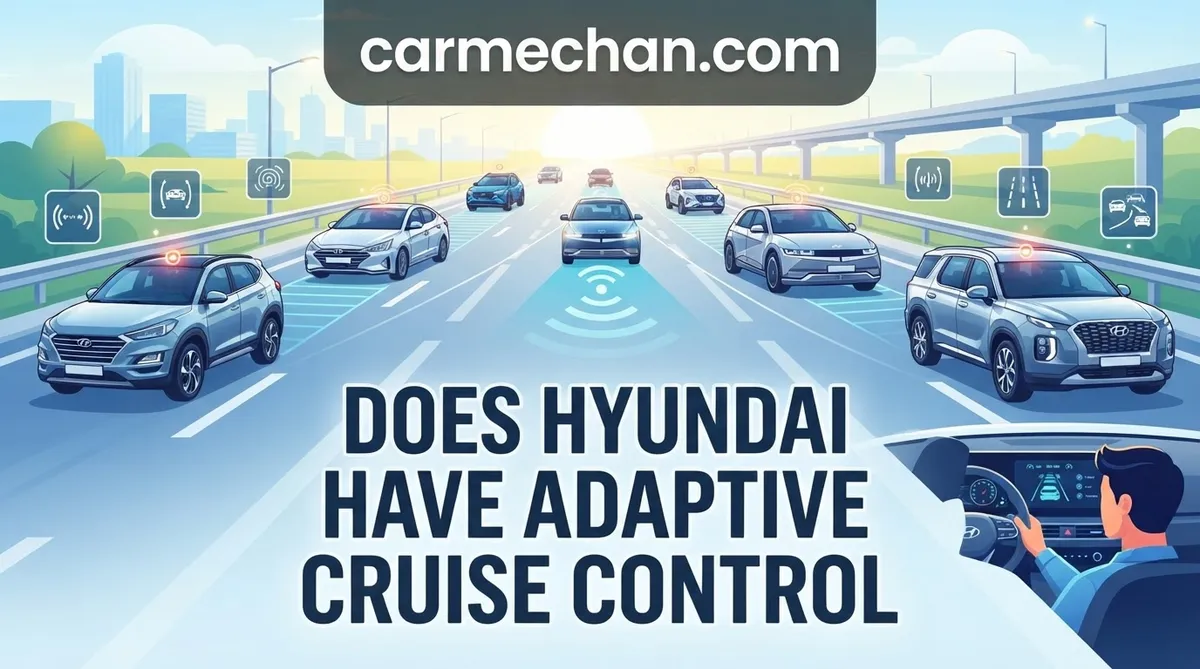
Hyundai markets its adaptive cruise control suite under the brand name Smart Cruise Control (SCC). As part of the broader Hyundai SmartSense safety architecture, SCC is designed to maintain a driver-selected speed while simultaneously monitoring the gap between your vehicle and the one detected ahead. By utilizing radar and camera sensors, the system automatically adjusts your speed—accelerating or braking—to maintain a pre-set distance, significantly reducing the cognitive load on the driver during long highway hauls.

The Evolution From Traditional Cruise Control
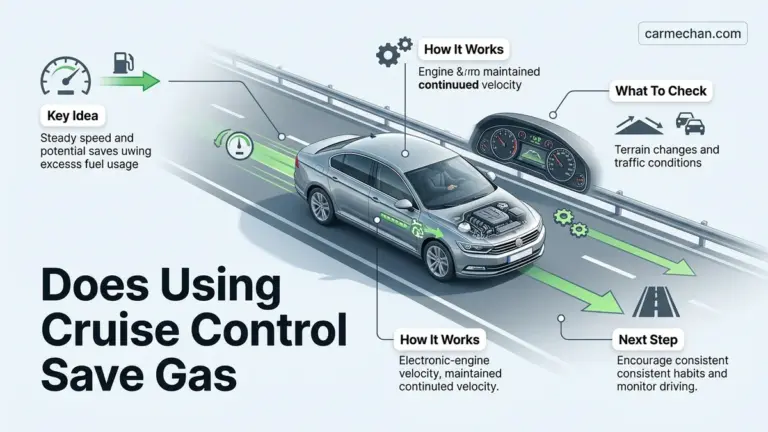
Traditional cruise control is a binary system: it maintains a constant velocity regardless of traffic flow, which requires the driver to constantly deactivate and reactivate the system when traffic fluctuates. In contrast, SCC is dynamic. It is a vital upgrade for quality of life on the road, as it allows the vehicle to react to the ebbs and flows of traffic independently of the throttle position. However, it is essential to emphasize that this is a convenience feature, not a self-driving system. The driver must remain fully attentive at all times, prepared to intervene.
How Stop & Go Functionality Enhances Traffic Comfort
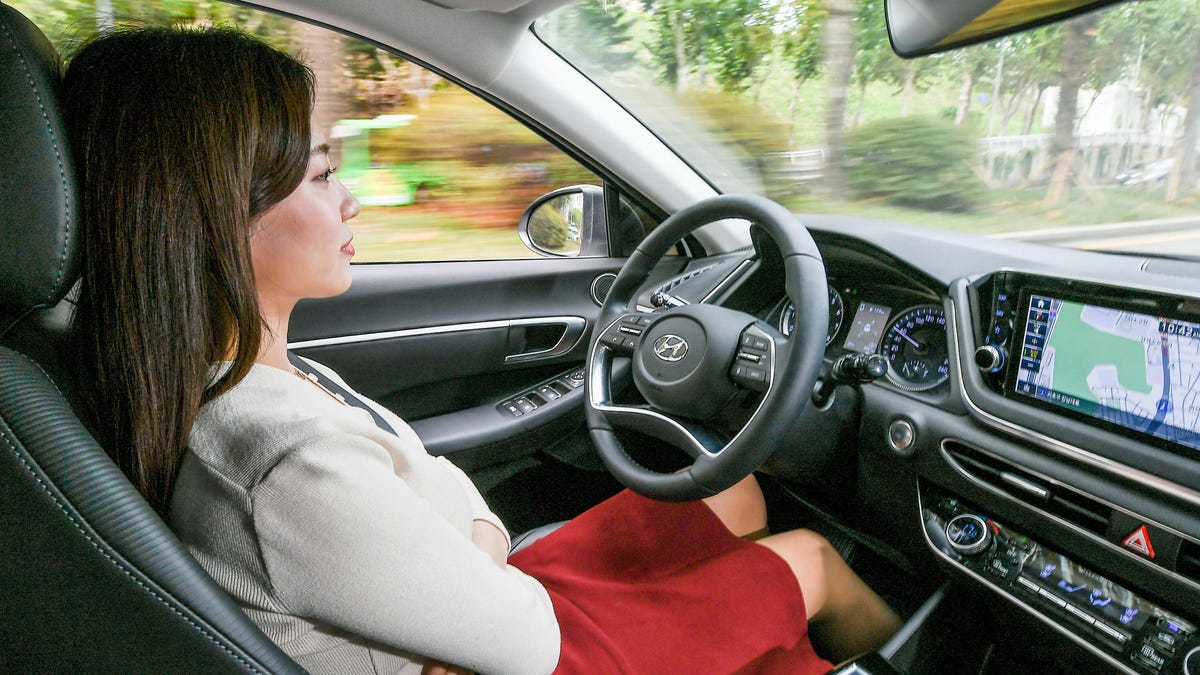
The “Stop & Go” iteration of SCC is perhaps the most requested feature for commuters. When the vehicle in front comes to a complete halt, the Hyundai SCC system can bring your vehicle to a full stop as well. If the pause in traffic is brief, the system remains active, and the car will resume forward motion automatically once the vehicle ahead starts moving. If the stop lasts longer, the driver simply taps the accelerator or the “Resume” button on the steering wheel to re-engage the system. This eliminates the repetitive, exhausting pedal work required in bumper-to-bumper city traffic.
How Does Hyundai Have Adaptive Cruise Control Hardware Work?
Front Radar Sensor and Camera Integration
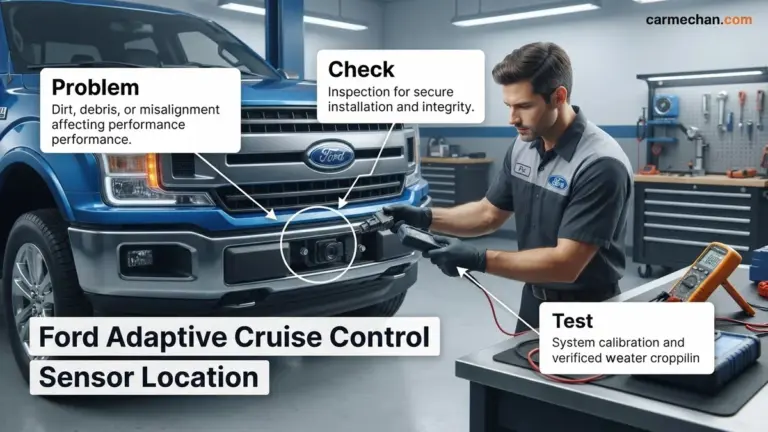
The reliability of the system relies on a sophisticated fusion of hardware. The primary component is the front radar sensor, typically mounted discreetly behind the front grille or the Hyundai emblem. This radar continuously bounces signals off objects to calculate distance and closing speed. This is paired with a front-facing camera located at the top of the windshield. The camera identifies lane markings and the size of the vehicle ahead, allowing the system to determine if the object is a large truck, a passenger car, or a motorcycle, thereby optimizing the braking behavior accordingly.
Electronic Stability Control (ESC) Role in Braking
When the sensors detect a vehicle slowing down—perhaps 100 meters ahead—the system sends a signal to the Electronic Stability Control (ESC) module. The ESC is the “muscle” behind the operation. It interfaces with the hydraulic braking system to apply precise, measured amounts of brake pressure. Unlike the “on-off” nature of early systems, modern Hyundai ESC integration allows for smooth, modulated deceleration that feels natural rather than jerky, maintaining the high standard of driver comfort expected in a modern vehicle.
Interpreting Steering Wheel Interface Controls
The interface for SCC is intuitively mapped to the right side of the steering wheel. Using the dedicated cruise control button, drivers can activate the system and set their desired velocity. A secondary toggle switch is typically used to adjust the following distance, allowing the driver to select between different intervals (usually four levels). This direct, hands-on control ensures that the driver remains the primary decision-maker, tailoring the system’s aggressiveness to current traffic volume and road quality.
Steps to Operate Your Hyundai Smart Cruise Control Safely
Ensure your speed is within the operational threshold (typically above 20 mph for activation). Press the ‘CRUISE’ button on the steering wheel. The SCC icon will appear on the instrument cluster.


Use the toggle switch to set your speed. Press the ‘Distance’ button to cycle through the 4 available gap settings, allowing you to widen the gap in heavy rain or tighten it in clear conditions.
Tap the brake pedal or press the ‘CANCEL’ button on the steering wheel. The system will disengage immediately, returning full manual control to the driver.
Addressing Does Hyundai Have Adaptive Cruise Control Limitations
While the technology is highly reliable, it is not infallible. Understanding the failure modes is part of being an expert user. The system can be impacted by several external variables:
- Environmental Interference: Heavy snowfall, thick fog, or mud covering the front emblem can obstruct the radar. In these cases, the system will provide an alert and deactivate for safety.
- Stationary Objects: Radar-based SCC systems can sometimes struggle to detect stationary vehicles at high speeds. Always stay vigilant when approaching stopped traffic.
- Trim Level Variance: SCC is often bundled into premium “SmartSense” or “Driver Assistance” packages. Consequently, lower-tier trim levels may come equipped only with standard, non-adaptive cruise control.
- HDA vs. SCC: Note that Highway Driving Assist (HDA) builds upon SCC. While SCC manages speed and distance, HDA integrates with Lane Following Assist (LFA) to help keep the vehicle centered in the lane. If your car has HDA, it implies you have a more advanced level of SCC.
Never rely on SCC in construction zones, winding mountain roads, or during severe weather conditions. These environments are prone to causing sensor confusion and rapid, unexpected disengagement of the system.
Industry Data
Typical Gap Intervals
Driver Supervision Required
Final Assessment of Hyundai Safety Features
Does Hyundai have adaptive cruise control? Yes, the brand offers one of the most reliable and user-friendly Smart Cruise Control systems on the market, backed by advanced radar and camera technology. However, recognizing that it is a tool meant to assist—rather than replace—the driver is paramount. Whether you are driving a daily commuter or a high-end SUV, always consult your owner’s manual to confirm the exact specifications for your specific vehicle identification number (VIN). If you remain uncertain about your model’s capabilities, visit your local authorized Hyundai dealer; they can provide a professional breakdown of your vehicle’s specific safety package and provide instructions tailored to your car’s trim level. Stay safe, stay alert, and leverage the technology provided to make your time on the road more efficient.
Does Hyundai Have Adaptive Cruise Control: Frequently Asked Questions
Does my Hyundai have adaptive cruise control?
Most Hyundai models produced after 2020 feature Smart Cruise Control (SCC). You can verify this by checking your steering wheel for a ‘Distance’ button, which allows you to toggle the following gap. If your vehicle has this icon and the corresponding menu in your driver display, it is equipped with adaptive cruise technology.
Does it work in stop-and-go traffic?
Yes, if your Hyundai is equipped with ‘Smart Cruise Control with Stop & Go,’ it is capable of bringing the vehicle to a complete stop in traffic and accelerating again once the vehicle ahead moves. Check your owner’s manual to confirm the ‘Stop & Go’ designation for your specific model, as some older base systems may disengage below 20 mph.
Does SCC work in heavy rain or snow?


Hyundai’s radar-based SCC can struggle in extreme weather. Heavy snow, thick ice, or torrential rain may coat the radar sensor located in the front grille, triggering a system disablement warning. In these conditions, the system may switch to standard cruise control or deactivate entirely for safety. Always remain vigilant and prepared to take manual control of the vehicle.
Is regular maintenance required for my adaptive cruise system?
While the system is software-driven, the front-facing radar sensor must remain clean and correctly aligned. If you have had front-end collision repairs, the radar must be recalibrated by a certified technician using specialized equipment. Failure to maintain a clear sensor surface can result in ‘system unavailable’ messages or erratic braking behavior during operation.
Can I upgrade my standard cruise control to adaptive cruise?
Retrofitting factory-installed Smart Cruise Control is generally not recommended or feasible. The system relies on deep integration with the vehicle’s ECU, radar sensor modules, and braking hardware. It is significantly more cost-effective and reliable to select a trim level that includes these advanced driver-assistance systems from the factory rather than attempting an aftermarket installation.