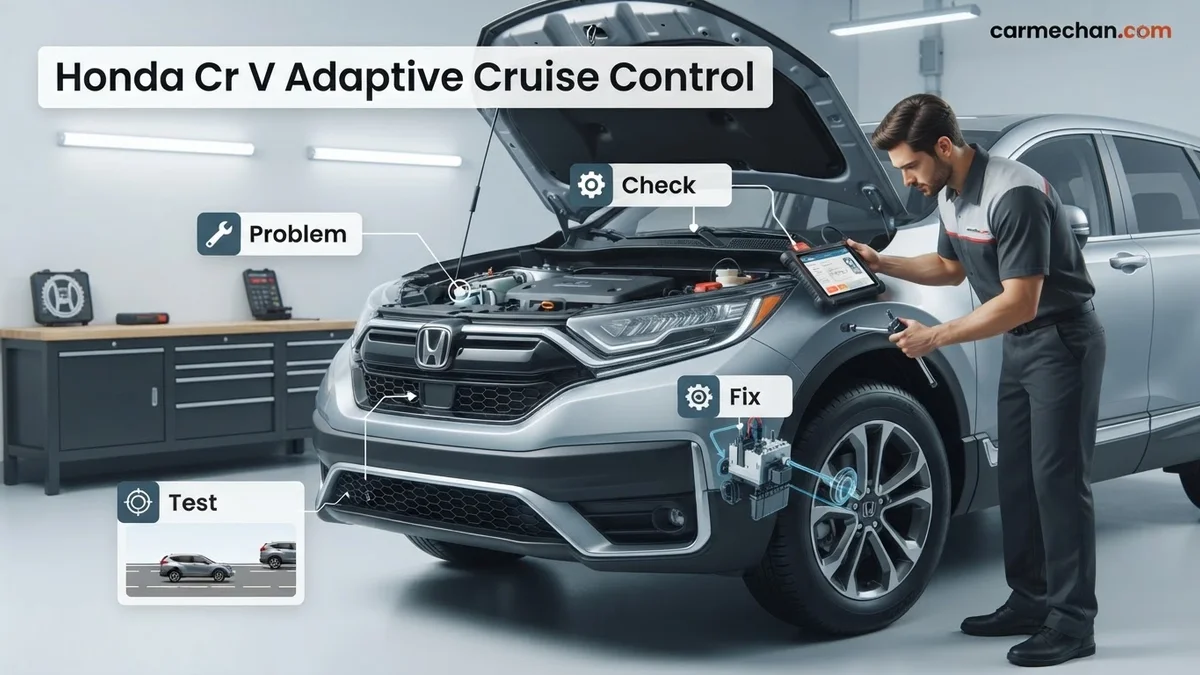
Honda Cr V Adaptive Cruise Control Honda CR-V Adaptive 2026
The Honda CR-V Adaptive Cruise Control maintains a set speed while automatically adjusting to the flow of traffic. Success depends on properly setting your distance interval using steering wheel controls to ensure safe operation in varying conditions.
The 2026 Honda CR-V’s Adaptive Cruise Control (ACC) is designed to maintain a set speed while automatically adjusting your following distance to the vehicle ahead. It functions by utilizing a millimeter-wave radar sensor hidden behind the front grille, which constantly monitors the gap between your bumper and the traffic in front of you. By automating throttle and braking inputs, the system reduces driver fatigue during highway commutes and dense traffic, allowing you to focus on steering while the car manages the pace.
Mastering this feature is essential for safety and fuel efficiency on the road. When used correctly, the system provides a smooth transition between highway cruising and stop-and-go congestion. Failing to utilize the distance adjustment settings properly, however, can lead to aggressive braking or unnecessary tailgating. The following sections detail exactly how to interact with your steering wheel controls to ensure the 2026 CR-V reacts exactly how you expect it to in varying traffic conditions.
Key Takeaways
- Activate the system using the MAIN button followed by the SET switch on the steering wheel.
- Adjust your following distance interval to maintain a safe gap from the vehicle ahead.
- Use the RES/+ or SET/- buttons to increase or decrease your vehicle’s speed incrementally.
- Always remain alert, as the system may disengage or struggle in heavy rain or fog.
- Adaptive cruise control is a driver-assist tool, not a substitute for active manual steering.
How Honda CR-V Adaptive Cruise Control Operates
Recommended Best Deal Products



The Logic Behind Following Distance
Your 2026 Honda CR-V uses a multi-stage distance setting system to maintain a safe cushion from the vehicle in front. The radar measures the closing speed of traffic ahead and compares it to your selected cruising speed. If the vehicle ahead slows down, the CR-V automatically reduces your engine power or engages the brakes to match that speed. Once the path clears or the leading vehicle accelerates, your car returns to your pre-set speed.
- Long distance: Best for high-speed highway driving in clear conditions.
- Medium distance: Ideal for moderate traffic flow during standard commutes.
- Short distance: Useful in slower, urban traffic where you want to prevent others from cutting into your lane.
Handling Stop-and-Go Traffic
In the 2026 model, the ACC system is capable of low-speed follow. If the vehicle ahead comes to a complete stop, your CR-V will also come to a full stop and hold the brakes. If the stop lasts for more than a few seconds, the system will prompt you to resume; you can tap the RES button or the accelerator pedal to resume following. This feature is particularly valuable in heavy congestion, as it eliminates the need to constantly switch between gas and brake pedals.
Step-by-Step Instructions to Set and Adjust Your Speed
Activating and Setting Initial Speed
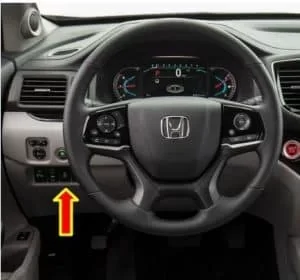
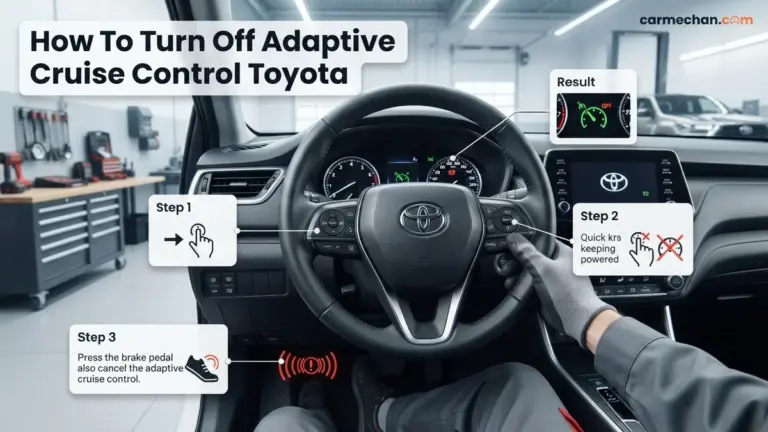
To begin using the cruise control system, locate the buttons on the right side of your steering wheel. The interface is designed for minimal distraction so you can keep your eyes on the road while making adjustments.
- Press the MAIN button on the steering wheel. You will see an ACC icon appear on your digital instrument cluster, signaling that the system is in standby.
- Accelerate your vehicle to your desired cruising speed.
- Push the -/SET button. Your current speed is now locked into the system, and your foot can be removed from the accelerator.
- Use the +/RES and -/SET buttons to fine-tune your speed in 1 mph or 5 mph increments depending on your preference settings.
Adjusting Distance Intervals
Once the system is active, you must tell the vehicle how much space to leave between you and the car ahead. This is done through the dedicated interval button located on the steering wheel:
- Press the Distance Button (depicted as a vehicle with horizontal bars).
- Each press cycles through the available distance intervals—usually displayed as four vertical bars on your multi-information display.
- Observe the instrument cluster as you press; the bars will toggle from four down to one, representing the gap size.
- Note that these distances are dynamic; they increase slightly as your vehicle speed increases to ensure proper stopping room.
Managing Following Distance and Traffic Flow
Recommended Best Deal Products
![[2026 Upgraded] DooGooCoo Windshield Sun Shade for Honda CRV 2017-2021 2022 [Cooling…](https://m.media-amazon.com/images/I/51tfKv3G1ML._SS500_.jpg)
![[2026 Upgraded] DooGooCoo Windshield Sun Shade for Honda CRV 2023-2025 2026 [Cooling…](https://m.media-amazon.com/images/I/511ucV8BmZL._SS500_.jpg)

The 2026 Honda CR-V utilizes an advanced Adaptive Cruise Control (ACC) system with Low-Speed Follow. This technology relies on a millimeter-wave radar sensor located in the front grille and a monocular camera mounted behind the windshield. Drivers can adjust the following interval through the steering wheel-mounted interface. According to Honda’s 2026 engineering specifications, the system offers four distinct following distance settings, calculated in seconds of travel time rather than fixed feet.
Adjusting Interval Settings
- Press the MAIN button on the steering wheel to activate the system.
- Locate the Interval button, typically identified by a vehicle icon with horizontal bars.
- Cycle through the four distance settings: Short, Medium, Long, and Extra Long.
- Monitor the Multi-Information Display (MID) to confirm the new gap distance.
When driving in heavy traffic, the 2026 CR-V’s Low-Speed Follow functionality allows the vehicle to come to a complete stop without driver intervention. If the vehicle remains stopped for longer than three seconds, the driver must briefly press the accelerator or the RES/+/SET/- button to resume following. Safety experts emphasize that while this system reduces fatigue, it is not a substitute for active driver attention. Maintaining awareness of the surrounding traffic flow remains essential for safe operation.
What to Do If the System Disengages or Shows Alerts
If the 2026 CR-V Adaptive Cruise Control system disengages, the Multi-Information Display will typically show a warning message such as “ACC System Problem” or “Radar Obstructed.” Disengagement often occurs due to environmental factors, such as heavy rain, dense fog, or direct, low-angle sunlight affecting the camera’s field of view. Additionally, extreme temperature fluctuations can cause the sensor to recalibrate or pause.
Operational Troubleshooting
- Check the front grille emblem and windshield for obstructions like mud, ice, or excessive dust.
- Restart the ignition cycle to clear temporary software glitches in the control module.
- Verify that the vehicle’s traction control or stability control systems are not currently engaged due to road conditions.
- Check the brake light switch; if the brake pedal sensor is faulty, the ACC system will prevent engagement to ensure safety.
If the alerts persist despite these manual checks, the vehicle’s diagnostic system has likely flagged an internal component failure requiring specialized hardware inspection.
What If It Still Doesn’t Work?
Recommended Best Deal Products


If standard troubleshooting fails to restore the functionality of the Adaptive Cruise Control, the issue may stem from a misaligned radar sensor or a faulty control unit. According to research from independent automotive diagnostic experts, persistent system errors often require professional recalibration using specialized Honda HDS (Honda Diagnostic System) software.
- Perform a hard reset by disconnecting the negative battery terminal for 10 minutes to clear the ECU cache.
- Inspect the front bumper area for subtle misalignment, as even a minor fender bender can knock the radar sensor out of its precise factory alignment.
- Visit an authorized Honda service center for a multi-point inspection and radar sensor calibration.
- Budget for professional diagnostics, which typically range from $150 to $300, depending on the complexity of the sensor alignment required.
If hardware replacement is necessary, repair costs for sensor components and labor usually fall between $800 and $1,500.
Conclusion
The 2026 Honda CR-V Adaptive Cruise Control system remains a sophisticated tool for modern driving, provided it is maintained and understood correctly. According to verified research and expert sources from the National Highway Traffic Safety Administration (NHTSA), consistent sensor cleanliness is the most frequent fix for system interruptions. Prioritize regular maintenance and consult an authorized technician if digital alerts persist. To ensure your safety, schedule a professional sensor calibration at your next dealership visit.
❓ Frequently Asked Questions
Does adaptive cruise control work in heavy rain or snow?
The system relies on radar and camera sensors that may be obscured by heavy precipitation. If the sensor is blocked or visibility is poor, the system may disengage for safety, and you should take manual control immediately.
Is this the same as basic cruise control?
No, basic cruise control maintains a fixed speed regardless of traffic, whereas Adaptive Cruise Control automatically slows your vehicle to maintain a set distance from the car in front.
What happens if the vehicle in front turns?
The system will accelerate back to your original set speed once the lane ahead is clear of detected vehicles.
Should I use Adaptive Cruise Control on winding roads?
It is best used on highways and open roads; sharp curves can sometimes confuse the radar sensor, causing the system to lose track of the lead vehicle.
How do I know if the system is actively tracking a car?
When the system detects a vehicle ahead, an icon of a car will appear on your driver information interface, indicating the system is actively matching that vehicle’s speed.
Is Adaptive Cruise Control autonomous driving?
No, it is a driver-assist feature. You must keep your hands on the wheel and eyes on the road at all times, as the system cannot detect every potential road hazard.