2011 Honda Odyssey TPMS Reset Button Location Explained
Last Updated on September 1, 2026 by Ryan
📋 Table of Contents
- 🎯 Key Takeaways
- Understanding the 2011 Honda Odyssey TPMS Architecture
- 2011 Honda Odyssey TPMS Reset Made Easy: Your Essential Action Plan
- Differences Between Low Pressure and System Malfunction Lights
- Factors Affecting Automatic Sensor Recalibration
- Common Causes for Persistent TPMS Warning Indicators
- Conclusion
- 💬 Quick Questions & Answers
- ❓ Frequently Asked Questions


The 2011 Honda Odyssey does not have a physical TPMS reset button; the system is designed to automatically recalibrate once tires are properly inflated. You must drive the vehicle at speeds above 28 mph for several minutes to clear the warning indicator.
🎯 Key Takeaways
- Takeaway 1:No physical reset button exists on the 2011 model year.
- Takeaway 2:Automatic recalibration occurs after driving for several minutes.
- Takeaway 3:Ensure all tires meet the door jamb PSI specifications.
- Takeaway 4:Distinguish between low pressure icons and TPMS system malfunctions.
- Takeaway 5:Sensor battery failure is common in vehicles over 10 years old.
Have you ever been cruising down the highway in your 2011 Honda Odyssey when a bright yellow light suddenly pops up on your dashboard? It usually looks like a horseshoe with an exclamation point in the center. For many Odyssey owners, this small icon causes a big headache. This is your Tire Pressure Monitoring System (TPMS) telling you that something needs your attention immediately.
Understanding this system is vital for your safety and your wallet. Properly inflated tires help your minivan handle better in rain or snow. They also save you money at the gas pump by reducing rolling resistance. In this guide, we will break down exactly how your 2011 Odyssey tracks air pressure. You will learn why there might not be a physical button to push and what those different dashboard lights actually mean for your daily commute.
Understanding the 2011 Honda Odyssey TPMS Architecture
The 2011 Honda Odyssey marked the beginning of the fourth generation of this popular minivan. Along with a sleek new body style, it featured a specific type of electronic architecture for monitoring its tires. Unlike some newer vehicles that use software to “guess” tire pressure based on wheel speed, your 2011 Odyssey uses a Direct TPMS. This means the car relies on physical hardware located inside every wheel to get the job done right.
The Role of Internal Wheel Sensors
Inside each of your four tires, there is a small sensor attached to the inner end of the tire valve stem. These sensors act like tiny radio stations. They constantly measure the actual air pressure and temperature inside the rubber. They then broadcast this data to a central receiver located deep within the van’s computer system. Because these are physical parts, they can sometimes be sensitive to bumps, extreme weather, or even dead batteries. Most sensors are designed to last about seven to ten years before the internal battery fails.
Why You Cannot Find a Reset Button
If you are searching high and low for a physical “Set” or “Reset” button on your dashboard, you might be looking for something that does not exist. In the 2011 model year, Honda designed the system to be self-learning. In many vehicles from this era, the computer is programmed to recognize the correct pressure automatically once you fill the tires to the levels listed on your door jamb sticker. Some key facts about this architecture include:
- No Manual Calibration: You do not need to “tell” the car you fixed the air; it should see the change itself.
- Specific Frequency: The sensors operate on a specific radio frequency that matches your Odyssey’s receiver.
- Battery Powered: Each sensor has a tiny lithium battery that cannot be replaced separately.
- High Accuracy: Direct systems are generally more accurate than the “indirect” systems found in modern 2018+ Hondas.
2011 Honda Odyssey TPMS Reset Made Easy: Your Essential Action Plan
If you are staring at that glowing horseshoe-shaped light on your 2011 Honda Odyssey dashboard, you are likely searching for a physical reset button to make it go away. Unlike many other vehicles or even newer Odyssey models, the 2011 version utilizes a specific direct sensing system that doesn’t always rely on a simple button press. This guide will walk you through the precise steps to locate the necessary controls, understand why your light is on, and perform the manual drive-cycle reset required to clear the Tire Pressure Monitoring System (TPMS) alert. Following these steps ensures your vehicle remains safe, your fuel economy stays optimized, and your tires wear evenly over time.
Step 1: Verify Correct Tire Pressure Specifications
What you need: A high-quality digital tire pressure gauge and the tire information placard located on the driver-side door jamb.
Instructions: Before attempting any reset, you must ensure the “trigger” for the light has been resolved. Open your driver’s door and look for the white and red sticker on the B-pillar. For a 2011 Honda Odyssey, the recommended cold tire pressure is typically 33 to 35 PSI for all four tires. Use your gauge to check each tire while they are “cold,” meaning the car hasn’t been driven more than a mile in the last three hours. If any tire is even 2-3 PSI low, the TPMS sensors will prevent the system from resetting. Fill each tire to the exact specification listed on the placard, not the “maximum pressure” listed on the tire sidewall itself.
Pro Tip: Don’t forget to check the spare tire if your light refuses to turn off. While the 2011 Odyssey doesn’t always monitor the spare, extreme temperature drops can cause pressure fluctuations that interfere with the system’s ambient logic.
Step 2: Identifying the TPMS Warning Type
What you need: Your ignition key and a clear view of the instrument cluster.
Instructions: Turn your key to the “ON” (II) position and look closely at the dash. There are actually two different indicators. A symbol showing a tire cross-section with an exclamation point (!) means one or more tires have low pressure. However, if the letters “TPMS” appear in plain text, this indicates a system malfunction, such as a dead sensor battery or a communication error. Understanding this distinction is vital; a low-pressure light can be fixed with air and driving, but a “TPMS” text light usually requires a diagnostic tool. Identifying which light you have will determine if the “reset” is a simple DIY task or a trip to the mechanic.
Pro Tip: If the “TPMS” light flashes for one minute and then stays solid, this is the definitive diagnostic code for a sensor failure rather than a simple pressure issue.
Step 3: The “Button” Search and Reality Check
What you need: Access to the lower dashboard area to the left of the steering column.
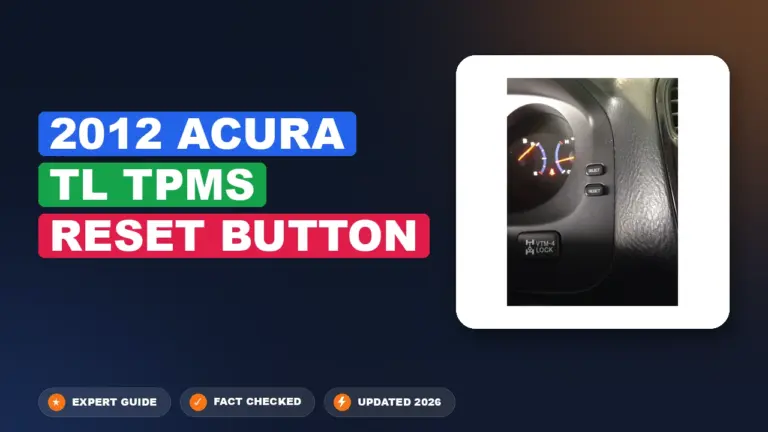
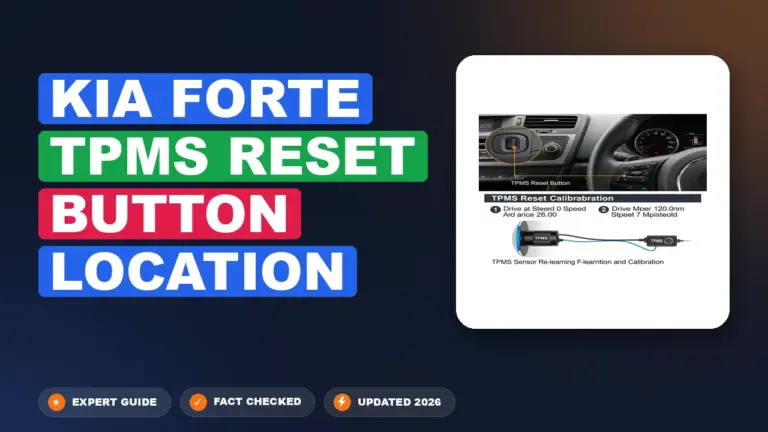
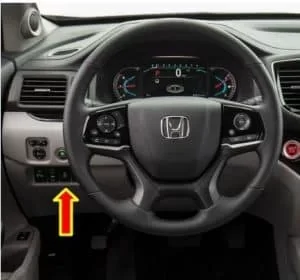
Instructions: Many 2011 Honda Odyssey owners search for a physical button labeled “SET” or a tire icon. On the 2011 model year, a physical calibration button is extremely rare and usually only present if the vehicle was manufactured for specific international markets or had an aftermarket system installed. For 99% of North American 2011 Odysseys, there is no physical reset button. Instead, the system is “self-learning.” You are looking for a blank plastic panel where a button might be in newer models (2018+), but on this specific generation, the “reset” is triggered by the computer sensing consistent, correct pressure while the vehicle is in motion. Stop searching for a button and prepare for the calibration drive.
Pro Tip: If you do find an aftermarket button installed by a previous owner, it is usually tucked far up near the OBD-II port under the dashboard, but do not rely on this for the factory system.
Step 4: Executing the Calibration Drive Cycle
What you need: A clear stretch of road where you can maintain steady speeds for 15-20 minutes.
Instructions: Once you have confirmed all tires are at the correct PSI (as per Step 1), the 2011 Odyssey requires a “relearn” drive. Start the engine and begin driving. To trigger the reset, you must maintain a speed of at least 28 mph (45 km/h) for a continuous period. The system’s control unit needs to receive consistent data packets from all four sensors to verify the pressures have stabilized. Usually, the light will turn off automatically after 10 to 20 minutes of driving at these speeds. Try to avoid stop-and-go traffic during this process, as frequent stopping can reset the internal timer the computer uses to verify the new pressure readings.
Pro Tip: If the light stays on after 20 minutes of highway driving, pull over, turn the car off, wait 30 seconds, and restart. This often “forces” the cluster to refresh the display with the new data.
Step 5: Using a TPMS Relearn Tool (If Sensors Were Replaced)
What you need: A handheld TPMS activation tool (like an Autel or Schrader tool) or a visit to a tire shop.
Instructions: If you recently got new tires or replaced a faulty sensor, the drive cycle alone might not work. The 2011 Odyssey uses 315MHz sensors that have unique ID codes. These codes must be “written” to the vehicle’s ECU. If the drive cycle fails, you or a technician must walk around the vehicle with a TPMS tool, “pinging” each sensor starting from the driver’s front tire and moving clockwise. Once the tool captures all four IDs, it is plugged into the OBD-II port (located under the driver’s side dash near the pedals) to upload the information. This tells the car’s computer exactly which sensors to listen to, effectively resetting the system from scratch.

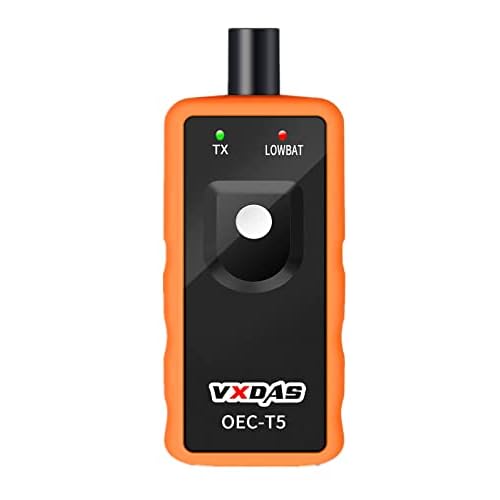

Pro Tip: Most major tire chains will perform this “TPMS Relearn” for a small fee or even for free if you purchased the tires from them.
Step 6: Addressing Sensor Battery Longevity
What you need: Knowledge of your vehicle’s service history.
Instructions: It is important to realize that the 2011 Honda Odyssey is now well over a decade old. The internal lithium batteries inside the TPMS sensors (located inside the wheel, attached to the valve stem) typically have a lifespan of 7 to 10 years. If you find that your TPMS light resets but then returns a few days later despite stable tire pressures, it is highly likely that one or more sensor batteries are failing. When the battery gets weak, the sensor transmits intermittently, which the car interprets as a system fault. In this scenario, no amount of driving or button-pushing will fix the light; the only solution is to replace the sensor units entirely during your next tire change.
Pro Tip: If one sensor battery fails, the others are likely close behind. It is more cost-effective to replace all four at once to avoid multiple trips to the shop and multiple balancing fees.
✅ Final Checklist
- All four tires are inflated to 33-35 PSI according to the door jamb placard.
- The spare tire has been checked (optional but recommended for stability).
- The vehicle was driven at speeds over 28 mph for at least 20 continuous minutes.
- The distinction between the “Low Pressure Symbol” and the “TPMS Text Light” has been identified.
- If sensors were replaced, the IDs have been programmed into the ECU via the OBD-II port.
Important Notes:
- Safety Warning: Never ignore a TPMS light. Low tire pressure can lead to tire delamination, blowouts, and increased braking distances.
- When to Seek Help: If the light persists after a long drive and confirmed PSI levels, a sensor has likely failed or the TPMS control module is faulty.
- Estimated Time: 25-40 minutes (including pressure check and drive cycle).
- Estimated Cost: $0 (DIY reset) to $50-$100 per sensor if replacement is required.
Differences Between Low Pressure and System Malfunction Lights
One of the most confusing parts of owning a 2011 Odyssey is seeing two different types of warnings. Your dashboard is capable of telling you if your air is low or if the actual monitoring system is broken. Knowing the difference can save you from a stressful trip to the tire shop. You need to look closely at the letters and symbols appearing near your speedometer to determine your next move.
The Low Tire Pressure Symbol
The most common light is the standard TPMS icon, which looks like the cross-section of a tire with an exclamation point. When this light stays solid while you are driving, it is a direct message from the sensors. It means at least one of your tires has dropped significantly below the recommended PSI (pounds per square inch). This often happens on the first cold morning of the year because cold air is denser and takes up less space. Usually, simply adding air to the correct level will satisfy the system’s requirements.
The “TPMS” Text Indicator
Sometimes, you might see the actual letters “TPMS” light up instead of the tire symbol. This is a system malfunction indicator. This is a very important distinction to make. If this light comes on or if the tire symbol flashes for 60 seconds before staying solid, it means the computer has lost touch with one or more sensors. This usually happens for a few specific reasons:
- Dead Sensor Battery: Since the van is over a decade old, the sensor batteries are likely reaching the end of their life.
- Electronic Interference: Sometimes aftermarket chargers or electronic devices can block the radio signal.
- Broken Hardware: A sensor might have been damaged during a recent tire change or rotation.
- Extreme Weather: Very deep snow or ice buildup can occasionally interfere with the signal transmission.
By identifying which light you are seeing, you can act with confidence. A solid tire icon means you need air, while a “TPMS” text light means you likely need a professional to look at the sensors themselves. Keeping these differences in mind will help you maintain your Odyssey’s safety without unnecessary stress.
Factors Affecting Automatic Sensor Recalibration
Since the 2011 Honda Odyssey relies on an automatic recalibration process rather than a manual button, several external factors can influence how quickly the system updates. It is not always an instantaneous process the moment you pull out of your driveway. The vehicle’s onboard computer needs specific data points to confirm that all four tires are rotating at the correct relative speeds and maintaining consistent pressure readings.
Driving Habits and Speed Requirements
One of the most common reasons the TPMS light stays on after inflating your tires is failing to meet the vehicle’s internal “reset” criteria. The system typically requires a steady pace to register the new data. If you are stuck in heavy stop-and-go traffic or only driving short distances at low speeds, the computer may not have enough time to verify the fix.
- Consistent Velocity: The system generally needs to see speeds above 28 mph for a sustained period.
- Duration: Most 2011 Odyssey owners find that the light clears after 15 to 20 minutes of continuous highway driving.
- Engine Cycles: Sometimes, the computer requires a full ignition cycle (turning the car off and back on) after a long drive to refresh the dashboard display.
Environmental and Physical Obstructions
External variables can occasionally interfere with the wireless signals sent from the wheel sensors to the receiver. While rare, high-frequency radio interference or even extreme weather conditions can cause a delay in the automatic recalibration process.
- Extreme Temperature Swings: Rapid drops in temperature can cause pressure fluctuations that “confuse” an aging sensor during its recalibration phase.
- Electronic Interference: Unofficial aftermarket electronic accessories plugged into the 12V outlets can sometimes create electromagnetic noise that disrupts TPMS signals.
- Sensor Shielding: Significant amounts of mud, ice, or snow packed into the wheel wells can occasionally dampen the signal strength.
Common Causes for Persistent TPMS Warning Indicators
If you have checked your tire pressure and driven the vehicle for several miles but the warning light refuses to disappear, you are likely dealing with a hardware issue rather than a simple pressure imbalance. Because the 2011 Honda Odyssey is now an older model, the components of the TPMS system are reaching the end of their natural life cycles.
Sensor Battery Depletion
Inside every TPMS sensor is a small, non-replaceable lithium battery. These batteries are designed to last roughly 7 to 10 years. For a 2011 model, most original sensors are either dead or dying. When a battery fails, the sensor can no longer transmit data to the Odyssey’s computer, which triggers the “TPMS” error light (often different from the low-tire-pressure icon).
- Signal Loss: A weak battery provides intermittent signals, causing the light to flicker on and off randomly.
- Total Failure: Once the battery is completely exhausted, the system will trigger a permanent fault code that cannot be cleared by adding air.
- Professional Diagnostics: A tire shop uses a handheld tool to “ping” each sensor to check battery health and signal strength.
Mechanical Damage and Corrosion
The TPMS sensors are located inside the wheel, attached to the valve stem. This makes them vulnerable to physical damage and the elements. Road salt, moisture, and debris can lead to internal failures that prevent the system from resetting itself automatically.
- Valve Stem Corrosion: Metal valve stems can corrode over time, leading to slow leaks or damage to the internal electronics.
- Installation Errors: During a tire change, it is easy for a technician to accidentally bump or crack the sensor body.
- Seal Failure: The rubber grommets that seal the sensor to the rim can dry out, causing a “micro-leak” that keeps the pressure just low enough to trigger the light.
Conclusion
Understanding that the 2011 Honda Odyssey lacks a physical TPMS reset button is the first step in troubleshooting your dashboard warnings. By relying on an automatic system, Honda simplified the process for the driver, but it also means you must rely on the health of your sensors and specific driving conditions to clear the light. If your pressure is correct and the light persists after a long drive, it is likely time to investigate the age of your sensor batteries or look for mechanical damage.
To keep your Odyssey running safely, make it a habit to check your tire pressure manually once a month with a high-quality gauge. If the TPMS light continues to be a headache, visit a local tire professional to have your sensor health scanned. Do you have a tip for keeping your Honda’s tires in top shape? Let us know in the comments below or share this guide with a fellow Odyssey owner!
💬 Quick Questions & Answers
Where is the TPMS reset button on a 2011 Honda Odyssey?
There is no physical reset button; the system updates automatically through driving.
How fast do I need to drive to reset the TPMS?
You should maintain a speed of at least 28 mph (45 km/h) for the sensors to sync.
What is the correct tire pressure for a 2011 Odyssey?
The recommended pressure is typically 33-35 PSI, as listed on the driver’s side door jamb.
Does the spare tire have a TPMS sensor?


No, the compact spare tire does not contain a sensor and will trigger the light if used.
Why does my TPMS light stay on after filling the tires?
This usually indicates a faulty sensor, a dead sensor battery, or a system error.
❓ Frequently Asked Questions
Why can’t I find a reset button under the dashboard?
Unlike newer Honda models that use indirect TPMS, the 2011 Odyssey uses direct sensors in each wheel. The system is engineered to detect pressure changes automatically, removing the need for a manual initialization button.
What is the difference between the ‘TPMS’ light and the tire icon?
The horseshoe-shaped icon with an exclamation point indicates low air pressure in a tire. The letters ‘TPMS’ indicate a fault with the monitoring system hardware, such as a broken sensor or signal interference.
How do I know if a TPMS sensor battery has failed?
Most sensors have a lifespan of 7 to 10 years, which the 2011 Odyssey has now surpassed. A technician can use a signal tool to check if individual sensors are still transmitting data.
Will disconnecting the car battery reset the TPMS light?
No, disconnecting the vehicle battery will not clear TPMS codes or reset the sensors. The system requires actual wheel rotation and pressure readings to update the dashboard display.
Can cold weather trigger the 2011 Honda Odyssey TPMS light?
Yes, for every 10-degree drop in temperature, tire pressure can drop by about 1 PSI. This is often enough to trigger the low-pressure warning on cold mornings even if there is no leak.
Is it necessary to replace all four TPMS sensors at once?
While not strictly required, it is often recommended because the internal batteries typically fail around the same time. Replacing them during a tire change saves on future labor costs.