Honda Cr-V Best And Worst Years: A Curated Performance Review
Title: Honda Cr-V Best And Worst Years: A Curated Performance Review
For decades, the Honda CR-V has stood as a bastion of practicality and reliability in the fiercely competitive compact SUV segment. Its enduring appeal is a testament to Honda’s engineering prowess, consistently delivering a balanced blend of efficiency, utility, and comfort. However, with numerous generations and model years, prospective buyers often face the daunting task of discerning which CR-V iterations uphold this esteemed reputation and which are best approached with caution. This expert, curated guide cuts through the complexity, providing a detailed analysis of the Honda CR-V’s best and worst years, equipping you with the essential knowledge to make an informed and confident purchasing decision.

Prime for Young Adults — 6 Months Free
Students and 18–24s get six months of Prime free, then half price.
Start 6 Months FreeUnderstanding the Honda CR-V’s Legacy: Evolution in the Compact SUV Segment

📤 Share Image
The Honda CR-V has consistently held its ground as a popular and consistently ranked contender in the compact SUV market since its introduction in 1997. It quickly established itself as a nimble, car-like SUV, offering an appealing alternative to the larger, truck-based sport utility vehicles prevalent at the time. This strategic positioning resonated with a growing consumer demand for versatile, fuel-efficient vehicles that married sedan-like driving dynamics with enhanced cargo capacity and all-weather capability.
Honda’s overarching brand philosophy, centered on engineering efficiency, passenger comfort, and uncompromising reliability, has always underpinned the CR-V’s design and evolution. Across its multiple generations, the CR-V has continuously adapted to market trends and technological advancements. Its journey began with a focus on practical utility, then transitioned through periods emphasizing refined aesthetics and enhanced interior sophistication, eventually embracing advanced powertrain technologies and comprehensive safety suites.
From its initial launch, often competing fiercely with rivals like the Toyota RAV4 for sales volume, the CR-V has seen significant shifts in design, powertrain configurations, and technological integration. Early models featured robust conventional automatic transmissions and naturally aspirated engines, while later generations introduced Continuously Variable Transmissions (CVTs) and turbocharged powerplants. This generational progression illustrates Honda’s commitment to evolving the CR-V into a more sophisticated family vehicle while striving to maintain its core attributes of dependability and value.
The Gold Standard: Identifying the Best Honda CR-V Model Years for Reliability and Value
For those seeking a Honda CR-V that embodies the brand’s legendary reliability and offers exceptional long-term value, certain model years stand out as the gold standard. This must-know section provides an essential guidance for potential buyers, highlighting periods of mechanical robustness and minimal reported issues.
2nd Generation (2005-2006): Unwavering Durability
The latter years of the 2nd Generation CR-V, specifically the 2005 and 2006 models, represent a pinnacle of conventional Honda engineering. These years are renowned for their mechanical fortitude, primarily due to the robust K24A1 2.4-liter DOHC i-VTEC engine, which is widely considered one of Honda’s most durable and reliable powertrains. Paired with a conventional 5-speed automatic transmission, these models boast a driveline known for its longevity and predictable performance.
Owners frequently report achieving 200,000+ miles with routine maintenance, a testament to their inherent quality. The interior quality also stands the test of time, with well-engineered components that resist wear and tear over years of rigorous use. Maintenance requirements are straightforward, contributing to lower ownership costs.
Exceptional Engine Life
K24-series engines in these years are celebrated for reaching high mileage with minimal issues.

Audible — Listen Free for 30 Days
One free credit a month and thousands of titles included.
Listen Free for 30 DaysReliable Transmission
Conventional 5-speed automatic transmissions are known for their smooth operation and durability.
Low Ownership Costs
Average annual repair costs are significantly lower than the compact SUV segment average, as reported by RepairPal.
4th Generation (2015-2016): Refined Dependability
The refreshed 2015 and 2016 CR-V models from the 4th Generation also represent a highly recommended selection. These years benefited from Honda’s “Earth Dreams” technology, introducing a revised 2.4-liter direct-injected K24W engine paired with a Continuously Variable Transmission (CVT). While the CVT might be a point of contention for some traditionalists, Honda’s iteration in these specific years proved largely reliable and contributed to impressive fuel efficiency.
Consumer Reports consistently gave the 2015 CR-V a “Recommended” status, praising its balanced performance, practicality, and particularly its strong dependability ratings. These models generally achieved high scores in J.D. Power Vehicle Dependability Studies (VDS) for their overall quality and low incidence of reported problems. The interior received significant upgrades, offering improved materials and a more sophisticated feel, further enhancing owner satisfaction.
By The Numbers: Best Years
J.D. Power Dependability (2015 CR-V)
Avg. Annual Repair Cost (2006 CR-V, RepairPal)
Combined Fuel Economy (2015 FWD)
Navigating Pitfalls: Dissecting the Worst Honda CR-V Years and Their Common Issues
While the Honda CR-V largely upholds a reputation for reliability, specific model years have historically presented significant mechanical or design flaws that warrant caution. This essential section provides a curated list of issues to be aware of, helping prospective buyers navigate potential pitfalls.
3rd Generation (2007-2009): A/C Compressor Woes and VTC Actuator Concerns
The early years of the 3rd Generation, particularly 2007, 2008, and 2009 CR-Vs, are frequently cited for problematic air conditioning systems. Owners widely reported A/C compressor failures, often stemming from clutch issues or the compressor itself seizing. This can lead to costly repairs, with average A/C compressor replacement costs typically ranging from $800 to $1500. Numerous complaints regarding “cracked blocks” or compressor lock-ups are documented on platforms like the National Highway Traffic Safety Administration (NHTSA).
Beyond the A/C, these years also saw a rise in complaints related to the VTC (Variable Timing Control) actuator. This issue manifests as a loud grinding or rattling noise during a cold start, particularly after the vehicle has been sitting for several hours. While not always immediately catastrophic, a failing VTC actuator can impact engine timing and performance over time, and its replacement can be an involved repair.
Early 5th Generation (2017-2018): The Oil Dilution Dilemma
The introduction of the 5th Generation CR-V brought significant changes, including the highly anticipated 1.5-liter turbocharged engine. However, the 2017 and 2018 models equipped with this specific engine experienced a widely publicized and severe issue: excessive oil dilution. This problem, particularly prevalent in colder climates and with short-trip driving, involves fuel mixing into the engine oil, leading to an elevated oil level and, more critically, reduced lubrication effectiveness.
Symptoms included a strong gasoline smell from the oil, increased oil levels on the dipstick, and in severe cases, engine misfires and loss of power. Numerous NHTSA complaints detail “fuel in oil” and other related engine performance issues. Honda eventually acknowledged the problem and issued a service bulletin (TSB 18-028) and a software update to address it, along with an extended warranty for affected components. Despite these measures, the long-term effects of prolonged oil dilution remain a concern for these specific early 1.5L turbo models. Additionally, some owners reported glitches with the early iterations of the infotainment system during these years.
When considering a 2017 or 2018 CR-V with the 1.5L turbo engine, verify if the oil dilution software update and any relevant recalls have been performed. Request service records documenting these critical updates to mitigate potential risks.
❌ Common Issues (Worst Years)
- A/C compressor failures (2007-2009)
- VTC actuator cold start rattle (2007-2009)
- Excessive oil consumption (some K24 variants, minor)
- Oil dilution in 1.5L turbocharged engine (2017-2018)
- Infotainment system glitches (early 5th Gen)
✅ Why Owners Still Choose CR-V
- Reputation for overall reliability (excluding specific years/issues)
- Excellent resale value
- Spacious and practical interior
- Good fuel economy across many generations
- Comfortable ride and easy to drive
Key Performance Indicators: Evaluating CR-V Generations on Powertrain, Features, and Safety
A comprehensive understanding of the Honda CR-V necessitates a ranked analysis of its evolution across key performance indicators. This section delves into the must-know upgrades and regressions in powertrain technology, interior features, and safety advancements across its different generations.
Powertrain Evolution: From Robust to Efficient
The CR-V’s powertrain journey began with the durable B-series engine in its first generation, transitioning to the highly praised K-series engines (e.g., K24A1) in the 2nd through 4th generations. These naturally aspirated engines, typically paired with conventional 4-speed or 5-speed automatic transmissions, were celebrated for their smooth power delivery and unwavering reliability. For instance, a 2006 CR-V with its K24A1 and 5-speed automatic offered predictable and robust driving dynamics.
The 4th generation introduced Earth Dreams technology, updating the 2.4L engine for improved efficiency and pairing it with a Continuously Variable Transmission (CVT). This was a significant shift, prioritizing fuel economy (e.g., 28 MPG combined for a 2015 FWD model) over the more direct feel of a geared automatic. The 5th generation further diversified, offering the aforementioned 1.5L turbocharged engine (190 hp, 179 lb-ft torque) alongside a naturally aspirated 2.4L in some markets, and later introducing hybrid variants.
Interior Features and Technology: From Basic to Advanced
Early CR-Vs offered utilitarian interiors focused on practicality, with basic amenities like a CD player. Fast forward to modern iterations, and the progression is stark. A comparison between the basic functionality of an early 2000s model and a modern CR-V reveals a shift towards advanced infotainment systems, seamless Apple CarPlay/Android Auto integration, premium audio options, and comfort features like heated seats, dual-zone climate control, and panoramic sunroofs. The material quality and overall cabin refinement have also steadily improved, making recent CR-Vs feel more upscale.
Safety Advancements: Protecting Occupants
Safety has been a continuously evolving priority for the CR-V. Early models provided standard airbags and Anti-lock Braking Systems (ABS). The significant leap came with the introduction of the Honda Sensing suite of advanced driver-assistance systems. This comprehensive package, becoming standard on many trims from the 2017 model year onwards, includes features like Collision Mitigation Braking System, Road Departure Mitigation, Adaptive Cruise Control, and Lane Keeping Assist System. These innovations have profoundly impacted the CR-V’s safety ratings, with many recent model years consistently earning IIHS ‘Top Safety Pick’ or ‘Top Safety Pick+’ awards.
Making an Informed Decision: Essential Factors When Purchasing a Used Honda CR-V
Acquiring a used Honda CR-V can be an excellent investment, but it demands diligence. This must-know section provides essential practical advice and a curated checklist to ensure you confidently choose a reliable model, regardless of whether it’s from a recommended collection of years or a more recent, technologically advanced selection.
📋
Step-by-Step Guide for Used CR-V Inspection
This is paramount. Have a trusted, independent mechanic thoroughly inspect the vehicle. They will identify hidden issues such as fluid leaks, suspension wear, exhaust problems, and potential frame damage that a visual check might miss. The average cost of a comprehensive PPI ($100-$200) is a small investment that can prevent thousands in future repairs.
Utilize services like CarFax or AutoCheck. These reports provide crucial insights into a vehicle’s past, including accident history, previous ownership, reported odometer discrepancies, and most importantly, service records and outstanding recalls. Ensure all recall work has been completed.
Beyond typical driving, pay attention to specific CR-V traits. Listen for unusual noises during cold starts (potential VTC actuator issue), evaluate transmission shifting for smoothness (especially CVTs), check for vibrations under braking, and test all electronics, including the infotainment system. Drive on various surfaces to assess suspension integrity and listen for rattles.
Specifically check for rust on the undercarriage, around wheel wells, and behind plastic trim. Open the oil cap to look for milky residue (sign of coolant in oil) or strong gasoline smell (oil dilution). Check brake pad wear, tire condition, and ensure all lights and features function as expected.
When negotiating, use any identified issues or overdue maintenance from the PPI to your advantage. A transparent seller with complete service records is always a better bet, regardless of the model year.
By diligently following these steps, you significantly increase your chances of securing a reliable Honda CR-V that will serve you well for years to come. Remember, even the most reliable models can have individual quirks, making thorough inspection an irreplaceable step in the purchasing process.
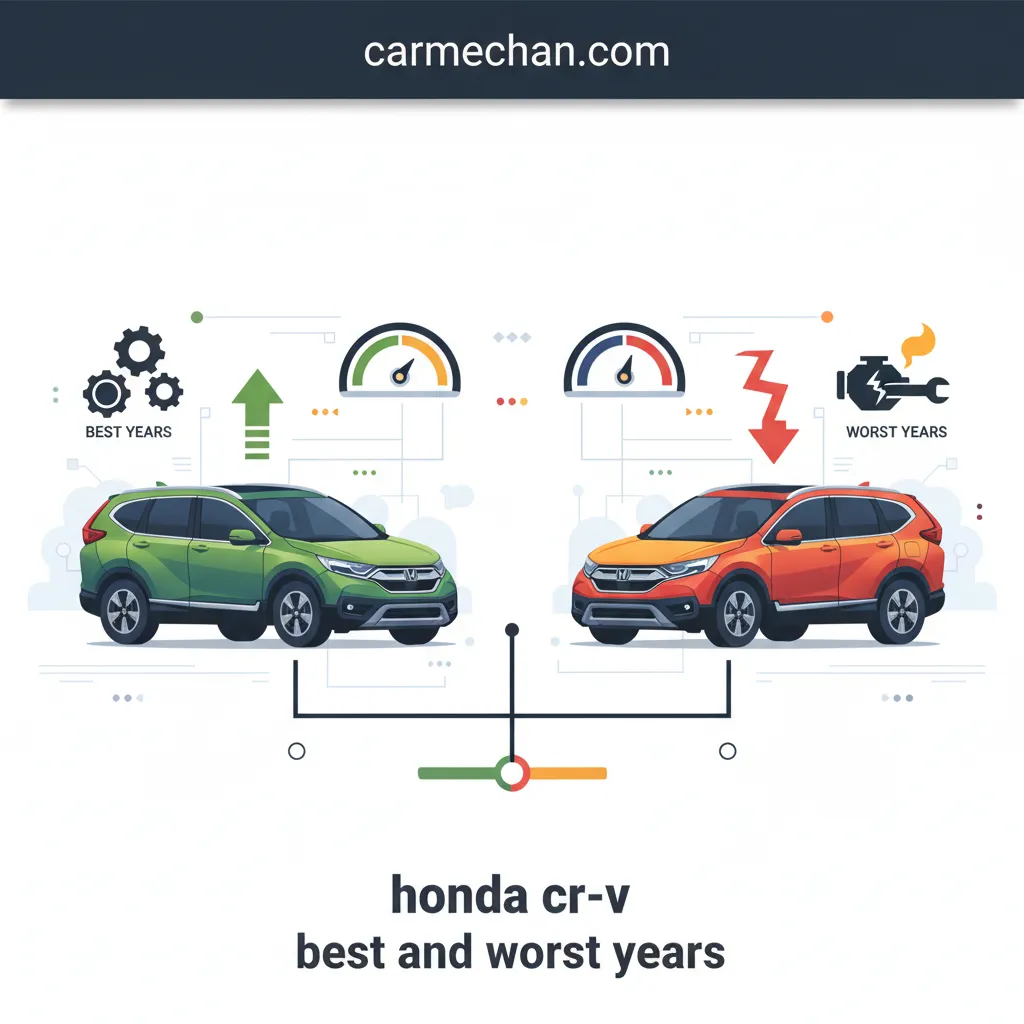
Certain Honda CR-V model years (e.g., 2005-2006, 2015-2016) stand out for their exceptional reliability and value, embodying Honda’s engineering strengths. Conversely, problematic years (e.g., 2007-2009, 2017-2018) often suffer from specific, well-documented mechanical or design flaws that warrant heightened scrutiny. A thorough pre-purchase inspection by a trusted mechanic and a diligent review of vehicle history are paramount for any used CR-V acquisition to mitigate risks.
Armed with this comprehensive ranking of the Honda CR-V’s performance across its generations, you are now better prepared. We encourage you to utilize this essential information, perform a diligent vehicle inspection, and prioritize test drives to ensure your next CR-V aligns perfectly with your expectations for durability and satisfaction.
Frequently Asked Questions
Which Honda CR-V generation is widely considered the most reliable?
The second generation (2002-2006), particularly the 2005-2006 models, and the fourth generation (2012-2016), especially 2015-2016, are often ranked highest for reliability. These years typically feature robust K-series engines and conventional automatic transmissions that have proven to be exceptionally durable with proper maintenance, minimizing common issues seen in other generations.
What are the most significant issues reported in the ‘worst’ CR-V years?
The 2007-2009 models of the third generation frequently encountered issues like premature A/C compressor failure and VTC actuator problems causing cold start rattles. Early fifth-generation models (2017-2018) with the 1.5L turbocharged engine faced oil dilution, leading to potential long-term engine wear. Infotainment glitches also plagued some newer models.
Is the Honda CR-V a good option for driving in snowy conditions?
Yes, the Honda CR-V is a popular choice for snowy conditions, particularly models equipped with Honda’s Real Time AWD system. While not a hardcore off-roader, the AWD system provides enhanced traction and stability on slippery surfaces. Combined with good winter tires, a CR-V offers reliable and controlled performance in most typical winter weather scenarios.
What is the typical lifespan for a well-maintained Honda CR-V?
A well-maintained Honda CR-V is known for its impressive longevity. It is not uncommon for CR-V owners to report their vehicles lasting well over 200,000 miles, and even up to 300,000 miles, with routine servicing and timely repairs. The key to maximizing its lifespan lies in adhering to the manufacturer’s recommended maintenance schedule.
Should I be concerned about the Continuously Variable Transmission (CVT) in newer CR-V models?
While early CVTs from some manufacturers had reliability concerns, Honda’s CVT units, introduced more widely in the CR-V from 2015 onwards, have generally proven reliable. They contribute to better fuel economy and smoother acceleration. However, regular transmission fluid changes are more critical for CVTs than traditional automatics to ensure their long-term health and performance.