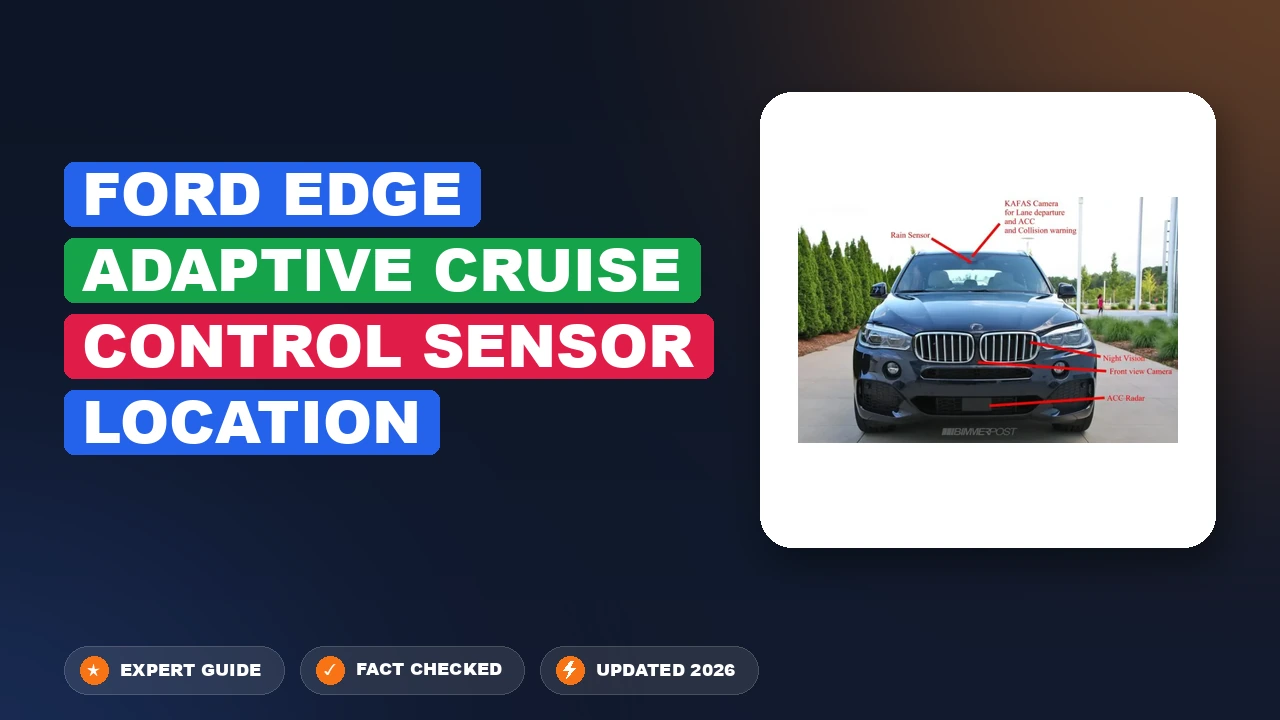
Ford Edge Adaptive Cruise Control Sensor Location Mapped Out
Is your Ford Edge displaying an “Adaptive Cruise Control Not Available” warning that just won’t clear? Many owners struggle to find the exact location of the sensor or assume it’s hidden behind the front emblem, leading to incorrect DIY attempts that leave the driver-assist suite offline. In this guide, we will pinpoint the Ford Edge adaptive cruise control sensor location, explain why it’s so sensitive to misalignment, and outline the professional calibration process required to get your vehicle back on the road safely.
Understanding the Ford Edge Adaptive Cruise Control Sensor Location and Function


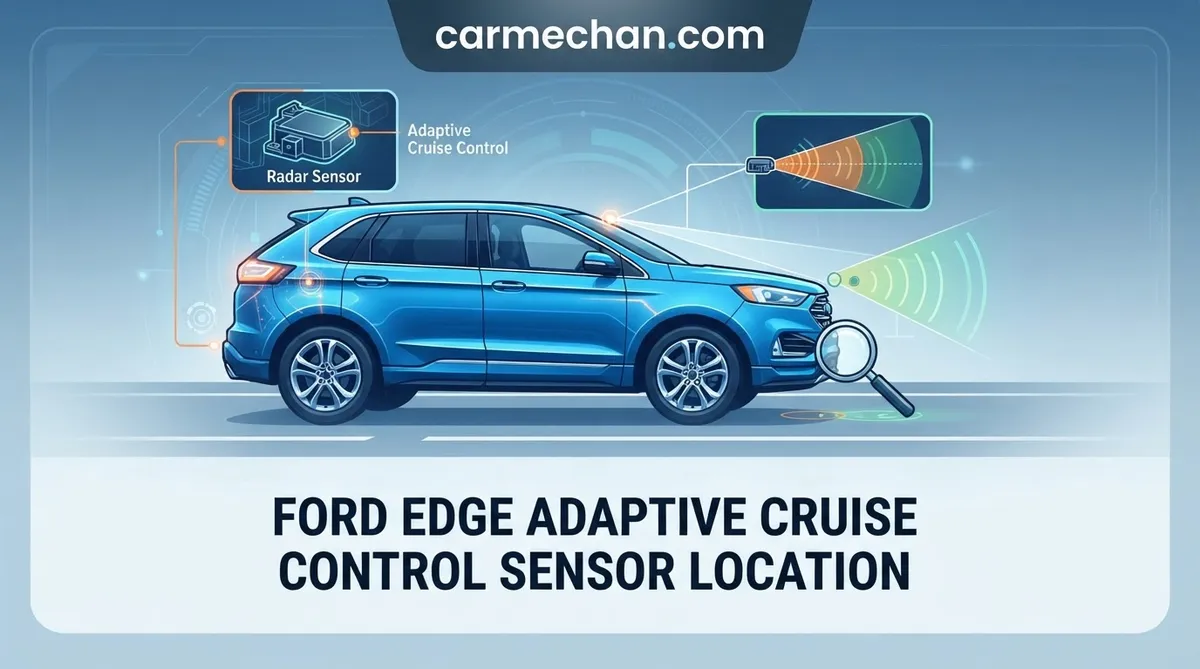
The Ford Edge utilizes advanced radar technology to maintain safe distances between you and the vehicle ahead. Understanding where this hardware lives and how it “sees” the world is the first step toward effective diagnostics.
📤 Share Image

How Radar Transceivers Calculate Distance
At the heart of the system is the radar transceiver, a sophisticated device operating at an operating frequency of 76-77 GHz. This unit utilizes FMCW (Frequency Modulated Continuous Wave) technology to broadcast a radar signal. Imagine this beam as a specialized flashlight cone projected forward; as the beam strikes a lead vehicle, it bounces back to the sensor. By calculating the shift in frequency and the time delay of the return signal, the system determines the lead vehicle’s distance and closing speed with extreme precision.
Differentiating Radar from Camera Systems
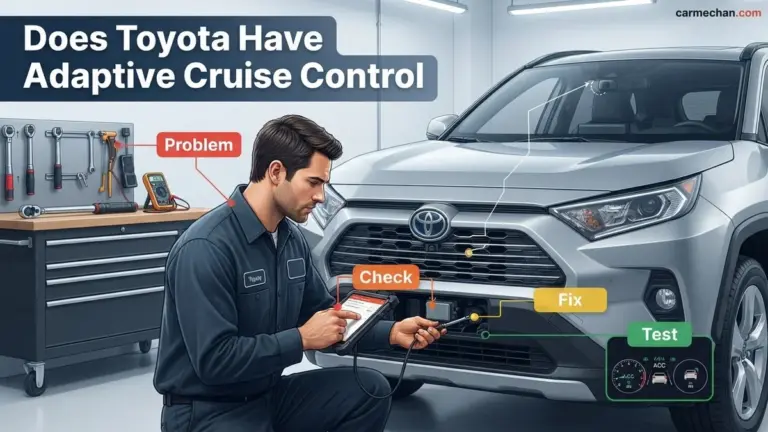
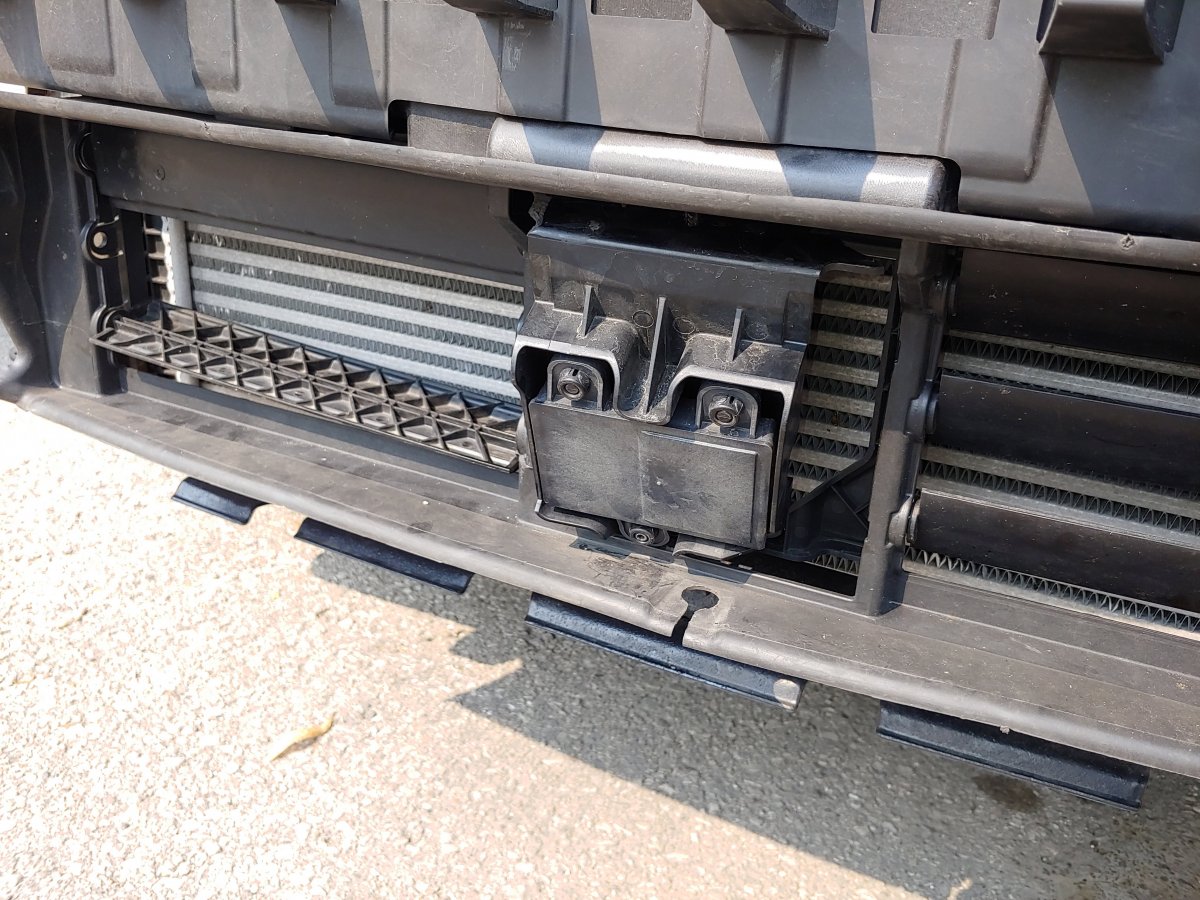
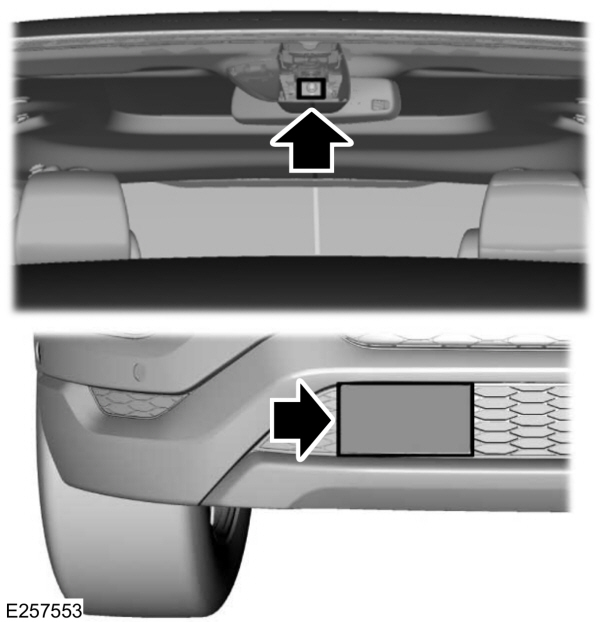
It is vital to distinguish the ACC radar sensor from the camera-based lane-keeping systems found in your Ford Edge. While the camera is typically mounted behind the rearview mirror to track lane markers, the ACC sensor is strictly focused on depth and velocity tracking of objects in your path. Because radar waves are sensitive to physical obstruction, the mounting bracket is intentionally placed in the lower grille area, far below the emblem, to ensure an unobstructed view of the road surface and preceding traffic.
Industry Data: Radar Tech Specs
GHz Frequency
Modulation Type
Identifying Ford Edge Adaptive Cruise Control Sensor Location Issues


Because the radar sensor is located in the lower front fascia, it is exposed to the elements and potential road hazards. Identifying the root cause of a system error starts with a physical inspection of the area.
The Impact of Road Debris and Weather
The ACC sensor requires a clear line of sight. Research indicates that the system is highly sensitive to external accumulation. Heavy buildup of mud, slush, or deep snow on the front lower grille will effectively “blind” the radar, causing an immediate dashboard warning. If your system is failing during inclement weather, this is often a design-intended safety lockout rather than a hardware failure.
Why Bumper Impacts Cause Misalignment
Even a low-speed parking lot bump can exert enough force to shift the sensor’s bracket. Because the radar beam is highly directional, a misalignment of just a few degrees can cause the system to “see” the road, guardrails, or empty space instead of the vehicle ahead. When the internal Adaptive Cruise Control Module (ACCM) detects that the beam reflection is inconsistent, it will disable the system to prevent erratic braking or acceleration.
Common Myths: The Ford Emblem vs. The Lower Grille
A common pitfall for DIY mechanics is assuming the sensor resides behind the front grille emblem. On most modern Ford vehicles, including the Edge, that area is often reserved for front-facing cameras or parking sensors. Accessing the ACC sensor requires examining the lower intake, and any attempt to manipulate the emblem area will not solve your cruise control issues.
Never attempt to force or manually bend the sensor bracket if you notice a misalignment. The radar unit is a calibrated optical-electronic device; manual adjustment without specialized dealer equipment will render the system permanently unreliable.
Performing Ford Edge Adaptive Cruise Control Sensor Calibration


If your sensor has been replaced or if a bumper impact has occurred, software-driven calibration is mandatory. This is not a task that can be completed with standard garage tools.
Why Specialized Calibration Tools Are Mandatory
Technicians use a specialized “target board” placed at a precise distance and angle from the front of the vehicle. The vehicle’s Powertrain Control Module (PCM) initiates a diagnostic routine that uses this target to map the radar’s field of view. Without this specific geometric reference, the sensor cannot verify its own aim, resulting in a persistent diagnostic trouble code (DTC).
The Role of the PCM and ABS Modules in Calibration
The ACCM does not work in isolation; it communicates constantly with the ABS/ESC module to manage vehicle braking and the PCM to modulate throttle. If there is a communication fault—or if the software version between these modules is mismatched—the sensor will appear “dead.”
📋
Calibration Process Overview
Technicians use an OBD-II scan tool to clear existing codes and ensure no unrelated electrical gremlins are disrupting communication.
The vehicle is placed on a level surface, and the radar alignment jig (target board) is positioned according to factory height and distance specifications.
Software prompts the ACCM to perform a horizontal and vertical sweep, adjusting the digital threshold to align with the physical target.
Troubleshooting Persistent Ford Edge Adaptive Cruise Control Errors
If your sensor remains unresponsive after cleaning, a deeper electrical or software inspection is required. You can utilize these steps to narrow down the failure points before visiting a professional.
- Instrument Cluster Codes: Pay close attention to specific messages. A “Service Adaptive Cruise Control” message usually points to an internal module fault, while “Adaptive Cruise Control Not Available” often indicates a physical obstruction or signal blockage.
- Wiring Harness Inspection: Inspect the connector leading to the radar unit. Road salt and moisture are notorious for causing pin corrosion. If the connector looks oxidized, consult with a trusted local technician for a terminal repair rather than a full harness replacement.
- Software Communication: Sometimes the ACCM fails to “handshake” with the PCM due to a corrupted firmware update. If the hardware is physically intact and clean, a dealer-level reflash of the vehicle’s modules often resolves persistent communication errors.
- Professional Intervention: If troubleshooting efforts do not yield results, it is time to seek accessible diagnostic services. Attempting to bypass these safety systems can be dangerous; rely on professionals to ensure the radar is calibrated to factory-grade accuracy.
If you have recently had your bumper removed for body work, ensure the shop performed the ACC calibration. Most body shops outsource this, but it is a critical final step for any front-end repair involving the bumper assembly.
Final Considerations for Your Adaptive Cruise Control System
Maintaining your Ford Edge’s driver-assist hardware ensures that you continue to enjoy the convenience of modern safety features. Remember that the sensor is located in the lower front grille area, not the emblem, and that it requires a clear, debris-free path to function correctly. Misalignment resulting from even minor bumper bumps necessitates professional laser calibration to ensure the radar beam is precisely aligned with the vehicle’s direction of travel. Furthermore, software-related faults in the PCM or ABS module can occasionally mirror hardware problems, requiring an expert to differentiate between a simple reset and a component replacement.
If your sensor remains unresponsive after a thorough cleaning of the lower grille, we recommend that you schedule a diagnostic check with your trusted local Ford dealer. Their technicians have the available tools and expertise to verify your system’s integrity, ensuring your vehicle’s safety features are calibrated to factory standards. By keeping this critical component in top condition, you maintain the convenient and reliable performance that makes the Ford Edge a standout in its class.
Ford Edge Adaptive Cruise Control Sensor Location: Frequently Asked Questions
Where exactly is the ACC sensor located on my Ford Edge?
The Adaptive Cruise Control (ACC) sensor is mounted on the front bumper support, positioned behind the lower front grille. It is generally located slightly to the driver’s side of the vehicle’s centerline. You will see a rectangular or square unit—the radar emitter—tucked behind the plastic air dam mesh. Its position is designed to provide an unobstructed view of the road while remaining shielded from direct road debris.
Why does my Ford Edge say ACC not available?
This message typically indicates that the radar sensor has lost its ‘field of view’ or its signal is being interrupted. This is most commonly caused by mud, heavy snow, or ice blocking the sensor window in the lower grille. However, it can also be triggered by a mounting bracket that has shifted, an internal sensor fault, or a software calibration error following recent front-end body repairs.
Does the sensor need calibration after a bumper repair?
Yes, absolutely. If your front bumper has been removed, replaced, or subjected to an impact, the ACC sensor’s alignment is almost certainly compromised. Even a change of a few millimeters can cause the radar to miscalculate the distance to the vehicle ahead. Ford requires a formal ‘Radar Alignment Procedure’ using specialized targets and software to restore factory accuracy and ensure the safety of the cruise control system.
Will a dirty front grille block the ACC sensor?
Yes, a dirty front grille will absolutely affect the sensor’s performance. Because the sensor relies on sending out radar waves that bounce off other vehicles, any dense material—such as a thick layer of road grime, wet mud, or heavy winter slush—can deflect or absorb these signals. Keeping this area of your grille clean is the most effective way to prevent false ‘sensor blocked’ warnings during inclement weather.
Can I replace the sensor myself?
While you can physically install a new sensor module, you cannot make it operational on your own. The Ford Edge requires the new sensor to be ‘handshaked’ with the vehicle’s Powertrain Control Module (PCM) and then calibrated to the specific orientation of your car. This requires dealership-level diagnostic software, such as the Ford FDRS, making it a professional-only repair for safety and system compliance.