Does Using Cruise Control Save Gas? A Proven 2026
Last Updated on September 1, 2026 by Ryan
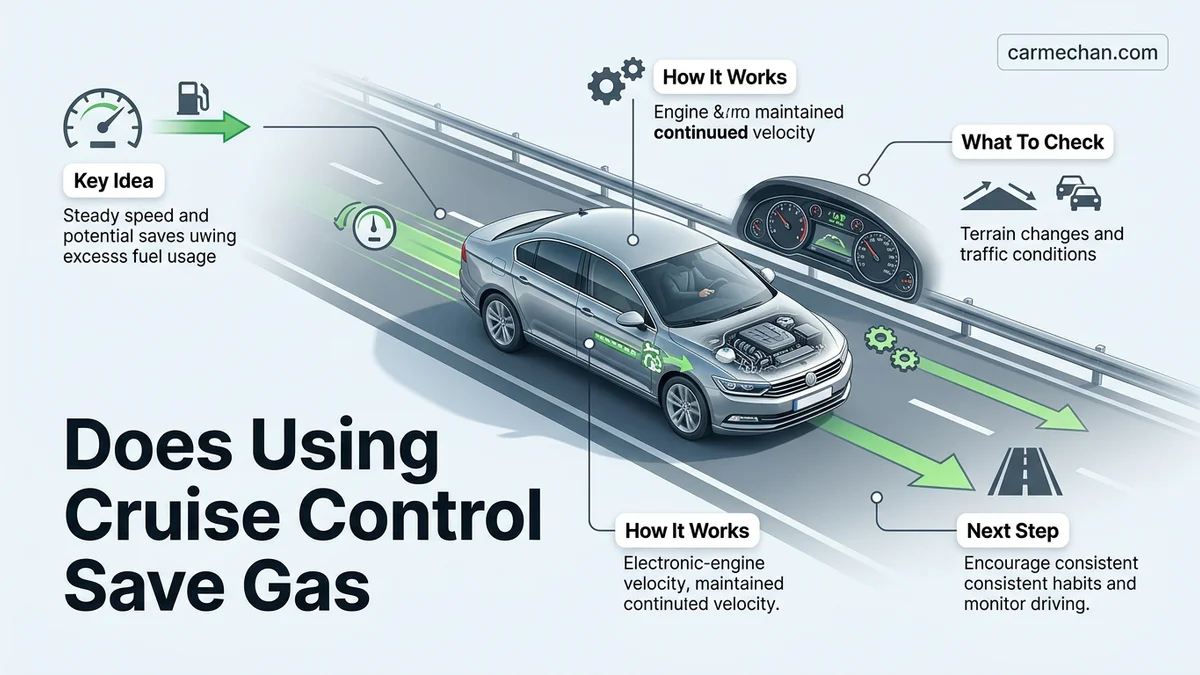
Cruise control saves gas primarily on flat highways by maintaining a steady throttle that humans often fail to replicate. However, it can decrease efficiency on hilly terrain because the system often forces aggressive downshifts to maintain speed.

Prime for Young Adults — 6 Months Free
Students and 18–24s get six months of Prime free, then half price.
Start 6 Months FreeUsing cruise control does save gas, but only when your environment allows the system to maintain a truly steady state. In 2026, modern vehicle computers are more efficient than ever at minimizing throttle micro-adjustments that human drivers naturally perform. On flat highways, using cruise control typically improves fuel economy by 5 to 7 percent because it eliminates the erratic speed fluctuations that trigger unnecessary fuel consumption.
However, the real-world answer depends entirely on the topography of your route. Understanding this distinction is the difference between optimizing your commute and inadvertently burning extra fuel. If you rely on cruise control blindly, you might be costing yourself money instead of saving it. This guide clarifies exactly when you should engage your system and when you need to take back control for maximum efficiency.
Key Takeaways
- Use cruise control on long, flat highway stretches to maximize fuel efficiency.
- Turn off cruise control in hilly terrain to maintain better momentum and save fuel.
- Avoid cruise control in heavy traffic to prevent unnecessary braking and acceleration cycles.
- Use manual speed control during inclement weather for better vehicle management and safety.
- Maintain consistent speeds to significantly reduce fuel consumption over long distances.
What Causes Fuel Inefficiency with Cruise Control
Recommended Best Deal Products


The Downhill Acceleration Trap
The primary inefficiency occurs when cruise control handles elevation changes. Because the system is programmed to maintain a specific speed, it often acts with a delayed reaction compared to a skilled driver. When your car begins to descend a hill, the cruise control frequently waits until the vehicle has already gained momentum before cutting the throttle. By that point, the system is essentially fighting against gravity. Instead of coasting to maintain speed, it may trigger an aggressive downshift or engine braking to stabilize, effectively wasting the potential kinetic energy you could have used to crest the next incline.
The Uphill Over-Correction
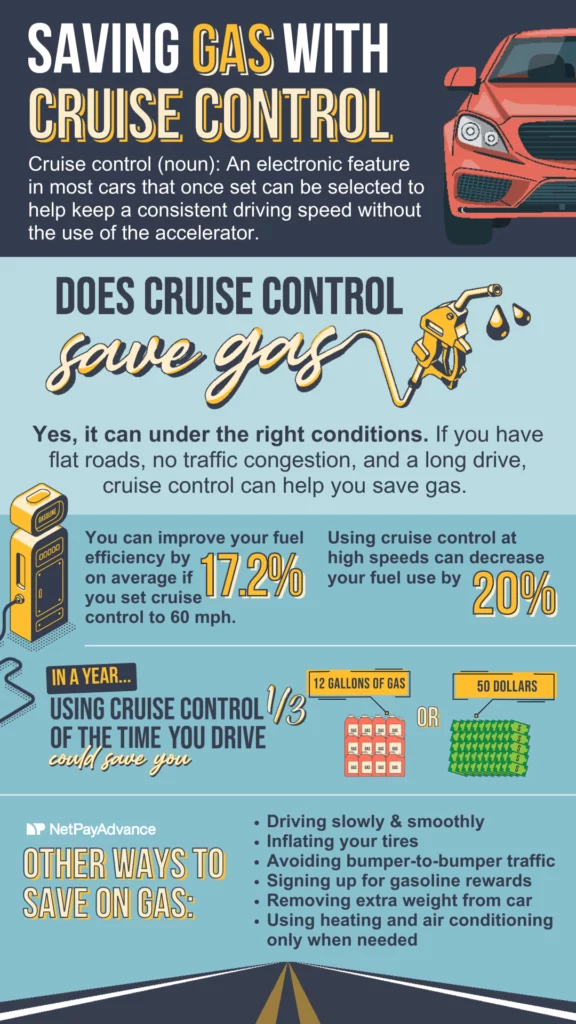
On steep inclines, the software in many 2026 models prioritizes target speed over fuel preservation. To maintain your set velocity, the computer often commands an aggressive downshift as soon as it detects a slight drop in speed. This high-RPM climb forces your engine to consume fuel at a much higher rate than if you allowed your speed to drop naturally by a few miles per hour.
- Speed decay: Allowing your speed to drop by 3–5 mph on a steep climb can significantly reduce fuel demand.
- Late response: Cruise control sensors often “overshoot” the throttle input, causing you to burn fuel trying to regain speed you already lost.
- Transmission hunting: Frequent gear shifts on rolling hills cause heat and parasitic energy loss.
How to Fix Your Driving Strategy for Better MPG
Mastering the Terrain-Based Switch
To maximize your mileage in 2026, you must become a dynamic user of your cruise control system. The most efficient strategy is to view your cruise control as a tool for flat highways, not a “set it and forget it” feature for every trip. When you encounter rolling hills or mountainous terrain, manual throttle control is almost always superior to the vehicle’s automated logic. By manually managing the throttle, you can anticipate the terrain, easing off the gas before the peak of a hill rather than waiting for the computer to react.
The 2026 Hybrid Approach
If you are driving a modern vehicle equipped with Adaptive Cruise Control (ACC) and integrated GPS mapping, you have a distinct advantage. These newer systems can “see” upcoming terrain and adjust throttle input before a grade begins. However, if your car lacks advanced predictive cruise features, follow this tactical approach:
- Engagement: Only engage cruise control on sustained, flat highway stretches where speed variation is minimal.
- Disengagement: Switch to manual control the moment you encounter a significant grade or winding road sections.
- The 5-MPH Rule: If you find yourself frequently canceling and resuming because of traffic or hills, your fuel economy will suffer more than if you had simply driven manually.
By actively switching between systems based on the road ahead, you stop the car from making high-RPM adjustments that drain your tank. You effectively become the “brain” that the cruise control software lacks when it comes to long-term terrain planning.
Step-by-Step Guide to Using Cruise Control Efficiently
Recommended Best Deal Products


To maximize fuel efficiency in 2026, motorists must shift from passive engagement to active management of cruise control systems. Modern adaptive cruise control (ACC) units are highly efficient, yet human intervention remains the variable for true savings.

Audible — Listen Free for 30 Days
One free credit a month and thousands of titles included.
Listen Free for 30 Days
Mastering Flat Terrain Consistency
- Engage your cruise control only once you have reached your target cruising speed, ideally at the lowest engine RPM necessary for that velocity.
- Keep your cruise control set to 60–65 mph on highways. According to the U.S. Department of Energy, every 5 mph increase over 50 mph acts as if you are paying an additional $0.30 per gallon for gas.
- Maintain a consistent following distance. Modern radar-based ACC systems can trigger frequent, micro-adjustments in braking that waste kinetic energy. Adjust your follow-distance setting to the maximum interval to allow for smoother speed modulation.
Optimizing for Variable Terrain
- Disengage the system manually when approaching significant inclines. Cruise control often commands a downshift, causing the engine to rev unnecessarily high to maintain speed.
- Use gravity to your advantage on descents. Allow your vehicle to slightly lose speed during climbs and recover it gently on the downslope, rather than forcing the cruise system to fight the terrain.
- Ensure your tires are inflated to the manufacturer’s 2026 specification found on the driver-side door jamb. Under-inflated tires increase rolling resistance, negating any efficiency gained through steady throttle application.
What If It Still Doesn’t Save Gas?
If you have implemented these techniques but still observe high fuel consumption, your vehicle may have underlying mechanical inefficiencies. Cruise control cannot overcome poor engine health or aerodynamic drag. Consider these professional diagnostic steps:
- Check your mass airflow (MAF) sensor. A faulty sensor provides inaccurate data to the ECU, causing the engine to run “rich” regardless of whether cruise control is engaged. Diagnostic fees typically range from $100 to $150.
- Inspect your fuel injectors for clogs. In 2026, carbon buildup remains a primary cause of poor fuel atomization, which forces the engine to burn more fuel to maintain speed. A professional cleaning service costs between $150 and $300.
- Verify your alignment. Misaligned wheels increase drag even on straightaways. If your steering wheel is off-center, you are wasting fuel every mile. An alignment check costs approximately $80 to $120.
- Consult a certified mechanic for a full engine performance diagnostic if fuel economy remains below the EPA-rated city/highway estimates for your specific 2026 model year vehicle.
Conclusion
Recommended Best Deal Products


Using cruise control effectively in 2026 requires understanding the balance between steady speeds and terrain-based throttle management. According to verified research and expert sources from the EPA, driving smoothly is the most significant factor in fuel preservation. Cruise control is a tool, not a substitute for attentive driving. For your next commute, perform a baseline fuel economy test over 50 miles to confirm your specific vehicle’s optimal cruise-engagement speed.
❓ Frequently Asked Questions
Does cruise control improve gas mileage on the highway?
Yes, on flat highways, cruise control maintains a precise, consistent speed that minimizes fuel waste. By preventing minor fluctuations in throttle, it keeps the engine in its most efficient operating range.
When is cruise control the least fuel-efficient?
Cruise control is least efficient in hilly or mountainous areas. The system will force the vehicle to maintain a set speed up a steep incline, which often triggers excessive downshifting and high RPMs that burn more fuel than necessary.
How much gas can I expect to save using cruise control?
Drivers can typically see a 5% to 7% improvement in fuel efficiency on long, flat drives. However, these savings vanish if the terrain is uneven or if you are constantly adjusting the set speed.
Why shouldn’t I use cruise control in heavy traffic?
Using cruise control in heavy traffic is both unsafe and inefficient. The constant need for the system to accelerate and brake based on the vehicle in front of you creates irregular engine loads that waste gas.
Does adaptive cruise control change the efficiency outcome?
Adaptive cruise control can be less efficient than standard cruise control because it frequently adjusts throttle and braking to maintain a gap from the car ahead. It is better to use manual control in variable traffic conditions.
Is there a specific speed that makes cruise control more efficient?
Generally, most vehicles reach peak efficiency between 55 and 65 mph. Higher speeds significantly increase aerodynamic drag, which negates any efficiency gains provided by the cruise control system.
Audible Premium Plus — Annual Membership
12 audiobook credits up front, plus the full Audible catalogue.
See Annual Plans