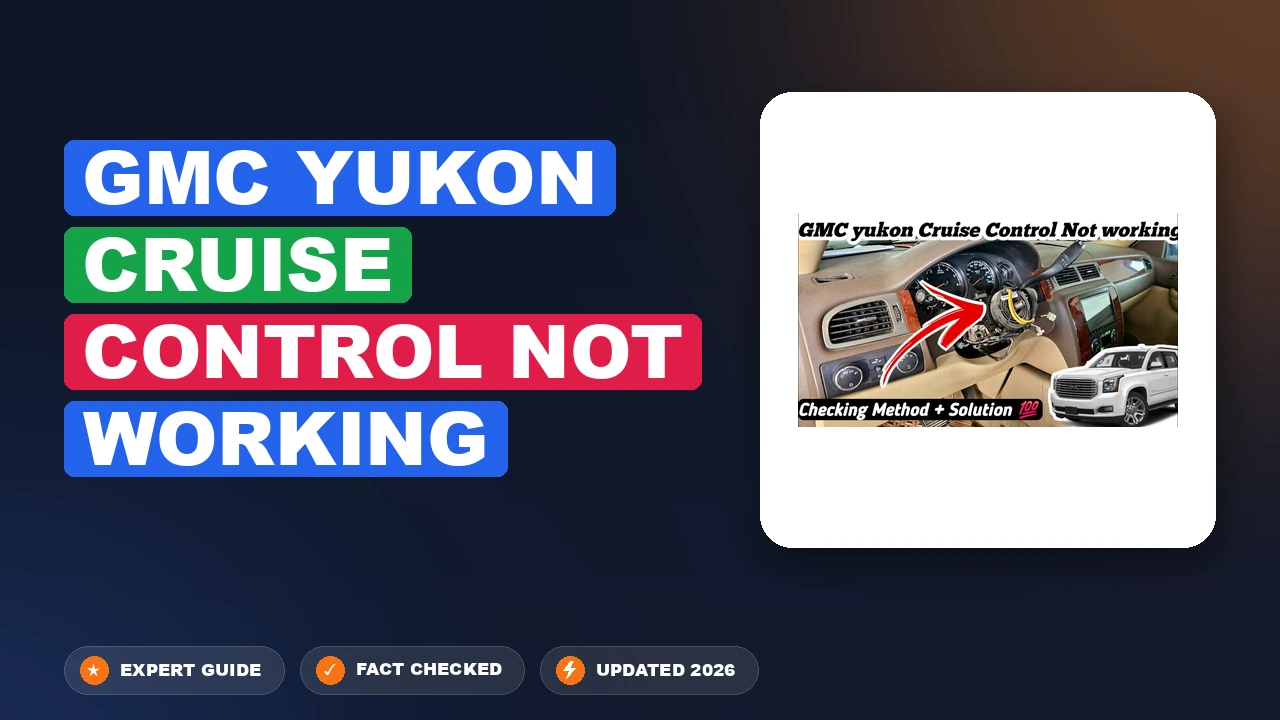
GMC Yukon Cruise Control Not Working: Diagnosed & Fixed
Nothing ruins a long highway road trip faster than a GMC Yukon cruise control that refuses to engage. Whether you are met with a blinking dash light or total system silence, cruise control failure is often a symptom of a deeper electrical or sensor issue within your vehicle’s complex architecture. In this guide, we will walk you through the essential diagnostic steps—from the simplest fuse checks to complex sensor data analysis—to get your Yukon’s speed control system working perfectly again.
Understanding Why the GMC Yukon Cruise Control Not Working


To effectively troubleshoot, you must recognize that your GMC Yukon’s cruise control is not a standalone mechanical unit. It is an electronically integrated feature that relies on constant data streams from the engine, transmission, and braking systems. If any of these systems report an anomaly, the vehicle will disable the cruise control as a protective measure.

📤 Share Image
The Role of ABS and StabiliTrak Data
The cruise control system is inextricably linked to the ABS and StabiliTrak systems. Because the cruise control relies on wheel speed sensors to maintain a consistent pace, a failure in the ABS module will almost immediately disable cruise functionality. If the computer cannot verify the vehicle’s actual speed, it defaults to a safety mode where cruise control is prohibited.

How Diagnostic Trouble Codes Kill System Function
A common misconception is that a Check Engine Light only impacts engine performance. In reality, a Powertrain Diagnostic Trouble Code (DTC)—such as a misfire, a throttle position sensor error, or an emissions fault—will automatically inhibit cruise control. The logic is simple: if the engine is compromised, the computer prevents the cruise system from placing an additional, unpredictable load on the powertrain.
Understanding Speed Thresholds
Before diving into complex diagnostics, ensure you are testing the system correctly. Standard GMC Yukon cruise control typically requires a minimum speed of 25–35 mph to engage. If you are experiencing issues, ensure you are well above these thresholds. Furthermore, differentiate between standard cruise and Adaptive Cruise Control (ACC). ACC utilizes front-facing radar sensors; if these are obscured by dirt, snow, or damage, the system will fail to engage even if the underlying cruise logic is functional.
Industry Data
DTC Inhibition Rate
Activation Min-Speed
Top Causes for GMC Yukon Cruise Control Failure


Identifying the root cause requires looking at the “feedback loop” of the system. If the computer doesn’t receive the correct signals, it defaults to ‘OFF’.
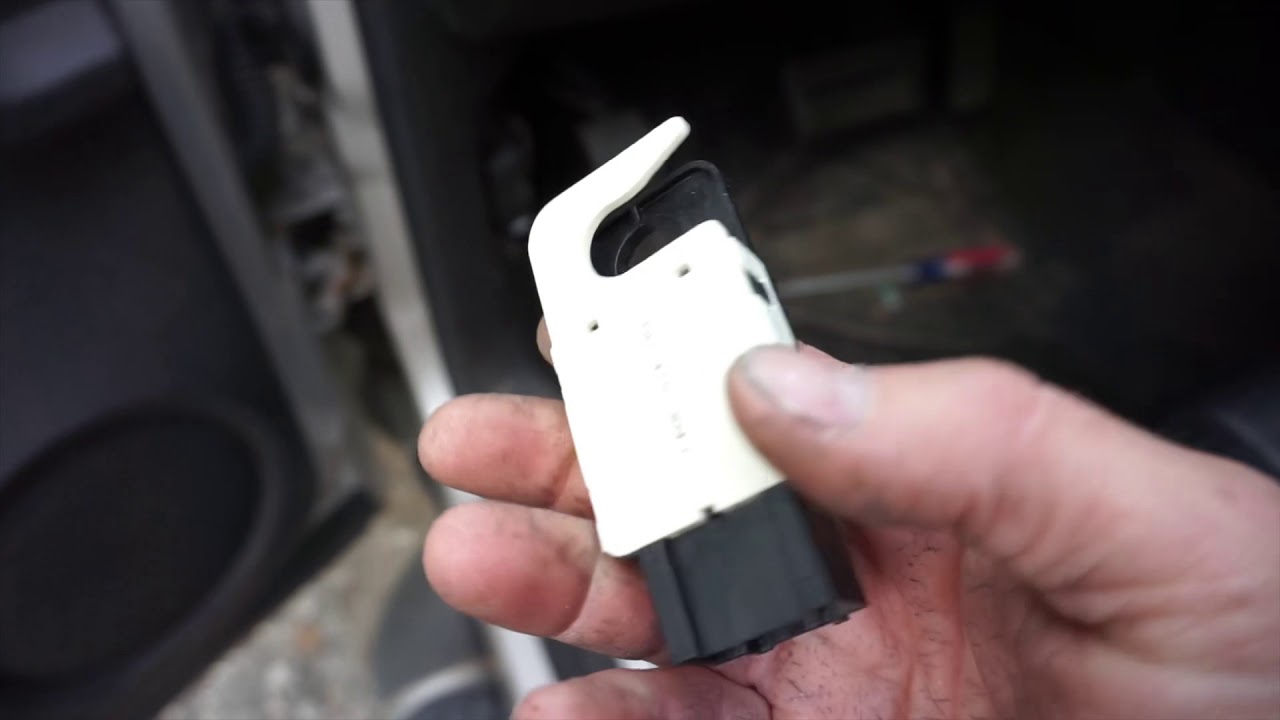
- Brake Pedal Position Sensor: If this sensor incorrectly signals that the brake is being pressed, the system will never engage. Even a slight misalignment can trigger this inhibition.
- Brake Light Fuses and Bulbs: A burnt-out brake light bulb or a blown fuse can mimic a system failure. The system monitors the brake light circuit for continuity; if it detects an open circuit, it disables cruise control as a safety precaution.
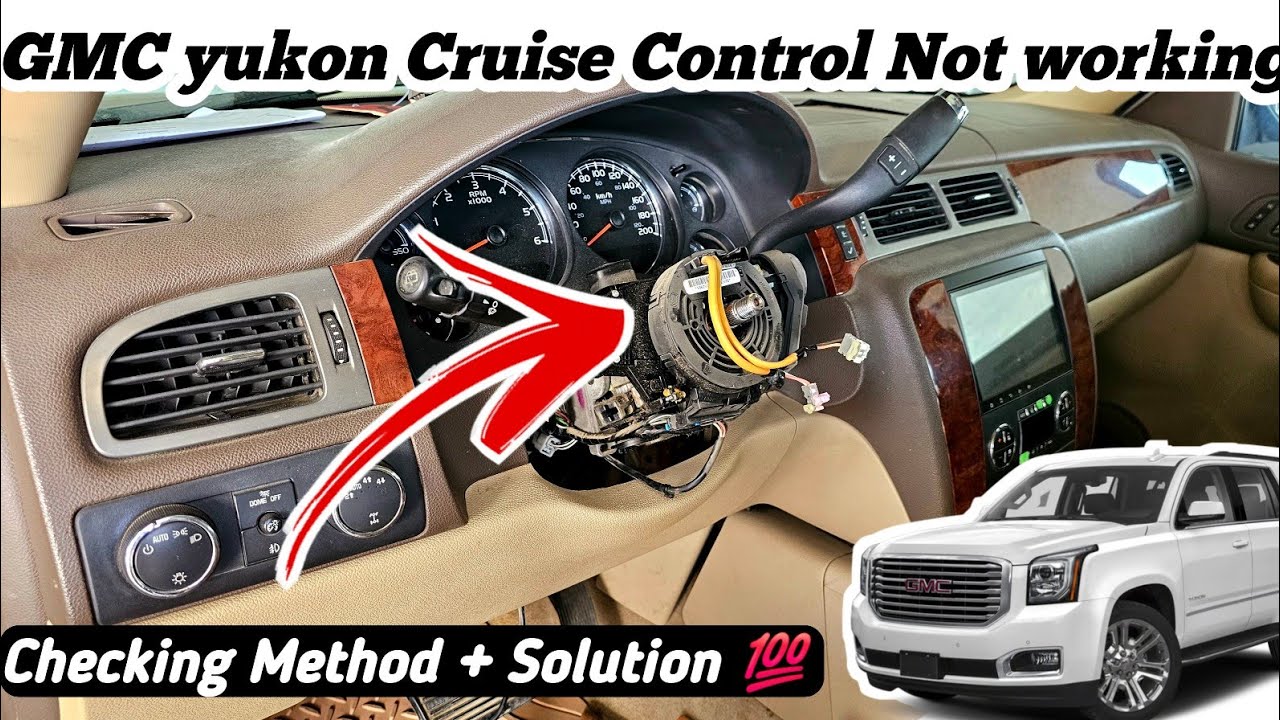
- Clock Spring and Steering Wheel Switches: The buttons on your steering wheel are common points of failure. The “clock spring” is a ribbon cable behind the steering wheel that allows electrical signals to transfer while the wheel turns. If the internal wires break, the signal from the buttons never reaches the PCM.
- Wheel Speed Sensors: These sensors provide the data required to maintain velocity. If one sensor is providing erratic, inconsistent data, the cruise module will cut out, often accompanied by “Service StabiliTrak” messages on the dash.
- Throttle Actuator Control (TAC): In modern Yukons, the cruise system communicates directly with the electronic throttle body. If the TAC system reports a deviation, the cruise will disable instantly.
Fixing Your GMC Yukon Cruise Control Step by Step


Follow this logical sequence to diagnose and resolve the issue. Avoid replacing parts blindly, as this often leads to unnecessary expenses.
📋
Diagnostic Workflow
Check all brake lights. If one is out, replace the bulb. Check the brake light fuse in the instrument panel fuse block. A disrupted brake circuit is a primary culprit for cruise refusal.
Use an OBD-II scanner that supports ABS and Body Control Module (BCM) codes. A standard engine code reader may not see the wheel speed sensor fault that is killing your cruise.
Using a multimeter, test for continuity in the brake pedal position switch. When the pedal is released, the circuit should close. If you see intermittent connectivity, replace the switch.
If all other systems pass, use the scanner to view ‘live data’ for steering wheel switch input. If pressing the cruise button shows no change on the scan tool, the switch or the clock spring is likely faulty.
Never attempt to repair or “bypass” the wiring within the steering column without disconnecting the battery. The airbag system is sensitive, and inadvertent activation is a severe safety risk.
When to Seek Professional Repair Services
While many DIY fixes are viable, there are instances where professional intervention is the most cost-effective and safe route.
Advanced BCM and ECM Diagnostics
If your scan tool reveals a “Communication Error” between the BCM (Body Control Module) and the ECM (Engine Control Module), you have reached the limit of basic home repair. These issues often require professional software reflashing or specialized bi-directional scan tools to command the throttle body and verify that the modules are talking to each other correctly.
Intermittent Signal Drops
If your cruise control only cuts out during specific maneuvers, such as tight turns or heavy bumps, you likely have a failing wire harness or a wheel speed sensor that is losing connection intermittently. A professional technician can use an oscilloscope to trace these “noise” spikes that a standard scanner will miss entirely.
✅ Pros of DIY
- Significant labor cost savings.
- Gains deeper knowledge of vehicle systems.
- Fixes simple failures like bulbs or fuses in minutes.
❌ Pros of Professional
- Access to factory-level scan tools (Tech2/MDI).
- Eliminates “guess-and-replace” part swapping.
- Safer when dealing with electrical harnesses/airbags.
Final Considerations for Yukon Owners
Resolving a GMC Yukon cruise control not working requires patience and a methodical approach. Always start with the simplest, most visible components—like brake light bulbs and fuses—before moving toward sensors or electronic modules. Because modern Yukons are so software-dependent, use an OBD-II scanner that can read ABS and Body codes, as these are almost always the hidden culprit behind a disabled cruise system. Most importantly, do not rush to replace the cruise module itself; in over 90% of cases, the fault lies in the signals reaching that module, not the module itself.
If you have performed these steps and the issue persists, it is time to visit your local GMC service center. A technician can perform a full electronic diagnostic cycle, saving you from replacing expensive components that are not actually broken. By relying on data and testing rather than assumption, you ensure your Yukon returns to its reliable, road-trip-ready state.
Gmc Yukon Cruise Control Not Working: Frequently Asked Questions
Why does my cruise control light flash then turn off?
A flashing cruise control indicator usually signifies that the PCM has detected an ‘inhibit’ signal, meaning the system is ready but a safety requirement isn’t being met. This is often caused by a faulty brake light switch or a communication error between the steering wheel module and the BCM. It essentially acts as a self-diagnostic ‘fail-safe’ mode to prevent the vehicle from accelerating uncontrollably.
Does a blown brake light fuse stop cruise control from working?
Yes, absolutely. The cruise control system requires a signal from the brake light circuit to know when to disengage. If the circuit is open due to a blown fuse, the system perceives a ‘dead’ circuit or a constant ‘brake active’ signal, depending on the architecture. Replacing a blown fuse is often the simplest, most effective fix for a suddenly unresponsive cruise control system.
Can a faulty wheel speed sensor cause cruise failure?
Yes. Cruise control relies on precise speed data transmitted from the wheel speed sensors (WSS) to the ABS module and the PCM. If one sensor reports inconsistent data or fails entirely, the vehicle cannot determine if it is meeting the speed threshold required to maintain a set velocity, causing the system to disable itself to ensure vehicle stability and passenger safety.
Why won’t my Yukon set a speed?
If the system turns on but refuses to ‘set’ a speed, the issue likely resides in the steering wheel switch or the clock spring assembly. If the ‘SET’ button fails to send the required voltage signal to the cruise module, the system remains in standby. Additionally, ensure you are above the minimum activation speed, typically 25 mph, as the system will ignore commands below this limit.
Is it safe to drive my GMC Yukon if the cruise control is broken?
Yes, it is perfectly safe to drive your vehicle without cruise control. Because the system is designed with a ‘fail-safe’ protocol, any electrical fault will simply result in the system deactivating. The standard throttle and braking functions are independent of the cruise control module. However, you should still address the issue, as some cruise failures are tied to ABS sensors that are crucial for your safety systems.