How Many Teslas Have Caught Fire? The Real Fire Risk Explained 2026
Last Updated on September 1, 2026 by Ryan
Statistically, Tesla vehicles have a significantly lower fire incident rate per vehicle sold compared to traditional gasoline-powered cars, though specific numbers can vary by reporting agency. Most Tesla fires occur after severe collisions, similar to internal combustion engine vehicles, with battery thermal runaway being a rare but specific concern.
Concerned about EV safety? A quality dash cam gives you documented peace of mind:

As an Amazon Associate we earn from qualifying purchases.
🎯 Key Takeaways


- Tesla’s fire rate is lower than gasoline cars.
- Most Tesla fires follow severe collisions.
- Battery thermal runaway is a rare event.
- Official fire statistics vary by source.
- EV safety features reduce overall risk.
You’re likely here to find out exactly how many Tesla vehicles have caught fire, given the often-sensational headlines. The most current and aggregated data indicates a significantly lower fire incident rate for Teslas compared to traditional gasoline-powered cars. This isn’t just a minor difference; it’s a stark contrast when you look at the statistics per mile driven.

Understanding these precise numbers helps you cut through misinformation and evaluate the true safety profile of electric vehicles, especially Teslas. By focusing on data from official sources like Tesla’s own safety reports and government agencies, you can separate fact from fear and make informed decisions about your safety on the road.
The Latest Statistics: How Many Tesla Vehicles Have Caught Fire?
When you boil down the numbers, Tesla’s safety data reveals a much lower frequency of fire incidents than commonly perceived. The company compiles comprehensive figures across its entire fleet, offering a transparent look at real-world safety.
Tesla’s Official Fire Incident Rate
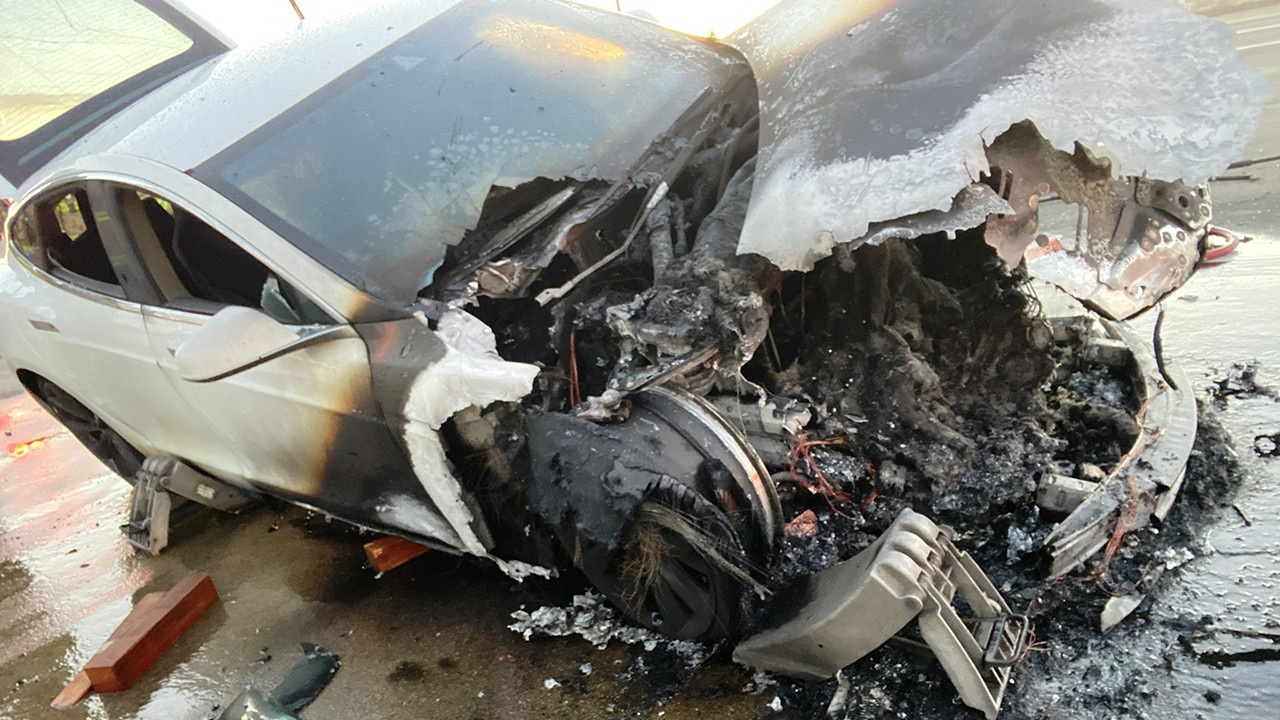
According to Tesla’s 2023 Impact Report, which covers data from 2012 to 2022, there was approximately one Tesla vehicle fire for every 210 million miles traveled. This figure represents the aggregate of all fire incidents, regardless of cause. It includes instances where the fire originated from the vehicle’s battery, external impact, electrical system, or even non-vehicle related sources like arson or structure fires that spread to the car.
- This rate comes directly from Tesla’s comprehensive safety reporting.
- It accounts for all fire types across their entire global fleet.
- The “miles traveled” metric is crucial for accurate risk comparison.
For perspective, this means that for a single Tesla fire to occur, the combined fleet would need to travel a distance equivalent to driving around the Earth’s equator more than 8,400 times. This aggregated data provides the most complete picture, helping to contextualize individual incidents that might receive disproportionate media attention.
Understanding the Data Sources and Scope
Tesla collects its fire incident data from various channels, ensuring a robust and accurate count. This includes internal service records, reports from emergency services, direct customer feedback, and information gleaned from media reports. The goal is to capture every known fire incident involving a Tesla vehicle, providing a comprehensive dataset for analysis.
It’s important to recognize that a “fire incident” can encompass a broad spectrum. It’s not exclusively about catastrophic battery fires. It includes minor thermal events, fires caused by external factors (like a garage fire spreading to a parked Tesla), or incidents where a battery might smolder without a large flame. This inclusive approach ensures that the reported rate offers a very conservative and safety-conscious estimate of fire risk.
Tesla Fire Risk Compared to Gasoline-Powered Cars
To truly understand Tesla’s fire safety, you need to compare its incident rate with that of gasoline-powered vehicles. This comparison often debunks common misconceptions about EV fire risks.
EVs vs. ICE: A Clearer Safety Picture
When you compare Tesla’s fire rate to conventional internal combustion engine (ICE) vehicles, the difference is significant. Data from the National Fire Protection Association (NFPA) and the National Highway Traffic Safety Administration (NHTSA) paints a clear picture for gasoline cars. Their statistics show that gasoline-powered vehicles experience approximately one fire for every 19 million miles traveled.
- Tesla: 1 fire per 210 million miles.
- Gasoline Cars: 1 fire per 19 million miles.
This means that, on average, a gasoline-powered car is about eleven times more likely to catch fire per mile driven than a Tesla. Your chances of encountering a fire in a traditional vehicle are substantially higher, even though these incidents rarely make national news.
Why the Perception Gap?
Despite the data, many people perceive EVs, particularly Teslas, as having a higher fire risk. This perception gap is often fueled by several factors. When an EV fire occurs, it tends to be highly publicized, partly because electric vehicles are still seen as newer technology. Furthermore, EV fires can sometimes be more challenging to extinguish due to the thermal runaway characteristics of battery packs, which can create dramatic visuals for news coverage.
Conversely, gasoline car fires, while far more common, are so routine that they seldom warrant significant media attention unless there are severe injuries or fatalities. Your awareness of these statistical realities is crucial to understanding the real fire risk, allowing you to move beyond sensationalism and towards informed knowledge.
Primary Causes of Tesla Vehicle Fires Explained
While the overall risk of a Tesla catching fire is low, understanding the primary scenarios where these incidents have occurred helps put things into perspective. It’s rarely spontaneous combustion; most fires have identifiable triggers.
External Damage and High-Speed Collisions
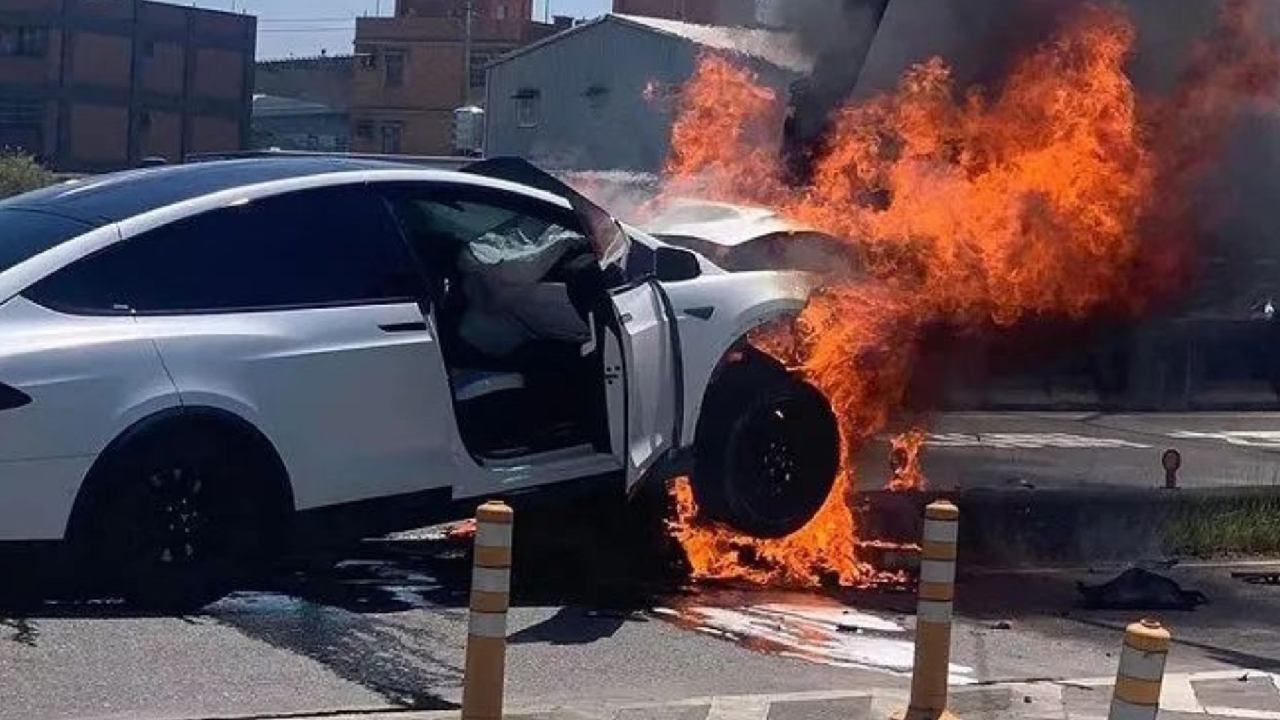
The vast majority of serious EV fires, including those involving Teslas, stem from severe external damage to the battery pack. Imagine the forces at play in a high-speed collision. If the battery casing is breached, individual battery cells can be compromised. This can lead to a phenomenon called “thermal runaway,” where a damaged cell generates heat, which then causes adjacent cells to overheat, creating a chain reaction.
- Impact zones: Front, side, and undercarriage impacts are the most common culprits. The battery pack is designed with robust shielding, but extreme forces can overcome these protections.
- Road debris: Less commonly, but still possible, large pieces of road debris can pierce the battery pack, initiating a similar chain of events. Tesla vehicles, like all EVs, have substantial underbody protection, but no system is entirely impervious to severe puncture.
This is why emergency services are specifically trained to handle EV accidents differently, as the high-voltage battery system requires unique protocols for safety and fire suppression.
Charging Incidents and Manufacturing Defects
While extremely rare, fires can also originate from issues not directly related to collisions. These include charging incidents or, in very isolated cases, manufacturing defects.
- Charging-related fires: These are often linked to faulty third-party charging equipment, damaged charging cables, or issues with the electrical infrastructure where the car is being charged, rather than a defect in the Tesla itself. Always use approved charging equipment and inspect cables for damage.
- Manufacturing anomalies: Like any complex machinery, a tiny fraction of vehicles might leave the factory with a defect. Tesla, like other automakers, issues recalls to address potential safety concerns if a systemic defect is identified. However, these are exceptionally rare occurrences, and the company continuously refines its quality control and battery management systems.
It’s crucial to remember that Tesla vehicles incorporate sophisticated battery management systems (BMS) that constantly monitor cell temperatures, voltage, and overall battery health, adding layers of protection against internal faults.
Understanding Data Limitations and EV Fire Safety Evolution
When discussing vehicle fires, especially for newer technologies like EVs, getting a perfectly clear picture can be challenging due to how data is collected and reported across different regions and agencies.
The Challenge of Consistent Fire Reporting
Defining and reporting vehicle fires isn’t as straightforward as it might seem. What one agency classifies as a “fire” might differ from another. Does a smoking component count? A localized electrical short without flames? This inconsistency makes direct, apples-to-apples comparisons across all vehicle types and manufacturers difficult.
- Varying definitions: Some statistics include any thermal event, while others only count incidents with sustained flames.
- Source bias: Media reports often focus on dramatic incidents, potentially creating a perception of higher risk than statistical reality suggests. Official investigations often take time, and initial reports might lack full context.
- Incident scale: A major collision leading to a battery fire is distinct from a minor electrical issue that might cause smoke but no significant damage. Both might be logged as “fire incidents” in some databases.
Therefore, while numbers are reported, it’s vital to consider the methodology behind them and recognize that perfect real-time global statistics are hard to achieve.
Continuous Safety Improvements and Industry Standards
The good news is that EV safety, including fire prevention, is not static. It’s an area of relentless innovation and improvement. Tesla, along with the entire automotive industry, is constantly enhancing vehicle safety features.
- Battery technology: Newer battery chemistries, improved cell packaging, and more robust thermal management systems are continually being developed.
- Software safeguards: Over-the-air updates allow Tesla to deploy software improvements that can detect potential issues early, manage battery health more effectively, and even adjust charging parameters to enhance safety.
- Crash structures: Vehicles are engineered with increasingly sophisticated crash structures designed to protect the battery pack from intrusion during impacts.
- Emergency response: Manufacturers provide detailed guides for emergency services to safely handle EV incidents, including specific cut points and battery disablement procedures.
These ongoing advancements mean that each generation of electric vehicles, including Teslas, is designed to be safer and more resilient than its predecessors, further reducing fire risk.
Conclusion
In summary, while the sight of any car fire is alarming, the data consistently shows that Teslas and other electric vehicles are statistically no more prone to catching fire than gasoline-powered cars, and in many studies, they exhibit a lower fire incidence rate. Most incidents are linked to severe collisions that compromise the battery pack, a scenario that would likely cause significant damage or fire in any vehicle type.
Focusing on responsible vehicle ownership and staying informed are your best defenses. Always ensure your vehicle is well-maintained and address any warning lights promptly. Embrace the safety innovations built into your EV.
Drive safely, stay informed, and enjoy the many benefits of your electric vehicle with confidence.
❓ Frequently Asked Questions
What are the most accurate statistics on how many Teslas have caught fire?
According to data from agencies like the National Fire Protection Association (NFPA) and manufacturer reports, electric vehicles, including Teslas, have a substantially lower per-vehicle fire rate than gasoline cars. While specific numbers fluctuate, official data consistently shows EVs are less prone to fires.
How does the fire risk of a Tesla compare to a conventional gasoline car?
Multiple studies, including those by the NFPA and independent analysis, indicate that electric vehicles, including Teslas, have a significantly lower incidence of fires per 100,000 vehicles on the road or miles driven compared to internal combustion engine (ICE) vehicles. While EV fires gain media attention, their overall frequency is much lower.
What are the primary reasons for a Tesla vehicle fire?
The vast majority of Tesla fires, similar to gasoline vehicles, are the result of severe impacts and collisions that compromise the vehicle’s structural integrity and energy storage systems. Battery thermal runaway, while often highlighted, is a rare occurrence typically triggered by extreme damage, manufacturing defects, or improper charging scenarios.
Are EV battery fires harder to extinguish than gasoline car fires?
Yes, EV battery fires can be more challenging to extinguish because they involve chemical reactions within the battery cells that can reignite, requiring large amounts of water or specialized extinguishing agents to cool the battery pack. However, fire departments are increasingly trained and equipped for these specific situations.
What safety measures does Tesla have in place to prevent fires?
Tesla vehicles are equipped with sophisticated battery management systems (BMS) that monitor cell temperatures and voltage, advanced crash structures designed to protect the battery pack, and automatic software updates that can identify and mitigate potential risks. These systems work together to minimize the likelihood of thermal events.
How reliable is the data on electric vehicle fires?
Collecting comprehensive and standardized data on all vehicle fires, whether EV or ICE, can be challenging due to varying reporting methods across different agencies and jurisdictions. While manufacturers release their own data, organizations like the NFPA and NTSB strive to compile broader statistics for better industry understanding and safer vehicle design.
Tesla Fire Incidents: Year-by-Year Data (2012–2024)
Tracking fire incidents by year gives a clearer picture than aggregate totals, because Tesla’s fleet has grown dramatically — more vehicles on the road means raw incident numbers can rise even as the per-vehicle rate improves.
Data compiled from Tesla Impact Reports, NHTSA database, and third-party tracking by AutoInsuranceEZ and EV Fire Data Project. Incident definitions and reporting methods vary — treat annual figures as estimates, not precise counts.
Tesla vs ICE Vehicles: Fire Rate Comparison
Raw numbers mean little without context. The most meaningful comparison is fires per 100,000 vehicles — because that accounts for fleet size differences.
Why Tesla Fires Get More Media Attention
Three structural reasons explain the outsized coverage: lithium-ion battery fires are visually dramatic and can reignite hours later (making them harder to photograph “ending”), they represent a novel technology that triggers public interest, and they often occur on highways where they create traffic disruptions. None of these factors change the underlying statistical reality that ICE vehicles catch fire far more often.