how do i know if my cruise control fuse is blown? Diagnosed
Is your cruise control suddenly dead? Before heading to the shop, learn how to perform a simple electrical check. Drivers often panic when cruise control stops working, assuming a complex computer failure, when a simple component might be to blame. This guide will show you exactly how to identify if your cruise control fuse is blown, safely test it, and determine when you need a professional mechanic.
Understanding Circuit Failures: How Do I Know If My Cruise Control Fuse Is Blown?


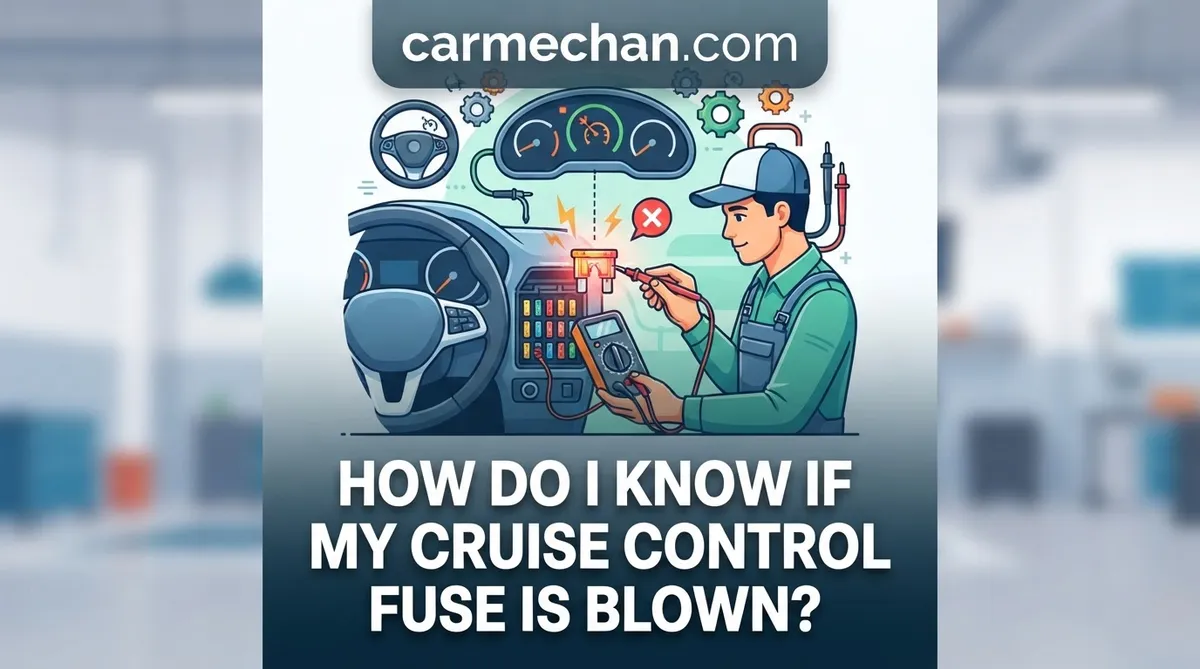
📤 Share Image

Understanding Circuit Protection and Electrical Loads
Automotive fuses serve as critical safety devices, acting as sacrificial links in an electrical circuit. Their primary purpose is to protect the vehicle’s wiring harness from fire in the event of an overcurrent situation or a short circuit. It is vital to understand that a fuse does not “fail” randomly; it melts because the current flowing through it has exceeded its rated capacity. When you ask, “how do i know if my cruise control fuse is blown,” you are essentially asking whether the path of least resistance for electrical flow has been severed.
Why System Short Circuits Blow Fuses
In most modern vehicles, the cruise control circuit is rarely isolated. It is frequently tethered to other systems, such as the horn, brake lights, or interior lighting, to streamline the fuse box layout. A common scenario involves a worn wire rubbing against the vehicle’s metal chassis, creating a “short to ground.” When this happens, current spikes instantly, causing the fuse element to melt. If the cruise control module itself experiences an internal failure, it can also draw excessive current, triggering the fuse to blow to prevent damage to the main vehicle wiring.
Industry Data: Fuse Failure Analysis
Cases where a fuse blows due to an external short rather than component failure.
Common systems (horn/brake/lights) often shared on a single cruise control circuit.

Diagnostic Steps: How Do I Know If My Cruise Control Fuse Is Blown?


📋
Diagnostic Procedures


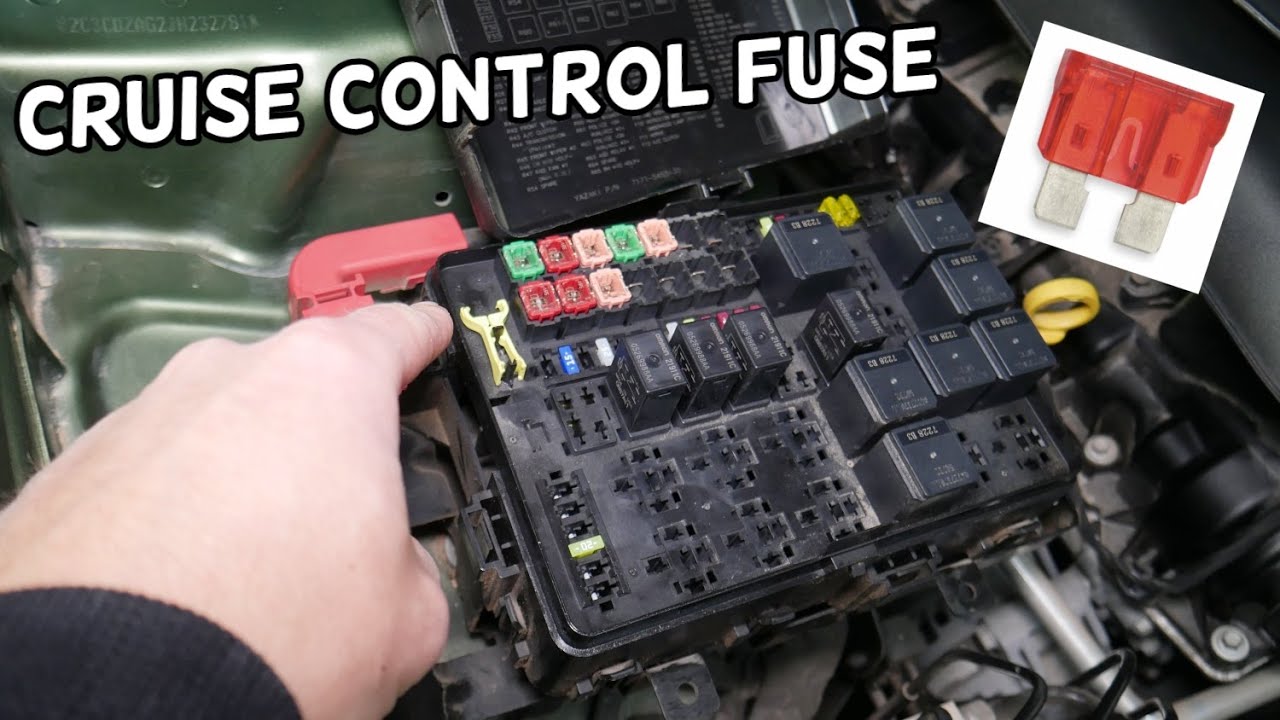
Consult your owner’s manual to identify the specific location of the interior or engine bay fuse block. Do not guess based on appearance. The diagram inside the lid or in the manual is the only authoritative source for mapping the cruise control circuit.
Remove the fuse using a dedicated fuse puller. Inspect the metal wire visible through the translucent casing. If the wire is broken, severed, or the plastic is charred, the fuse is blown.
Set your multimeter to the ‘continuity’ (beep) mode. Touch the probes to the metal test points on the top of the fuse pins. If the meter beeps, the fuse has continuity and is functioning. No beep indicates a broken internal circuit.
Essential Safety Rules for Replacing Automotive Fuses
Once you confirm a blown fuse, replacing it requires strict adherence to manufacturer specifications. Automotive electrical systems are engineered with precise tolerances.
- Never increase amperage: Replacing a 10A fuse with a 20A fuse is a severe fire hazard. The wiring harness is designed to withstand 10 amps; if you install a higher-rated fuse, the wire may melt or catch fire before the fuse blows again.
- Respect response times: Fuses come in various response types, such as fast-blow and slow-blow. Always match the type exactly to ensure the circuit is protected as intended by the engineers.
- Troubleshoot first: If your replacement fuse blows immediately upon insertion, you have an active short circuit. Do not continue trying to force a new fuse in, as this risks damage to your vehicle’s electronic control units (ECUs).
- Color codes: Most automotive blade fuses follow a standardized color code (e.g., red for 10A, blue for 15A). Use these as a secondary check, but always verify the number stamped on the top of the fuse.
Never use metal tools like pliers or screwdrivers to remove fuses. These can slip and cause a short across the fuse box pins, potentially blowing multiple circuits or damaging sensitive computer modules.
Troubleshooting When the Cruise Control Fuse Is Not the Problem
If your fuse is perfectly intact, the issue lies elsewhere. Professional technicians frequently encounter situations where owners assume a blown fuse because it is the “easiest” fix, only to find the problem is related to sensor or component failure.
Software and DTCs: The Digital Barrier
In modern vehicles, the cruise control system is managed by the Engine Control Module (ECM) or Body Control Module (BCM). If the vehicle registers a Diagnostic Trouble Code (DTC) related to the engine or transmission (such as a misfire or emissions issue), the computer will often automatically disable the cruise control as a safety precaution. This has nothing to do with the fuse; it is a software-based lock. If your cruise control is dead, scanning the vehicle for codes using an OBD-II scanner should be the next step before you assume any electrical component has failed.
If your brake lights stay on permanently, the brake light switch is likely stuck or failed. Since the cruise control uses this switch to disengage when you brake, a faulty switch will prevent the cruise control from activating entirely, even if the fuse is healthy.
Always use your owner’s manual to identify the correct circuit. Never replace a blown fuse with a higher amperage rating, as this creates a significant fire risk. If the new fuse blows immediately, stop and find the short circuit, as persistent blowing is a sign of a deeper wiring fault. Consider external sensors like the brake light switch if the fuse is healthy and your system is still unresponsive. Check your fuse box today, but remember: if you aren’t comfortable working with automotive electronics, consult a professional technician to avoid damaging the vehicle’s onboard computers.
How Do I Know If My Cruise Control Fuse Is Blown?: Frequently Asked Questions
Can I use a higher amp fuse if the correct one isn’t available?
Absolutely not. You must never replace a fuse with one of a higher amperage rating. Fuses are designed to protect specific wire gauges; installing a higher-rated fuse allows too much current to flow, which can melt your wiring harness, damage sensitive electronic control modules, and potentially cause an electrical fire in your dashboard.
Does cruise control have its own dedicated fuse?
In many modern vehicles, the cruise control system shares a circuit with other components like the horn, radio, or interior lighting. While some luxury vehicles have a dedicated cruise control fuse, it is more common to find it bundled in an ‘Accessory’ or ‘Body Control’ circuit. Always check the diagram on the fuse box cover to confirm which devices share the link.
What does a blown fuse look like?
A blown fuse is usually easy to spot in clear-cased versions. You will notice the small, S-shaped metal wire filament inside the plastic housing has snapped or vaporized, often leaving a dark or metallic smudge on the inside of the casing. If the fuse is opaque, you must use a multimeter to test for electrical continuity across the two metal tabs.
How often should cruise control fuses fail?
A cruise control fuse should theoretically never ‘wear out.’ If you find your fuse blowing repeatedly, it indicates an underlying electrical short or a component, such as the cruise control servo, is drawing excessive current. If the fuse blows immediately after replacement, stop usage and have a professional technician inspect the wiring harness for shorts to ground.
Is it safe to pull fuses to check them?
Yes, it is perfectly safe to pull fuses, provided the ignition is in the ‘OFF’ position and the key is removed. Use a proper fuse puller tool rather than metal pliers, which can short the terminals or damage the plastic. Ensure the engine is cool if the fuse box is located within the engine bay, as components can reach extreme temperatures.