Boost Gas Mileage: Smart Habits & Maintenance Tips
Improving your gas mileage primarily hinges on adopting smarter driving habits and ensuring consistent vehicle maintenance. Simple, actionable changes to how you drive and care for your car can lead to significant fuel savings and reduced environmental impact over time.
🎯 Key Takeaways
- Smooth acceleration and braking saves fuel.
- Maintain correct tire pressure monthly.
- Avoid excessive vehicle idling.
- Regular engine maintenance is crucial.
- Reduce unnecessary vehicle weight.


You can significantly improve your car’s fuel efficiency right now, often without spending a dime. Focusing on your driving style and simple maintenance checks are the most effective ways to cut down on gas consumption. These are practical, actionable steps you can implement immediately.
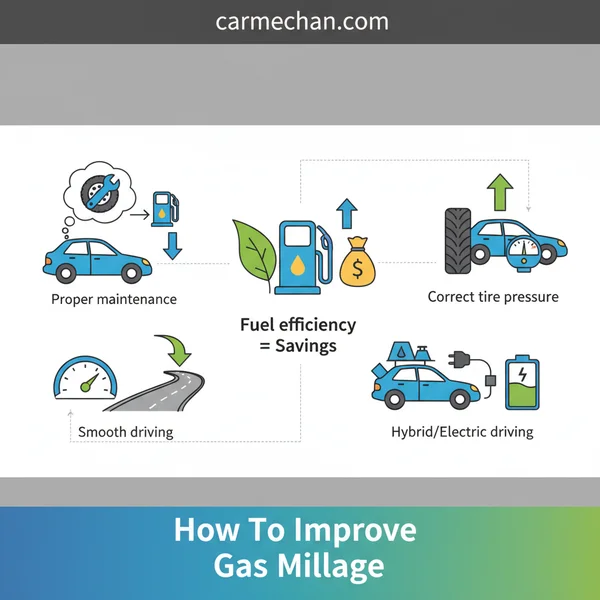
This isn’t just about saving money at the pump, though that’s a huge benefit. Better fuel economy also means less wear and tear on your vehicle and a smoother, more controlled driving experience. These smart habits and preventative measures put more cash in your pocket and extend your car’s lifespan.
Understanding the Core Factors Affecting Fuel Economy
Your vehicle’s fuel consumption isn’t just about engine size. It’s a complex interplay of forces your car must overcome and how efficiently it does so. Understanding these factors helps you make smarter choices on the road and in the garage, directly impacting your gas mileage.
Beyond the Engine: External & Internal Resistance
Every gallon of fuel you burn is used to conquer resistance. These resistances fall into a few key categories, many of which you can influence. Knowing these allows you to target improvements effectively.
- Aerodynamic Drag: This force increases exponentially with speed. Driving at 80 mph uses significantly more fuel to push through the air than driving at 60 mph. Your car works much harder at higher speeds.
- Rolling Resistance: Primarily influenced by your tires. Underinflated tires create more friction with the road, like driving uphill all the time. This resistance also comes from your car’s weight.
- Internal Friction: Within the engine and transmission, components generate friction. Proper lubrication and maintenance minimize this, ensuring your engine runs optimally rather than fighting itself.
- Engine Efficiency: How effectively your engine converts fuel into power. A well-tuned engine with clean filters and healthy spark plugs burns fuel more completely and efficiently.
How to Maximize Your MPG Like a Pro: A Practical Walkthrough
Welcome to your ultimate guide to significantly improving your vehicle’s gas mileage! In today’s world, optimizing fuel efficiency isn’t just about saving money at the pump; it’s also about reducing your carbon footprint and extending the life of your car. This comprehensive guide will walk you through actionable, step-by-step strategies, from simple driving habit adjustments to essential vehicle maintenance, empowering you to squeeze more miles out of every gallon. By diligently following these expert tips, you’ll not only see a noticeable difference in your fuel consumption but also enjoy a smoother, more cost-effective driving experience.
Step 1: Maintain Optimal Tire Pressure
What you need: A reliable tire pressure gauge (digital is often more accurate), access to an air compressor (found at most gas stations or available for home purchase).
Instructions: Locate the recommended tire pressure for your specific vehicle, usually printed on a sticker inside the driver’s side door jamb, in your owner’s manual, or sometimes on the fuel filler door. This value is typically given in PSI (pounds per square inch) and applies to cold tires (before driving for more than a few miles). Check your tire pressure at least once a month. Unscrew the valve cap on each tire, press the gauge firmly onto the valve stem, and read the pressure. If it’s too low, add air until it reaches the recommended PSI. If it’s too high, carefully release air. Incorrect tire pressure—either under-inflation or over-inflation—can drastically impact fuel economy, tire wear, and vehicle handling.
Pro Tip: Do not rely solely on the “MAX PRESS” value listed on the tire’s sidewall; this is the maximum safe pressure the tire can hold, not necessarily the optimal operating pressure for your specific vehicle. Always follow the manufacturer’s recommended PSI for best results.
Step 2: Embrace Smooth Driving Habits
What you need: Self-awareness, a light foot on the pedals, and patience.
Instructions: Aggressive driving, characterized by rapid acceleration, hard braking, and excessive speeding, is one of the biggest fuel economy killers. Aim for gradual, smooth acceleration, allowing your engine to build speed efficiently without straining. Anticipate traffic flow and upcoming red lights or stop signs to minimize sudden braking, which wastes kinetic energy that your engine worked to create. Maintain a consistent speed whenever possible, especially on highways, by using cruise control if your vehicle is equipped. Studies show that driving at 65 mph consumes significantly less fuel than driving at 80 mph due to increased aerodynamic drag and engine workload. Imagine trying to balance a full cup of water on your dashboard without spilling a drop – that’s the level of smoothness you’re aiming for.
Pro Tip: Look several cars ahead to anticipate changes in traffic. This allows you to ease off the accelerator and coast rather than slamming on the brakes, which not only saves fuel but also reduces wear and tear on your brake components.
Step 3: Shed Unnecessary Weight
What you need: A dedicated clear-out session, perhaps some storage bins for items removed from the car.
Instructions: Every extra pound your vehicle carries forces the engine to work harder to accelerate and maintain speed, directly reducing its fuel efficiency. Conduct a thorough clean-out of your trunk, back seats, and cargo area. Remove anything that isn’t essential for your daily drives, such as sports equipment, rarely-used tools, heavy shopping bags, or accumulated clutter. While a few pounds might seem insignificant, a persistent extra 100 pounds in your vehicle can reduce its MPG by about 1-2%. This is a simple, free step that can yield immediate and noticeable benefits, especially for drivers who tend to use their car as a mobile storage unit.
Pro Tip: For every 100 pounds removed from the car, you can typically see a 0.5 to 1% improvement in fuel economy. Make it a habit to periodically declutter your vehicle, especially after trips or if you’ve recently used it for hauling specific items.
Step 4: Perform Regular Engine Maintenance
What you need: Your vehicle’s owner’s manual for maintenance schedules, potentially new spark plugs, an air filter, an oil filter, and motor oil. Basic hand tools if you plan to do the work yourself.
Instructions: A well-maintained engine runs significantly more efficiently. Adhere strictly to your car manufacturer’s recommended maintenance schedule. Key items include changing your engine oil and filter as specified (e.g., every 5,000-7,500 miles for conventional oil, or as per synthetic oil recommendations), replacing dirty air filters (a clogged filter can reduce MPG by up to 10%), and inspecting/replacing spark plugs. Worn-out or fouled spark plugs can cause misfires and reduce combustion efficiency. Ensure all fluids (transmission fluid, coolant) are at proper levels, and that engine sensors (like the oxygen sensor or mass airflow sensor) are functioning correctly, as they play a critical role in optimizing the fuel-air mixture. Ignoring maintenance can lead to dramatically lower MPG.
Pro Tip: A “Check Engine” light often indicates a problem directly affecting fuel economy, such as a faulty oxygen sensor, a misfiring cylinder, or even a loose gas cap. Address these issues promptly to prevent further damage and restore optimal MPG. Never ignore warning lights on your dashboard.
Step 5: Minimize Aerodynamic Drag
What you need: Awareness of external vehicle accessories, common sense, and the ability to remove items from your car’s exterior.
Instructions: Anything that creates resistance on your vehicle forces the engine to work harder, especially at higher speeds. Remove roof racks, cargo carriers, or bike racks when they are not in use. These accessories, while convenient, can significantly increase aerodynamic drag, potentially reducing highway MPG by 5-10% or more. Even seemingly small additions like window visors or bug deflectors can subtly impact aerodynamics. Driving with windows open at highway speeds also significantly increases drag; it’s often more fuel-efficient to use the air conditioning on its lowest setting for ventilation than to drive with all windows fully down. The cleaner and smoother your car’s exterior, the less resistance it encounters from the air, translating to better fuel economy.
Pro Tip: At speeds above 40 mph, aerodynamic drag becomes a more significant factor in fuel consumption than rolling resistance. Taking off an empty roof box can save you a surprising amount of fuel over hundreds of highway miles. Always consider removing external add-ons if you don’t need them for an extended period.
Step 6: Plan and Combine Trips Strategically
What you need: A map app (e.g., Google Maps, Waze), a notepad or digital calendar for planning, and a commitment to efficiency.
Instructions: Cold engines are inherently less efficient. Short, frequent trips, especially those under 5 miles, consume a disproportionately large amount of fuel because the engine hasn’t reached its optimal operating temperature. Try to combine multiple errands and destinations into one longer trip, allowing your engine to warm up properly and operate at peak efficiency. Utilize navigation apps to find the most efficient routes, avoiding heavy traffic, excessive hills, or construction zones, which can all lead to stop-and-go driving and increased fuel consumption. For very short distances, consider carpooling, public transport, walking, or biking instead of starting your car. Each time you start your car from cold, you use more fuel initially and increase wear on engine components.
Pro Tip: Many modern navigation apps offer “eco-friendly” routing options that prioritize fuel efficiency over the absolute fastest route, often by avoiding frequent stops and heavy acceleration zones. Explore these features to optimize your daily commute and weekend errands.
Step 7: Choose the Right Fuel Grade
What you need: Your vehicle’s owner’s manual for specific fuel recommendations.
Instructions: The vast majority of modern vehicles are designed to run perfectly fine on regular (typically 87 octane) unleaded gasoline. Using premium fuel (91 or higher octane) in a vehicle that does not specifically require it, as indicated in your owner’s manual, will not improve your gas mileage, engine performance, or engine longevity. It’s simply a waste of money. Only vehicles with high-compression engines or turbochargers that are explicitly “recommended” or “required” to use premium fuel will truly benefit from it, as it prevents engine knocking or pre-ignition. Always consult your owner’s manual; if it states “regular fuel is recommended,” stick with regular. If it says “premium fuel required,” then use premium. If it says “premium recommended,” you can often use regular without harm, but might experience a slight, unnoticeable power reduction.
Pro Tip: If your owner’s manual says premium is “recommended” but not “required,” try one or two tanks of regular gas and monitor your vehicle’s performance. Many modern engines can adjust to different octane levels without any noticeable issues or harm, saving you money at the pump.
Step 8: Minimize Idling Time
What you need: Awareness and discipline.
Instructions: Idling your vehicle burns fuel without moving you anywhere, contributing to wasted money and unnecessary emissions. While the exact consumption varies by engine size and whether the air conditioning is running, a typical car burns about 0.2 to 0.4 gallons of fuel per hour while idling. If you anticipate being stopped for more than 30 seconds (excluding brief traffic stops), it’s generally more fuel-efficient to turn off your engine and restart it when you’re ready to go. This applies to waiting for someone, warming up your car (modern cars do not need extensive warm-up idling), or waiting in a long drive-thru line. Many newer vehicles even come equipped with automatic start/stop systems specifically to address this fuel-wasting habit, demonstrating its significance.
Pro Tip: The amount of fuel used to restart an engine is roughly equivalent to the amount consumed during 10-20 seconds of idling, depending on the car. Therefore, if you’re stopping for more than half a minute, switching off your engine is the more fuel-efficient choice. This also reduces engine wear and emissions.
✅ Final Checklist
- Tire pressures verified and adjusted to manufacturer’s specifications for cold tires.
- Vehicle interior and trunk cleared of all unnecessary weight and clutter.
- Engine oil, air filter, and spark plugs checked or replaced according to the maintenance schedule.
- External racks, cargo carriers, or other accessories removed from the vehicle’s exterior when not in use.
- Driving habits adjusted for smoother acceleration, anticipated braking, and consistent speeds.
- Trips are planned and combined to minimize cold starts and inefficient routes.
Important Notes:
- Safety considerations: Always check tire pressure on a flat, level surface with the parking brake engaged. When performing any work under the hood, ensure the engine is off and cool, and consult your owner’s manual for specific safety procedures and cautions. If in doubt about any mechanical task, consult a professional.
- When to seek professional help: If you notice persistent issues like a “Check Engine” light, strange noises, unusual vibrations, or a significant, unexplained drop in MPG despite diligently following these steps, it’s time to visit a certified mechanic. These could indicate underlying mechanical or electronic problems that require professional diagnosis and repair.
- Estimated time and cost range: Many steps (adjusting driving habits, decluttering your vehicle, planning routes, minimizing idling) are completely free and offer immediate benefits. Tire pressure checks take 5-10 minutes and cost nothing if you own a gauge. Routine maintenance (oil change, filters, spark plugs) can cost anywhere from $50 to $200+ depending on whether you DIY or seek professional service, and typically takes 30 minutes to a few hours. Investing in regular maintenance almost always pays for itself in fuel savings and extended vehicle life.
The Impact of Driving Habits on Gas Mileage
Your driving style is arguably the biggest determinant of your vehicle’s fuel efficiency. Aggressive driving wastes fuel, while a smoother, more deliberate approach can dramatically reduce consumption. These changes are free and provide immediate savings.

Smooth Operator: Mastering Acceleration & Braking
Every time you press the accelerator or brake pedal aggressively, you’re using more fuel than necessary. Smooth transitions are key to conserving momentum and fuel.
- Gentle Acceleration: Imagine an egg under your accelerator pedal. Gradual increases in speed use less fuel than flooring it. Aggressive starts can reduce your gas mileage by 15% to 30% at highway speeds, and even more in stop-and-go traffic. Ease onto the gas and let your car build speed steadily.
- Anticipate Stops: Look ahead. If you see a red light, a stop sign, or slowing traffic, ease off the gas early. Coasting towards a stop reduces fuel use to near zero, as the car’s momentum carries it forward. Slamming on the brakes at the last minute wastes all that kinetic energy you paid to create. Plan your stops.
Consistent Speed & Strategic Idling
Maintaining a steady speed and avoiding unnecessary engine run time are simple, yet powerful, fuel-saving tactics. Every minute counts when it comes to fuel consumption.
- Maintain Consistent Speed: Fluctuating speeds constantly demand more fuel. On highways, use cruise control to hold a steady speed whenever possible. Every time your speed drops then increases, your engine works harder to regain momentum. This applies to city driving too; try to flow with traffic.
- Find Your Highway Sweet Spot: Fuel efficiency drops significantly above 55-60 mph. For every 5 mph over 60 mph, it’s like paying an extra $0.25 to $0.40 per gallon in increased fuel costs. Aim for the lower end of the speed limit when conditions allow.
- Minimize Idling: If you’re stopped for more than 10 seconds (unless in traffic where constant start-stop is imminent), turn off your engine. Idling consumes 0.1 to 0.5 gallons of fuel per hour, adding up quickly. A warm engine restarts efficiently and uses less fuel than continuous idling.
- Plan Your Routes: Combine errands to minimize short trips and cold starts. A cold engine uses significantly more fuel until it reaches its optimal operating temperature. Planning efficient routes avoids unnecessary mileage and cold engine operation.
<h2>Essential Vehicle Maintenance for Optimal Fuel Efficiency</h2>
<p>While your driving habits play a huge role, a well-maintained vehicle is inherently more fuel-efficient. Neglecting routine care can quietly erode your gas mileage, costing you more at the pump over time.</p>
<h3>Tire Care: Pressure and Alignment</h3>
<p>Your tires are the direct link between your car and the road, and their condition significantly impacts fuel use. Properly inflated tires reduce rolling resistance, meaning your engine doesn’t have to work as hard to move the car. Think of it like riding a bicycle with flat tires versus fully pumped ones.</p>
<ul>
<li><strong>Check Tire Pressure Regularly:</strong> Aim to check your tire pressure at least once a month, and always before long trips. The correct pressure can be found on a sticker inside your driver’s side door jamb or in your owner’s manual. Even a few PSI below the recommended level can impact efficiency.</li>
<li><strong>Ensure Proper Wheel Alignment:</strong> Misaligned wheels cause your tires to drag instead of roll smoothly. This creates extra friction and forces your engine to use more fuel. If you notice uneven tire wear or your steering wheel isn’t centered, it’s likely time for an alignment.</li>
</ul>
<h3>Engine Health: Filters, Fluids, and Spark Plugs</h3>
<p>A clean, smooth-running engine burns fuel more efficiently. Think of these components as the engine’s respiratory and circulatory systems – they need to be clear and optimized.</p>
<ul>
<li><strong>Replace Air Filters:</strong> A dirty air filter restricts airflow to the engine, forcing it to work harder and consume more fuel. Replacing a clogged filter can often lead to a noticeable improvement in mileage.</li>
<li><strong>Regular Oil Changes:</strong> Engine oil lubricates moving parts, reducing friction. Old, dirty oil can increase friction, making the engine less efficient. Always use the recommended oil type and follow your car’s service schedule.</li>
<li><strong>Inspect Spark Plugs:</strong> Worn-out spark plugs can cause misfires and incomplete combustion, wasting fuel. Replacing them at the manufacturer-recommended intervals ensures optimal ignition and fuel burn.</li>
</ul>
<h2>Long-Term Strategies and Lifestyle Adjustments for Savings</h2>
<p>Beyond immediate driving habits and maintenance, thinking strategically about your daily routines and vehicle choices can lead to significant, lasting fuel savings.</p>
<h3>Smart Trip Planning and Consolidating Errands</h3>
<p>How you plan your trips can drastically cut down on fuel consumption. Every cold start uses more fuel, so fewer, more efficient trips are better than many short, separate ones.</p>
<ul>
<li><strong>Combine Errands:</strong> Group all your stops into one logical route. Instead of running to the grocery store in the morning and then the dry cleaner in the afternoon, do them back-to-back.</li>
<li><strong>Avoid Peak Traffic:</strong> Sitting in stop-and-go traffic wastes an enormous amount of fuel. If possible, adjust your commute or errand times to avoid rush hour. Use navigation apps that show real-time traffic to find the quickest, least congested routes.</li>
<li><strong>Consider Alternatives:</strong> For very short distances, could you walk or bike? For longer commutes, is carpooling or public transport an option? Every mile not driven is money saved.</li>
</ul>
<h3>Vehicle Choice and Weight Management</h3>
<p>While you can’t instantly change your car, future vehicle decisions can lock in long-term savings. In the meantime, managing what your current car carries helps immediately.</p>
<ul>
<li><strong>Future Vehicle Considerations:</strong> When it’s time for a new car, prioritize fuel efficiency. Research models with good MPG ratings, or explore hybrid and electric options. The upfront investment can pay dividends over years of ownership.</li>
<li><strong>Lighten the Load:</strong> Extra weight in your car means your engine has to work harder. Regularly clear out your trunk and back seat. Do you really need those golf clubs or tools if you’re not using them today? Every 100 pounds can reduce MPG by about 1%.</li>
<li><strong>Remove Roof Racks:</strong> Roof racks, even empty ones, create aerodynamic drag. If you’re not using a roof rack, bike rack, or cargo carrier, take it off. This simple act can improve your highway mileage by as much as 10-25%.</li>
</ul>
<h2>Conclusion</h2>
<p>Boosting your gas mileage is an achievable goal that combines smart driving, diligent maintenance, and thoughtful lifestyle adjustments. From easing up on the accelerator and keeping your tires properly inflated, to combining errands and shedding unnecessary cargo, every small change contributes to significant savings. These practices not only save you money but also reduce your environmental footprint and extend the life of your vehicle.</p>
<p>Why not start today? Take a moment to check your tire pressure and plan your next day’s route strategically. You’ll be surprised how quickly these habits add up to a healthier wallet and a greener drive.</p>
❓ Frequently Asked Questions
What are the most impactful driving habits to improve gas mileage?
The most impactful habits include smooth acceleration and gentle braking, maintaining a consistent speed on highways (using cruise control when appropriate), and anticipating traffic to avoid sudden stops and starts. These practices minimize wasted energy from unnecessary engine demands.
How does proper tire inflation specifically boost fuel economy and safety?
Properly inflated tires reduce rolling resistance, meaning your engine expends less effort to move the car. This can improve gas mileage by up to 3%. Additionally, correct tire pressure ensures better handling, braking, and extends tire life.
Beyond regular oil changes, what other maintenance tasks are critical for fuel efficiency?
Other critical maintenance tasks include regularly replacing clogged air filters, ensuring spark plugs are in good condition, and keeping your engine tuned up. A clean air filter ensures optimal air-fuel mixture, while healthy spark plugs ensure efficient combustion, both directly impacting mileage.
Does reducing vehicle weight truly make a noticeable difference in gas mileage?
Yes, reducing vehicle weight can make a noticeable difference. For every 100 pounds removed, your car’s fuel economy can improve by about 1-2%. Avoid carrying unnecessary items in your trunk or back seat, as lighter vehicles require less energy to move.
Is it always better to use cruise control for fuel efficiency?
Cruise control is beneficial for fuel efficiency on flat or gently rolling highways, as it helps maintain a consistent speed, preventing unnecessary acceleration. However, on hilly terrain, it can sometimes be less efficient than a skilled driver who can coast effectively down inclines.
What role do vehicle aerodynamics play in gas mileage, and what can I do?
Aerodynamics play a significant role, especially at higher speeds. Excessive drag from open windows, sunroofs, or external roof racks can noticeably decrease gas mileage. Removing roof racks when not in use and keeping windows closed on highways can improve efficiency by reducing air resistance.