Does Adaptive Cruise Control Use Brakes? A Real 2026 Guide
Yes, adaptive cruise control (ACC) physically engages the vehicle’s braking system to maintain safe following distances. When the radar detects a slower vehicle ahead, the system modulates hydraulic pressure to slow your car down, activating your brake lights automatically.
Yes, modern adaptive cruise control (ACC) systems physically engage your vehicle’s braking system. Simply reducing engine power is insufficient to maintain a safe following distance in heavy traffic or on steep descents. By 2026, virtually all ACC systems are integrated with your car’s electronic stability control and hydraulic braking modules to actively clamp the calipers when necessary.
This matters because relying solely on engine braking would lead to dangerous “tailgating” scenarios. Knowing that your car is capable of independent, hydraulic braking provides peace of mind when navigating high-speed highways. It is not just a throttle-control system; it is a full-authority longitudinal control system that manages speed through both power delivery and friction-based deceleration.

Prime for Young Adults — 6 Months Free
Students and 18–24s get six months of Prime free, then half price.
Start 6 Months FreeKey Takeaways
- ACC uses hydraulic pressure to engage calipers when engine braking is insufficient for speed maintenance.
- The system automatically activates your brake lights to alert drivers behind you during deceleration.
- Radar and camera sensors constantly monitor the distance gap to determine when physical braking is required.
- ACC prioritizes smooth speed reduction by first lifting the throttle before applying the brakes.
- Always remain alert, as ACC may disengage in extreme weather or sharp curves.
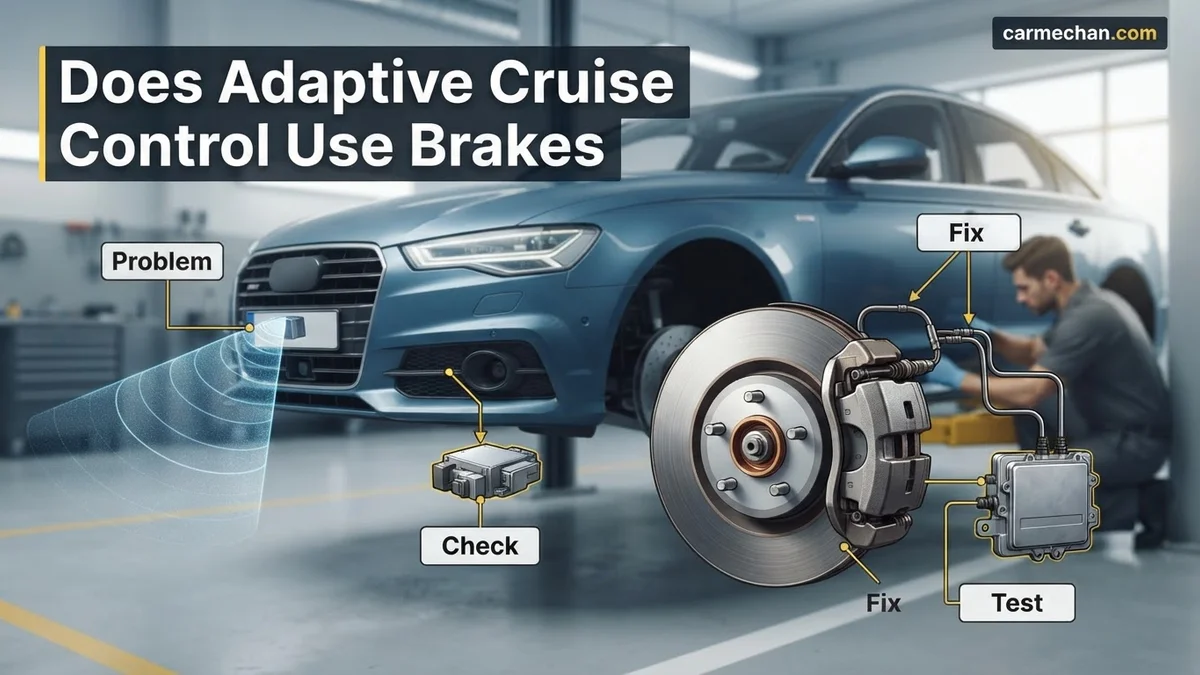
How Adaptive Cruise Control Uses Brakes to Maintain Distance
Recommended Best Deal Products


Hydraulic Pressure and Caliper Engagement
In 2026 vehicle architectures, ACC functions as an automated driver assist that talks directly to your ABS (Anti-lock Braking System) module. When your car identifies that the vehicle ahead is moving slower than your set speed, it first attempts to coast or reduce torque. If those measures cannot close the gap or maintain the pre-set following distance, the system commands the hydraulic pump to build pressure in the lines.
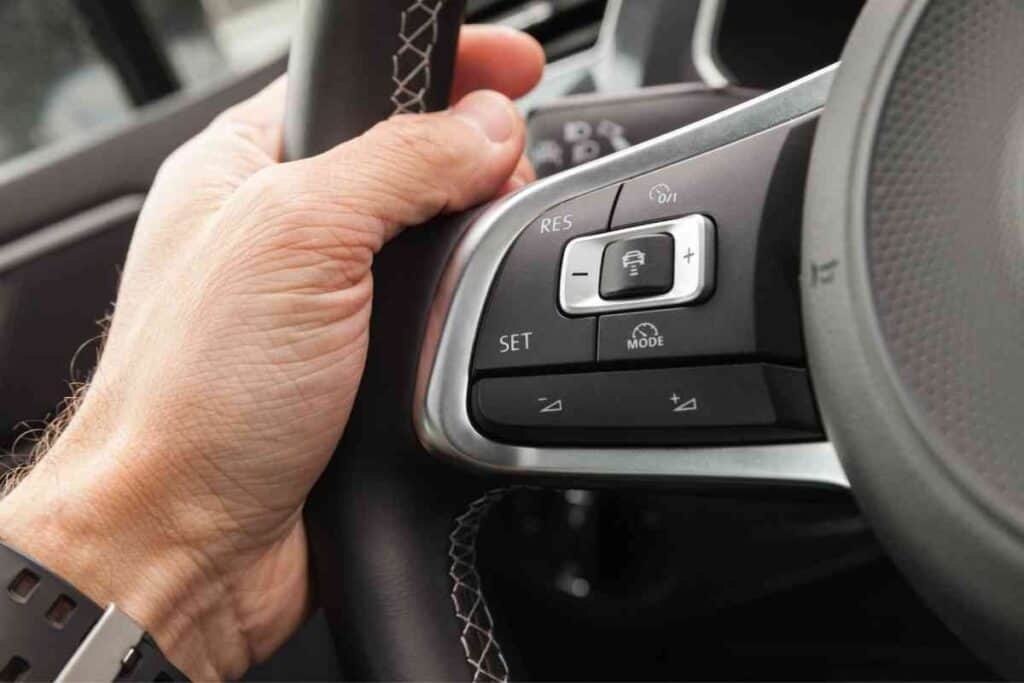
This pressure travels to the brake calipers, squeezing the pads against the rotors just as if you had stepped on the pedal yourself. This process is seamless and quiet, often imperceptible to the driver unless you are watching the brake light indicator on your dashboard.
- Active Hydraulic Control: The system uses electronic valves to modulate pressure to each wheel independently.
- Brake Light Activation: Whenever the system applies enough deceleration force to merit it, the vehicle automatically illuminates your brake lights to alert drivers behind you.
- Pressure Modulation: Unlike static cruise control, ACC adjusts braking force in real-time, ranging from light “dragging” to firm stops.
Managing Deceleration Beyond Engine Braking
Modern vehicles use a tiered approach to speed reduction. If you are coasting down a hill, the system might prefer to keep the car in a lower gear to utilize engine braking first. However, if the radar detects a sudden obstruction, the transmission shift strategy is bypassed entirely in favor of immediate hydraulic braking. This ensures the system remains responsive even if the engine is already at its lowest idle state.
Step-by-Step: How ACC Sensors Trigger Automatic Braking
Sensor Fusion: The Brain Behind the Braking
Your 2026 vehicle relies on a fusion of long-range radar mounted in the front grille and high-definition stereoscopic cameras behind the windshield. This sensor suite creates a 360-degree situational map. The computer calculates the “Time to Collision” (TTC) continuously. If the TTC drops below the threshold defined by your chosen following distance, the vehicle decides between two modes of intervention.
- Predictive Coasting: The system cuts fuel injection and initiates a mild transmission downshift.
- Active Service Braking: The ACC controller sends a digital signal to the Electronic Stability Control (ESC) unit, which then commands the hydraulic pump to activate the service brakes.
Defining the Threshold for Braking vs. Coasting
The transition from coasting to braking is determined by your chosen “gap setting.” If you set a short gap, the system allows the vehicle to drift closer before initiating braking. If you set a long gap, the system begins applying the brakes much earlier to maintain a buffer. In stop-and-go 2026 traffic, the system will hold the brakes entirely once the vehicle comes to a complete halt, requiring either a tap of the accelerator or a button press to resume motion.
- Radar Velocity Data: Sensors measure the relative speed of the target vehicle 50 times per second.
- Camera Classification: Cameras distinguish between stationary objects (like signs) and moving vehicles to avoid phantom braking.
- Brake Bias: The system can adjust braking pressure to account for road conditions, such as reducing force if wheel slip is detected.
Fix: Managing Expectations and Safety During ACC Braking
Adaptive Cruise Control (ACC) is a convenience feature, not a replacement for driver vigilance. By 2026, most vehicle manufacturers, including Toyota, Tesla, and Mercedes-Benz, emphasize that ACC systems utilize the electronic stability control (ESC) module to trigger hydraulic pressure in the brake calipers. This allows for precise deceleration without the driver touching the pedal.

Understanding the “Phantom” Braking Phenomenon
Modern radar and camera fusion systems sometimes misinterpret road geometry as an obstruction. This leads to abrupt, unprompted braking. To maintain safety during these events:
- Keep your foot poised near the brake pedal when approaching complex highway exits or construction zones.
- Monitor the vehicle’s “following distance” setting, as shorter gaps often lead to more aggressive, late-stage braking maneuvers.
- Scan the road at least 15 seconds ahead to identify potential triggers, such as stopped vehicles in neighboring lanes that the radar might mistake for your own path.
Always remember that ACC is optimized for highway flows. In 2026, experts at the Insurance Institute for Highway Safety (IIHS) consistently warn that sensor limitations still exist regarding stationary objects in low-light conditions.

Audible — Listen Free for 30 Days
One free credit a month and thousands of titles included.
Listen Free for 30 DaysWhat If ACC Braking Feels Inconsistent or Jerky
If your vehicle’s braking feels mechanical, “grabby,” or overly sensitive, there may be an underlying sensor calibration issue. ACC relies on a constant calibration between the radar array in the front grille and the forward-facing camera behind the rearview mirror.
Diagnostic Steps for System Performance
- Clear all debris, ice, or road grime from the front emblem or sensor housing. Even minor obstructions can cause erratic sensor data processing.
- Check your tire pressure. Uneven tire wear or improper pressure levels can confuse the vehicle’s speed sensors, leading to inconsistent braking logic.
- Perform a “hard reset” of the infotainment system, as the ACC control unit often shares data pathways with the primary vehicle computer.
What If It Still Doesn’t Work?
If the braking remains inconsistent after basic checks, the issue likely stems from a software glitch or a misaligned radar sensor. Follow these steps to resolve the mechanical concern:
- Inspect the sensor housing for physical damage or slight shifts in alignment caused by minor bumper impacts.
- Check for active “Service Required” codes using an OBD-II scanner, specifically looking for codes related to the ADAS (Advanced Driver Assistance Systems) module.
- Schedule a professional alignment. Modern sensors require laser-guided calibration that cannot be performed manually.
- Consult a certified dealer technician. If the system requires a software flash or radar recalibration, costs typically range from $250 to $650, depending on the manufacturer’s labor requirements.
Conclusion
Adaptive Cruise Control effectively uses your vehicle’s hydraulic brakes to maintain safe distances, but it remains a tool for highway convenience rather than total automation. According to verified research and expert sources from the 2026 automotive safety standards, sensor cleanliness and proper tire maintenance remain the most critical factors in ensuring smooth performance. If your system continues to brake inconsistently, consult a certified technician immediately. Your next step should be checking your owner’s manual for specific sensor cleaning instructions.
❓ Frequently Asked Questions
How does the car know when to switch from coasting to braking?
The system uses radar and camera data to calculate the ‘closing speed’ between your car and the vehicle ahead. If engine braking (lifting the throttle) cannot close the distance gap quickly enough to maintain your preset safety interval, the ACC control unit signals the electronic brake booster to engage the calipers.
Do all adaptive cruise control systems use the brakes?
Essentially all modern ACC systems found in 2026 vehicles use the brakes. Older or budget-level cruise control systems might only use throttle control, but the ‘adaptive’ designation almost universally implies the ability to physically decelerate via the braking system.
Does the system wear out my brake pads faster?
Because ACC constantly makes micro-adjustments to maintain a precise distance, it may apply the brakes more frequently than a human driver would. While this is unlikely to cause rapid wear under normal conditions, heavy stop-and-go traffic usage could lead to slightly earlier brake service intervals.
Will the ACC stop my car completely?
Many modern systems are ‘Full-Speed Range’ ACC, meaning they can bring your car to a complete stop if the vehicle in front of you does. However, you should check your specific owner’s manual, as some systems are only designed to operate above a certain minimum speed threshold.
Can heavy rain or snow affect the braking system?
Yes, adverse weather can obscure the radar and camera sensors mounted in the grille or windshield. When these sensors are blocked, the ACC system may disable itself and alert the driver, meaning the automatic braking function will no longer be available.
Should I be worried if I don’t feel the brake pedal move?
In many modern vehicles, the brake pedal is disconnected from the hydraulic system or uses a ‘brake-by-wire’ setup. You may not feel the physical pedal move under your foot, even though the calipers are actively clamping the rotors.
Audible Premium Plus — Annual Membership
12 audiobook credits up front, plus the full Audible catalogue.
See Annual Plans