Toyota Tundra TPMS Reset Button Location by Year 2022-2026
Last Updated on June 28, 2026 by Ryan
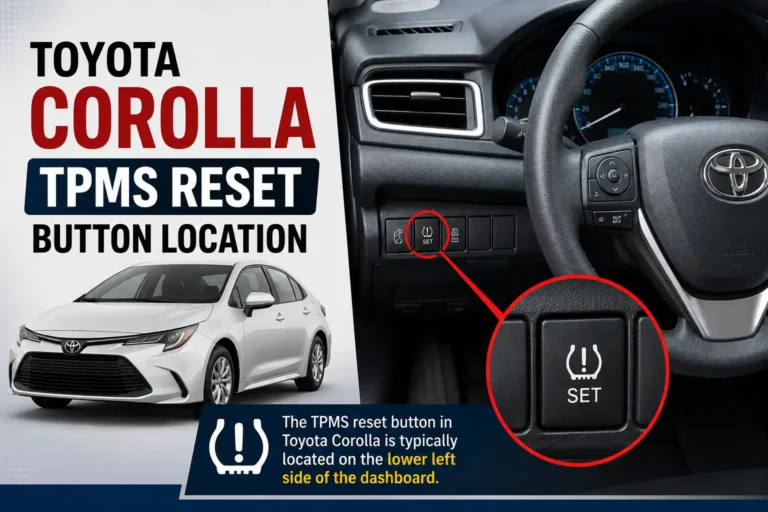
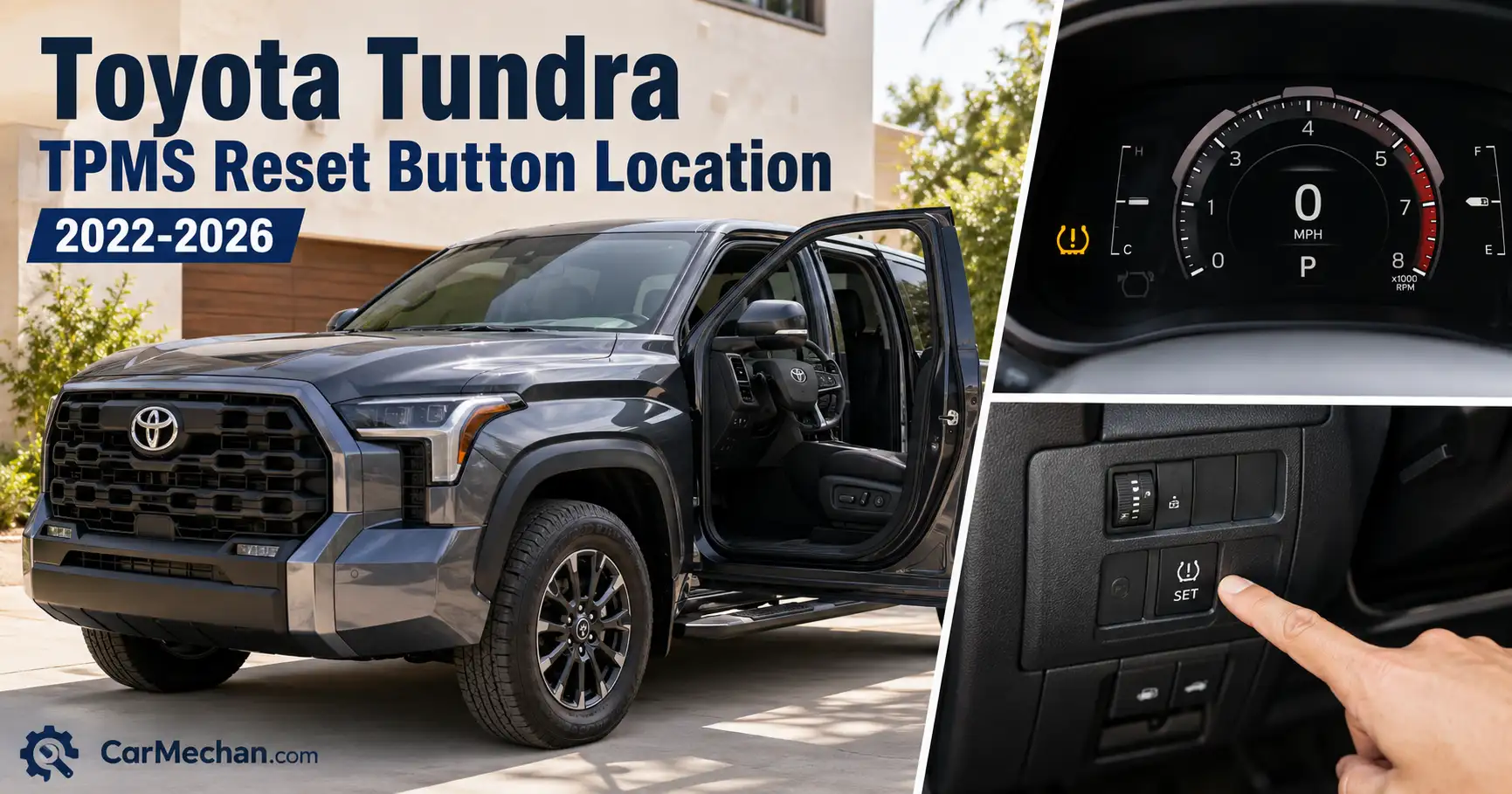
The Toyota Tundra TPMS reset button location depends on the model year. On many older Tundra trucks, the Tire Pressure Monitoring System button is low on the driver-side dash near the steering column or knee panel.

Prime for Young Adults — 6 Months Free
Students and 18–24s get six months of Prime free, then half price.
Start 6 Months Free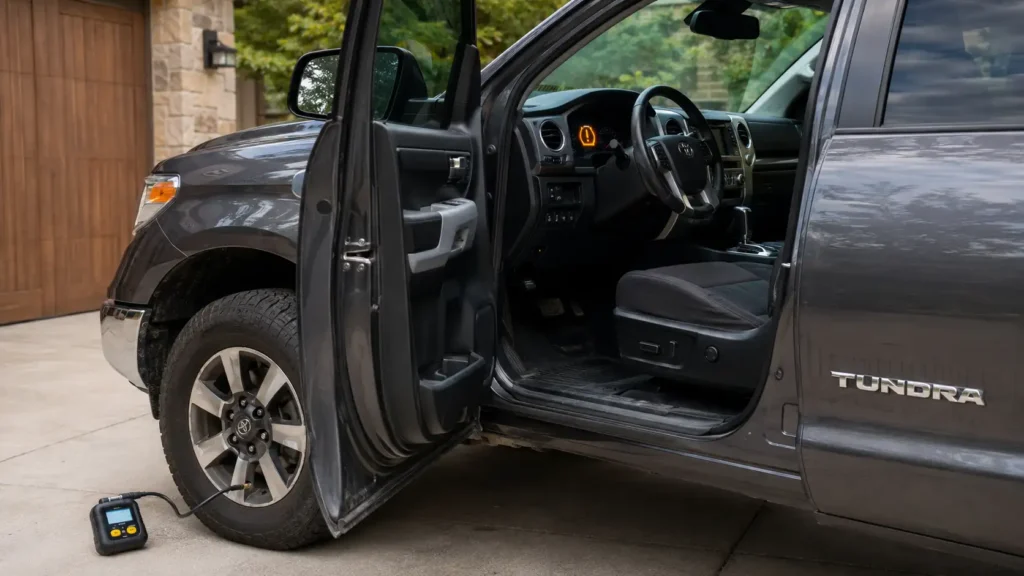
On newer Tundra models, especially 2022 and newer, you may not find a physical reset button at all. Toyota moved many tire pressure functions into the instrument cluster or vehicle settings menu, depending on trim and market.
Start by matching your Tundra year before looking under the dash.
Toyota Tundra TPMS Reset Button Location Guide
Match your model year first. Older Tundras usually use a physical SET button, while newer trucks may use menu-based tire pressure settings.
Physical SET Button Likely
Start by checking the lower driver-side dash area below the steering wheel.
Lower Dash Button Area
Many second-generation Tundra models still use a physical TPMS SET button.
Menu or Auto Update
Do not waste time removing trim to find a hidden button on newer models.
Check Cold PSI
Use the driver-side door placard pressure, not the tire sidewall maximum.
Find the Reset Path
Use the SET button if equipped, or open the tire pressure menu on newer trucks.

Audible — Listen Free for 30 Days
One free credit a month and thousands of titles included.
Listen Free for 30 DaysDrive and Recheck
Some Tundra systems need a short drive before the tire pressure light clears.
Scan If Needed
If sensors were replaced, a TPMS tool or tire shop may need to register sensor IDs.
Quick rule: A reset helps after pressure correction. It usually will not fix dead sensors, wrong sensors, or unregistered new TPMS sensor IDs.
What Determines Toyota Tundra TPMS Button Location
Recommended Best Deal Products

The reset location is not random, because Toyota changed how owners interact with TPMS over time. TPMS means Tire Pressure Monitoring System, which watches tire pressure and warns you when one or more tires are low.
Before pressing anything, you need to know whether your truck is using a physical SET button, a dashboard menu, or a sensor relearn procedure.
Model Year
Older Toyota Tundra trucks are more likely to have a physical tire pressure SET button. The usual location is below the steering wheel area, near the lower dash or driver-side knee panel.
Toyota’s own TPMS help page says that when a Toyota has a reset button, it is low and to the right of the steering wheel on the instrument panel. Toyota also says to hold the button until the TPMS indicator blinks slowly three times.
Button Type
Some Tundra models use a small physical SET button. Other models use steering wheel controls and a vehicle settings menu.
If you have a 2022 to 2026 Tundra and cannot find a button under the dash, do not remove trim panels. Check the multi-information display and owner manual first.
Audible Premium Plus — Annual Membership
12 audiobook credits up front, plus the full Audible catalogue.
See Annual PlansSensor Registration
A reset button does not register new sensor IDs. If you installed new TPMS sensors, new wheels, or a winter tire set, the truck may need sensor registration with a TPMS tool.
Once you know the system type, the year-by-year location becomes much easier to follow.
Toyota Tundra TPMS Reset Button Location by Year
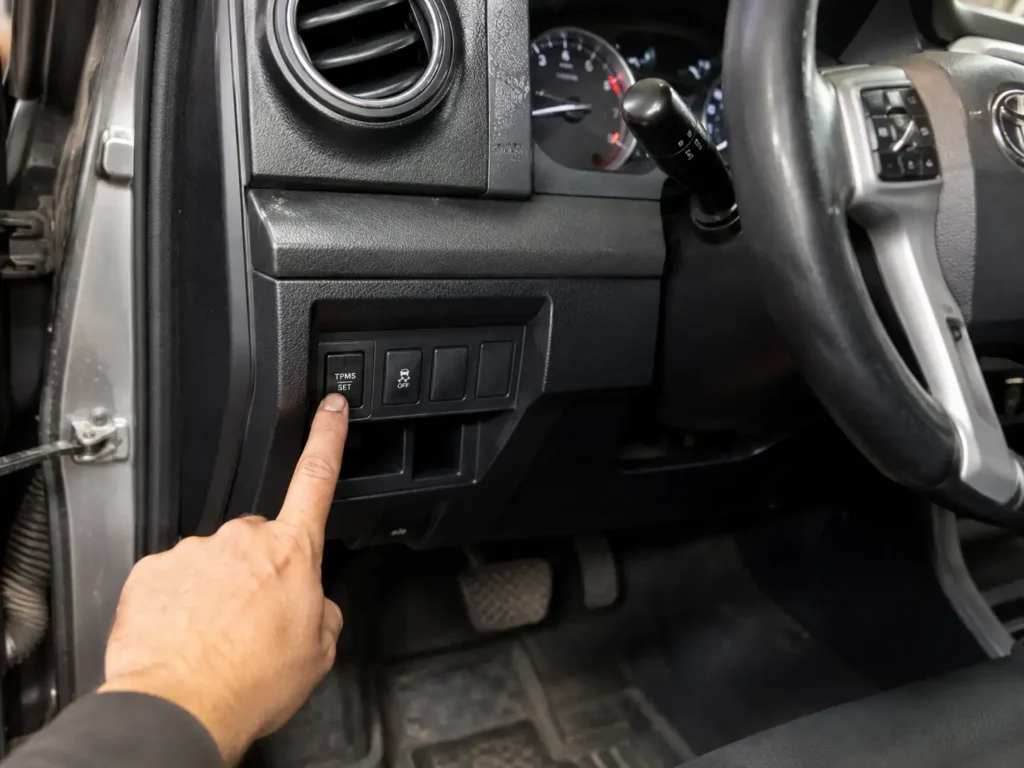
Use this table before searching under the dashboard. Toyota trim levels and market versions can differ, so treat this as a practical starting point and confirm with your owner manual before removing panels.
Toyota Tundra TPMS Reset Button Location Table
2007 to 2013
Likely reset type: Physical TPMS SET button likely
Where to look: Low driver-side dash, below steering wheel, near knee panel
What to do next: Set cold tire pressure first, then hold SET until the light blinks three times if equipped
2014 to 2021
Likely reset type: Physical TPMS SET button likely
Where to look: Lower instrument panel area near the steering column
What to do next: Use the SET button after tire pressure adjustment, rotation, or tire replacement
2022 to 2026
Likely reset type: Menu-based TPMS settings or automatic system update more likely
Where to look: Check the multi-information display and vehicle settings menu
What to do next: Do not hunt for a hidden under-dash button. Use the owner manual menu path or have sensors scanned if the TPMS light stays on
Toyota’s 2021 Tundra quick reference guide states that after tire pressure adjustment, tire rotation, or tire replacement, the driver should turn the ignition switch to ON and press and hold the SET button until the warning light blinks three times.
For 2025 Tundra models, Toyota’s quick reference guide refers to tire pressure being set through the multi-information display, which supports the newer menu-based approach.
The table gives the likely location, but the reset process still matters.
How To Reset Toyota Tundra TPMS Light
Recommended Best Deal Products


Do not press the reset button until the tires are set to the correct cold pressure. Toyota says the correct pressure can be found on the driver’s door jamb sticker, in the owner manual, or through Toyota’s online manuals.
Use a good tire pressure gauge and check all tires before starting. If you need one, Car Mechan’s guide to the best tire pressure gauge can help you choose a simple tool for home checks.
Follow this basic reset path for Tundra models with a physical SET button.
- Park safely and let the tires cool. Tire pressure should be checked cold, not right after highway driving.
- Set all tires to the door placard PSI. Do not use the maximum PSI printed on the tire sidewall as your target pressure.
- Turn the ignition to ON. On push-button models, follow the owner manual instruction for ignition-on mode without driving.
- Press and hold the TPMS SET button if equipped. Hold it until the tire pressure warning light blinks three times.
- Wait and drive normally. Some systems need several minutes of driving before the warning light clears.
If the light turns off, the system accepted the new baseline. If the light returns, check for a leak, wrong pressure, sensor failure, or a sensor registration issue.
If your truck has no visible SET button, the next path is different.
What To Do If Your Tundra Has No Button
Image Placement: Add section image here showing the lower driver-side dashboard and TPMS SET button area.
If you cannot find a TPMS reset button, do not assume it is hidden behind the dash. Many newer Toyota trucks use steering wheel controls and the multi-information display instead of a separate button.
For 2022 to 2026 Tundra models, check the vehicle settings menu for tire pressure or TPWS settings. TPWS is Toyota’s term for Tire Pressure Warning System in many owner materials.
If the tires are inflated correctly and no sensor work was done, drive the truck for a normal trip and recheck the warning light. Some systems update after the truck reads stable pressure from all sensors.
If new wheels or TPMS sensors were installed, a menu reset may not be enough. The truck may need the new sensor IDs registered.
This is where recalibration and sensor registration often get mixed up.
When Toyota Tundra TPMS Needs Sensor Registration
Recommended Best Deal Products


A TPMS reset teaches the truck the correct pressure baseline, but it may not register new sensors. Sensor registration is a different job because each wheel sensor has an ID that the truck must recognize.
ATEQ lists 2009 to 2019 Toyota Tundra models as using 315 MHz direct TPMS sensors. ATEQ also says OBD relearn requires an OBD module and a TPMS diagnostic scan tool.
New Wheel Set
If you installed another wheel set, the sensors may not be registered to the truck. This is common with winter wheels, aftermarket wheels, or takeoff wheel sets.
A tire shop can read the sensor IDs and write them to the truck when the system requires it.
Dead Sensor Battery
TPMS sensors use internal batteries. When a sensor battery dies, the sensor may stop sending pressure data.
A reset button cannot fix a dead sensor battery. The failed sensor usually needs replacement and registration.
Wrong Sensor Type
Wrong sensor frequency or incompatible sensors can keep the light on. For older Tundra models covered by ATEQ’s data, the listed frequency is 315 MHz.
Do not buy sensors based only on a seller’s broad compatibility claim. Match the sensor to your exact year, trim, and market.
A flashing TPMS light is the clearest sign that the issue may be more than low pressure.
Why Toyota Tundra TPMS Light Stays On
A TPMS light that stays on after reset usually means the truck is still detecting a real problem. Do not keep resetting the system until you confirm the tire pressure.
RepairPal lists the most common reasons a 2021 Toyota Tundra tire pressure light stays on as a leaking tire, a wheel that no longer holds air, or a faulty tire pressure monitoring system.
Check these items in order.
- One tire is still low. Check pressure cold and compare it with the driver-side door placard.
- The spare tire may be low. Some Toyota systems monitor the spare, depending on year and equipment.
- A tire has a slow leak. Nails, valve stems, bead leaks, and wheel damage can drop pressure slowly.
- A sensor battery failed. This is more likely on older trucks with original sensors.
- The truck needs sensor registration. This is common after sensor, wheel, or tire set changes.
NHTSA explains that newer vehicles use TPMS to warn drivers about critically low tire pressure, but drivers should still check tire pressure regularly.
The warning pattern tells you whether to keep troubleshooting at home or get the system scanned.
When To Use a Tire Shop or OBD Scanner
A regular OBD2 scanner may help with general warning light diagnosis, but TPMS work often needs a TPMS-specific tool. The tool must be able to read wheel sensor IDs and transfer data to the truck when registration is required.
If you want a Toyota-focused scanner for general diagnostics, our best OBD2 scanner for Toyota guide is the better internal starting point. For TPMS sensor registration, confirm that the tool specifically supports TPMS relearn for your Tundra year.
Use this rule.
- If you only adjusted tire pressure, try the button or menu reset first.
- If you rotated tires only, follow the owner manual reset procedure if your year requires it.
- If you replaced sensors, changed wheels, or installed a second tire set, use a TPMS tool or tire shop.
- If the light flashes first and then stays solid, get the TPMS system scanned.
With the reset paths clear, the final answer depends on your exact Tundra year and warning pattern.
What Toyota Tundra Owners Should Do Next
The correct Toyota Tundra TPMS reset button location depends on the truck’s year and TPMS design. For many 2007 to 2021 Tundra models, start low on the driver-side dash near the steering wheel or knee panel.
For 2022 to 2026 Tundra models, check the instrument cluster settings before searching under the dash. If the light stays on after the correct cold PSI is set, stop resetting and look for leaks, sensor failure, or sensor registration issues.
The safest next step is simple. Set the tires to the correct door placard pressure first, then choose the reset path that matches your Tundra year.
5 Common Toyota Tundra TPMS Reset Questions
Where Is the TPMS Reset Button on a Toyota Tundra
On many older Toyota Tundra models, the TPMS reset button is low on the driver-side dash near the steering wheel or knee panel. Toyota says its reset button, when equipped, is low and to the right of the steering wheel on the instrument panel.
Does a 2024 Toyota Tundra Have a TPMS Reset Button
A 2024 Toyota Tundra may not have the same physical under-dash SET button used on older trucks. Check the multi-information display and vehicle settings menu before removing trim or searching behind panels.
Why Is My Toyota Tundra TPMS Light Flashing
A flashing TPMS light usually points to a system fault rather than simple low pressure. Common causes include a dead sensor battery, unregistered sensor, incompatible sensor, or TPMS communication problem.
Can I Reset Toyota Tundra TPMS After Tire Rotation
Yes, you can reset the Toyota Tundra TPMS after tire rotation if your owner manual calls for it. On models with a SET button, Toyota’s reset sequence uses the ignition ON position and a button hold until the light blinks three times.
Do New Toyota Tundra TPMS Sensors Need Programming
Yes, new Toyota Tundra TPMS sensors often need registration or relearn. A basic tire pressure reset may not write new sensor IDs to the truck, so a TPMS scan tool or tire shop may be needed.