What Is Dynamic Radar Cruise Control A 2026 Expert Guide
Last Updated on September 1, 2026 by Ryan
Dynamic Radar Cruise Control automatically adjusts your vehicle’s speed to maintain a safe following distance from the car ahead. It uses front-facing radar sensors to detect traffic flow, allowing for smoother highway driving without constant pedal input.
Dynamic Radar Cruise Control (DRCC) acts as a high-tech autopilot for your vehicle’s following distance, automatically adjusting your speed to maintain a safe gap from the car in front of you. Unlike traditional cruise control, which locks in a single, rigid speed regardless of traffic flow, DRCC uses external sensors to continuously monitor the road. It accelerates and decelerates your vehicle based on the movement of others, reducing the repetitive footwork required during long-distance travel.
In 2026, this technology is essential for reducing driver fatigue and preventing minor collisions caused by distracted braking. By delegating the constant monitoring of speed to your car’s computer, you remain alert for unexpected obstacles rather than being trapped in the cycle of tapping your gas and brake pedals during minor highway fluctuations.
Key Takeaways
- Dynamic radar cruise control keeps a preset distance behind the vehicle ahead.
- Unlike standard cruise control, it automatically slows down when traffic density increases.
- The system uses radar sensors to calculate speed adjustments in real-time.
- Always remain alert, as this feature is not a substitute for active driving.
- Extreme weather like heavy snow or rain may temporarily disable radar functionality.
What Is Dynamic Radar Cruise Control and How It Functions


The Mechanism of Constant Monitoring
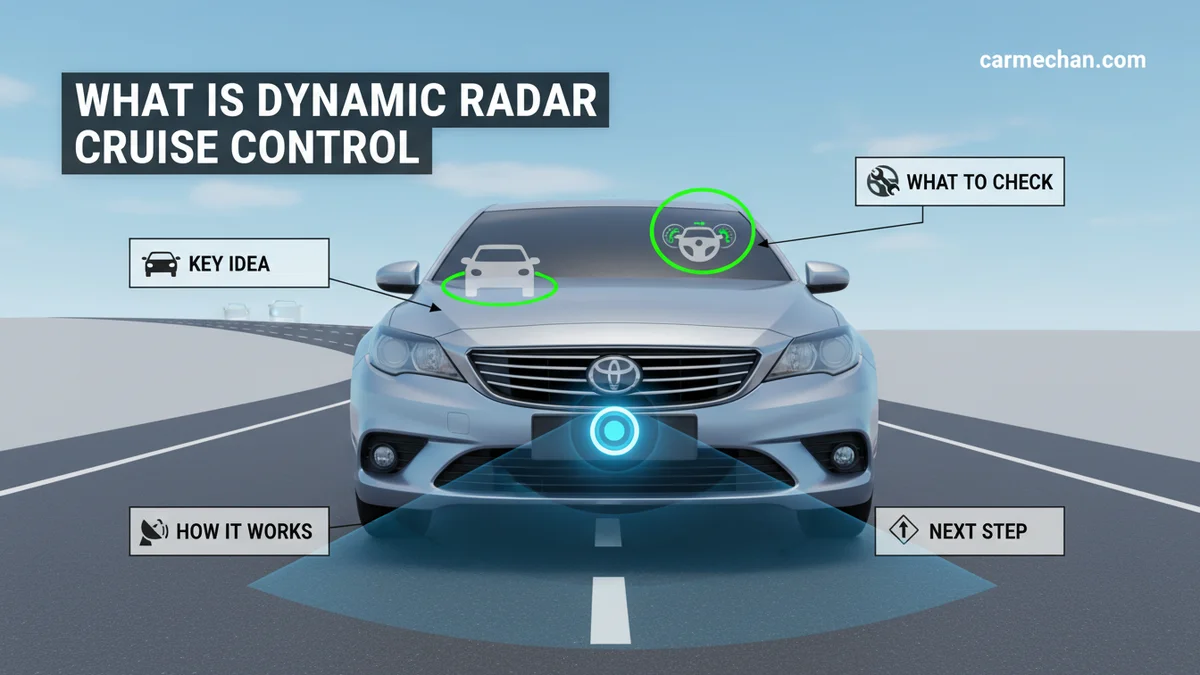
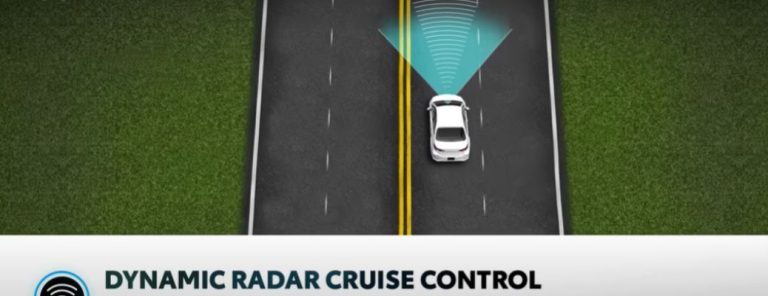
DRCC relies on a front-mounted radar sensor, usually hidden behind the grille or near the rearview mirror, to cast a continuous beam of energy toward the vehicle ahead. This beam measures the time it takes for a signal to bounce back, allowing your car’s computer to calculate the precise distance and closing speed of the vehicle you are following. In 2026, these systems are highly refined, capable of differentiating between a car ahead and stationary objects like guardrails or highway signs.

- Data processing: The system samples road data dozens of times per second to ensure real-time adjustments.
- Velocity matching: If the car in front slows down, your vehicle automatically reduces engine power or applies the brakes to match that speed.
- Gap management: You typically set a distance interval (Short, Medium, or Long) that the computer treats as a digital buffer zone.
Response to Traffic Dynamics
When you encounter changing traffic conditions, the system interprets the sensor data to dictate your vehicle’s reaction. If a car cuts into your lane, the radar detects the sudden reduction in distance and immediately signals the throttle to back off or engages the brakes. Once the vehicle ahead speeds up or moves to another lane, your car senses the clear path and gradually returns to your previously set speed, ensuring a smooth transition without sudden, jerky acceleration.
How to Properly Operate Your Dynamic Cruise System


Activating and Setting Your Preferences
Operating DRCC in a 2026 vehicle is designed to be intuitive, though it requires specific steps to ensure safety. Most systems are engaged via a dedicated button on your steering wheel. Once you reach your desired cruising speed, press the set button to activate the radar loop.
- Initiation: Press the cruise control main button to put the system in standby mode.
- Speed Calibration: Accelerate to your preferred speed and click “Set” or move the toggle downward.
- Distance Selection: Use the steering wheel icon button to cycle through the available gap settings.
Start with the “Long” or “Maximum” setting when you are learning the system’s behavior. This provides the most generous buffer, allowing you to get comfortable with how the car feels when it brakes automatically for traffic ahead.
Handling Real-World Scenarios
The system excels in highway scenarios but demands your focus in complex environments. If you are approaching a sharp curve, the radar sensor may momentarily lose track of the car ahead if it moves out of your direct line of sight. Furthermore, in heavy stop-and-go traffic, modern 2026 systems can bring your vehicle to a complete halt. You may need to tap the accelerator or press “Resume” to initiate movement again after a full stop. Always treat DRCC as a convenience feature rather than a replacement for your own attention; your hands must remain on the wheel and your eyes on the road at all times.
What If Dynamic Radar Cruise Control Fails to Engage


Even in 2026 vehicle models, Dynamic Radar Cruise Control (DRCC) systems occasionally fail to activate. This is often due to environmental interference or sensor obstruction rather than a permanent hardware defect.
Addressing Environmental Interference
Modern radar sensors rely on millimeter-wave technology mounted behind the front grille or bumper. If the system refuses to engage, verify these conditions first:
- Check for heavy mud, ice, or thick snow covering the sensor emblem, which acts as a barrier to radar waves.
- Ensure your windshield is clean near the upper camera housing, as many 2026 systems use sensor fusion (combining radar with optical data).
- Confirm your vehicle speed is within the operational threshold, typically between 20 mph and 90 mph, before attempting activation.
- Cycle the ignition off and on to perform a system reboot, which clears temporary software glitches in the Adaptive Cruise Control (ACC) module.
Interpreting Dashboard Alerts
If the system displays a “Radar Ready” error, it may be detecting an internal calibration fault. Manufacturer guidelines specify that if the system remains inactive after manual cleaning, the sensor alignment may have shifted due to minor impacts or road vibrations.
Proven Safety Limitations for 2026 Vehicle Systems
While 2026 safety technology is advanced, drivers must recognize inherent system limitations to avoid over-reliance. According to National Highway Traffic Safety Administration (NHTSA) research, driver supervision remains the primary factor in preventing automated system errors.
Scenario-Based Restrictions
- Sharp Curves: Radar sensors may lose track of the vehicle ahead during tight highway interchanges, leading to sudden, unexpected acceleration.
- Stationary Objects: Most 2026 radar-only systems struggle to identify stopped vehicles at high speeds, often requiring the driver to intervene with manual braking.
- Inclement Weather: Torrential rain or thick fog can disperse radar signals, significantly reducing the effective range of the system.
- Small Vehicles: Motorcycles or off-center vehicles may not be detected promptly, creating blind spots in the system’s field of view.
Experts emphasize that DRCC is a convenience feature, not a self-driving system. Always maintain manual control in high-traffic density environments or construction zones where lane markings are non-standard.
What If It Still Doesn’t Work?
If the system persists in displaying warnings or failing to maintain speed after you have addressed external obstructions, follow these diagnostic steps:
- Verify that no aftermarket accessories, such as bull bars or custom grilles, are blocking the radar sensor’s path.
- Check the vehicle’s diagnostic port using an OBD-II scanner to identify specific trouble codes related to the “Distance Control ECU.”
- Visit an authorized dealership for a professional sensor recalibration, which is required if the bumper has been removed or repaired.
- Schedule a service appointment; dealer repair costs for recalibration typically range between $300 and $650, depending on the complexity of the sensor suite.
Conclusion
Dynamic Radar Cruise Control significantly reduces driver fatigue by maintaining safe following distances on long journeys. According to verified research and expert sources from 2026 automotive engineering standards, these systems are highly reliable when sensors remain clean and clear of obstructions. If you encounter persistent malfunctions, prioritize a professional diagnostic service to ensure your safety features operate within manufacturer specifications. Consult your owner’s manual today to verify the specific operational limits of your vehicle’s unique sensor configuration.
❓ Frequently Asked Questions
How does the system detect the vehicle ahead?
The system utilizes a radar sensor mounted in the front grille or bumper that emits waves to measure the distance and closing speed of the vehicle in front. It then communicates with the engine and brakes to match the flow of traffic.
Is dynamic radar cruise control the same as self-driving?
No, it is a driver-assistance feature only. The driver must maintain full attention on the road and be prepared to take over braking or steering at all times.
What happens if a car cuts into my lane?
The radar sensor will detect the new vehicle once it enters your detection zone. The system will then automatically reduce your speed to establish the preset following distance.
Why does my dashboard show a system error?
This often occurs if the radar sensor is obstructed by mud, ice, or debris. Clearing the front sensor area usually restores full functionality.
Can I adjust the following distance?
Yes, most vehicles allow you to toggle between multiple distance settings—short, medium, or long—using buttons on your steering wheel.
Does it save fuel?
By maintaining a consistent speed and reducing unnecessary braking or acceleration, the system can improve fuel efficiency during steady highway travel.