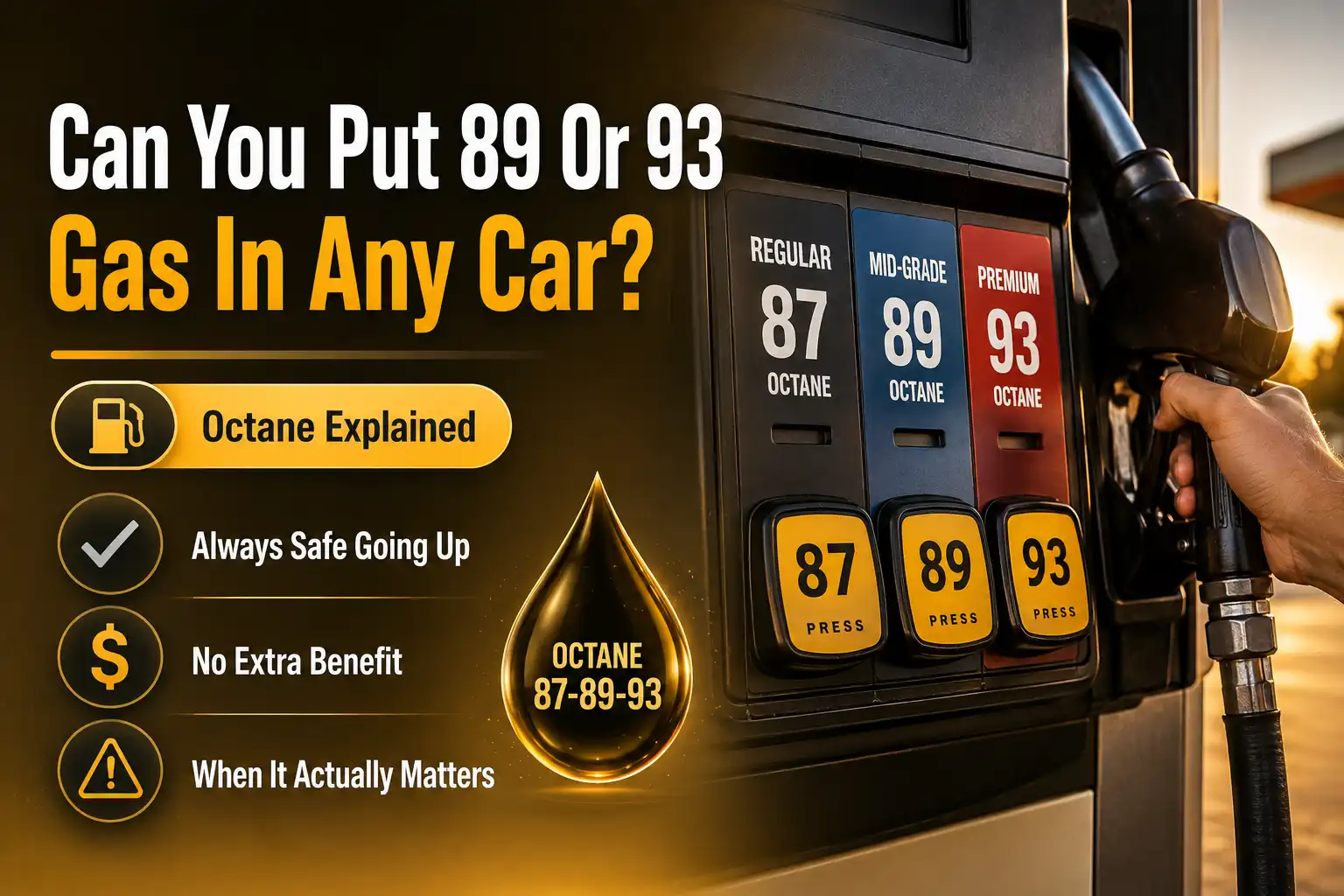
Can You Put Higher Octane Gas in Your Car? 89 and 93 Explained
Last Updated on August 12, 2026 by Albert Duke
Yes, you can safely put a higher octane gas than your car requires, whether that’s 89 in a car that calls for 87, or 93 in a car built for regular gas. Going up in octane is always safe. The only time octane rating actually matters for safety is going below what your engine needs, not above it.

Prime for Young Adults — 6 Months Free
Students and 18–24s get six months of Prime free, then half price.
Start 6 Months FreeWhat higher octane won’t do is give you free horsepower or better fuel economy in an engine that wasn’t designed to use it. This guide covers both common versions of this question, what actually happens in each case, and when a higher octane genuinely makes a difference versus when it’s just a more expensive way to fill your tank. By the end, you’ll know exactly what your specific car needs and won’t have to second-guess yourself at the pump again.
Can You Put 89 Gas In A Car That Takes 87
Recommended Best Deal Products


Yes, and it’s completely harmless. Using 89 octane, often labeled mid-grade, in a car designed for 87 won’t cause any engine damage, trigger a check engine light, or leave you stranded. A guide focused on this exact question confirms that for cars requiring 87 octane, using 89 is harmless but offers no performance or fuel economy benefits, making it an unnecessary expense.
The reason there’s no benefit is that your engine’s compression ratio and ignition timing are calibrated for 87 octane fuel. The extra knock resistance that 89 octane provides simply isn’t needed, so you’re paying more per gallon for a property your engine has no use for.
If a gas station accidentally pumps 89 into your tank, or you grab the wrong button out of habit, there’s genuinely nothing to worry about. Your car will run exactly the same as it would on 87, and there’s no cumulative downside to doing this occasionally or even every fill-up if you don’t mind the extra cost.
Mid-grade 89 octane exists mostly as a blend point between regular and premium at the pump, and at many stations it’s literally mixed on the spot when you select it rather than stored separately. That’s worth knowing if you’re ever curious what you’re actually paying for at the mid-grade button.
Can You Put 93 Gas In Any Car
Yes, premium gas is safe to use in any gasoline-powered car, regardless of what the manufacturer recommends or requires. Car experts consulted on this exact question confirm that premium gas is completely okay to put in a standard vehicle, with no risk of damage to a standard car using premium fuel. The direction that actually carries risk is putting regular gas in a car that requires premium, not the other way around.
In a standard engine built for 87 octane, 93 octane provides no performance boost, no cleaner combustion, and no fuel economy improvement, since today’s regular gas already contains the same detergent additives premium does. You’ll simply pay more per gallon for the same driving experience, which is really the only downside worth considering.
Modern cars with electronic fuel management systems handle the switch to higher octane without any issue. The engine’s computer simply doesn’t need to make any timing adjustments it wasn’t already making, since the fuel is more resistant to knock than the engine requires in the first place.

Audible — Listen Free for 30 Days
One free credit a month and thousands of titles included.
Listen Free for 30 DaysThis applies whether you’re filling up occasionally with premium out of curiosity, doing it because it’s what was available at the pump, or simply prefer the peace of mind of top-tier fuel. None of those reasons carry any risk, even if they don’t deliver a noticeable benefit either.
Why Higher Octane Doesn’t Boost A Regular Engine
Recommended Best Deal Products


Octane rating measures a fuel’s resistance to knocking, also called pre-ignition, not how much energy the fuel contains or how powerful it makes your engine. A higher number means the fuel resists igniting under pressure before the spark plug fires, which matters most in high-compression or turbocharged engines that squeeze the air-fuel mixture harder. Our breakdown of how much horsepower a turbo actually adds covers why these engines are built differently in the first place, and why they’re the ones that genuinely benefit from higher octane.
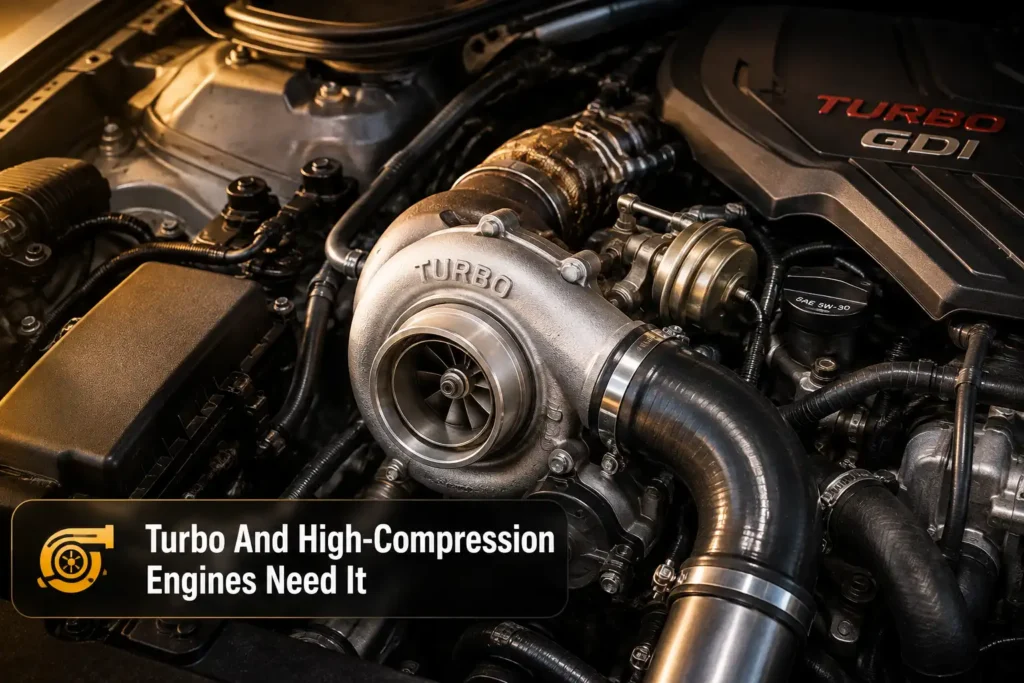
A standard engine’s compression ratio simply doesn’t create enough pressure to benefit from that extra knock resistance. Using premium in a regular engine is like buying tires rated for much higher speeds than you’ll ever drive. Nothing goes wrong, but you’re not getting anything extra for the added cost either.
Some drivers believe higher octane fuel burns “cleaner” or delivers more energy per gallon, but neither is true. Octane and energy content are separate properties of gasoline, and a fuel’s knock resistance has nothing to do with how much power it can theoretically deliver.
When Octane Actually Matters
The scenario that genuinely carries risk is the reverse of both keywords covered here: putting lower octane gas than your engine requires. If your owner’s manual says premium is required, not just recommended, using regular gas can cause knocking and, over time, potential engine damage. One automotive resource notes that an engine that needs high-octane fuel might start knocking on regular gas, sounding bad and performing poorly, though it will likely escape permanent damage from an occasional tank.
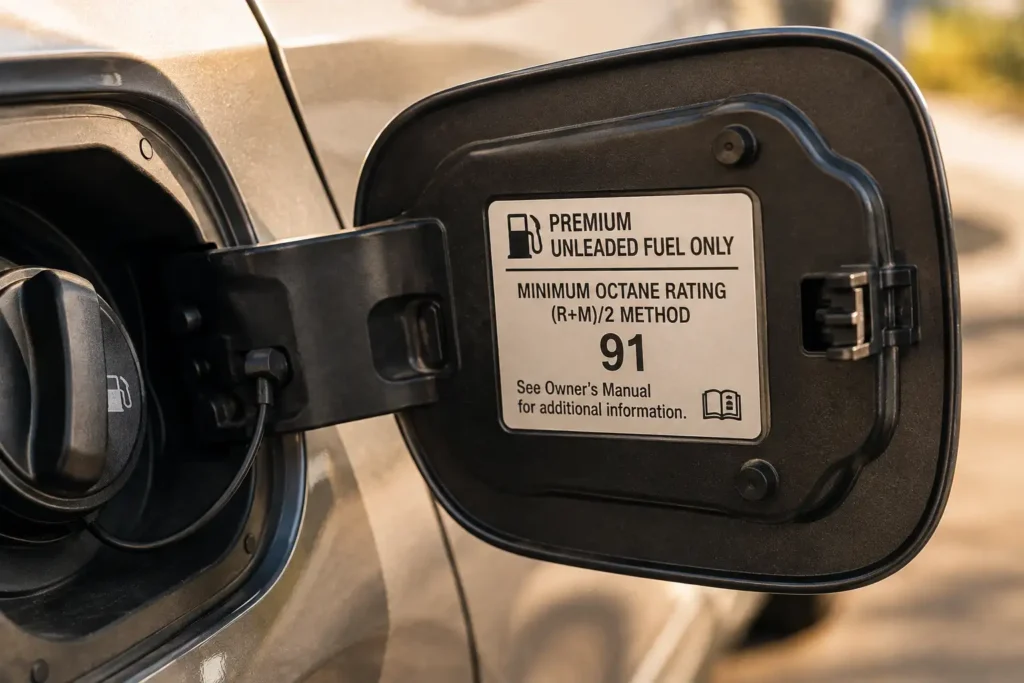
The key word to check in your owner’s manual is whether premium is “required” or merely “recommended.” Required means stick with it consistently. Recommended means regular gas is a safe fallback, just with a small possible tradeoff in performance or efficiency depending on your specific engine.
Turbocharged and high-compression engines are the most common examples where the octane requirement is a genuine mechanical necessity rather than a marketing suggestion. High-output performance cars like a Hellcat or a Scat Pack are built around premium fuel requirements to safely handle their compression and boost levels. If you drive a performance-oriented or luxury vehicle, checking the fuel door label or owner’s manual once is worth the few minutes it takes.
Higher Octane Quick Reference
Recommended Best Deal Products


| Situation | Safe | Any Benefit |
|---|---|---|
| 89 octane in a car that takes 87 | Yes | No, no measurable difference |
| 93 octane in a car that takes 87 | Yes | No, no measurable difference |
| 87 octane in a car that recommends premium | Yes | Slight performance or efficiency tradeoff |
| 87 octane in a car that requires premium | Not recommended | Risk of knocking, possible engine damage |
Higher Octane Gas FAQ
Will mixing 87 and 93 gas hurt my car?
No. Mixing octane grades simply blends to an average rating somewhere in between, and that blended fuel is safe for any car as long as the result still meets or exceeds what your engine requires. This happens naturally if you fill up with different grades on different visits, since your tank never fully empties between fill-ups.
Does higher octane gas clean my engine better?
No, this is a common myth. Regular gas sold today contains the same required detergent additives as premium, so higher octane fuel doesn’t clean your fuel system any more effectively than regular gas does. This misconception likely comes from decades-old marketing that hasn’t matched fuel formulation standards for years.
Audible Premium Plus — Annual Membership
12 audiobook credits up front, plus the full Audible catalogue.
See Annual PlansWill premium gas improve my gas mileage in a regular car?
No, not in an engine designed for regular gas. Any fuel economy gain from premium comes from an engine specifically built to take advantage of it, not from the fuel itself, so a standard engine sees no efficiency benefit no matter how many tanks of premium you run through it.
How do I know if my car requires or just recommends premium?
Check your owner’s manual or the fuel door itself, which often states the requirement directly. The wording matters: “required” means you should use it consistently, while “recommended” means regular gas is a safe, if slightly less optimal, alternative most of the time.
Can using higher octane void my warranty?
No. Using a higher octane than required never causes warranty issues, since you’re giving the engine more knock resistance than it needs, not less. Warranty concerns only come up when using lower octane than a manufacturer specifically requires, particularly in turbocharged or high-performance engines.
Does altitude change what octane my car needs?
Yes, somewhat. At higher elevations, the thinner air naturally reduces the risk of engine knock, which is why some gas stations at altitude sell regular gas rated slightly lower than 87. This doesn’t change the safety of using a higher octane than needed, only the minimum your specific engine requires in that environment.
Putting 89 or 93 octane gas in a car that only needs 87 is always safe, it just won’t give you any extra performance or efficiency for the added cost. The only octane mistake that actually matters is going below what your engine requires, not above it. Check your owner’s manual once to know exactly what your car needs, and you’ll never have to wonder at the pump again, whether you’re standing in front of the 87, 89, or 93 button.