Can You Drive a Car With a Bad Catalytic Converter? It Depends
Last Updated on September 1, 2026 by Albert Duke
Yes, in many cases, but the real answer depends heavily on what kind of catalytic converter failure you’re actually dealing with. A converter that’s still letting exhaust flow but just isn’t cleaning it efficiently is a very different situation than one that’s severely clogged or physically breaking apart inside.

Audible — Listen Free for 30 Days
One free credit a month and thousands of titles included.
Listen Free for 30 DaysTreating every bad catalytic converter the same way is where most advice on this topic falls short. Here’s how to tell which category yours falls into and what that actually means for driving on it, whether it’s safe for a while or something you need to address right away.
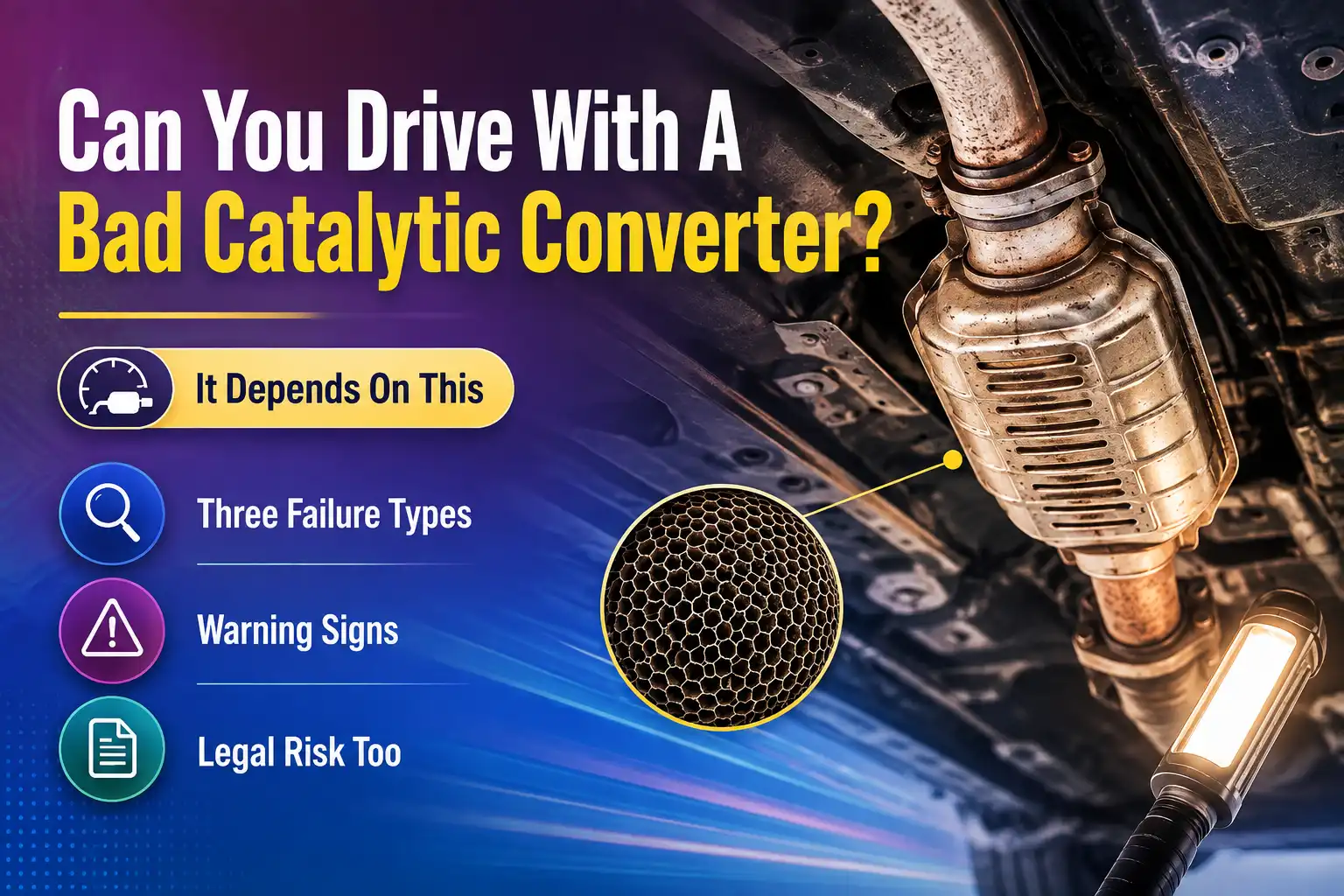
The Three Types Of Catalytic Converter Failure
Recommended Best Deal Products


Unobstructed but inefficient: The converter still lets exhaust pass through freely, but it’s no longer converting pollutants as effectively as it should. This typically shows up as an oxygen sensor reading out of range or a P0420 or P0430 trouble code, without any noticeable loss of engine power.
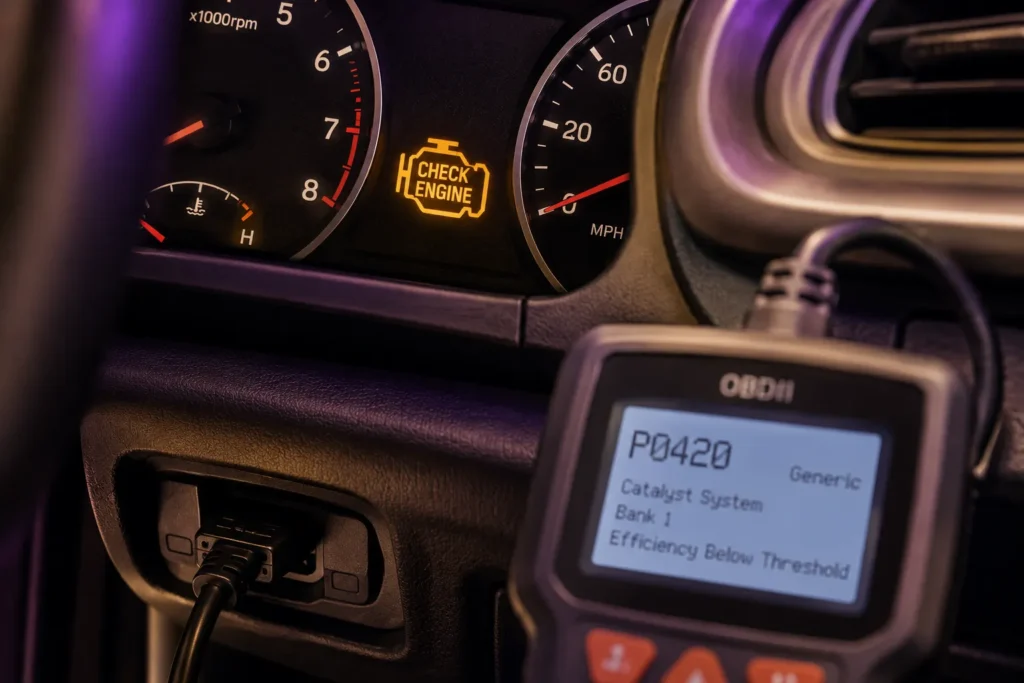
Partially clogged: The internal honeycomb structure has started to degrade or collect debris, restricting exhaust flow to some degree. Performance takes a real but often gradual hit here, and the situation tends to worsen over time rather than staying stable at whatever level it starts at.
Fully clogged or physically damaged: The converter is severely restricted or has broken apart internally, with loose fragments potentially rattling inside. This is the category where real mechanical risk enters the picture, and it’s meaningfully different from the first two categories in terms of urgency.
A resource focused specifically on this distinction confirms that whether you can safely keep driving depends on the specific problem, since some catalytic converter issues are mostly annoying while others can seriously damage your engine or lead to emissions test failures. Knowing which of the three categories above applies to your situation is the actual answer to this question, not a single universal yes or no.
What Happens If You Keep Driving On Each Type
If your converter falls into the unobstructed-but-inefficient category, driving on it for a while generally won’t cause additional damage. You’ll likely see worse fuel economy and a failed emissions test, but the engine itself isn’t under unusual mechanical stress in this scenario.
A partially clogged converter is where things start to matter more. Continuing to drive on it can lead to engine misfire or a noticeable loss of acceleration power as the restriction gradually worsens, and what starts as a minor performance dip can progress faster than expected, especially under hard acceleration or towing where the engine demands more airflow through an already restricted system.
A fully clogged or physically damaged converter is the situation where you genuinely shouldn’t keep driving. The restricted exhaust flow creates backpressure that the engine wasn’t designed to handle, which can lead to rough idling, stalling, and in more severe cases, real engine damage from the excess pressure building up in the exhaust system over time.

Prime for Young Adults — 6 Months Free
Students and 18–24s get six months of Prime free, then half price.
Start 6 Months FreeWarning Signs You Shouldn’t Ignore
Recommended Best Deal Products


Some of these signs are more urgent than others, and paying attention to which ones apply to your situation helps gauge how quickly you need to act.
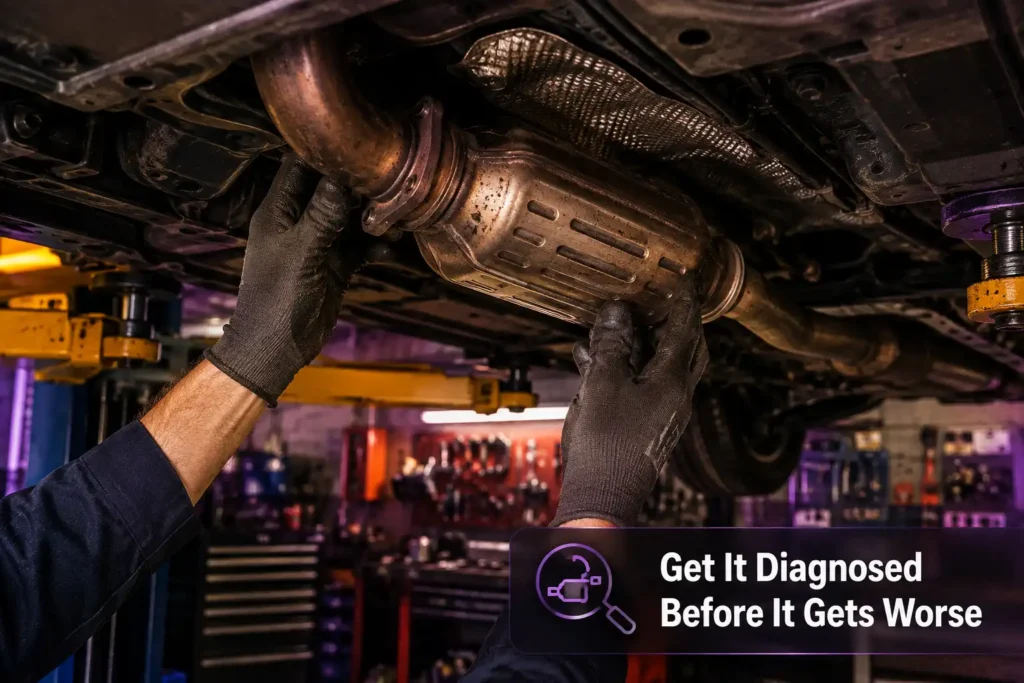
- Check engine light with a P0420 or P0430 code: The most common early warning, indicating the converter isn’t processing emissions efficiently.
- Rotten egg smell: A sulfur-like odor often points to a converter that’s no longer processing exhaust gases correctly.
- Dark exhaust smoke: Can indicate the converter is struggling or a related issue like an oil or fuel problem is contributing to its failure.
- Excessive heat under the vehicle: A converter working harder than normal, or one that’s clogging, can run noticeably hotter than usual.
- Rattling noise: Often a sign the internal honeycomb structure has broken apart, which points toward the more serious physical damage category.
- Sluggish acceleration or stalling: Signs the restriction has progressed enough to meaningfully affect engine performance.
A dealership service resource summarizing these warning signs notes that common symptoms include check engine light illumination, often with codes P0420 or P0430, along with reduced acceleration or sluggish engine performance, and any of these signs are worth having inspected promptly rather than waiting to see if they worsen on their own.
The Legal And Emissions Risk
Separate from the mechanical risk, driving with a bad or missing catalytic converter carries its own legal exposure. It’s illegal in many states to operate a vehicle without a properly functioning converter, and doing so can result in a citation independent of any performance issue you might be experiencing.
A failing converter will also very likely cause a failed emissions test, which many states require to renew vehicle registration. Even a converter in the mildest failure category, unobstructed but inefficient, is often enough to fail this specific test, so passing emissions and being mechanically safe to drive are two separate questions with different answers, and it’s entirely possible to be fine on one and fail the other.
How Long A Catalytic Converter Typically Lasts
Recommended Best Deal Products


A well-maintained catalytic converter typically lasts between 70,000 and 100,000 miles, and many last considerably longer with proper vehicle care. There’s no fixed mileage at which it automatically needs replacing, since it should be replaced based on actual symptoms rather than age alone, and plenty of converters keep working fine well past that range.
Several factors can shorten a converter’s lifespan well before that range, including ongoing engine misfires, oil or coolant leaks that reach the exhaust system, poor fuel quality, and physical impact from road debris. If your converter failed unusually early, addressing whatever caused it matters just as much as the replacement itself, or the new one may fail prematurely too, leaving you paying for the same repair twice.
Can You Drive Quick Decision Chart
| Failure Type | Safe To Keep Driving | Risk Level |
|---|---|---|
| Unobstructed, inefficient (P0420 code) | Yes, short term | Low mechanical, fails emissions |
| Partially clogged | With caution | Moderate, worsens over time |
| Fully clogged | No | High, engine damage risk |
| Physically broken, rattling | No | High, debris and damage risk |
Bad Catalytic Converter FAQ
How much does it cost to replace a catalytic converter?
Costs vary significantly based on vehicle make, model, and year, since converters contain precious metals and prices differ widely between models. Getting a quote specific to your vehicle from a trusted shop is the most reliable way to know what to expect, since generic estimates online rarely match what a specific make and model actually costs, and theft-prone models sometimes carry a premium due to demand for replacements.
Can a bad catalytic converter damage my engine?
Yes, but mainly in the fully clogged or physically damaged categories. The excess backpressure created by a severely restricted converter can strain the engine enough to cause real damage if driving continues for an extended period, particularly under sustained highway speeds or heavy loads where the engine is already working harder than usual.
Will a bad catalytic converter hurt my gas mileage?
Yes, in most failure types. Even a converter that’s still flowing exhaust but working inefficiently typically reduces fuel economy, since the engine’s computer often compensates in ways that aren’t optimized for efficiency once it detects the converter isn’t performing as expected, sometimes running the engine slightly richer than necessary.

Prime Gaming — Free In-Game Loot
Free monthly games, in-game content and a Twitch channel sub.
Claim Free LootCan I drive without a catalytic converter at all?
Technically the engine will run without one, since cars operated fine before converters became standard equipment. It’s illegal in most places and will fail emissions testing, so this isn’t a realistic long-term option even though the engine itself would function without any mechanical issue, and removed converters are also a common target for theft due to the precious metals inside.
How do I know if it’s the catalytic converter versus the oxygen sensor?
Both can trigger similar codes and symptoms, which is why a proper diagnosis matters before replacing an expensive part unnecessarily. A code reader can help narrow things down, and our guide to the best OBD2 scanner for the money covers options that give more detail than a basic code reader alone, which can help you avoid paying for a converter replacement when the actual problem was a much cheaper sensor.
Whether you can drive with a bad catalytic converter depends entirely on which type of failure you’re dealing with, not a single blanket answer. A converter that’s simply inefficient can often wait for a scheduled repair, while one that’s severely clogged or physically breaking apart needs attention right away before it turns into a much larger repair bill. If you’re seeing a P0420 code specifically, our P0420 diagnostic guide walks through narrowing down the actual cause before you commit to a replacement.