How Much Does a Ford F-250 Weigh? Curb, GVWR, & Payload
Last Updated on September 1, 2026 by Ryan
The curb weight of a Ford F-250 varies considerably, typically from 6,000 to over 8,000 pounds, influenced by its engine, drivetrain, and configuration. Understanding these figures, along with GVWR and payload capacity, is essential for safe and legal towing and hauling.

Prime for Young Adults — 6 Months Free
Students and 18–24s get six months of Prime free, then half price.
Start 6 Months Free🎯 Key Takeaways
Recommended Best Deal Products


- F-250 curb weight ranges 6,000-8,000+ lbs by configuration.
- Diesel engines add roughly 500-800 lbs over gas.
- 4WD adds significant weight; check your specific truck’s sticker.
- GVWR is max operating weight; never exceed this limit.
- Payload capacity directly correlates with curb weight and GVWR.
A Ford F-250’s curb weight typically ranges from approximately 6,000 pounds for a base 4×2 Regular Cab to over 8,000 pounds for a fully optioned 4×4 Crew Cab with the diesel engine. This significant variance depends heavily on the model year, cab configuration, bed length, engine choice, and whether it’s two-wheel or four-wheel drive. Knowing your F-250’s exact weight is crucial for many practical reasons, from understanding its true payload capacity and safe towing limits to ensuring you stay within legal weight restrictions and even fitting it into certain garages or onto specific vehicle lifts.

Understanding these weight specifications isn’t just for heavy haulers; it impacts everything from tire pressure recommendations to bridge load limits. Beyond curb weight, you also need to grasp Gross Vehicle Weight Rating (GVWR), payload capacity, and Gross Combined Weight Rating (GCWR) to truly know your truck’s capabilities and limitations. Let’s break down these critical numbers, focusing primarily on the F-250’s actual curb weight across popular configurations and model years.
Understanding Ford F-250 Curb Weight Ranges
The Ford F-250 Super Duty has seen its curb weight evolve over the years, influenced by changes in materials, engine technology, and overall design. While older models tended to be heavier due to all-steel construction, newer generations have strategically used lighter materials to offset the added weight of new features and emissions equipment.
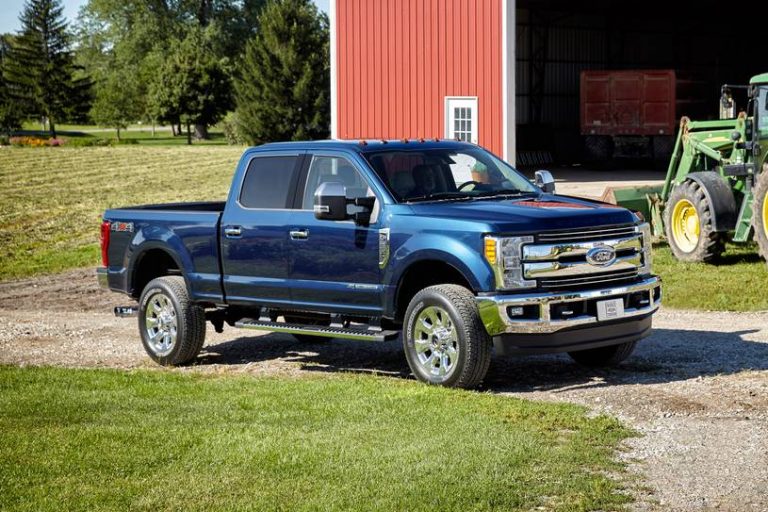
Modern Super Duty (2017-Current Generation)
The 2017 redesign marked a significant shift with the introduction of an aluminum-alloy body, reducing overall weight while maintaining or increasing structural rigidity. Despite the lighter body, the heavier-duty frames and powertrains mean the F-250 remains a substantial vehicle. Here are some typical curb weight examples for popular configurations:
- 2020-2022 F-250 Crew Cab, 6.75′ Bed, 4×4, 7.3L Gas: Approximately 7,000 to 7,200 pounds.
- 2020-2022 F-250 Crew Cab, 6.75′ Bed, 4×4, 6.7L Power Stroke Diesel: Approximately 7,800 to 8,000+ pounds.
- 2017-2019 F-250 Regular Cab, 8′ Bed, 4×2, 6.2L Gas: Around 6,100 to 6,300 pounds.
- 2017-2019 F-250 SuperCab, 8′ Bed, 4×4, 6.7L Power Stroke Diesel: Roughly 7,500 to 7,700 pounds.
Always check the specific vehicle’s door jamb sticker for its exact “Curb Weight” or “Weight as shipped” if you need precise figures, as factory options can add a few hundred pounds.
Older Generations (Pre-2017)
Prior to the 2017 model year, F-250s featured full steel bodies, generally resulting in heavier base curb weights compared to similarly configured aluminum-body trucks, especially when comparing specific trim levels. However, the exact differences vary by generation:
- 2011-2016 F-250 (Steel Body): These models often ranged from about 6,200 pounds for a 4×2 Regular Cab with a gas engine to over 7,500 pounds for a 4×4 Crew Cab diesel. The 6.7L Power Stroke diesel introduced in 2011 was notably heavier than the previous 6.4L and 6.0L diesels.
- 1999-2010 F-250 (Steel Body): Curb weights typically fell between 5,500 pounds (base 4×2 gas) and 7,000 pounds (4×4 Crew Cab diesel). Engine choices like the 7.3L Power Stroke, 6.0L Power Stroke, or the V10 gas engine heavily influenced these numbers.
Generally, expect older models to hover in similar ranges to modern trucks, with the biggest differences often seen in specific engine and drivetrain combinations rather than drastic generational shifts in base weight.
Understanding the various weight specifications of your Ford F-250 is absolutely critical for safe operation, legal compliance, and efficient performance, especially when towing or hauling. This comprehensive guide will walk you through, step-by-step, how to accurately determine how much your F-250 weighs and what its capacities are. We’ll cover everything from decoding your truck’s stickers to utilizing online resources and even weighing the vehicle yourself. Following these steps ensures you can maximize your truck’s utility while staying safe and within legal limits.

Audible — Listen Free for 30 Days
One free credit a month and thousands of titles included.
Listen Free for 30 DaysStep 1: Understand Key Weight Terminology
What you need: A basic understanding of automotive terms, internet access for definitions if needed.
Instructions: Before diving into numbers, familiarize yourself with crucial weight ratings. Curb Weight is the weight of the truck itself with all standard equipment, fluids, and a full tank of fuel, but no passengers or cargo. Gross Vehicle Weight Rating (GVWR) is the maximum permissible total weight of the truck, including the truck itself, passengers, cargo, and any accessories. Gross Axle Weight Rating (GAWR) specifies the maximum weight that can be supported by each axle (front and rear). Lastly, Payload Capacity is the maximum weight of cargo and passengers the truck can safely carry, calculated as GVWR minus the truck’s curb weight.
Pro Tip: Do not confuse Curb Weight with GVWR. Curb Weight is what the truck weighs empty, while GVWR is the absolute maximum it should ever weigh when fully loaded, including everything inside and on it.
Step 2: Locate Your Truck’s Door Jamb Sticker
What you need: Your Ford F-250, good lighting (a flashlight might be helpful), and a pen and paper or smartphone for notes.
Instructions: The most direct and accurate source for your specific truck’s factory weight ratings is the certification label, commonly found on the driver’s side door jamb (or sometimes on the edge of the driver’s door itself). Open the driver’s door and look for a white or yellow sticker. On this label, you will find your truck’s unique Gross Vehicle Weight Rating (GVWR) and the Gross Axle Weight Ratings (GAWR) for both the front and rear axles. These numbers are determined by the manufacturer for your exact vehicle configuration as it left the factory.
Pro Tip: The numbers on this sticker are legally binding maximums. They represent the truck’s capacity as it was manufactured and do not account for aftermarket modifications that might change its actual curb weight or capacity.
Step 3: Consult Your Owner’s Manual
What you need: Your Ford F-250 owner’s manual (physical copy or digital PDF), internet access if using a digital version.
Instructions: Your F-250’s owner’s manual contains a wealth of detailed information, including extensive weight specifications. Navigate to the “Specifications” or “Capacities and Weights” section, usually found towards the back of the manual. Here, you’ll often find tables detailing curb weights, GVWR, GAWR, and Gross Combined Weight Rating (GCWR – the maximum allowable weight of the fully loaded truck and a fully loaded trailer combined) for various configurations (e.g., different engines, cab types, bed lengths, 2WD vs. 4WD). Use your specific truck’s configuration to find the most relevant figures.
Pro Tip: While the owner’s manual provides general figures for different configurations, always prioritize the door jamb sticker for your truck’s specific GVWR and GAWR, as the manual lists ranges that may not perfectly match your exact build.
Audible Premium Plus — Annual Membership
12 audiobook credits up front, plus the full Audible catalogue.
See Annual PlansStep 4: Utilize Ford’s Official Online Resources
What you need: Internet access, your F-250’s Vehicle Identification Number (VIN) if possible.
Instructions: Ford’s official website offers tools that can help you determine your F-250’s specifications. For newer models, the “Build & Price” tool allows you to configure a truck similar to yours and view its estimated curb weight and payload capacity based on selected options. For any model, you might be able to use your VIN on Ford’s support or owner’s portal to access detailed specifications or even a digital version of your owner’s manual. Some third-party VIN decoders can also provide factory spec information, though always cross-reference with official Ford sources.
Pro Tip: Factory-installed options (such as larger engines, luxury packages, heavy-duty alternators, or even specific wheel and tire combinations) can significantly impact the truck’s curb weight, directly reducing its available payload capacity. Be mindful of these additions when using general online specs.
Step 5: Factor in Configuration Variations
What you need: Knowledge of your F-250’s specific engine, cab style, bed length, and drivetrain (2WD or 4WD).
Instructions: The weight of a Ford F-250 is highly dependent on its specific configuration. A 4×4 crew cab long bed with a 6.7L Power Stroke diesel engine will weigh substantially more than a 4×2 regular cab short bed with a 6.2L gasoline engine. Generally: diesel engines add more weight than gasoline engines, 4×4 adds weight over 2WD, crew cabs are heavier than super cabs, which are heavier than regular cabs, and long beds weigh more than short beds. Be sure to identify your exact configuration when looking up specifications or comparing numbers.
Pro Tip: A diesel engine can add 600-800 pounds to the curb weight compared to a gasoline engine in the same F-250 configuration. This directly impacts the remaining payload and towing capacity available to you.
Step 6: Determine Actual Curb Weight with a Commercial Scale
What you need: Your F-250 (empty of all passengers and cargo), a full tank of fuel, access to a commercial weigh station (e.g., CAT scale).
Instructions: For the most accurate measure of your specific F-250’s curb weight, visit a certified commercial weigh station, such as a CAT scale found at many truck stops. Ensure your truck is completely empty of passengers, cargo, and any non-permanent accessories you don’t consider part of its standard curb weight (e.g., tools you don’t always carry). Fill your fuel tank to full, as this is part of its standard operating weight. Drive onto the scale, follow the instructions (often involving communicating via intercom), and obtain a weigh ticket. This ticket will show your truck’s actual weight, often broken down by axle.
Pro Tip: To get a true “curb weight,” weigh the truck with only the driver in it, and make sure any permanent modifications (like a heavier bumper or toolboxes bolted down) are included. Any subsequent load, including passengers, adds to the total vehicle weight and reduces available payload.
Step 7: Calculate Available Payload Capacity
What you need: Your F-250’s GVWR (from door jamb sticker) and your truck’s actual measured curb weight (from Step 6).
Instructions: Once you have your truck’s accurate GVWR and its actual curb weight, calculating available payload is straightforward. Simply subtract the curb weight from the GVWR: Available Payload = GVWR – Actual Curb Weight. For example, if your GVWR is 10,000 lbs and your truck actually weighs 7,000 lbs when empty, your available payload is 3,000 lbs. This 3,000 lbs must accommodate all passengers, cargo, and anything else you add to the truck, including the tongue weight of a trailer if you’re towing.
Pro Tip: Many people forget to factor in the weight of all passengers and their personal effects when calculating available payload. Even a few hundred pounds of people can quickly eat into your capacity. Always include the weight of everyone and everything you intend to carry.
Step 8: Understand Gross Combined Weight Rating (GCWR) for Towing
What you need: Your F-250 owner’s manual or door jamb sticker for GCWR, knowledge of your truck’s actual weight and intended trailer weight.
Instructions: While GVWR focuses on what your truck can carry, the Gross Combined Weight Rating (GCWR) is paramount for towing. It specifies the maximum allowable weight of the fully loaded truck (including passengers and cargo) AND the fully loaded trailer combined. Your GCWR can be found in your owner’s manual and is often influenced by factors like engine, axle ratio, and whether it’s 2WD or 4WD. Ensure that the total weight of your F-250 and anything it’s towing never exceeds this rating. You’ll need to weigh your loaded truck and loaded trailer separately, then add their weights together to ensure you’re within GCWR.
Pro Tip: Exceeding GCWR puts immense strain on your drivetrain, brakes, and suspension, leading to unsafe driving conditions and potential mechanical failure. Always err on the side of caution and stay well below the maximum ratings.
✅ Final Checklist
- Located and understood all primary weight ratings (GVWR, GAWR) from the door jamb sticker.
- Consulted the owner’s manual for additional specifications like GCWR and detailed curb weights for various configurations.
- Factored in how your specific truck’s configuration (engine, cab, bed, 2WD/4WD) influences its weight.
- Obtained your truck’s actual empty curb weight from a commercial scale.
- Calculated your available payload capacity by subtracting actual curb weight from GVWR.
- Understood the Gross Combined Weight Rating (GCWR) and its importance for safe towing.
Important Notes:
- Safety Considerations: Never exceed any of your truck’s stated weight ratings (GVWR, GAWR, GCWR, Payload Capacity). Overloading can lead to dangerous handling, brake fade, tire blowouts, accelerated wear on components, and potential legal penalties.
- When to Seek Professional Help: If you are unsure about any weight calculations, your truck’s specific capabilities, or safe towing practices, consult with a Ford dealership, a certified towing specialist, or a reputable truck accessory shop. They can provide expert advice tailored to your situation.
- Estimated Time and Cost Range: Locating stickers and consulting manuals is free and takes 5-15 minutes. Using Ford’s online resources is free and takes 10-30 minutes. Weighing your truck at a CAT scale typically costs between $10-$15 per weigh, with re-weighs often being less expensive.
Key Factors Influencing F-250 Weight
Several fundamental choices you make when configuring an F-250 directly impact its curb weight. Understanding these factors helps you predict how much your specific truck will weigh before you even look at the spec sheet.
Cab and Bed Configuration
The size of your F-250’s cabin and cargo bed are primary drivers of its overall weight. More metal and interior components mean more pounds:
- Regular Cab: This is the lightest configuration, seating two to three passengers.
- SuperCab (Extended Cab): Adds a second row with smaller, rear-hinged doors. Expect an increase of 200-300 pounds over a Regular Cab.
- Crew Cab: The heaviest option, offering four full-sized doors and maximum interior space. This can add 400-600 pounds compared to a Regular Cab, or 200-300 pounds over a SuperCab.
- Bed Length: The 8-foot (long) bed adds more steel and structure than the 6.75-foot (short) bed. You can typically expect an 8-foot bed to add 150-250 pounds over the shorter option, depending on the cab style it’s paired with.
Choosing a larger cab or bed can push your truck into a higher weight class, directly impacting its available payload capacity.
Engine and Drivetrain
The powertrain components underneath your F-250 significantly contribute to its curb weight:
- Diesel Engine: The 6.7L Power Stroke V8 diesel engine is substantially heavier than its gasoline counterparts. The diesel engine, along with its heavier cooling systems, emissions equipment, and stronger transmission, can add anywhere from 600 to 800 pounds to the curb weight compared to a gas engine in the same configuration.
- Gas Engines: The 7.3L “Godzilla” V8 gas engine (since 2020) and the earlier 6.2L V8 are lighter options. The 7.3L is generally a bit heavier than the 6.2L but still considerably lighter than the diesel.
- 4×4 vs. 4×2: Opting for four-wheel drive (4×4) adds components like a transfer case, front differential, and heavier front axle. This typically increases the curb weight by 250 to 400 pounds compared to a two-wheel drive (4×2) version.
These engine and drivetrain choices are crucial for performance, but they also profoundly dictate your truck’s starting weight.
Decoding F-250 Weight Specs: GVWR, Payload, and GCWR
Beyond curb weight, three other critical weight ratings define your Ford F-250’s capabilities and limitations. These are set by the manufacturer and should never be exceeded for safety and legal compliance.
Gross Vehicle Weight Rating (GVWR)
The GVWR is the maximum permissible total weight of your fully loaded F-250. This includes the truck’s curb weight, all occupants, cargo in the bed and cabin, and any accessories. For Ford F-250s, the GVWR typically ranges from 10,000 pounds (the common threshold for Class 2B heavy-duty trucks) to 11,400 pounds, depending on the specific configuration and spring package. It’s a hard limit you must always adhere to, as exceeding it compromises handling, braking, and structural integrity.
Payload Capacity
Payload capacity is arguably one of the most important numbers for a truck owner. It represents the maximum amount of weight your F-250 can carry, including passengers and cargo, when properly distributed. You calculate it by subtracting the truck’s curb weight from its GVWR (Payload = GVWR – Curb Weight). Since the F-250 is a Super Duty truck, its payload capacities are impressive, typically ranging from 2,800 pounds for a diesel 4×4 Crew Cab to over 4,200 pounds for a gas 4×2 Regular Cab. The specific number for your truck is on the yellow Tire and Loading Information sticker in the driver’s side door jamb.
Gross Combined Weight Rating (GCWR)
The GCWR is the absolute maximum weight of the fully loaded truck (at its GVWR) combined with the fully loaded trailer it is towing. This figure accounts for the total stress on the powertrain, brakes, and chassis. F-250 GCWRs vary widely based on engine, drivetrain, and axle ratios, commonly ranging from 22,000 pounds up to 30,000 pounds for properly equipped diesel models. It’s vital to stay within this limit to maintain safe control and prevent excessive wear on your truck’s components, ensuring you can stop safely under all conditions.
Ford F-250 Weight Ratings: GVWR, Payload, and GCWR Explained
Beyond the truck’s inherent weight, understanding its rated capacities is crucial for safe and legal operation. Ford, like all manufacturers, assigns specific weight ratings to each F-250 configuration. These aren’t just arbitrary numbers; they reflect the engineering limits of the vehicle’s frame, axles, suspension, tires, and brakes. Ignoring these can lead to serious safety risks, costly damage, and potential legal issues.
Understanding GVWR and Payload Capacity
The Gross Vehicle Weight Rating (GVWR) represents the maximum permissible total weight of your fully loaded F-250. This includes the truck’s curb weight, all passengers, any cargo inside the cab or bed, and the tongue weight of a towed trailer. For a Ford F-250, GVWR typically falls between 10,000 lbs and 11,400 lbs, depending on the year, engine, drivetrain (2WD vs. 4WD), and specific trim level. Exceeding your truck’s GVWR places undue stress on critical components and significantly compromises handling and braking capabilities.
Your Payload Capacity is arguably one of the most important numbers for F-250 owners. It’s the maximum amount of weight you can safely add to your truck, calculated by subtracting your F-250’s curb weight from its GVWR. This includes everyone inside the truck, all gear, tools, and even the downward force (tongue weight) exerted by a trailer. An F-250’s payload can range significantly, often from around 2,500 lbs to over 4,000 lbs for certain configurations.
Decoding GCWR (Gross Combined Weight Rating)
The Gross Combined Weight Rating (GCWR) is the absolute maximum allowable weight of the fully loaded F-250 plus any attached trailer and its cargo. The GCWR is a critical factor for towing, ensuring the truck’s powertrain, frame, and brakes can safely manage the combined mass. For many F-250s, the GCWR can soar well past 20,000 lbs, reaching close to 30,000 lbs for certain high-capacity models. These ratings are foundational to operating your F-250 safely and effectively.
- GVWR: Maximum total weight of the truck itself (including everything in/on it).
- Payload: Maximum weight you can add to the truck (passengers, cargo, trailer tongue weight).
- GCWR: Maximum total weight of the truck and its fully loaded trailer combined.
Practical Applications: Why F-250 Weight Matters
Understanding the various weight figures for your Ford F-250 isn’t just about reading stickers; it has very real, tangible implications for every aspect of your truck’s operation. From daily driving to heavy-duty towing, how you manage your truck’s weight directly impacts safety, performance, longevity, and even your wallet.
Safety and Performance Implications
When you overload an F-250, even slightly, you immediately compromise its designed safety margins. An overloaded truck requires significantly longer distances to stop, as the braking system is forced to work beyond its intended capacity. Stability is also severely reduced, making the truck more prone to swaying, particularly when towing, and increasing the risk of losing control in emergency maneuvers. You’ll likely experience a noticeably “squishy” or unstable ride, and the rear end might sag excessively.
Beyond safety, performance takes a significant hit. The engine strains more, leading to reduced acceleration, poorer fuel economy, and increased wear on critical components like the transmission, suspension, tires, and axles. This accelerated wear can lead to premature mechanical failures and expensive repairs down the road. Maintaining proper weight distribution and staying within ratings ensures your F-250 performs as intended, giving you peace of mind on every journey.
Legalities and Warranty Considerations
Operating an overloaded F-250 isn’t just dangerous; it can also lead to legal trouble and financial penalties. Commercial vehicles are frequently subjected to weight checks, and exceeding posted limits can result in substantial fines. In the unfortunate event of an accident, if it’s determined your F-250 was overloaded, your insurance company might deny coverage, leaving you personally liable for damages. This can be a devastating financial blow.
Furthermore, consistent overloading can, and often will, void your factory warranty for any components that fail due to excessive stress. Manufacturers design their trucks for specific load ranges, and operating outside those parameters is considered misuse. Protect your investment by adhering to the published weight ratings. It’s not just about avoiding immediate trouble; it’s about ensuring the long-term reliability and resale value of your F-250.
- Safety: Longer stopping distances, reduced stability, increased accident risk.
- Performance: Strained engine, poor fuel economy, accelerated component wear.
- Legality: Fines, potential insurance denial, personal liability.
- Warranty: Overloading can void your manufacturer’s warranty.
Conclusion
Understanding the various weights associated with your Ford F-250 is essential for safe, efficient, and compliant operation. We’ve explored how curb weight varies by configuration, and delved into the critical ratings like GVWR, payload capacity, and GCWR. These numbers are the foundation for properly utilizing your Super Duty’s immense capabilities without compromising safety or durability.
Before your next big haul or towing adventure, always confirm the exact ratings for your specific F-250 model by checking the driver’s side door jamb sticker. If you’re ever in doubt about your loaded weight, utilize a public weigh station. By respecting your F-250’s limits, you ensure a safer journey for yourself and others, protect your investment, and unlock the full potential of your powerful truck.
❓ Frequently Asked Questions
How does the F-250’s cab and bed configuration affect its weight?
Larger cab configurations like Crew Cabs and longer bed options (e.g., 8-foot beds) significantly increase the F-250’s curb weight compared to Regular Cab or short-bed models. More materials and structural reinforcement contribute to these added pounds.
What’s the difference between curb weight and GVWR for an F-250?
Curb weight is the weight of the F-250 with all standard equipment, fluids, and a full tank of fuel, but without passengers or cargo. GVWR (Gross Vehicle Weight Rating) is the maximum total weight the truck can safely handle, including its curb weight, occupants, and cargo.
Why is it important to know my F-250’s weight for towing?
Knowing your F-250’s curb weight and GVWR is crucial for safe towing to calculate your available payload and ensure you don’t exceed your truck’s limits. Exceeding these limits can compromise safety, handling, and potentially void warranties or incur legal penalties.
Do different trim levels impact the F-250’s curb weight?
Yes, higher trim levels (e.g., Lariat, King Ranch, Platinum) often include more luxurious features, heavier materials, and additional electronics, which can add several hundred pounds to the F-250’s curb weight compared to a base XL model.
How does the F-250’s weight impact its payload capacity?
The F-250’s payload capacity is calculated by subtracting its curb weight from its Gross Vehicle Weight Rating (GVWR). Therefore, a heavier F-250 (due to engine, 4WD, or trim) will have a lower payload capacity, as more of the GVWR is taken up by the truck itself.
Are older F-250 models typically lighter or heavier than new ones?
Generally, newer F-250 models tend to be heavier due to increased safety features, more robust frames, advanced technology, and larger engines. However, specific configurations across generations can vary, so always consult the exact model year’s specifications.