Hellcat Horsepower: Dodge Challenger & Charger Models Explained
Last Updated on May 5, 2026 by Ryan
The standard Dodge Challenger and Charger Hellcat models typically produce 707 to 717 horsepower. However, specialized versions like the Hellcat Redeye push that to 797 horsepower, and the Super Stock or Jailbreak editions unleash an incredible 807 horsepower from their supercharged HEMI V8 engines.
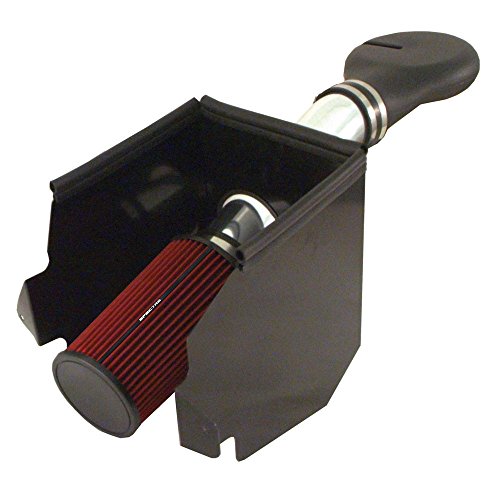
Want more from your Hellcat’s 717 horsepower? These bolt-on mods are the most popular:
 cold air intake Kit — FIPK Series Performance Upgrade” style=”width:90px;height:90px;object-fit:contain;border-radius:8px;flex-shrink:0;” loading=”lazy”>

As an Amazon Associate we earn from qualifying purchases.
🎯 Key Takeaways
- Standard Hellcat models:707-717 horsepower.
- Hellcat Redeye variants:Unleash 797 horsepower.
- Super Stock/Jailbreak:Top 807 horsepower.
- All use a supercharged 6.2L HEMI V8.
- Expect immense power and torque figures.
If you’re asking about the raw power of a Challenger Specifications on Wikipedia”>Dodge
Hellcat, you’re looking at horsepower figures that typically range from 707 HP to an astonishing 807 HP, depending on the specific Challenger or Charger model and its year. These numbers are not just impressive; they define a vehicle engineered for extreme performance, delivering mind-bending acceleration and an unmistakable roar from its supercharged HEMI V8 engine. Understanding these variations is crucial for appreciating the distinct performance capabilities each Hellcat iteration brings to the road or track.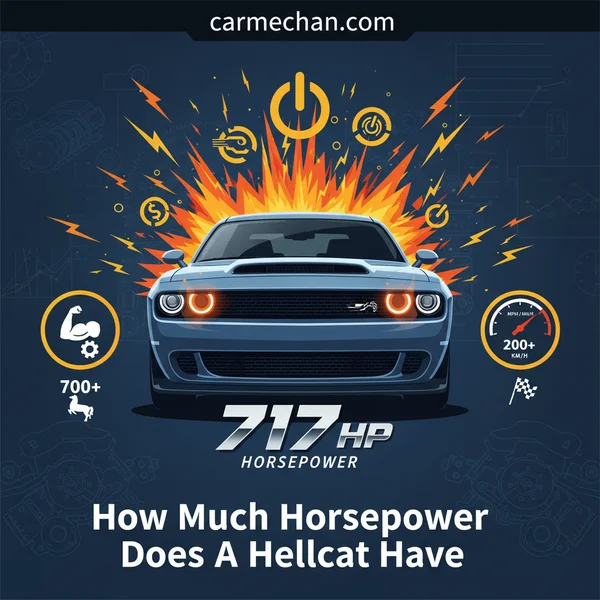
Knowing the precise horsepower output matters because it directly translates to how these powerful machines perform. Whether you’re a prospective buyer, an enthusiast, or simply curious, distinguishing between a standard Hellcat, a Redeye, or a Super Stock gives you a clearer picture of their capabilities. It highlights Dodge’s commitment to pushing performance boundaries, offering drivers a clear choice in extreme power levels and unique driving experiences.
Understanding Standard Hellcat Horsepower Outputs
The original Hellcat, whether a Dodge Challenger or Charger, burst onto the scene with a truly formidable power output that reset expectations for muscle cars. These foundational models established the benchmark for Hellcat performance, delivering incredible power directly from their supercharged HEMI V8 engines. The exact horsepower could vary slightly based on the model year, but always remained in a truly high-performance bracket.

The Initial 707 HP Benchmark
When the Dodge Challenger SRT Hellcat first launched in 2015, it immediately grabbed headlines with its groundbreaking power. It boasted a formidable 707 horsepower and an equally impressive 650 lb-ft of torque. This was an unprecedented level of power for a factory production muscle car. This output came courtesy of its 6.2-liter supercharged HEMI V8 engine, known internally as the “Hellcat engine.” The Charger SRT Hellcat, released shortly after, shared these exact same powertrain specifications. This combination allowed for incredible straight-line speed and a truly visceral driving experience. You were getting supercar-level power in a practical, four-seat package.
Evolution to 717 HP and Torque Figures
Over subsequent model years, Dodge subtly refined the Hellcat’s already potent formula. For instance, from the 2019 model year onwards, the standard Challenger and Charger SRT Hellcat models saw a slight bump in power. These versions now produced 717 horsepower and maintained a robust 650 lb-ft of torque. This minor increase showcased continuous optimization of the supercharged 6.2-liter HEMI V8. It wasn’t a radical change, but a testament to Dodge’s ongoing pursuit of performance refinement. Both the Challenger SRT Hellcat Widebody and the Charger SRT Hellcat continued to share these impressive specifications, solidifying their status as top-tier performance vehicles.
- 2015-2018 Hellcat (Challenger/Charger): 707 HP | 650 lb-ft Torque
- 2019+ Hellcat (Challenger/Charger): 717 HP | 650 lb-ft Torque
- Engine Type: Supercharged 6.2L HEMI V8
The Ultimate Hellcat Horsepower Walkthrough
Welcome to your definitive guide for uncovering the impressive horsepower figures of the Dodge Hellcat lineup. This guide will walk you through a detailed, step-by-step process to accurately identify the specific power output for various Hellcat models and understand the nuances that contribute to these legendary numbers. By following these instructions, you’ll gain a comprehensive understanding of what makes these supercharged beasts roar, ensuring you have the precise information you need.
Step 1: Deciphering the “Hellcat” Moniker: Understanding the Core Model
What you need: A basic understanding of automotive model hierarchies and the concept of engine trims.
Instructions: First, it’s crucial to understand that “Hellcat” refers to a specific high-performance trim level within the Dodge Challenger and Charger lineups, characterized by its supercharged 6.2-liter HEMI V8 engine. The original SRT Hellcat, introduced in 2015, immediately set a new benchmark for muscle cars with its astounding horsepower. This foundational model typically refers to the initial production variant before the introduction of more extreme iterations. Its power output was a staggering 707 horsepower (hp) at the crankshaft from 2015 to 2018. From the 2019 model year onwards, the base Hellcat saw a minor bump to 717 hp.
Pro Tip: Do not confuse the “Hellcat” with other powerful SRT trims like the Scat Pack, which utilizes a naturally aspirated 392 HEMI V8 and produces significantly less power (typically 485 hp). The presence of a supercharger whine is the immediate auditory giveaway for a Hellcat engine.
Step 2: Identifying Specific Models: Challenger vs. Charger and Trim Levels
What you need: Awareness of the different Hellcat variants (Redeye, Super Stock, Demon) and their distinct characteristics.
Instructions: The term “Hellcat” has evolved to encompass several ultra-high-performance variants. To pinpoint the exact horsepower, you must identify the specific model:
- Dodge Challenger/Charger SRT Hellcat: The original variant, producing 707 hp (2015-2018) or 717 hp (2019-present).
- Dodge Challenger/Charger SRT Hellcat Redeye: Introduced in 2019, featuring an engine derived from the Demon, it boasts 797 hp.
- Dodge Challenger SRT Super Stock: Launched in 2020, essentially a Redeye Widebody optimized for the drag strip, delivering 807 hp.
- Dodge Challenger SRT Demon: A limited-production, single-model-year (2018) drag-strip monster. It produces 808 hp on 91/93 octane pump gas and a monumental 840 hp when fueled with 100+ octane race gas and utilizing its specialized Powertrain Control Module (PCM).
Pro Tip: Pay close attention to fender badges and specific styling cues. Redeye models often feature a dual-snorkel hood and Redeye logos, while the Demon has unique Widebody flares and Demon-specific badging.
Step 3: Consulting Official Manufacturer Resources
What you need: Internet access and a few minutes of time.
Instructions: The most reliable source for a Hellcat’s horsepower is the manufacturer itself. Navigate to the official Dodge website (www.dodge.com). Look for sections like “Current Vehicles,” “Build & Price,” or “Specifications.” Once you locate the Challenger or Charger models, you can typically select the specific SRT Hellcat trim and view its detailed specifications, including engine output. The website will clearly list the horsepower and torque figures for each variant, often broken down by model year. This method provides the exact, officially published crank horsepower directly from the source.
Pro Tip: Always prioritize the manufacturer’s official website over third-party sites or forums, as this ensures the information is current and accurate, reflecting any minor updates or changes made during a model year.
Step 4: Cross-Referencing with Reputable Automotive Publications
What you need: Internet access and a critical eye for credible information sources.
Instructions: After consulting the official Dodge website, cross-reference this information with well-established and respected automotive publications. Websites like MotorTrend (www.motortrend.com), Car and Driver (www.caranddriver.com), and Edmunds (www.edmunds.com) consistently review and publish detailed specifications for new vehicles, including specific horsepower figures. Use their search functions to look for “Dodge Challenger Hellcat horsepower [model year]” or “Dodge Charger Hellcat Redeye specifications.” These sources not only confirm manufacturer claims but often provide real-world test results and comparisons, adding depth to your understanding.
Pro Tip: Be selective about your sources. Avoid forums, unverified blogs, or social media posts as primary information providers. Stick to professional automotive journalists and established review sites that have a proven track record of accuracy and unbiased reporting.
Step 5: Understanding Model Year Evolution
What you need: An awareness that vehicle specifications can change over time.
Instructions: The horsepower of a “Hellcat” isn’t a static number across all years. As noted in Step 1, the base Hellcat saw an increase from 707 hp to 717 hp starting in the 2019 model year. New variants like the Redeye (797 hp) were introduced in 2019, the Super Stock (807 hp) in 2020, and the Demon was a singular 2018 model. When researching, always specify the exact model year to ensure you’re getting the correct horsepower figure for that particular vehicle. For example, a “2016 Challenger Hellcat” will have different stated horsepower than a “2020 Challenger Hellcat Redeye.” This attention to detail is critical for accurate identification.
Pro Tip: When discussing or comparing Hellcat horsepower, always include the model year (e.g., “a 2017 Hellcat” or “a 2021 Hellcat Redeye”). This precision eliminates ambiguity and ensures everyone understands exactly which variant and its corresponding power output is being referenced.
Step 6: The Fuel Factor: How Octane Affects Stated Power
What you need: Basic knowledge of automotive fuels and their octane ratings.
Instructions: For optimal performance and to achieve the stated horsepower figures, all Hellcat models require premium unleaded gasoline with an octane rating of 91 or higher. The engine’s computer (ECU) is tuned to take advantage of higher octane fuel, which resists pre-ignition (knock) under high compression and supercharger boost. Using lower octane fuel can cause the ECU to retard ignition timing to protect the engine, resulting in a noticeable decrease in horsepower and potential long-term damage. For the Challenger SRT Demon, achieving its full 840 hp specifically requires 100+ octane race fuel (via the Demon Crate’s performance PCM), whereas it produces 808 hp on 91/93 octane pump gas.
Pro Tip: Always adhere strictly to the fuel recommendations found in your vehicle’s owner’s manual. While a Hellcat might run on lower octane fuel, it will not produce its maximum stated horsepower and could experience increased wear or long-term engine issues.
Step 7: Distinguishing Crank Horsepower vs. Wheel Horsepower
What you need: An understanding of how horsepower is measured and reported.
Instructions: It’s important to differentiate between “crank horsepower” (bhp – brake horsepower) and “wheel horsepower” (whp). The horsepower figures quoted by Dodge (707, 717, 797, 807, 808, 840 hp) are all crank horsepower measurements, taken directly at the engine’s crankshaft without any drivetrain components attached. When this power is transmitted through the transmission, driveshaft, differential, and axles to the wheels, some energy is inevitably lost due to friction and parasitic drag. This typically results in a 10-15% loss, meaning the horsepower measured at the wheels (whp) will be lower than the stated crank horsepower. For example, a 717 hp Hellcat might put down approximately 600-650 whp on a dynamometer.
Pro Tip: Never directly compare published crank horsepower figures to dyno-measured wheel horsepower numbers. These are two distinct measurements, and confusing them can lead to misunderstandings about a vehicle’s true performance capabilities.
Step 8: Verifying with Your Vehicle’s Documentation
What you need: Your vehicle’s owner’s manual or the Vehicle Identification Number (VIN).
Instructions: If you own a Hellcat, the most definitive source for its specific stock horsepower rating is its own documentation. Consult the owner’s manual, typically found in the glove compartment, under the “Specifications” or “Engine” section. This will provide the precise factory-rated horsepower for your exact model and year. Alternatively, you can use your car’s VIN (Vehicle Identification Number) to look up detailed factory specifications. While some online VIN decoders might offer engine details, for specific horsepower figures, the owner’s manual or contacting a Dodge dealership with your VIN will yield the most accurate results for your individual vehicle.
Pro Tip: Keep your owner’s manual safe and accessible. It’s an invaluable resource for all your vehicle’s specifications, maintenance schedules, and operational details, providing certainty beyond internet searches.
✅ Final Checklist
- ✅ Confirmed the specific Hellcat model (e.g., Challenger SRT Hellcat, Charger Hellcat Redeye, Demon).
- ✅ Identified the precise model year of the vehicle in question.
- ✅ Understood the critical role of fuel octane in achieving peak horsepower.
- ✅ Distinguished between manufacturer-stated crank horsepower and dyno-measured wheel horsepower.
- ✅ Cross-referenced information from at least two reputable sources (Dodge official site, major automotive publication).
Important Notes:
- Safety Considerations: The power output of Hellcat vehicles is extreme. Always exercise caution and respect their capabilities, especially on public roads. Aggressive driving can be dangerous.
- When to Seek Professional Help: If you are considering aftermarket modifications to increase horsepower beyond factory specifications, always consult with experienced performance shops or tuners specializing in Hellcat platforms. Improper modifications can lead to severe engine damage or compromise safety.
- Estimated Time and Cost Range: This guide’s research steps can be completed in approximately 15-30 minutes and are entirely free. If you wish to verify actual wheel horsepower, a dyno test typically costs between $100-$250, depending on the facility and services included.
Exploring Hellcat Redeye and Widebody Power
While the standard Hellcat was already an extreme machine, Dodge pushed the boundaries even further with the introduction of the Redeye and specialized Widebody variants. These models weren’t just about wider tires; they incorporated significant engine enhancements to deliver truly astonishing horsepower figures, setting new benchmarks for street-legal performance.

Unleashing the Hellcat Redeye: 797 HP
The Dodge Challenger SRT Hellcat Redeye, introduced for the 2019 model year, took Hellcat power to an entirely new level. It wasn’t just an upgrade; it borrowed significant components from the limited-production Demon. The Redeye model packed an astounding 797 horsepower and 707 lb-ft of torque. This massive power increase came from an enhanced version of the supercharged 6.2-liter HEMI V8 engine, featuring a larger supercharger, stronger internals, and a higher redline. You could feel the difference immediately, as the Redeye delivered an even more brutal acceleration experience. Later, the Charger SRT Hellcat Redeye also joined the lineup, sharing these exact, incredible power figures.
Super Stock and Jailbreak: The 807 HP Pinnacle
For those seeking the absolute pinnacle of Hellcat power in a production vehicle, Dodge introduced models like the Challenger SRT Super Stock and later the Jailbreak editions. The Challenger SRT Super Stock, launched in 2020, was essentially a drag-strip optimized variant of the Redeye. It boasted an incredible 807 horsepower and maintained 707 lb-ft of torque, making it the most powerful production Hellcat at the time. This power increase was achieved through fine-tuning and calibration, specifically designed for optimal performance on 100+ octane fuel when certain conditions were met. The Jailbreak models, available for both Challenger and Charger, also offered this peak 807 horsepower, allowing for unprecedented customization alongside ultimate power.
- Challenger/Charger SRT Hellcat Redeye: 797 HP | 707 lb-ft Torque
- Challenger SRT Super Stock: 807 HP | 707 lb-ft Torque
- Challenger/Charger SRT Hellcat Jailbreak: 807 HP | 707 lb-ft Torque
- Engine Type: Enhanced Supercharged 6.2L HEMI V8
The Ultimate: Super Stock and Jailbreak Horsepower
While the standard Hellcat and Redeye models deliver staggering power, Dodge pushed the boundaries even further with special editions designed for specific performance goals or ultimate customization. These models represent the pinnacle of Hellcat horsepower, often sharing the highest output figures.
Dodge Challenger SRT Super Stock: Built for the Strip
For those who craved raw, drag-strip dominance straight from the factory, the Dodge Challenger SRT Super Stock was the answer. Released as a limited-production model, it took the already formidable Redeye engine and squeezed out every last drop of performance.
- Horsepower: The Super Stock boasts an incredible 807 horsepower.
- Design Philosophy: It was specifically engineered for drag racing, featuring lightweight 18-inch wheels, sticky Nitto NT05R drag radials, and a revised suspension setup tuned for optimal launch and weight transfer.
- Key Feature: While sharing the Redeye’s supercharged 6.2L HEMI V8, the Super Stock achieved its extra horsepower through a calibration tweak that maximized output on premium fuel, making it a true street-legal drag monster.
This car wasn’t just about horsepower; it was about the entire package working in harmony to deliver mind-bending acceleration, allowing it to cover the quarter-mile in under 10.5 seconds.
Dodge Challenger/Charger Hellcat Jailbreak: Unleashing Customization and Power
The Jailbreak models, introduced for the 2022 model year, offered something unique: unprecedented factory customization options combined with a horsepower bump for Redeye models. It’s about personal expression without sacrificing a shred of performance.
- Horsepower: For Redeye Jailbreak models, output climbs to the same 807 horsepower as the Super Stock. Standard Hellcat Jailbreaks maintain their respective 717 HP or 797 HP (for the Redeye version).
- Customization: The Jailbreak program truly shines in its extensive palette of colors, finishes, and options, allowing owners to create a truly one-of-a-kind Hellcat. This includes unique paint colors, interior schemes, wheel designs, and even brake caliper colors.
- Performance Advantage: The power increase for the Redeye Jailbreak comes from a specific powertrain calibration, ensuring that while you’re customizing your ride, you’re also getting the absolute maximum factory output available.
The Jailbreak demonstrated Dodge’s commitment to giving enthusiasts not just power, but also the freedom to tailor their high-performance machine to their exact desires.
Key Factors Influencing Hellcat Performance
While the advertised horsepower figures are impressive, a Hellcat’s real-world performance can be influenced by several external and internal factors. Understanding these can help you maximize your beast’s potential.
Fuel, Temperature, and Altitude: The Performance Triangle
The environment and what you feed your Hellcat play a significant role in how much power it truly puts down.
- Fuel Quality: All Hellcats are designed to run on premium 91+ octane fuel. Using lower octane fuel can lead to the engine’s computer retarding timing to prevent detonation, which directly reduces horsepower and torque. Always use the recommended fuel for optimal performance.
- Ambient Temperature: Supercharged engines love cool air. Colder, denser air contains more oxygen, allowing the engine to make more power. Conversely, hot weather can cause performance to drop slightly as the engine works harder to cool the incoming air charge. This is why a Hellcat might feel even more powerful on a crisp, cool evening.
- Altitude: Thinner air at higher altitudes means less oxygen available for combustion. While a supercharger helps force air into the engine, it still can’t completely overcome the effects of very high altitudes, which can lead to a slight reduction in overall power compared to sea level.
For peak performance, try to run your Hellcat in cooler conditions with a tank full of fresh, high-octane fuel.
Maintenance, Modifications, and Driver Skill
Beyond environmental factors, how you care for and drive your Hellcat also impacts its performance.
- Regular Maintenance: Keeping up with routine maintenance, such as oil changes, spark plug replacements, and air filter checks, ensures your engine runs efficiently and produces its advertised power consistently. A neglected engine won’t perform its best.
- Aftermarket Modifications: Many Hellcat owners choose to modify their vehicles for even more power. Common upgrades include cold air intakes, smaller supercharger pulleys (to increase boost), and custom engine tunes. However, it’s crucial to choose reputable tuners and quality parts, as improper modifications can damage the engine or even reduce reliability.
- Driver Skill: Horsepower is only one part of the equation. Effectively launching a Hellcat and managing its immense power requires considerable driver skill. Getting the tires to hook up, managing traction control, and knowing how to utilize the car’s various drive modes (e.g., Track mode) are critical for putting all that power to the pavement efficiently and safely.
A well-maintained Hellcat in the hands of a skilled driver will always outperform one that isn’t, regardless of its peak horsepower figure.
Conclusion
The Dodge Challenger and Charger Hellcat models stand as monumental achievements in automotive performance, offering a staggering range of horsepower from the robust 717 HP of the standard models to the astonishing 807 HP found in the Super Stock and Redeye Jailbreak editions. Each variant brings its unique blend of power, purpose, and personality, catering to different enthusiasts’ desires. Understanding the specific horsepower of each model, along with factors like fuel quality, temperature, and maintenance, is key to appreciating and maximizing these incredible machines.
Ready to feel the roar for yourself? Research the various Hellcat models to find the perfect blend of power and features that speaks to you. Unleash the beast and find your perfect Hellcat experience!
❓ Frequently Asked Questions
Can you detail the horsepower figures for different Dodge Hellcat models across the years?
The initial Dodge Hellcat models from 2015-2018 produced 707 horsepower. From 2019 onwards, the standard Hellcat increased slightly to 717 horsepower, while the Hellcat Redeye debuted with 797 horsepower, and later Super Stock/Jailbreak models reached 807 horsepower.
What are the torque figures associated with the Hellcat’s horsepower?
Along with their impressive horsepower, Hellcat models also produce substantial torque. The standard Hellcat generates 650 lb-ft of torque, while Redeye, Super Stock, and Jailbreak versions increase this to 707 lb-ft.
What specific modifications allow Hellcat Redeye and Super Stock models to produce more horsepower?
Redeye and Super Stock models feature a larger 2.7-liter supercharger, stronger internals like reinforced connecting rods and pistons, a higher-revving engine, and an improved fuel system compared to the standard Hellcat. These enhancements allow for greater boost pressure and power output.
Is the Hellcat’s horsepower measured at the engine or at the wheels?
The advertised horsepower figures for all Dodge Hellcat models are measured at the crank (engine output) by the manufacturer. Wheel horsepower, which is what actually reaches the ground, is typically lower due to drivetrain losses, usually ranging from 10-15% less.
How does the Hellcat’s horsepower compare to other high-performance muscle cars?
The Hellcat’s horsepower figures place it at the very top tier of production muscle cars, surpassing many competitors like the Ford Mustang Shelby GT500 and Chevrolet Camaro ZL1 in sheer power output, especially with its Redeye and Super Stock variants. It’s often considered one of the most powerful factory muscle cars ever.
Does the horsepower output vary between the Challenger and Charger Hellcat models?
No, for any given model year and trim level (e.g., standard Hellcat, Redeye), the Dodge Challenger and Charger Hellcat variants share the exact same supercharged 6.2L HEMI V8 engine and therefore produce identical horsepower and torque figures. The differences lie in their body styles and slight weight variations.