Can You Use Car Oil in a Lawn Mower? Yes, With Limits in 2026
Last Updated on August 22, 2026 by Ryan
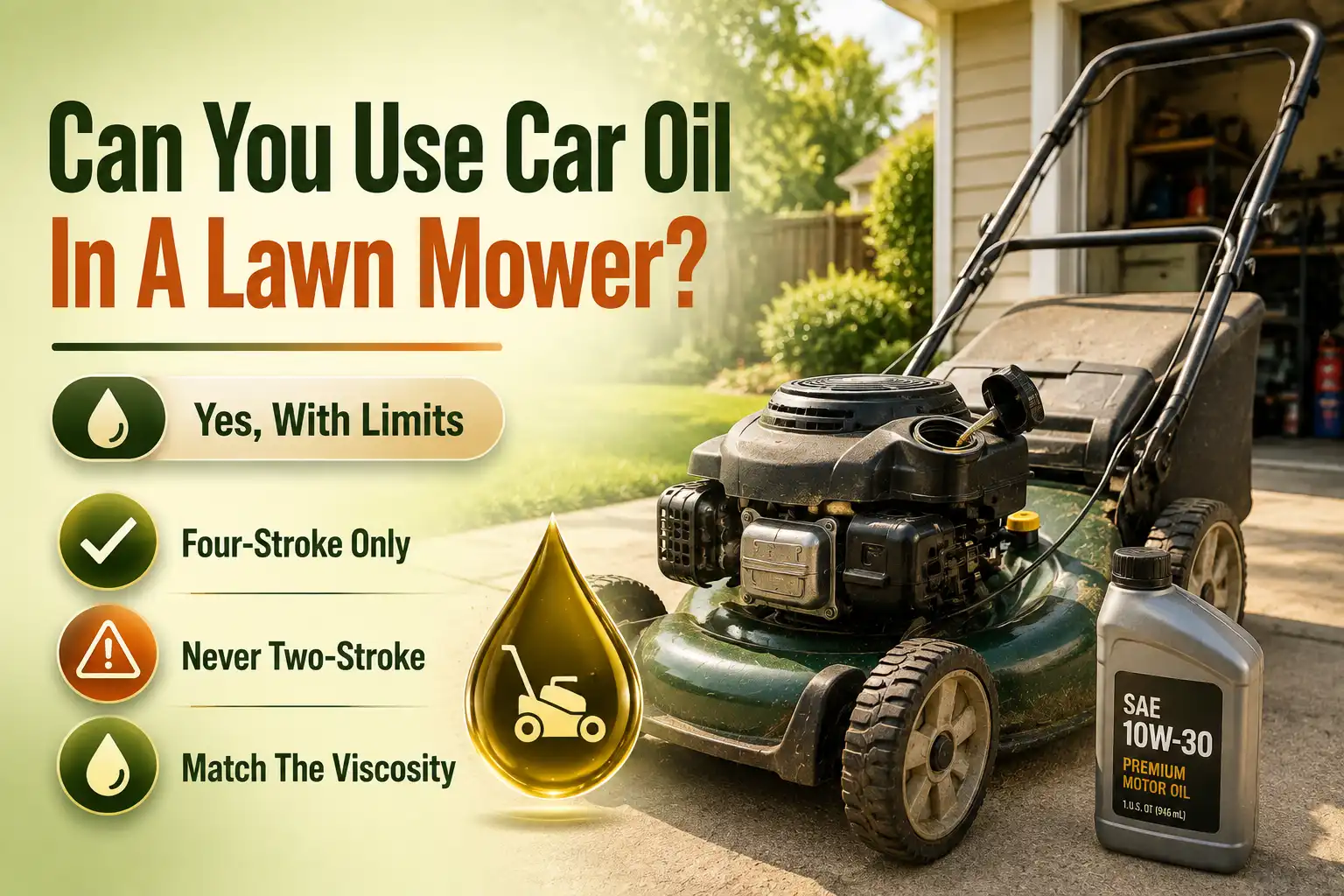
Yes, car oil can work in a four-stroke lawn mower engine as a temporary fix, as long as the viscosity matches what your mower calls for. It’s a different story for two-stroke engines, where car oil should never be used, since those engines mix oil directly with the fuel rather than running it separately like a car does.

Prime for Young Adults — 6 Months Free
Students and 18–24s get six months of Prime free, then half price.
Start 6 Months FreeEven in a four-stroke mower where it technically works, car oil isn’t a long-term substitute for dedicated small engine oil. Here’s why the formulation actually matters, when reaching for that bottle in your garage is genuinely fine, and what to do if you’ve already used it, whether that was intentional or an honest mistake in the shed.
Four-Stroke Versus Two-Stroke Matters First
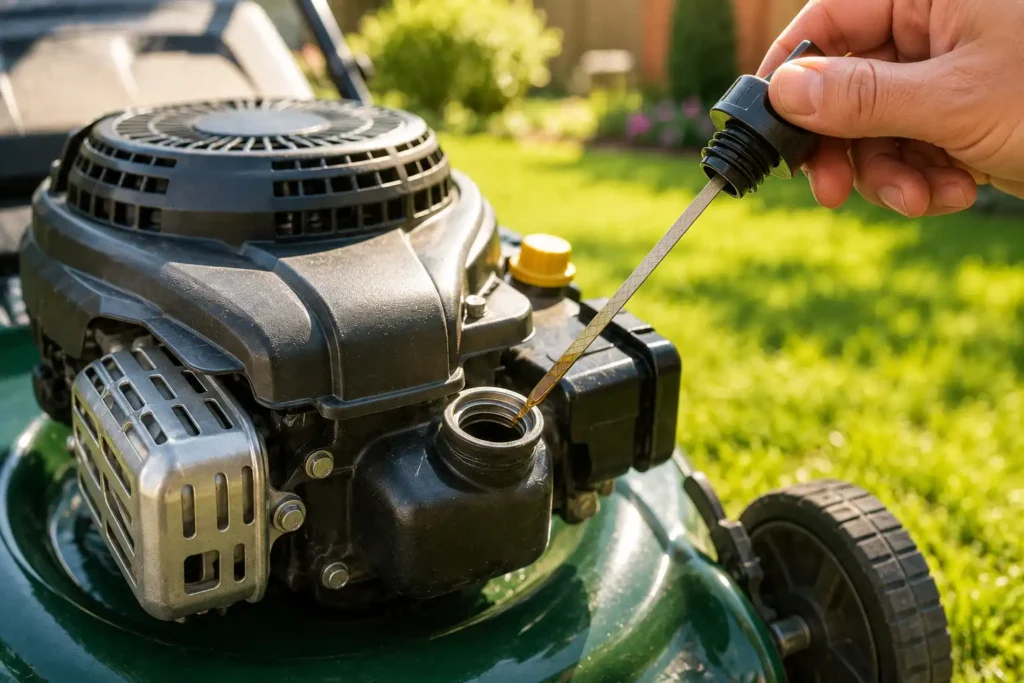
Before anything else, you need to know which type of engine your mower has, since the answer is completely different depending on it. Four-stroke engines run oil and gas separately, filling and draining through a dedicated oil reservoir, much like a car’s engine does. This is the type of mower engine where car oil is at least a workable option, and it’s what the majority of standard walk-behind mowers use.
Two-stroke engines work differently entirely. They mix oil directly into the fuel, and that oil is burned along with the gas rather than circulating through a separate lubrication system. Two-stroke engines rely on oil specifically formulated for that fuel-oil mix, and standard automotive engine oil is not appropriate here regardless of viscosity, since it isn’t designed to be burned in the combustion chamber alongside gasoline.
If you’re not sure which type you have, check your mower’s manual or look for a separate oil fill cap and dipstick, which indicates a four-stroke engine. A single fuel tank with no separate oil reservoir usually means it’s a two-stroke, common on smaller handheld equipment like trimmers and some older or lighter-duty mowers.
Why Car Oil Isn’t Ideal Even When It Works
Even in a compatible four-stroke mower, car oil and dedicated small engine oil aren’t formulated the same way, and the difference comes down to more than just viscosity numbers matching up. A repair-focused resource on this topic explains that car engines run at relatively consistent temperatures with sophisticated cooling systems, while lawn mower engines operate in more extreme conditions with basic air cooling, which means the additive packages each oil relies on are built for genuinely different jobs.
Zinc content, specifically zinc dialkyldithiophosphate or ZDDP, is one of the clearer examples. A small engine specialist notes that some mower oils are higher in zinc to support the higher operating temperatures of air-cooled systems, while car oils sometimes reduce zinc for emissions compliance, which can leave a mower engine less protected over time than it would be with oil designed specifically for it.
Automotive oil’s detergents and friction modifiers, tuned for a liquid-cooled engine’s needs, can also behave differently in a simpler air-cooled mower engine, sometimes foaming or reducing lubrication effectiveness rather than helping. None of this causes immediate damage from a single use, but it does explain why repair shops consistently recommend switching back to dedicated oil for ongoing maintenance.
When It’s Genuinely Fine To Use Car Oil
Recommended Best Deal Products

- It’s a genuine one-time emergency: The mower is critically low on oil and no dedicated small engine oil is available before you need to mow.
- The engine is confirmed four-stroke: A separate oil fill and dipstick, not a fuel-oil mix.
- The viscosity matches: SAE 30 or 10W-30 car oil lines up with what most gas lawn mowers are designed to run.
- You plan to switch back: This is a stopgap, not your new regular maintenance routine.
If all four of these apply, using what’s in your garage rather than running the engine dry or skipping a mow is a reasonable call, and it’s the exact scenario most people are actually facing when they search this question in the first place.

Audible — Listen Free for 30 Days
One free credit a month and thousands of titles included.
Listen Free for 30 DaysHow To Check What Your Mower Actually Needs
Check your mower’s owner’s manual or look at the oil fill cap itself, which often lists the recommended viscosity directly. Most modern four-stroke lawn mowers specify SAE 30 for standard use, with some accepting 10W-30 for a wider temperature range across seasons, particularly in climates with cold spring starts.
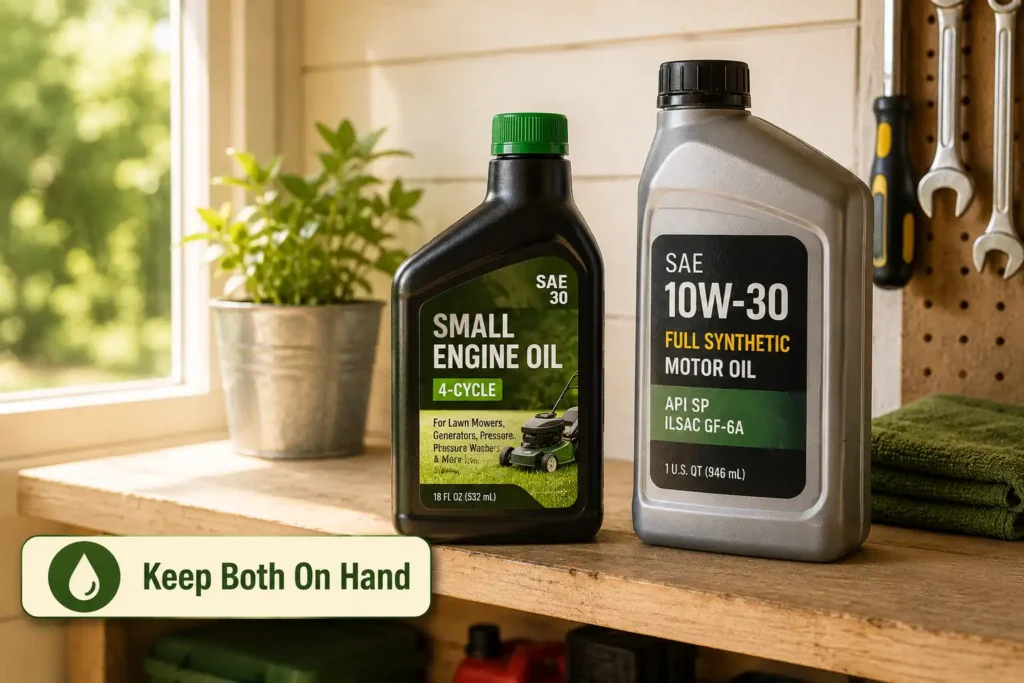
Dedicated small engine oil is inexpensive, typically available at any hardware store or home center, and keeping a bottle on hand alongside your car oil avoids this dilemma entirely the next time your mower needs a top-off or a full change. A small container lasts most homeowners several seasons, making it a low-cost way to sidestep the whole question going forward.
What To Do If You’ve Already Used Car Oil
A single fill-up with the correct viscosity car oil in a four-stroke engine isn’t cause for alarm. Watch for unusual exhaust smoke, rough running, or performance changes over the next few uses, which would be worth investigating further if they appear.
At your next scheduled oil change, switch to proper small engine oil rather than continuing the substitution as a habit. One tank of the wrong formulation is a minor tradeoff; repeated use over an entire mowing season is where the additive and cooling differences are more likely to catch up with the engine, particularly during the hottest stretches of summer use when the mower is already working harder than usual.
Car Oil In A Lawn Mower Quick Reference
| Engine Type | Car Oil OK | Notes |
|---|---|---|
| Four-stroke, one-time emergency | Yes | Match viscosity, switch back next change |
| Four-stroke, regular ongoing use | Not recommended | Additive and zinc differences add up over time |
| Two-stroke, any situation | No | Requires dedicated fuel-mix oil, not car oil |
Car Oil In Lawn Mower FAQ
Does synthetic car oil work better than conventional in a mower?
Synthetic 5W-30 car oil is often considered a reasonable all-temperature option if used temporarily, since it handles a wider range of conditions than conventional oil. It still carries the same additive formulation differences as conventional car oil, so it’s not a long-term fix either, just a slightly better short-term choice if you have both options in the garage. If you’re weighing synthetic options for your car itself, our guide to the best synthetic oil for high mileage engines covers what to look for there.
How often should lawn mower oil actually be changed?
Most manufacturers recommend changing mower oil roughly once per mowing season at minimum, and more often in dusty or high-use conditions. Checking your specific mower’s manual gives the most accurate interval for your model, since some manufacturers recommend changes based on hours of use rather than a calendar timeline, similar to how heavy-duty equipment is often serviced. If you’re also wondering about your car’s oil change schedule, our guide on how often to change synthetic oil covers that separate but related question.
Can the wrong oil void a mower warranty?
Potentially, yes, particularly if a manufacturer can trace engine damage back to using an oil type outside their specifications. Sticking with the manual’s recommended oil protects both the engine and any active warranty coverage, which matters more on a newer mower still under its original coverage period, especially for higher-end zero-turn or riding models.
Is SAE 30 the same thing as 10W-30?
No. SAE 30 is a single-grade oil that behaves the same across a narrower temperature range, while 10W-30 is a multi-grade oil that adjusts its flow characteristics between cold starts and operating temperature. Many mowers accept either, but the manual will specify which is preferred for your climate and typical mowing conditions. If you’re curious about mixing different viscosity grades in general, our guide on mixing 0W-20 and 5W-30 covers the same underlying principles that apply here.
Can you use old or used car oil in a mower?
No. Used oil has already broken down and picked up contaminants from its time in your car’s engine, so it offers far less protection even if the viscosity still matches. Only use fresh, unused oil, whether it’s car oil in an emergency or dedicated small engine oil for a proper change, since old oil defeats the purpose of topping off in the first place.
Audible Premium Plus — Annual Membership
12 audiobook credits up front, plus the full Audible catalogue.
See Annual PlansCar oil works as a genuine emergency fix in a four-stroke lawn mower, as long as the viscosity matches and you switch back to proper small engine oil at the next change. It’s never appropriate for a two-stroke engine, which needs oil specifically formulated to mix with fuel. Keeping a bottle of the correct small engine oil in your garage is the simplest way to avoid needing to make this call at all, and it costs less than most people expect for the peace of mind it provides.