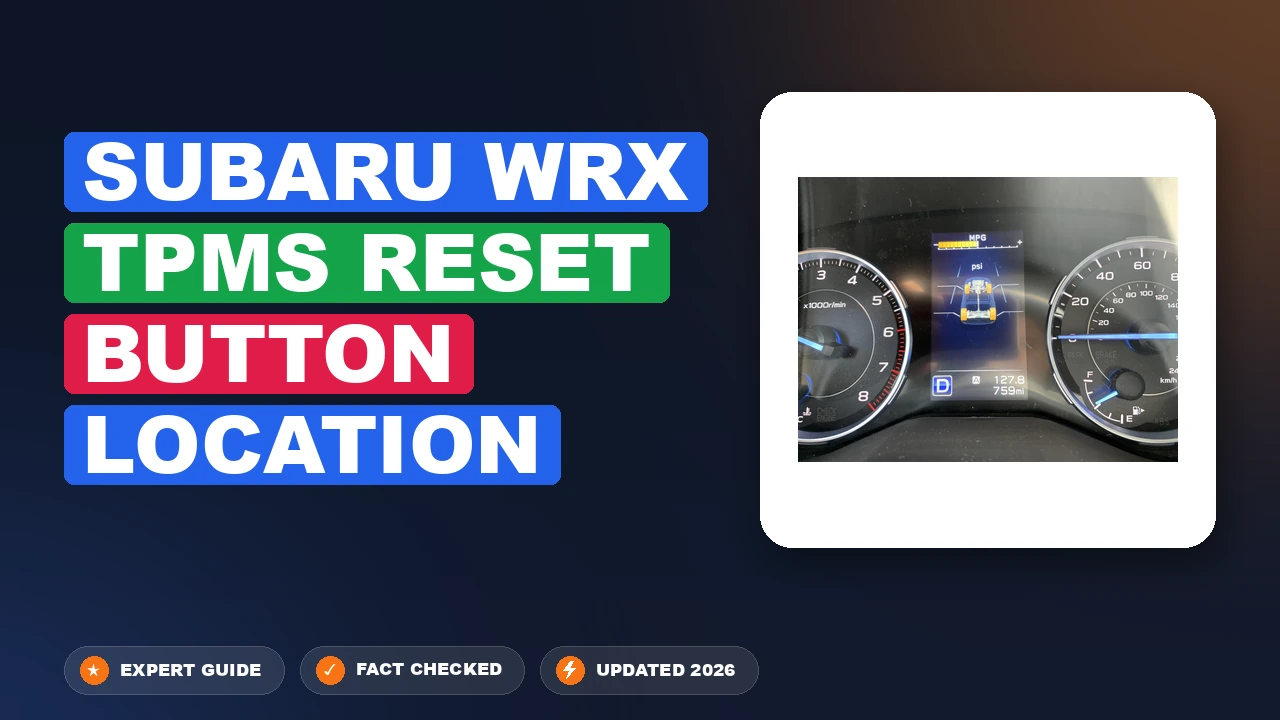
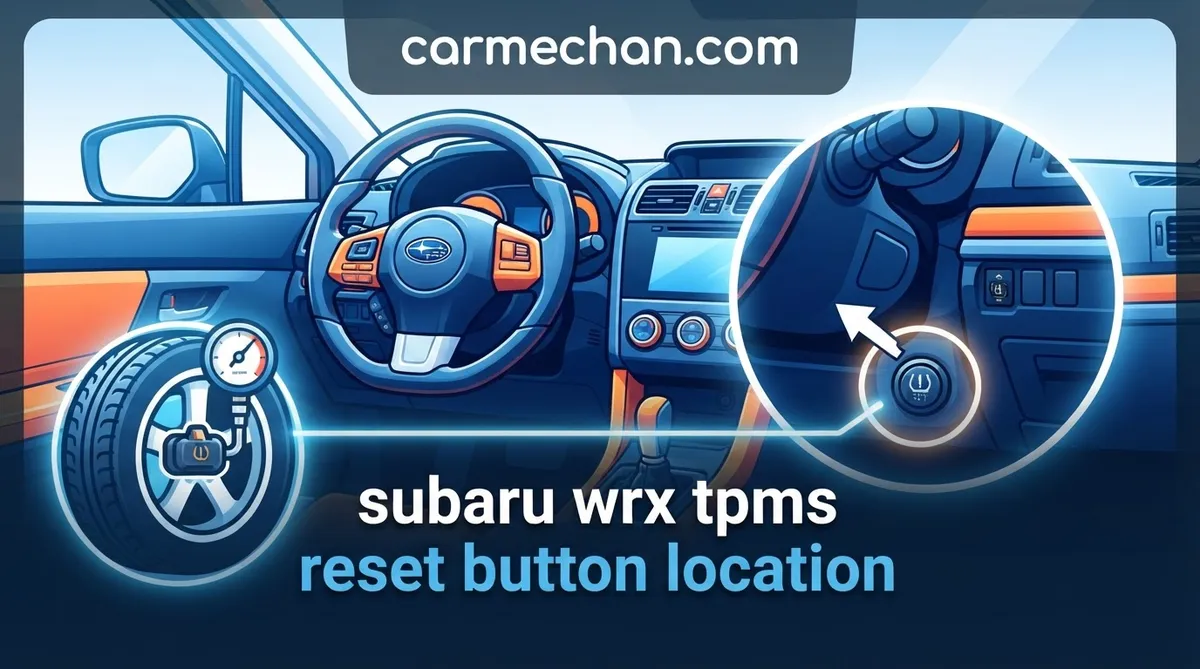
Subaru WRX TPMS Reset Button Location: Located & Clarified
Seeing a flashing or solid Tire Pressure Monitoring System (TPMS) light on your Subaru WRX dashboard can be frustrating, especially when you cannot find a manual way to turn it off. Many drivers waste hours hunting for a physical “reset button” that simply does not exist in modern Subaru architecture. In this guide, we clarify exactly how your TPMS functions, why you cannot find a manual override, and the precise steps required to clear your dashboard alerts for good.

Decoding Your Subaru WRX TPMS Warning Indicators
Recommended Best Deal Products


📤 Share Image
Solid vs. Flashing Warning Light Indicators
The TPMS dashboard icon serves two distinct purposes. A solid light indicates that one or more of your tires are significantly under-inflated—typically 25% or more below the recommended cold inflation pressure. This is a pressure-based alert. In contrast, a flashing warning light that remains illuminated after 60–90 seconds of driving signifies a system malfunction. This usually points to a failed valve stem sensor, a dead sensor battery, or an issue within the TPMS control module itself.

Common Causes for System Activation
Environmental factors play a massive role in TPMS sensitivity. Research indicates that for every 10-degree Fahrenheit drop in ambient temperature, tire pressure can decrease by approximately 1 PSI. In the performance-oriented environment of a Subaru WRX, these fluctuations often push tires below the threshold required by the ECU, triggering the light on cold mornings. Other common culprits include:
- Punctures or slow leaks: Even minor debris can cause a pressure drop over time.
- Dead sensor batteries: These internal batteries typically last 7–10 years; once they fail, the entire sensor must be replaced.
- Over-inflation pitfalls: Many owners mistakenly over-inflate tires to force the light off, which compromises handling and tire wear, and rarely fixes the underlying issue.
By The Numbers
Common threshold drop for warning activation
Expected sensor battery lifespan
The Truth About the Subaru WRX TPMS Reset Button Location
Why Your Vehicle Lacks a Manual Reset Button
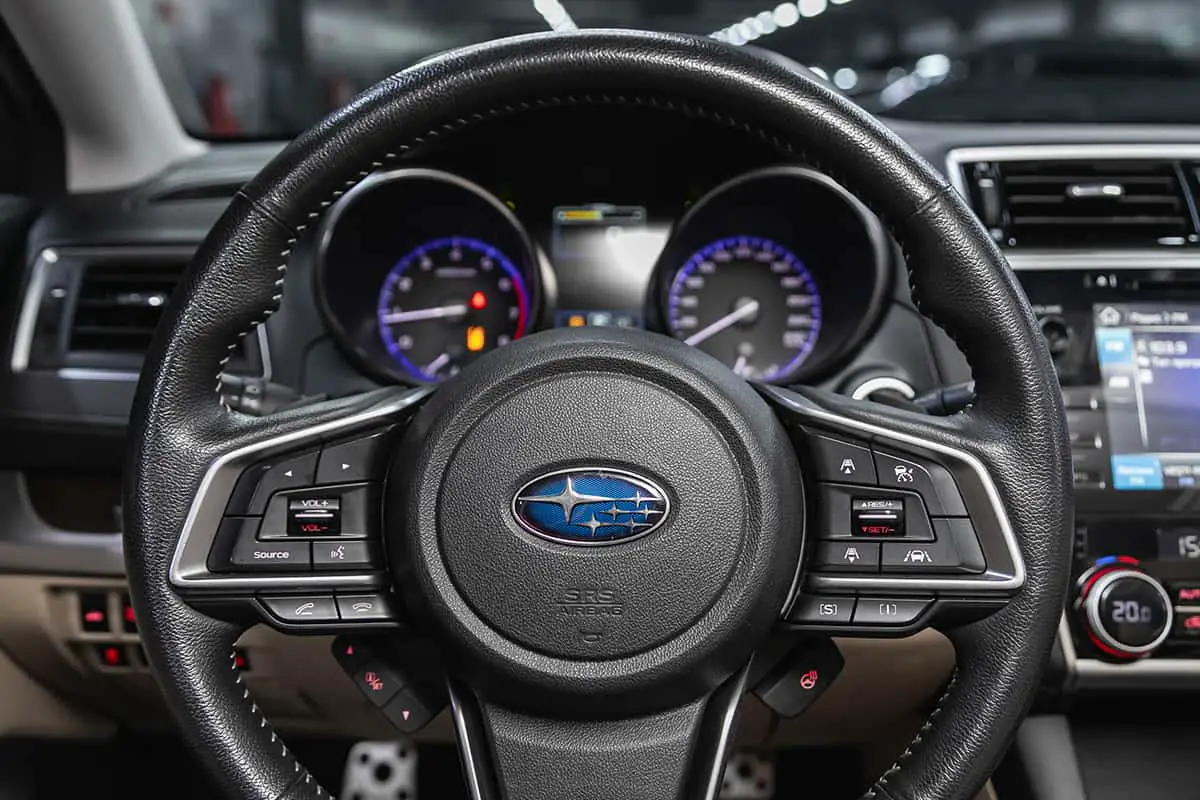
Users frequently hunt for a button under the steering column or inside the glovebox, a design feature common in older Toyota or Lexus models. However, modern Subaru engineering has moved toward fully automated systems. The Subaru WRX uses a direct TPMS that relies on individual sensors in each wheel to transmit data via 315-433 MHz radio frequencies. There is no manual “reset” because the vehicle is designed to “learn” the sensors automatically as it receives signals from them.
Understanding TPMS Control Module Automation
The TPMS control module acts as the brain of the operation, constantly listening for sensor pings. When you perform a fresh start—such as rotating your tires or installing new wheels—the control module detects the new signal signatures without needing an initialization button. If you are struggling to find a button, rest assured: the absence of one is intentional. The system is meant to provide a maintenance-free experience, assuming the hardware remains in good working order.
How to Perform a Subaru WRX TPMS Calibration
Recommended Best Deal Products


📋
Step-by-Step Guide
Use a high-quality, calibrated tire pressure gauge to check all four tires when they are cold. Never rely on the dashboard readout alone to calibrate the system.
Inflate every tire to the specific PSI found on the door jamb placard. Note that the WRX often requires different pressures for the front and rear axles.
Drive your vehicle at speeds consistently above 20–30 mph for at least 10–20 minutes. This sustained motion triggers the TPMS learn mode, allowing the sensors to sync with the ECU and restore normal function.
Troubleshooting Subaru WRX TPMS Hardware Failures
Recommended Best Deal Products


If the light remains illuminated after the drive cycle, you are likely dealing with a hardware failure rather than a pressure issue. Use these guidelines to move forward:

Audible — Listen Free for 30 Days
One free credit a month and thousands of titles included.
Listen Free for 30 Days- Use an OBD-II Scanner: Professional-grade diagnostic tools can communicate directly with the TPMS module to display specific error codes. This will confirm exactly which sensor is failing or if the system has lost its backup pairing data.
- Tire Shop Verification: A specialized tire shop will use a handheld “trigger tool” to wake up each sensor. If a sensor fails to respond, its internal battery is dead, and the unit requires replacement.
- Aftermarket Wheel Challenges: Many aftermarket wheels do not accommodate the factory valve stem sensor properly. If you recently changed wheels, ensure your new setup is compatible with direct TPMS sensors, or you will have a permanent dash light.
- The Spare Tire Trap: Some drivers forget that a full-size spare may have its own TPMS sensor. If that tire is flat, it can trigger the system even if your road tires are perfect.
Never ignore a flashing TPMS light. While a solid light is a warning, a flashing light is a system fault that effectively renders your TPMS inactive. You will have no warning if a tire loses pressure while driving in this state.
Conclusion: Managing Your TPMS System
Successfully navigating the Subaru WRX TPMS warning requires understanding that you are not looking for a mechanical button, but rather a digital handshake between your sensors and the car’s computer. There is no physical reset button in the WRX; the system relies on manual pressure adjustment and a subsequent drive-cycle to initialize and clear the light.
By keeping your tires at the correct factory specification and acknowledging that persistent flashing lights indicate hardware failure, you maintain the safety and performance of your vehicle. If your tires are confirmed to be at the correct PSI and the light persists after a long drive, visit a tire professional to scan for faulty sensor batteries. Addressing this promptly ensures your vehicle remains reliable and road-ready.
Subaru Wrx Tpms Reset Button Location: Frequently Asked Questions
Can I reset the TPMS if I changed my wheels?
If you installed new wheels with new sensors, the vehicle’s ECU must be programmed to recognize the unique IDs of those new sensors using an OBDII scan tool. A standard drive cycle will not suffice if the system has not been paired with the specific IDs of the new hardware installed by a professional tire shop.
Will the light turn off automatically after I add air?
Yes, in most cases, the light will turn off automatically. Once you have inflated the tires to the recommended factory PSI and driven the vehicle at speeds consistently above 20 mph for approximately 10 minutes, the sensors will transmit the new pressure data to the ECU, and the system will clear the warning light without further input.
What does a flashing TPMS light mean?
A flashing TPMS light indicates a fault within the system itself rather than low tire pressure. This could mean a sensor has failed, the battery inside a sensor is dead, or there is a communication error between the sensors and the receiver module. A professional diagnostic tool is required to pull the specific fault code to determine the exact component failure.
Do I need to visit a dealership to reset my TPMS?
No, you generally do not need a dealership for a standard reset. If your pressures are correct and the tires are original, a simple drive cycle is the standard procedure. If you are using aftermarket wheels or winter tires without pre-programmed sensors, you will need to visit a local tire shop that has the equipment to clone or program the new sensors.
Does cold weather affect the TPMS light?
Yes, ambient temperature drops often trigger the TPMS light. Air contracts in cold weather, leading to a drop in PSI. Even if your tires were properly inflated in the summer, a significant winter temperature drop can trigger the sensors. Always check your pressures in the morning when the tires are ‘cold’ to ensure they meet factory specifications.
Audible Premium Plus — Annual Membership
12 audiobook credits up front, plus the full Audible catalogue.
See Annual Plans