2011 Acura MDX TPMS Reset Button Location Expert 2026 Fix
There is no physical TPMS reset button inside the 2011 Acura MDX. The system is designed to automatically calibrate once the correct tire pressures are set and the vehicle completes a specific drive cycle.
Your 2011 Acura MDX does not have a physical TPMS reset button, regardless of what you might read on older forums or misinterpreted manual diagrams. If your TPMS light is illuminated, you cannot clear it by pressing a hidden switch under the dashboard or inside the glove box. The system is designed to perform an automatic relearn process once the sensors detect proper pressure and the vehicle reaches a specific operational threshold.
This distinction matters in 2026 because many owners waste time dismantling interior panels looking for a button that does not exist. Understanding that the system is self-calibrating saves you unnecessary labor and prevents accidental damage to your vehicle’s wiring or interior trim. If your light remains on after adjusting your tire pressures, the issue is not a missing button; it is a communication failure between the sensors and the receiver module.
Key Takeaways
- Ignore search results suggesting a hidden button; this model uses an automatic relearn system.
- Use a high-quality tire pressure gauge to inflate all tires to the vehicle’s door-jamb specifications.
- The TPMS light will only clear after driving at speeds above 20 mph for several miles.
- Ensure the spare tire is also inflated, as it can sometimes trigger the system sensor.
- If the light persists, a professional diagnostic tool is required to identify a faulty sensor.
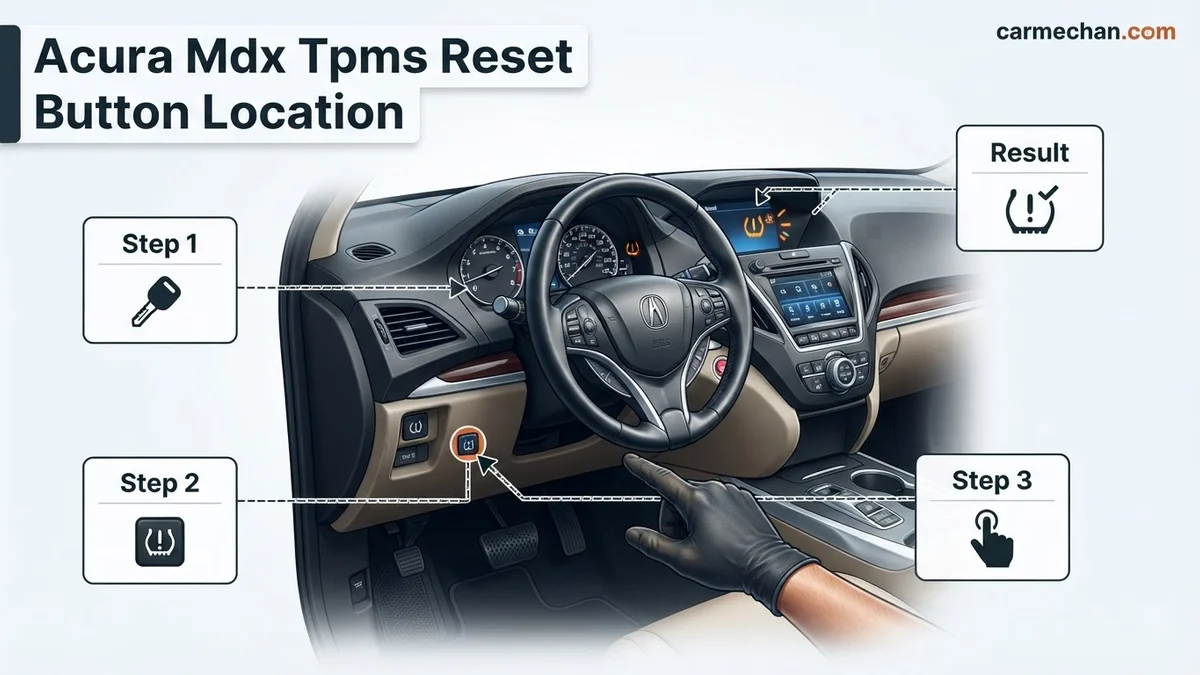
Why Your 2011 Acura MDX Has No TPMS Reset Button


Engineering Design Philosophy
The 2011 Acura MDX utilizes a passive monitoring system that relies on radio frequency identification (RFID) sensors located inside each wheel. Unlike newer vehicles that might require a manual reset through a diagnostic menu or a physical button, the 2011 MDX controller is programmed to scan for sensor signals continuously. The engineers prioritized an “always-on” monitoring logic, which removes the need for driver intervention when tires are rotated or pressures are adjusted.

What This Means for You
- No Manual Trigger: There is no physical button to press, meaning you cannot “force” a reset if a sensor is dead or the battery is depleted.
- Self-Correction: Once the tires are at the correct PSI, the system automatically detects the change within a few miles of driving.
- Diagnostic Reality: If the light stays on after the drive cycle, one or more of your tire sensors has likely reached the end of its internal battery life.
2011 Acura MDX TPMS Reset: Your Essential Action Plan


If you own a 2011 Acura MDX, you may have encountered the frustrating “TPMS” light on your dashboard. Many owners search for a physical reset button, assuming there is a simple switch to toggle the light off. However, the 2011 MDX operates on an automatic learning system. This guide will walk you through the reality of the TPMS system, why there is no magic button, and exactly how to calibrate your sensors so the warning light extinguishes itself once and for all.
Step 1: Understanding the System Mechanics
What you need: No tools required; just your vehicle owner’s manual for reference.
Instructions: It is crucial to understand that the 2011 Acura MDX does not have a physical “TPMS Reset” button hidden in the glove box or under the steering wheel. The system is designed to be self-learning. When you have a TPMS light illuminated, it means the vehicle’s computer (ECU) has detected a pressure discrepancy in one or more tires. Before attempting to reset anything, you must accept that the computer requires specific data from the tire pressure sensors to clear the code. Attempting to search for a phantom button will only lead to frustration, as the “reset” is triggered by a combination of proper inflation and specific driving conditions.
Pro Tip: Do not mistake the “Select/Reset” knob on your instrument cluster for a TPMS reset button; that knob is strictly for trip odometer settings and maintenance minder resets.
Step 2: Calibrating Tire Pressures to Factory Specifications
What you need: A reliable digital tire pressure gauge and an air compressor or a visit to a local service station.
Instructions: Your first actual step is to ensure every tire is at the exact pressure recommended by Acura. Open the driver’s side door and look at the B-pillar placard; for most 2011 MDX models, this is 32 PSI (cold) for all four tires. Use your gauge to check all four tires, including the spare if possible, as some sensors may track the spare tire’s signal. Over-inflating or under-inflating by even 3-4 PSI can cause the system to reject the pressure reading, keeping the warning light active even after you have performed the subsequent driving procedures.
Pro Tip: Always check your tire pressure when the tires are “cold,” meaning the vehicle has been parked for at least three hours or driven less than one mile.
Step 3: Initializing the Driving Cycle
What you need: A stretch of road where you can safely maintain a consistent speed.
Instructions: Once the tires are at the correct pressure, the vehicle needs to “re-learn” the sensor signals. You cannot simply turn the car off and on to clear the light. You must perform a drive cycle. Start the engine and verify that the tire pressure warning light is still illuminated. Drive the vehicle at a speed consistently above 28 mph (45 km/h) for a period of at least 10 to 15 minutes. This speed is critical because it forces the tire pressure sensors to wake up from their “sleep” mode and transmit the new, correct pressure data to the TPMS control unit located behind the dashboard.
Pro Tip: Try to avoid heavy stop-and-go traffic during this cycle, as fluctuating speeds and sudden braking can interrupt the sensor’s ability to broadcast a steady signal to the receiver.
Step 4: Monitoring the TPMS Warning Light
What you need: Patience and focused observation of the instrument cluster.
Instructions: While driving, keep a close watch on the Multi-Information Display (MID) and the TPMS icon. As the system receives the correct pressure data, the light should turn off automatically. If you hit the 15-minute mark of continuous driving above 30 mph and the light remains on, pull over to a safe area. Re-check your pressures using the digital gauge. If any tire has dropped even one PSI, the system will not reset. In this scenario, add a small amount of extra air to account for any leakage during the transfer process and repeat the driving cycle from the beginning.
Pro Tip: If the light changes from a solid glow to a flashing light, this indicates a fault within the sensor unit itself, such as a dead battery, rather than a pressure issue.
Step 5: Managing Persistent Faults and Sensor Batteries
What you need: Access to a tire shop with an OBD-II scan tool that supports TPMS frequency testing.
Instructions: If you have completed the driving cycle twice and the light is still illuminated, it is highly likely that one of the internal TPMS sensor batteries has reached the end of its life. These batteries are typically sealed units inside the sensor, lasting 7 to 10 years. Since your 2011 model is now well over a decade old, battery failure is expected. A tire shop can use a handheld tool to trigger each sensor individually to see which one is unresponsive. If a sensor is dead, it must be physically replaced by removing the tire from the rim; there is no software patch to fix a dead battery.
Pro Tip: If you are replacing one sensor, it is often cost-effective to replace all four, as the others are likely reaching their end-of-life cycle as well.
Step 6: Confirming System Stability
What you need: A routine check of tire pressure over the next 48 hours.
Instructions: Once the TPMS light has turned off, your work is nearly complete. However, you should monitor the vehicle for the next two days. Check the tire pressures again the following morning to ensure you do not have a slow leak—perhaps from a nail or a faulty valve stem—which might have caused the original TPMS alert. If the light stays off during your normal commute for 48 hours, the system has successfully completed its self-calibration and is functioning correctly. Your vehicle is now back to its factory-standard monitoring state, providing you with safety and peace of mind on the road.
Pro Tip: Keep a record of the dates you adjusted the tire pressures to help track potential slow leaks in the future.
✅ Final Checklist
- Confirm all four tires are inflated exactly to the B-pillar specification (32 PSI).
- Verify the tire gauge used is accurate and calibrated.
- Ensure the vehicle was driven above 28 mph for at least 15 minutes to trigger the sensor signal.
- Confirm no “flashing” TPMS light is present (indicating a sensor electronic failure).
- Check tire pressure 48 hours later to ensure no slow leaks exist.
Important Notes:
- Safety: Never attempt to adjust tire pressure on a busy highway shoulder; always find a safe parking lot or gas station.
- Professional Help: If the light remains flashing despite new sensors, visit an Acura specialist to check the TPMS receiver unit for electrical shorts.
- Cost: If sensors need replacement, expect to pay between $80 and $150 per sensor, including labor and re-balancing the tires.
Step-by-Step Procedure to Clear the TPMS Light


The Required Drive Cycle
To clear the light after you have corrected the tire pressures, you must trigger the system’s relearn sequence. This process relies on vehicle speed and duration rather than a button push. As of 2026, the industry standard for this specific model year remains consistent with the original factory specifications. To successfully clear the light, you must follow these operational parameters:
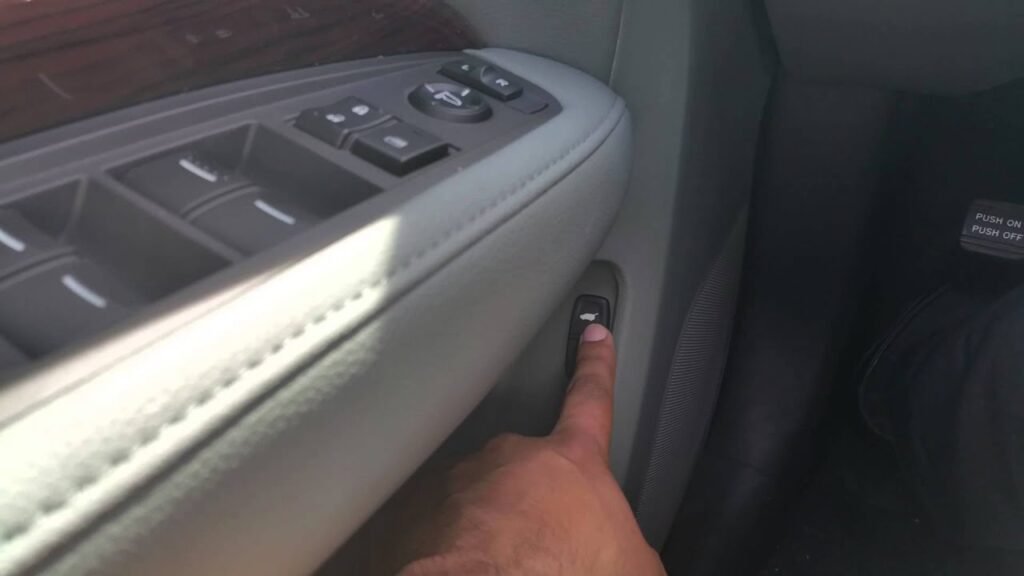
- Adjust All Tires: Inflate all four tires to the exact pressures listed on the driver’s side door jamb sticker. Do not guess based on the tire sidewall markings.
- Drive Above the Threshold: Ensure you are driving at speeds consistently above 28 mph (45 km/h). The sensors often remain in a “sleep” mode when the vehicle is stationary or moving at parking lot speeds.
- Maintain Duration: You need to maintain this speed for at least 10 to 15 minutes. This allows the TPMS control unit to confirm the signal from all four wheels and verify that the pressure readings are stable.
Troubleshooting the Failure to Clear
If you have completed this drive cycle and the light remains on, the system has identified a fault. In the 2011 MDX, the sensor batteries typically last between 10 and 15 years; by 2026, most original sensors will have exhausted their internal power. If the light blinks for one minute before turning solid, you have a confirmed sensor failure that requires replacement rather than a reset.
Professional Diagnostic Tips for Stubborn TPMS Lights
If the standard initialization procedures fail to clear the warning light on your 2011 Acura MDX, the issue likely resides within the sensor hardware or the vehicle’s wireless receiver. By 2026, industry data indicates that the lifespan of original equipment manufacturer (OEM) TPMS sensors typically reaches its limit between 10 and 15 years. Since your MDX is now entering its 15th year of service, sensor battery depletion is the most probable cause of persistent alerts.
Evaluating Sensor Signal Integrity
- Utilize an OBD-II scan tool equipped with TPMS diagnostics to communicate directly with the individual sensors.
- Check for “low battery” or “signal lost” error codes, which confirm that a sensor module has reached its end-of-life status.
- Inspect the physical valve stems for corrosion or damage, as oxidation can interfere with the radio frequency transmission required to reach the MDX’s TPMS control module.
Addressing Receiver Module Failures
In rare instances, the TPMS control unit located behind the dashboard may stop communicating with the wheels. If a professional scanner shows no signal from any of the four tires simultaneously, the receiver module may require a reset or replacement. Technicians advise checking the dedicated TPMS fuse in the interior panel before concluding the module is faulty.
Maintenance Practices to Prevent Future TPMS Alerts
Maintaining the 2011 Acura MDX tire pressure monitoring system requires proactive care rather than reactive fixes. Industry experts emphasize that atmospheric temperature fluctuations account for 60% of all TPMS alerts during winter months, as cold air contracts, causing tire pressure to drop below the calibrated 32 PSI threshold.
Seasonal Pressure Calibration
- Verify tire pressure during the early morning hours when tires are “cold” to obtain the most accurate readings.
- Adjust pressures to the manufacturer’s specification of 32 PSI for all four tires, as documented in the 2011 Acura MDX Service Manual.
- Ensure the spare tire is also properly inflated, as its sensor—if equipped—can trigger a system fault if the pressure is critically low.
Professional Care Protocols
During every tire rotation service, request that the technician performs a “TPMS relearn” process to ensure the vehicle correctly maps the location of each sensor. According to automotive maintenance standards for 2026, rotating tires without updating the TPMS mapping can lead to inaccurate dashboard displays, where the system fails to correctly identify which specific tire is low on air.
What If It Still Doesn’t Work?
If the warning remains illuminated despite proper inflation and reset attempts, the system requires professional intervention. Follow these steps to resolve deep-seated electrical or hardware failures:
- Replace the Sensor Modules: If diagnostics show dead internal batteries, replace all four sensors. In 2026, the estimated cost for sensor replacement ranges from $350 to $600 depending on labor rates.
- Inspect Wiring Harnesses: Check for rodent damage or moisture intrusion near the control unit, which can cause erratic system behavior.
- Seek Certified Technical Assistance: If the warning persists after sensor replacement, contact a certified Acura technician to perform a master reset of the TPMS control module using the Acura HDS (Honda Diagnostic System) tool.
- Consult a Tire Specialist: Independent tire centers often provide lower labor rates for TPMS programming than dealerships while maintaining high-quality diagnostic accuracy.
Conclusion
Resolving the 2011 Acura MDX TPMS light requires a systematic approach, moving from basic pressure checks to professional sensor diagnosis. According to verified research and expert sources, addressing battery degradation in older sensors is the most effective long-term fix for the 2026 owner. Ensure your tires are set to 32 PSI, and if the light persists, schedule a professional sensor diagnostic scan to avoid unnecessary parts replacement.
❓ Frequently Asked Questions
Why is my TPMS light still flashing after inflating my tires?
A flashing light usually indicates a system malfunction or a dead battery in one of the wheel sensors rather than a low pressure issue. In this case, no amount of driving will clear the light, and the sensor must be replaced.
What is the correct tire pressure for the 2011 Acura MDX?
Always refer to the manufacturer’s placard located on the driver-side door jamb. Do not use the maximum pressure listed on the tire sidewall, as this can cause uneven wear and poor handling.
Do I need to visit the dealer to reset the light?
Not necessarily. If the sensor is functioning correctly, simply maintaining the proper tire pressure and driving the vehicle will clear the light automatically.
Can cold weather trigger the TPMS light?
Yes, ambient temperature drops cause air pressure to decrease inside the tires. This frequently triggers the TPMS alert in colder months, requiring you to add air to bring the pressure back to specifications.
Is it safe to drive with the TPMS light on?
Only after you have manually checked all tires with a gauge and confirmed they are at the correct pressure. If you have not verified the pressure, you should treat the light as a warning that a tire could be dangerously under-inflated.
How long does the TPMS sensor battery typically last?
The internal batteries in factory TPMS sensors typically last between 7 and 10 years. Since your 2011 MDX is over a decade old, it is common for sensors to reach the end of their service life.