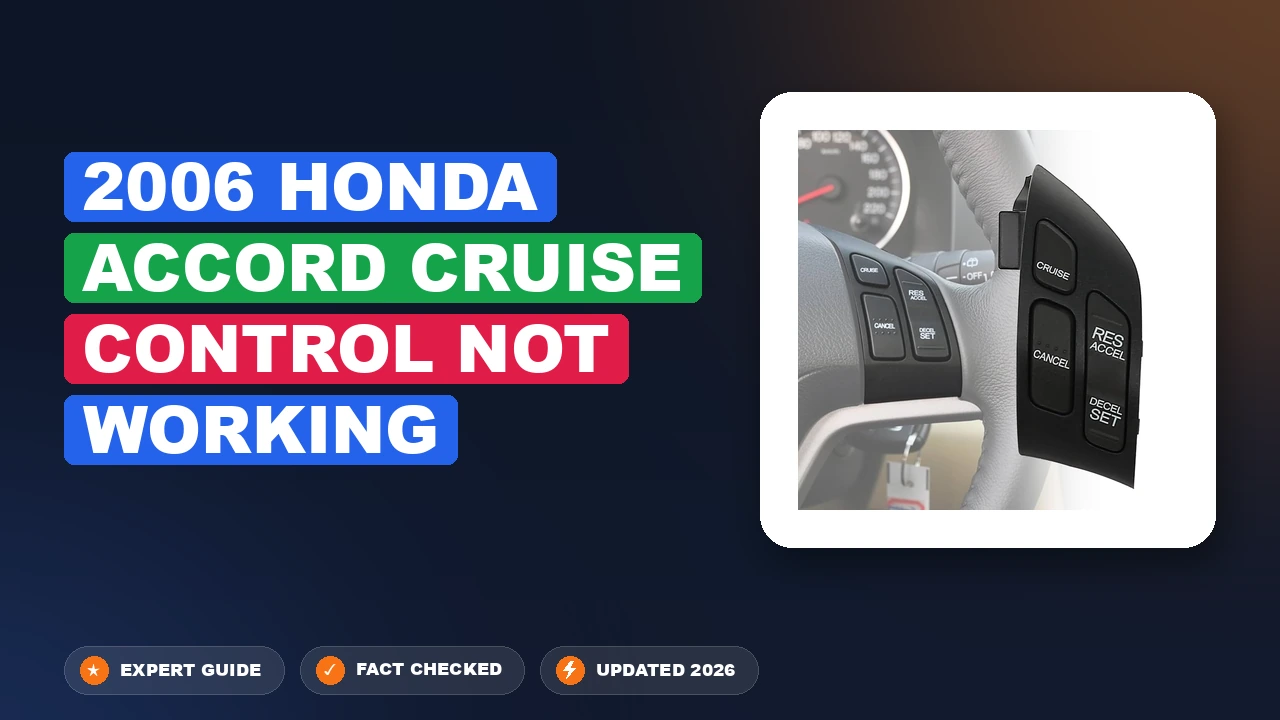
2006 Honda Accord Cruise Control Not Working: Diagnosed & Fixed
Is your 2006 Honda Accord cruise control failing to hold speed or refusing to engage altogether? It is a frustrating scenario for any driver: the dashboard “Cruise” light illuminates, yet the system remains completely unresponsive when you attempt to set your speed. Many owners fear this points to a catastrophic electrical failure or an expensive trip to the dealership. In reality, most cruise control issues in this model year are rooted in accessible, manageable components. This guide provides a comprehensive roadmap to diagnose and fix your system, covering everything from simple fuse inspections to nuanced mechanical cable adjustments.

Common Causes of 2006 Honda Accord Cruise Control Not Working
Recommended Best Deal Products


When the cruise control system refuses to engage, the culprit is often a safety interrupter or a simple loss of power. The 2006 Honda Accord utilizes an electromechanical system that requires several conditions to be met before it will allow the computer to take control of the throttle.
📤 Share Image

Why the Brake Light Switch Disables Cruise
The brake light switch is the primary safety interrupter in the circuit. Its dual-function design serves two purposes: turning on your brake lights and sending an “OFF” signal to the cruise control module. If the internal contacts are worn or misaligned, the computer constantly “thinks” you are pressing the brake pedal, which prevents the system from locking in your speed. This is arguably the most common failure point for this vehicle.
The Role of the Clock Spring in Signal Transmission
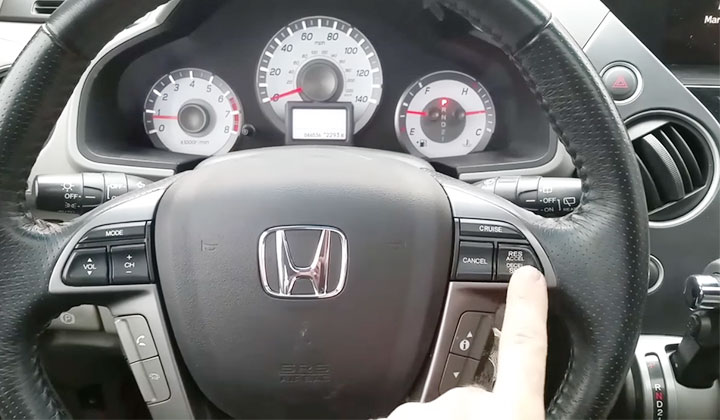
Because the cruise control buttons are mounted on the steering wheel, the electrical signals must pass through the clock spring—a spiral-wound ribbon cable located behind the steering wheel. Over time, the clock spring can develop intermittent open circuits, causing the cruise control to fail specifically when the wheel is turned or to stop responding entirely.
Identifying Blown Fuses in the Under-Dash Panel
The cruise control system is protected by dedicated fuses within the under-dash fuse box. If the system fails to even illuminate the main dashboard light, the fuse is your first suspect. A blown fuse often occurs due to a short in the actuator harness or an aging relay, providing an instant cutoff to the cruise control module.
By The Numbers
Ranked Cause: Brake Switch Failure
Systems rely on Brake Light continuity
How to Diagnose and Fix 2006 Honda Accord Cruise Control
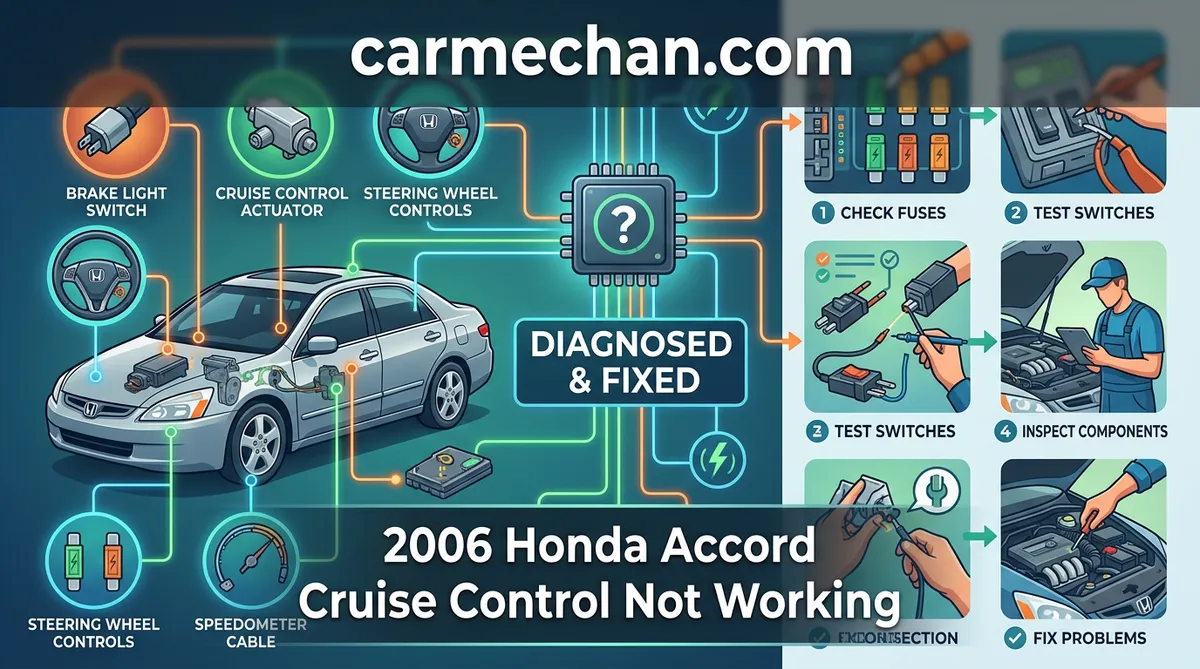
Repairing a 2006 Honda Accord cruise control system requires a systematic approach. Follow these steps to diagnose the failure efficiently without unnecessary part swapping.
Use a multimeter to check for continuity at the brake switch. With the pedal released, the switch should be closed. If you lack continuity while the pedal is at rest, the switch is faulty.
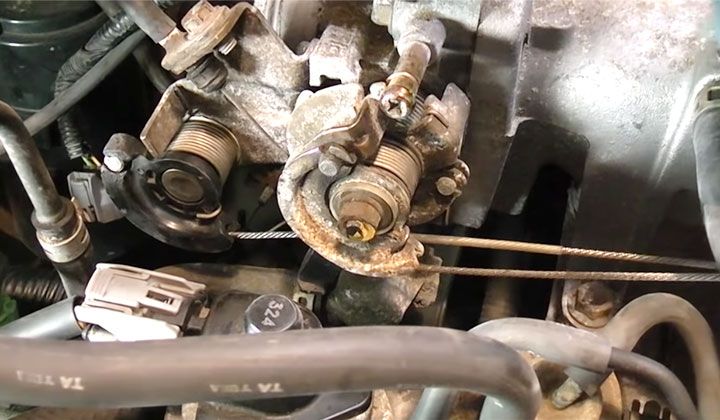
Locate the cruise actuator near the driver-side strut tower. Ensure the cable attached to the throttle body has minimal play. Excessive slack prevents the actuator from opening the throttle butterfly.
Inspect the vacuum lines connected to the actuator. If the diaphragm inside the actuator has ruptured, it cannot maintain suction, leading to a failure to engage the cruise speed.

Audible — Listen Free for 30 Days
One free credit a month and thousands of titles included.
Listen Free for 30 DaysIf the main “Cruise” light works but “Set” does nothing, use an OBD-II scanner to monitor switch inputs. If the ECM shows no change when pressing “Set,” the steering wheel switch module likely requires replacement.
The cruise control system operates directly on the throttle body. Never adjust the throttle cable tension while the engine is running or while the vehicle is in gear. Always disconnect the battery before working on the steering wheel button assembly to avoid airbag deployment.
Troubleshooting 2006 Honda Accord Cruise Control Mechanical Links
Recommended Best Deal Products


Unlike modern “drive-by-wire” systems, the 2006 Accord uses a hybrid approach where a mechanical cable is pulled by a vacuum-operated actuator. If the electrical components test out fine, the failure is almost certainly mechanical.
- Adjusting Throttle Cable Tension: Locate the tension adjustment nut on the cable bracket. If the cable is too loose, the actuator will hit its limit before the throttle butterfly opens enough to maintain speed. Conversely, over-tightening can force the throttle open and cause an abnormally high idle. Aim for roughly 1/4 inch of slack.
- Testing the Actuator for Vacuum Leaks: Inspect the rubber hose running from the intake manifold to the actuator. A small crack or dry-rot in this hose will prevent the system from creating the necessary vacuum to pull the cable. Use a vacuum pump to test the actuator directly—if it doesn’t hold vacuum, the internal diaphragm is dead.
- Cleaning the Throttle Body Interface: Carbon buildup can cause the throttle cam to stick, making it difficult for the actuator to pull it smoothly. Use an approved throttle body cleaner to clear any debris near the attachment point of the cruise control cable.
Advanced Diagnosis for 2006 Honda Accord Cruise Control Failure
When common fixes fail to restore function, you are likely dealing with intermittent electrical signals or communication errors with the Engine Control Module (ECM).
Resolving Intermittent Disengagement Issues
If the cruise control works momentarily but “kicks out” when you hit a bump, the problem is a loose ground or an intermittent switch. Focus on the brake pedal switch—ensure the pedal stop bumper (a small plastic pad on the pedal arm) hasn’t crumbled away. Without that pad, the switch won’t be held in the “OFF” position firmly.
Inspecting the Clock Spring Signal Path
If your cruise control only fails when the steering wheel is turned, the clock spring is the culprit. While the horn and cruise buttons both share this path, the cruise circuit is more sensitive to resistance spikes. A scan tool that can read “live data” will show the cruise button status; if it flickers while turning the wheel, confirm the clock spring integrity.
Identifying ECM Communication Faults
The ECM monitors the vehicle speed sensor (VSS) to decide if the cruise control is safe to operate. If your speedometer is acting erratically or you have a Check Engine Light related to the VSS, the cruise control will automatically disable itself as a safety measure. Always resolve engine-related fault codes before attempting to debug the cruise system.
If you have replaced the brake light switch and the cruise still won’t set, verify that your brake lights are actually turning off. Sometimes an aftermarket LED bulb upgrade in the tail lights creates enough resistance drop to keep the cruise control module in a “brake pressed” state.
2006 Honda Accord Cruise Control Not Working Questions Answered
Recommended Best Deal Products


Can a bad fuse cause the light to turn on but not set?
Rarely. If the light turns on, the main power circuit is functional. The issue is likely a signal input (like the brake switch) or a vacuum leak.
Audible Premium Plus — Annual Membership
12 audiobook credits up front, plus the full Audible catalogue.
See Annual PlansIs the cruise control actuator repairable?
Generally, no. The actuator is a sealed unit. If the diaphragm is torn or the internal motor has burned out, replacing the unit with a tested OEM part is the most reliable solution.
Do I need special tools to adjust the throttle cable?
No, standard metric wrenches (typically 10mm or 12mm) are sufficient to adjust the locknuts on the throttle cable bracket.
To summarize your repair path: start by confirming your brake light bulbs and the brake pedal switch, as these are the most common points of failure for “light on, system won’t set” symptoms. Once electrical inputs are verified, inspect the mechanical linkage for correct tension and ensure the vacuum actuator is not leaking. If these steps do not solve the issue, ensure no “Check Engine” lights are active, as the system will not engage if the ECM detects a fault elsewhere. If your diagnostics continue to yield no results, a professional scan for proprietary Honda body control module codes may be required to pinpoint a specific wiring break.