Kia Optima TPMS Reset Button Location: Debunked & Explained
Are you staring at your dashboard, looking for a Kia Optima TPMS reset button that just isn’t there? Many drivers waste time searching through gloveboxes, under steering columns, and behind trim panels, only to realize the light won’t go out after simply filling their tires. In this guide, we reveal exactly how the Kia Optima’s sophisticated TPMS works and provide the proven, step-by-step method to recalibrate your sensors and clear that warning light for good.
Understanding Why You Cannot Find a Kia Optima TPMS Reset Button


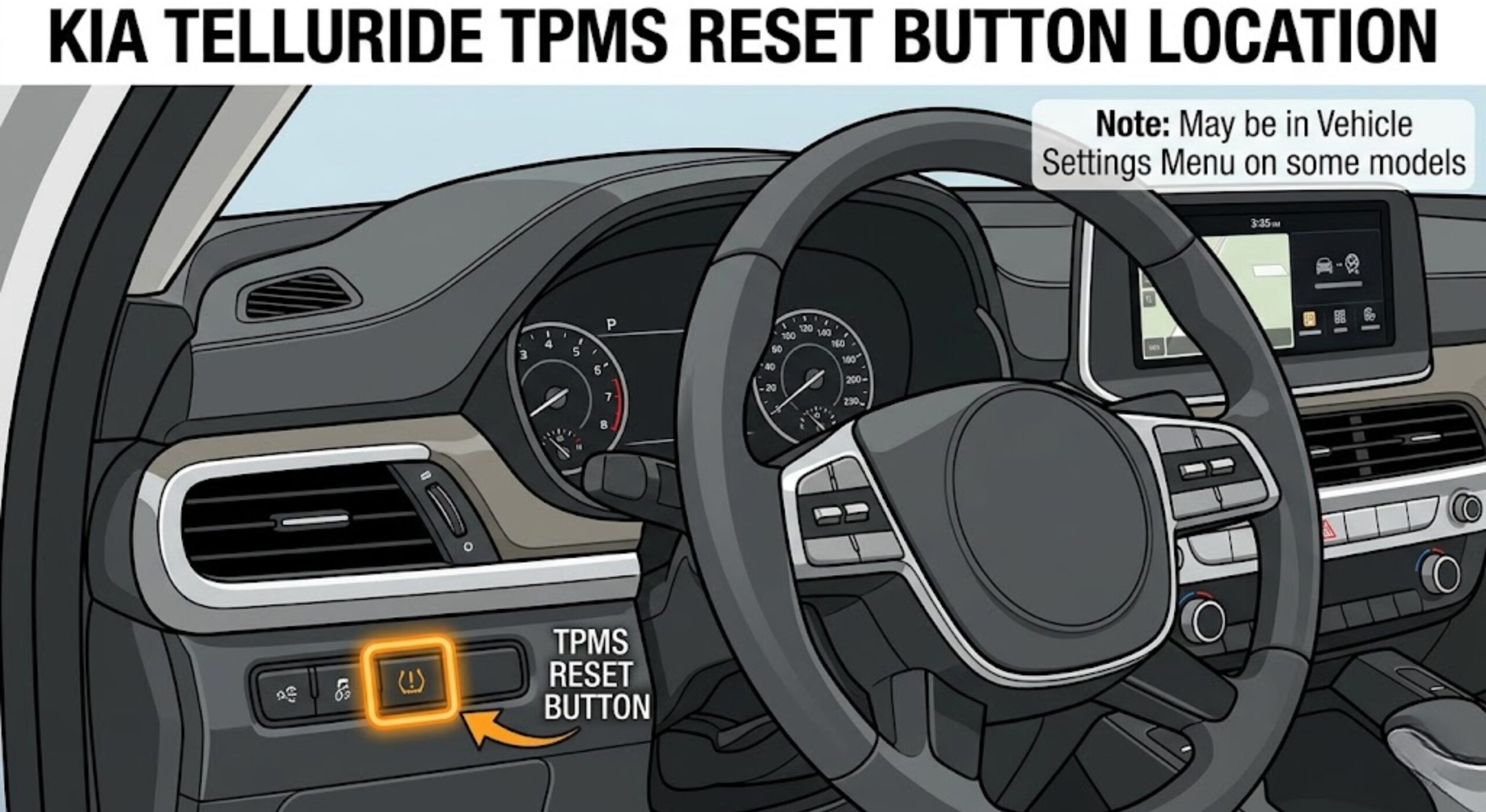
The search for a manual reset button is a common rite of passage for many Kia owners, yet it is a futile exercise. Unlike some older automotive platforms that required a manual “learning” button to be held down for several seconds, the Kia Optima utilizes a robust, high-frequency radio-based system that operates continuously.

📤 Share Image

How the Kia Direct TPMS Network Operates
The Kia Optima employs a Direct TPMS (Tire Pressure Monitoring System). Inside each of your four wheels, a battery-powered sensor is mounted to the valve stem. These sensors constantly measure the internal air pressure and temperature of the tire. This data is transmitted wirelessly to a central TPMS control module located within the vehicle. Because the system is “Direct,” it knows exactly which tire is low, rather than relying on indirect wheel-speed calculation methods used in simpler, budget-oriented vehicle platforms.

Why Modern Kias Moved Away from Manual Reset Buttons
Modern automotive engineering emphasizes user transparency and reduced maintenance complexity. By removing the need for a manual reset button, Kia has eliminated the risk of human error in the initialization process. In legacy systems, failing to press the button correctly often led to false alarms or ignored pressure drops. The current system provides a reboot logic that is entirely autonomous, ensuring the safety features remain active without requiring specialized knowledge from the operator.
By The Numbers
Automated Calibration
Required Drive Speed
Step-by-Step Kia Optima TPMS Light Calibration Procedure
Since no physical button exists, you must allow the system to initialize through proper inflation and specific driving conditions. This is the only manufacturer-approved way to clear the warning light.
Locating Correct PSI Specs on Your Door Jamb
Never rely on the maximum PSI rating printed on the sidewall of the tire itself. That is the tire’s physical limit, not your Kia’s requirement. Always refer to the sticker located on the driver-side door jamb. This factory-specified pressure is optimized for the Optima’s weight, handling characteristics, and fuel efficiency.
Driving Requirements for Sensor Initialization
The TPMS sensors are programmed to remain in a “sleep” mode while the vehicle is parked to preserve battery life. To “wake them up” and force a factory reset of the system, you must reach a specific operational threshold.
📋
Calibration Steps
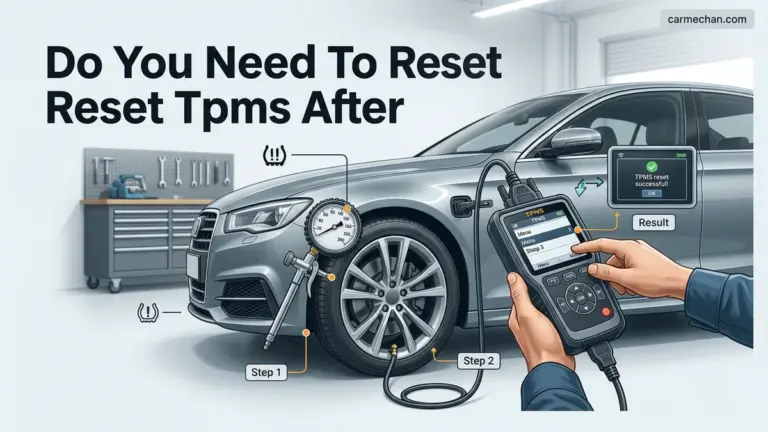
Use a high-quality manual tire pressure gauge to inflate all four tires to the exact PSI listed on the door jamb. Do this while tires are “cold”—ideally before driving or after the car has sat for at least three hours.
Drive the vehicle at speeds consistently above 20-25 mph for at least 10 to 15 minutes. This motion triggers the sensors to send an updated pressure signal to the control unit, allowing the system to verify the new default values.
Why Parking Won’t Reset Your TPMS
Parking, turning the engine off, or even disconnecting the battery will not clear a persistent TPMS light. The system requires the centrifugal force of the wheels spinning to initiate the sensor transmissions. If the pressure remains below the trigger point, the system will detect the discrepancy immediately upon the vehicle’s first movement.
Identifying Kia Optima TPMS Malfunction Symptoms
Distinguishing between a low-pressure warning and a hardware failure is critical for efficient maintenance. If the light behavior deviates from a simple steady glow, you likely have a hardware issue rather than a pressure issue.
What a Flashing TPMS Light Actually Means
- Solid Light: Indicates that one or more tires are significantly under-inflated.
- Flashing Light: Usually indicates a system malfunction. Typically, the light will flash for 60 to 90 seconds upon starting the vehicle before remaining solid. This signifies that the ECU cannot communicate with one or more sensors.
When to Replace a Dead or Damaged Sensor
If the light persists after a 20-minute drive with verified pressures, the internal sensor battery is likely depleted. These batteries are sealed inside the sensor and are not replaceable. You must visit a tire shop to have the sensor replaced and the system relearned.
Troubleshooting Persistent Kia Optima TPMS Light Issues
If your tire pressures are perfect but the light remains, environmental factors or physical damage could be the culprit. A clean diagnostic approach is necessary to isolate the fault.
Using an OBDII Scanner for TPMS Diagnostics
A standard OBDII scanner is excellent for engine codes, but many also support TPMS diagnostics. A professional-grade tool can ping each wheel’s sensor individually to see if it is responding. If a sensor fails to respond, it is effectively dead, and no amount of driving will perform a restoration of the system.
Environmental Factors Affecting Sensor Readings
Temperature swings play a significant role in tire pressure. For every 10-degree drop in ambient temperature, your tire pressure can decrease by approximately 1 PSI. In autumn or winter, this common phenomenon often triggers a fresh start alert across all four tires simultaneously, even if there is no physical puncture. Always check your pressures as the seasons change to avoid unnecessary diagnostic trips.
Accurate Tools
Always use a calibrated digital pressure gauge. Analog “pencil” gauges are notoriously inaccurate and often lead to under-inflation.
Consistent Maintenance
Check tire pressure monthly. Keeping them at the door-jamb recommended PSI acts as a natural backup to ensure the system doesn’t trigger false alerts.
In summary, the Kia Optima’s TPMS is a highly reliable automated system that requires no manual intervention or button-pushing. By verifying your tire pressures against the driver-side door jamb and driving the vehicle to allow the sensors to synchronize, you can effectively manage the system. Remember that the system is designed to provide you with peace of mind regarding your vehicle’s safety. If the light remains flashing after your attempts to restore normal operation, visit your local tire professional to confirm if you have a failing sensor. Routine checks and attention to seasonal pressure fluctuations remain your best strategy for a trouble-free driving experience.
Kia Optima Tpms Reset Button Location: Frequently Asked Questions
Does the Kia Optima have a physical TPMS reset button?
No. The Kia Optima does not feature a physical TPMS reset button in the cabin or under the dashboard. The system is designed to be fully automated. Once the tires are inflated to the correct pressure as specified on the driver’s door placard, the internal computer automatically detects the sensor readings, provided the vehicle is operated according to the manufacturer’s driving requirements.
Why is my TPMS light still on after I filled my tires?
If the light persists, the system has not yet received a clear, stable signal from all four sensors. This can happen if the tires were not inflated to the exact factory specification, if there is a faulty sensor battery, or if the system requires a specific driving cycle to finalize the ‘handshake’ between the sensor and the car’s ECU. Ensure all four tires match the recommended PSI.
How long does it take for the light to turn off after filling tires?
Typically, the TPMS system requires between 10 to 20 minutes of continuous driving at speeds above 20 mph to recalibrate. During this period, the system continuously polls the sensors for their pressure data. If the pressure readings are within the acceptable range, the ECU will automatically extinguish the warning light on the instrument cluster without any manual input required from the driver.
What does a flashing TPMS light indicate on a Kia Optima?
A flashing TPMS light indicates a system malfunction rather than a simple low-pressure issue. While a solid light means one or more tires are low, a flashing light often signals a dead battery in a wheel sensor, a broken sensor, or an issue with the vehicle’s TPMS control module. This condition requires an OBD-II diagnostic scan to pinpoint which specific sensor has failed.
Can I use an aftermarket tire pressure gauge to reset the system?
No, using an external tire pressure gauge cannot ‘reset’ the system because the TPMS is not a manual-triggered system. You should use a high-quality gauge to verify the tire pressure, as this ensures the internal sensors are reading the correct pressure to trigger the automatic shut-off. If the pressures are correct and the light remains on, the system’s fault lies in communication or component health.