What is the cruise control fuse called: Identified & Located
Ever reached for your cruise control button on the highway, only to find absolutely zero response from your vehicle? Most drivers assume a blown fuse is the culprit, but the naming conventions for these components are rarely straightforward, and the “fuse” itself is often a casualty rather than the root cause. In this guide, we will clarify what your cruise control fuse is actually called, where to find it, and how to perform a safe diagnostic without risking your car’s electrical wiring.

Identifying What Is The Cruise Control Fuse Called In Your Vehicle
Recommended Best Deal Products


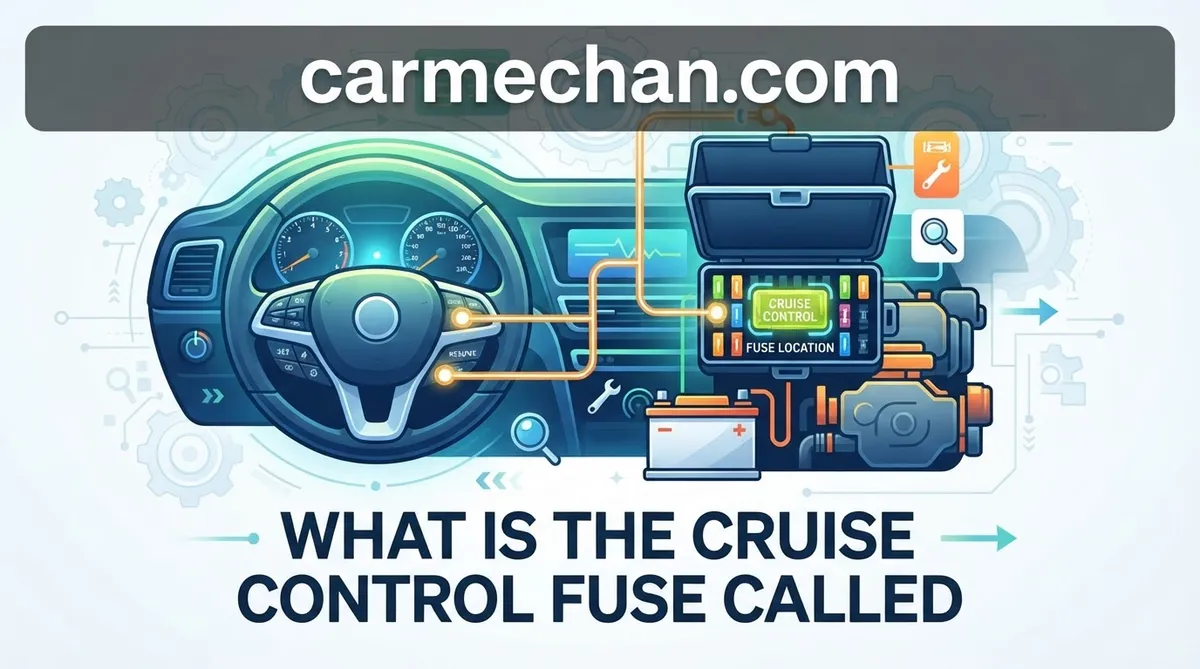
The primary point of confusion for most vehicle owners is that the term “cruise control fuse” is a functional description, not a manufacturing standard. Manufacturers group electrical circuits to consolidate power distribution, meaning cruise control systems are almost always “piggybacked” onto other systems to save space in the Power Distribution Center (PDC).
📤 Share Image
Why Cruise Control Fuses Are Often Bundled
Electrical engineers design fuse boxes based on load balancing. Because the cruise control system requires a signal from the brake light switch to function (a critical safety redundancy), it is often tied to the brake circuit. If your brake lights are working, the circuit is alive, but the cruise control may still be disabled if the logic signal is interrupted. On a 2022 Ford F-150, for instance, you will not find a dedicated “Cruise” fuse. Instead, you must look for a 15A fuse inside the passenger-side kick panel, often categorized under “Safety Logic Module” or “Brake/Signal Integration.”

Locating the Power Distribution Center
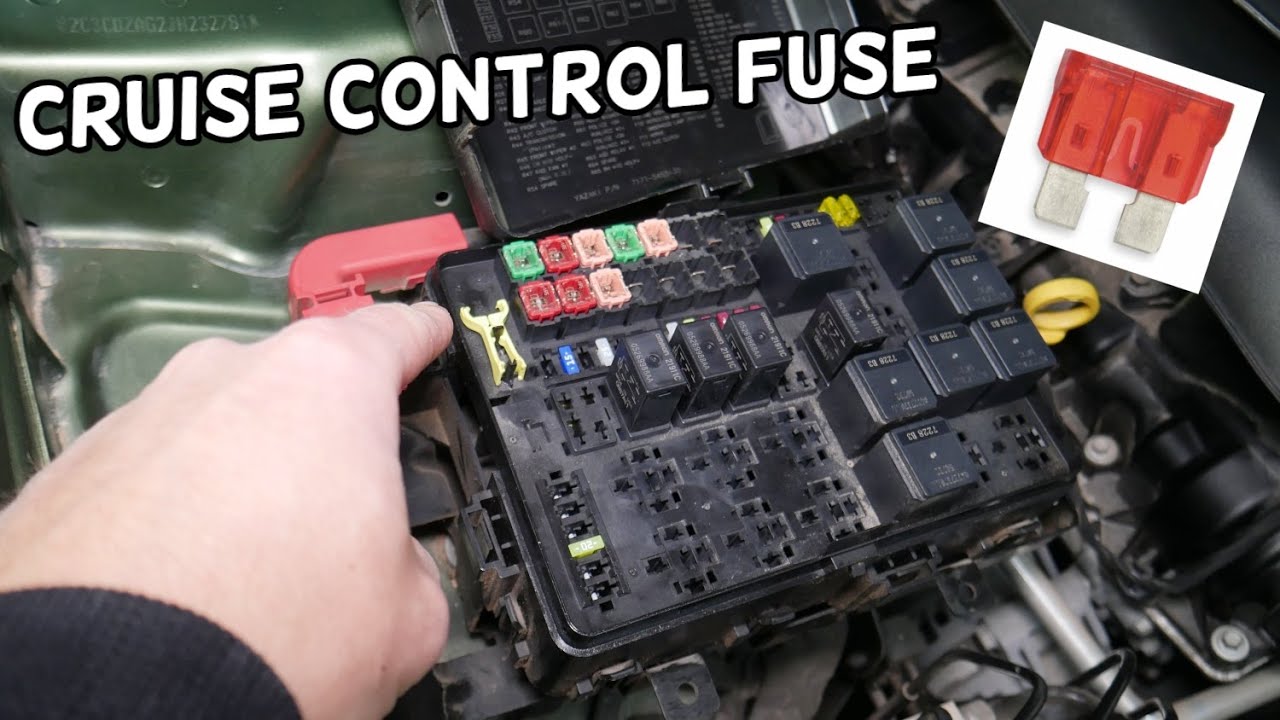
The Power Distribution Center (PDC) is your vehicle’s central clearinghouse for power. While older vehicles relied heavily on simple blade fuses, modern vehicles utilize a complex array of fusible links and micro-relays. If you are hunting for the cruise circuit, check your owner’s manual index for “Electrical,” “Fuse Panel,” or “Interior/Exterior Power.” Never guess based on the size of the fuse; the manual is the only definitive source for identifying the exact slot.
Understanding Fuse Amperage Ratings
Amperage ratings are non-negotiable. A 10A fuse protects a circuit designed to handle a maximum load. If you replace a blown fuse with a higher amperage rating—for example, putting a 20A fuse where a 10A was intended—you risk melting the wiring harness before the fuse ever trips. This is a leading cause of localized electrical fires in modern automotive systems.
Industry Data: Fuse Reliability
Cases where a “blown” cruise fuse is actually a sensor fault
Required accuracy rate when matching OEM amperage
Causes and Symptoms Behind a Blown Speed Control Fuse
When a cruise control system fails, the fuse is often the last thing to blame, despite being the easiest to check. A blown fuse is almost always a secondary symptom of a short circuit elsewhere in the harness or a failing component drawing excessive current.
Recognizing Electrical Shorts vs. Overloads
An electrical short occurs when “hot” wire touches a ground, bypassing the component. This causes an instantaneous spike in current that blows the fuse immediately. An overload, conversely, occurs when a component (like a servo motor) is failing and pulling more than its intended capacity, eventually melting the fuse wire over time. If your fuse blows as soon as you turn the ignition, you have a short. If it blows after using the cruise for ten minutes, you likely have an overheating component.
Interdependence With the Brake Light Switch
The cruise control and the brake light circuit are fundamentally linked. In many vehicles, the cruise control system uses the brake switch as its “kill signal.” If that switch is failing or has an internal resistance issue, it can send erratic signals to the Body Control Module (BCM), which may trigger a system-wide safety shutdown. This looks like a blown fuse but is actually a logic-driven software protection protocol.
How Modern Software Mimics Blown Fuses
Modern vehicle systems are diagnostic-heavy. If the BCM detects an anomaly in the steering angle sensor, the wheel speed sensor, or the cruise module itself, it will simply inhibit the function of the cruise control. This “software-induced” lockout is designed to prevent the system from engaging in an unsafe state, often leading confused owners to check the fuse box when the issue is purely electronic.

Audible — Listen Free for 30 Days
One free credit a month and thousands of titles included.
Listen Free for 30 DaysHow To Safely Replace and Test A Cruise Control Fuse
📋
Step-by-Step Guide
Always turn the ignition to the ‘OFF’ position and remove the key. Locate the fuse panel—usually under the dash or in the engine bay—and remove the plastic cover. Use a dedicated fuse puller; pliers can damage the delicate metal tabs of the fuse panel.
Hold the fuse against a light source. A healthy fuse shows a solid ‘U’ shaped metal wire. If the wire is broken, melted, or exhibits an ‘S’ shape with a gap, the fuse is blown. Use a multimeter set to continuity (beep) mode to verify if you are unsure.
Extract the fuse using the puller tool. Inspect the fuse slot for any signs of melting or oxidation. Insert a new fuse of the exact same amperage. If the new fuse blows immediately upon insertion, you have a confirmed short that requires professional inspection.
Turn the ignition to the ‘ON’ position without starting the engine. Test the cruise control switch functionality. If it engages or lights up, perform a road test. Do not force the system if the light on the dash does not illuminate.
Never substitute a fuse with a piece of metal, wire, or a higher amperage fuse. Doing so is the most common cause of electrical fire in the steering column and dash wiring. If the fuse keeps blowing, stop testing—you have a hard short.
Troubleshooting When The Cruise Control System Fails Again
If you have replaced the fuse and the system remains inoperative, the issue is likely deeper within the electrical path. Assuming the fuse is the only point of failure is a common pitfall that ignores the complexity of modern automotive electronics.
- Inspecting the Clock Spring Electrical Path: If your steering wheel controls (cruise, radio, volume) are unresponsive, the clock spring—the ribbon cable assembly behind the steering wheel—may be broken. This component allows for the transfer of electrical signals while the wheel turns.
- Analyzing Body Control Module Error Codes: Use an OBD-II scanner to pull specific diagnostic trouble codes (DTCs). If you see codes related to “Communication Error” or “Invalid Signal,” the cruise control module is likely not receiving the data it needs to activate.
- Identifying Cruise Control Module Failure: In older mechanical systems, a vacuum leak can mimic an electrical failure. In newer electronic systems, the module itself can suffer from internal board failure due to moisture or vibration.
- Professional Diagnostic Scanning: If you cannot identify the fault with a standard OBD-II scanner, a technician with a bidirectional scan tool can “command” the cruise control system to engage. This isolates whether the problem is in the switch, the module, or the communication network (CAN bus).
Final Considerations for Cruise Control Repair
To summarize the fundamentals: cruise control power is almost always shared with other lighting or signaling circuits, making it difficult to find on a schematic if you aren’t looking at the right subsystem. Never replace a fuse with a higher amperage than specified to prevent melting wires, as the harness is calibrated for the original load. The owner’s manual remains your best tool for identifying the correct circuit protection in your specific vehicle. If fuses continue to blow, stop testing and investigate the system for a shorted wire or failing module.
Consult your vehicle’s specific owner’s manual before pulling any fuses. If the issue persists after a fuse check, consult a professional technician to prevent permanent damage to your dashboard electronics and sensitive control modules.
What Is the Cruise Control Fuse Called: Frequently Asked Questions
Where is the cruise control fuse located?
The fuse is typically located in the interior junction block (usually under the dashboard near the driver’s left knee) or the engine compartment power distribution center. You must consult your owner’s manual diagram, as manufacturers place these fuses differently. Look for the fuse box cover map for labels like ‘CRUISE,’ ‘CCS,’ or ‘PCM,’ which are standard industry designations.
Audible Premium Plus — Annual Membership
12 audiobook credits up front, plus the full Audible catalogue.
See Annual PlansDoes a blown cruise control fuse affect the engine?
Generally, no. Cruise control systems are usually on independent circuits to prevent a failure in the speed control system from shutting down essential engine functions. However, if your vehicle uses a shared ‘PCM’ or ‘ECU’ fuse, a failure there could prevent the engine from starting or cause erratic performance. Always check the specific fuse circuit diagram to understand what other components are protected.
Why does my cruise control stop working after I change a fuse?
If it fails immediately after replacement, you may have installed the wrong amperage fuse, which can blow again instantly, or the new fuse may be faulty. Alternatively, the root cause might be a damaged circuit elsewhere—such as a failing brake switch or clock spring—that continues to trip the protection mechanism. Ensure the replacement fuse matches the exact amperage rating specified on your panel.
How do I know if the fuse is blown or if the cruise control module is bad?
A blown fuse is a simple, ‘open’ electrical connection. A bad module is an internal logic or electronic failure. Use a multimeter to test for power at the cruise control switch connector. If the fuse has power on both sides but the module remains unresponsive to input signals, the module is likely the faulty component rather than the wiring or the fuse.
Can a bad brake light switch mimic a blown fuse?
Yes, it is the most common misdiagnosis. The cruise control system receives a ‘cutoff’ signal from the brake light switch. If the switch is stuck, faulty, or the brake light bulbs are burnt out, the cruise control computer assumes the brake is being applied and will refuse to engage. This often feels exactly like an electrical system failure, but the fuse itself remains perfectly functional.