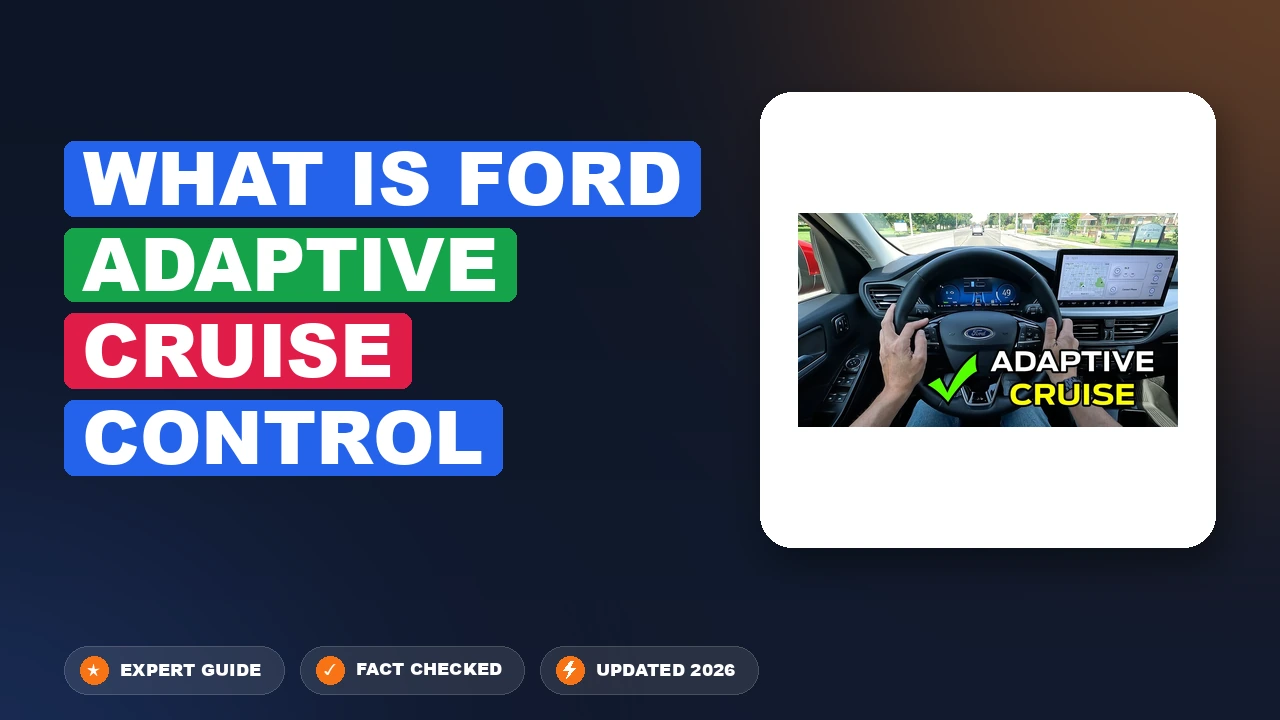
What is Ford Adaptive Cruise Control: Deconstructed for Drivers
Ever felt the persistent fatigue of constant braking and accelerating in heavy, bumper-to-bumper highway traffic? For many modern motorists, navigating stop-and-go congestion is a primary driver of commute-related stress. While technology has evolved to assist in these situations, a common point of confusion remains: drivers often mistake advanced driver-assist systems for fully autonomous self-driving technology. This misunderstanding leads to over-reliance and significant safety hazards on the road. In this guide, we break down exactly what Ford Adaptive Cruise Control is, how to use it safely, and what it simply cannot do.

What Is Ford Adaptive Cruise Control and How Does It Function?
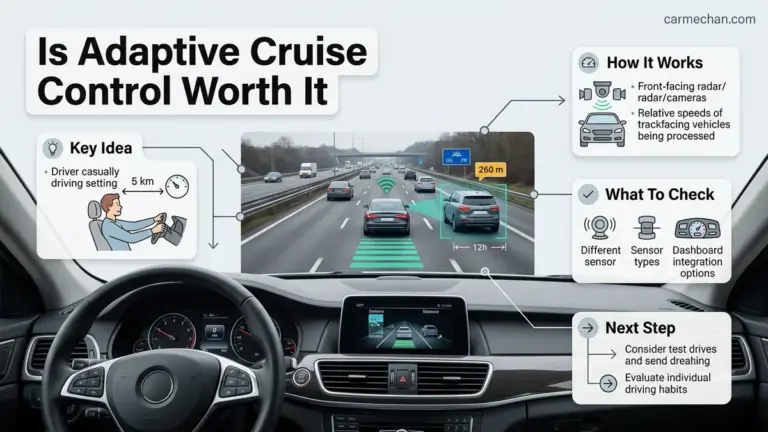
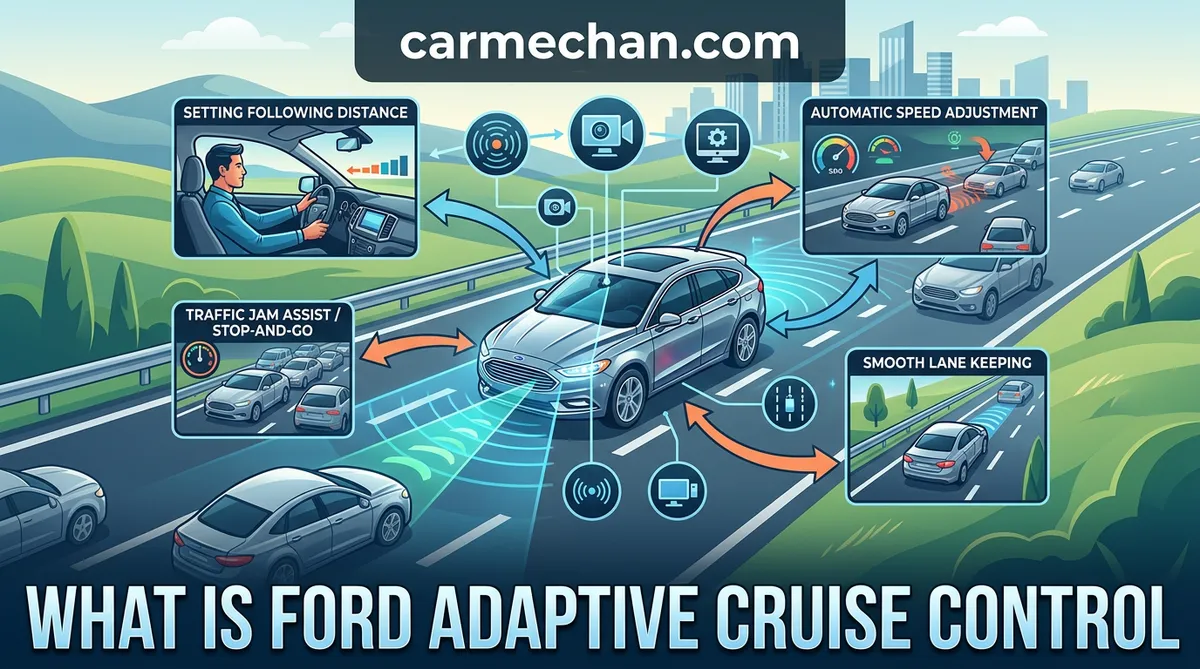
Adaptive Cruise Control (ACC) represents a significant leap forward from the static cruise control systems found in legacy vehicles. Unlike older systems that maintain a fixed speed regardless of traffic, Ford’s ACC is a cornerstone of the Ford Co-Pilot360 safety suite, engineered to automatically adjust vehicle speed to maintain a driver-selected following distance from the vehicle directly ahead.
📤 Share Image

The Role of Radar and Camera Sensors
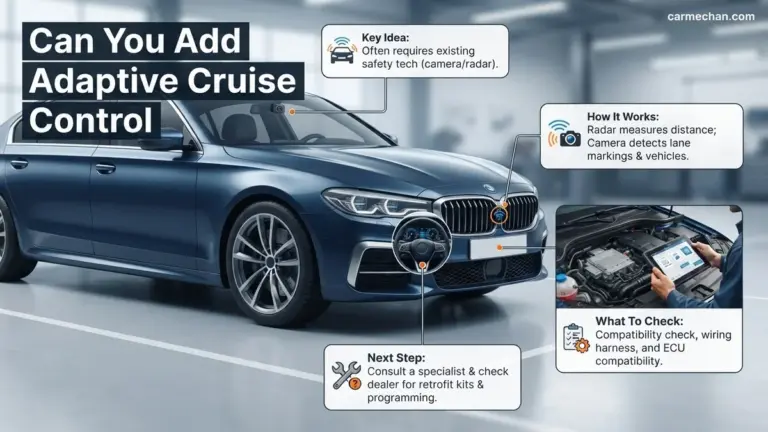
The system operates through a sophisticated integration of hardware and software. A high-precision radar sensor, typically mounted in the front grille or lower bumper, emits waves to detect the distance and relative speed of objects in the vehicle’s path. In many modern Ford models, this is complemented by a forward-facing camera located behind the rearview mirror, which helps the system differentiate between different types of vehicles and road markings.
Understanding the ECU Data Processing
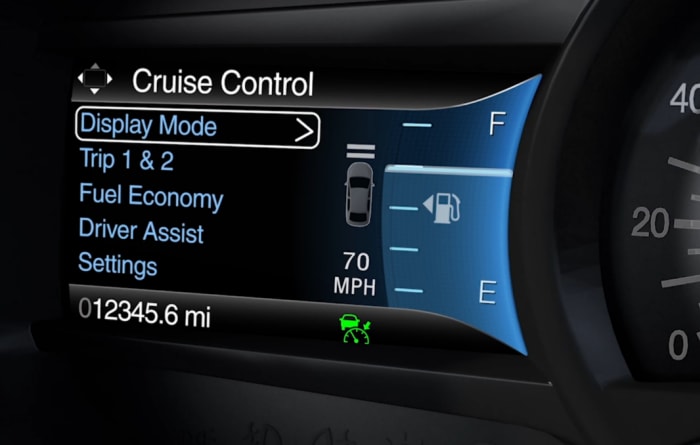
The Electronic Control Unit (ECU) serves as the brain of the system. It processes the raw data from the radar and camera in real-time, calculating whether the host vehicle needs to throttle up, maintain velocity, or apply the brakes to prevent a collision or maintain the set gap. On the CAN bus—the vehicle’s internal communication network—this data travels in milliseconds, ensuring that response times are far faster than human reaction speeds in steady-state traffic.
How It Differs From Standard Cruise Control
While a 2015 Ford model with standard cruise control would simply maintain a set speed until the driver manually disengaged it, a 2026 model equipped with Intelligent ACC and stop-and-go capabilities can bring the car to a full stop and resume movement once traffic begins to flow again. It is a convenience-focused driver-assist system, fundamentally different from SAE Level 3 or higher autonomous driving technologies.
How to Use Ford Adaptive Cruise Control: Step-by-Step Settings
📋
Operational Procedures
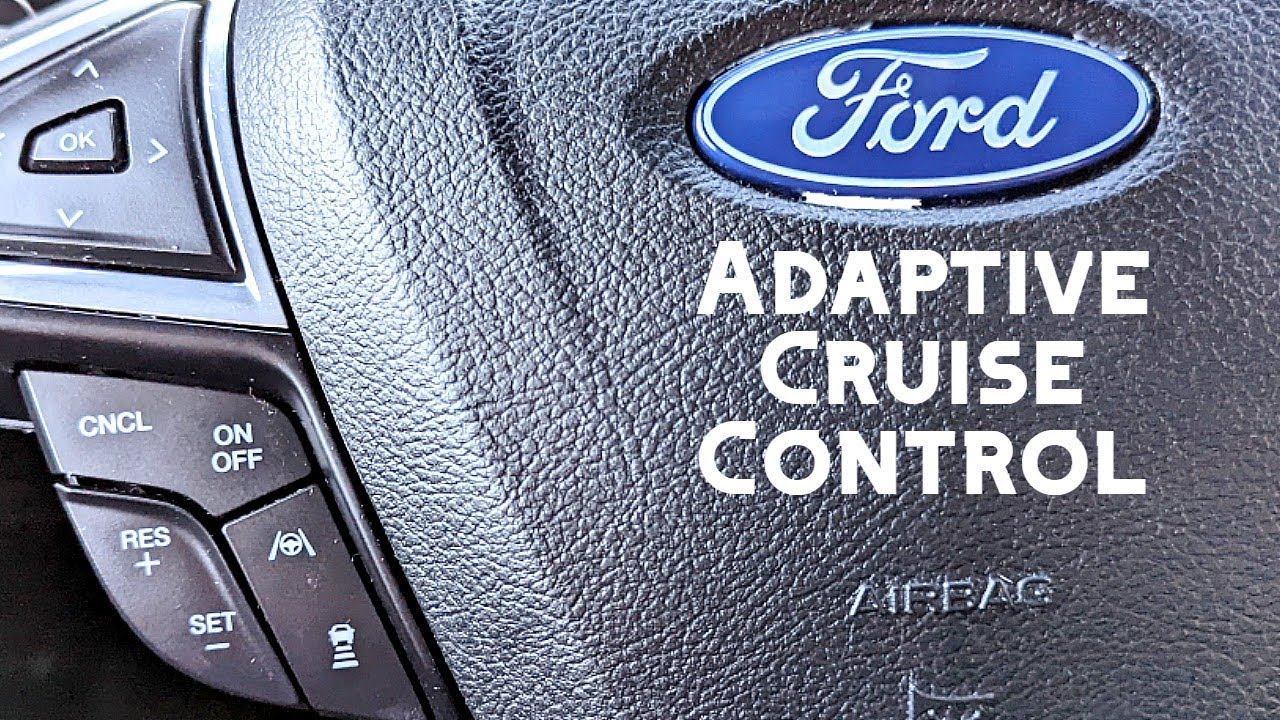
Press the ‘CRUISE’ or ‘ACC’ button on your steering wheel. The instrument cluster will display a standby icon. Once at your desired speed, press the ‘SET+’ button to initiate the system.
Use the steering wheel gap-adjustment buttons (marked with vehicle icons) to toggle between the available distance settings. Most Ford systems offer three to four distinct gap levels based on time-to-collision.
In stop-and-go traffic, if the lead vehicle stops, your car will come to a halt automatically. If the stop is short, the car will resume automatically; if the stop lasts longer, you may need to tap the resume button or press the accelerator.
Limitations and Safety Risks of Ford Adaptive Cruise Control
While ACC provides significant comfort, it is critical to understand its inherent limitations. As an expert, I must emphasize that the driver is legally and physically responsible for the vehicle’s operation at all times, regardless of system activity.

Audible — Listen Free for 30 Days
One free credit a month and thousands of titles included.
Listen Free for 30 Days- Environmental Sensitivity: Radar and camera performance can be degraded by extreme weather, including heavy rain, thick fog, or accumulating snow, which may cause the system to disable itself for safety.
- Sensor Obstruction: Dirt, road salt, or debris covering the front bumper radar or the windshield-mounted camera will trigger an ‘ACC Not Available’ message. Always ensure these areas are clean before a long drive.
- Stationary Object Limitation: Most radar-based ACC systems are optimized for moving traffic. They may struggle or fail to detect stopped vehicles or stationary objects in the lane, making it essential to remain ready to intervene with the brake pedal.
- Not Hands-Free: Unless your vehicle is specifically equipped with Ford BlueCruise and you are on a compatible “Hands-Free Blue Zone,” you must keep your hands on the wheel. ACC is not a substitute for active steering input.
The most common pitfall is ‘automation bias,’ where drivers become distracted by secondary tasks because the vehicle is controlling its own speed. Always remain focused on the road ahead, as ACC cannot account for unexpected debris or sudden lane changes by other drivers.
Troubleshooting Common Ford Driver-Assist System Issues
If your Adaptive Cruise Control flags an error, it is often a matter of sensor cleanliness or environmental blockage rather than a hardware failure. If you receive a warning that the radar is blocked, the first step is to inspect the front grille area—typically behind the Ford emblem—and clear any mud, ice, or adhesive labels that may be interfering with the signal.
When to Consult Your Ford Service Technician
If clearing the sensors does not resolve the issue, you may be experiencing a deeper communication fault within the CAN bus or a software-related calibration error. Modern driver-assist systems rely on precise camera-to-radar alignment. If you have recently had the windshield replaced or the front bumper repaired, the system likely requires a professional recalibration using Ford-specific diagnostic tools.
Industry Insight: Reliability Data
System Uptime (w/ Clear Sensors)
Service Calls Due to Debris
Final Considerations for Intelligent Driving
Adaptive Cruise Control remains one of the most effective tools for reducing driver fatigue in modern Ford vehicles. By understanding that ACC is a convenience-focused driver-assist feature rather than a self-driving system, you can maximize its benefits while mitigating risks. Success in using this system relies entirely on keeping your radar sensors and cameras clean and maintaining constant human oversight. As driving conditions change, so must your engagement with the vehicle. Always consult your specific model’s owner manual for sensor locations and software-specific capabilities to ensure your safety systems operate as intended every time you get behind the wheel.
What Is Ford Adaptive Cruise Control: Frequently Asked Questions
Does Ford Adaptive Cruise Control bring the car to a complete stop?
Yes, if your vehicle is equipped with ‘Adaptive Cruise Control with Stop-and-Go,’ the system can bring the vehicle to a full, complete stop if the car in front of you stops. If the stop is brief, the car will automatically resume following. If the stop lasts longer than a few seconds, you may need to tap the accelerator or press the ‘Resume’ button to re-engage movement.
Can I use cruise control in heavy rain or snow?
No, it is highly recommended that you do not use adaptive cruise control in heavy rain, snow, or icy conditions. These environmental factors can obscure the radar sensors, leading to system failure or erratic behavior. Furthermore, cruise control is not designed for low-traction surfaces where manual braking control is necessary to prevent skidding or loss of vehicle stability during emergency maneuvers.
Does this system steer the car for me?
Standard Ford Adaptive Cruise Control does not steer the vehicle; it only manages acceleration and braking to maintain a speed and following distance. While some newer Ford vehicles offer Lane Centering or BlueCruise features that provide steering assistance, basic Adaptive Cruise Control is strictly a longitudinal control system and requires the driver to keep both hands on the steering wheel at all times.
Will the system detect stationary vehicles?
While modern radar systems are increasingly capable, Ford adaptive cruise control systems are primarily designed to track moving vehicles. Depending on your specific model year and sensor generation, the system may struggle to detect and react to stopped traffic in time. Always maintain full situational awareness, as the system might not brake for stationary objects in the lane, leading to a potential collision.
How do I update or calibrate my Ford adaptive cruise system?
You cannot calibrate the adaptive cruise radar yourself. If your system displays a recurring ‘System Fault’ or ‘Sensor Blocked’ message despite a clean sensor area, it must be serviced at a certified Ford dealership. Technicians use specialized diagnostic equipment to realign the radar sensor to factory specifications to ensure the system detects obstacles and distances accurately at high speeds.
Audible Premium Plus — Annual Membership
12 audiobook credits up front, plus the full Audible catalogue.
See Annual Plans