What Causes Cruise Control to Stop Working A 2026
Cruise control failure is most often caused by a faulty brake pedal switch, which tricks the car into thinking you are braking. Blown fuses and damaged speed sensors are also common culprits that can usually be diagnosed and fixed with basic tools.


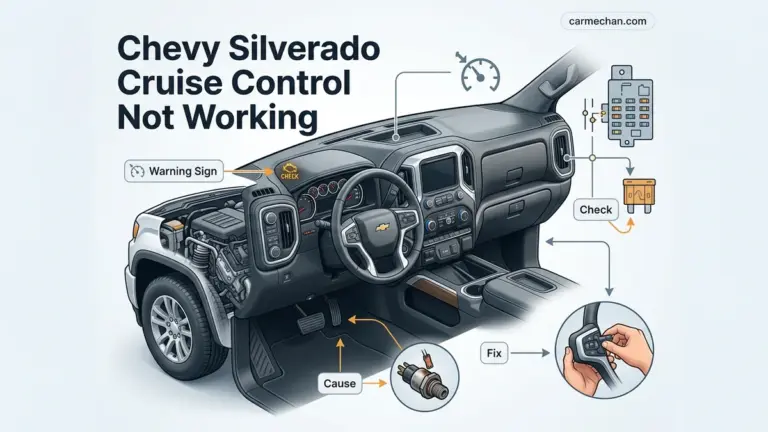
Cruise control failure usually stems from a specific break in the electrical circuit or a mechanical signal interruption. Because modern 2026 vehicles rely on a complex network of sensors and modules, the system will automatically disable itself the moment it detects a fault to ensure driver safety. If your set speed suddenly drops or the indicator light fails to engage, you are likely dealing with a blown fuse, a malfunctioning brake switch, or a faulty speed sensor.
Repairing this system is essential for long-distance highway driving and fuel efficiency. Addressing these failures promptly prevents the annoyance of a dead system and ensures your vehicle’s safety computers are receiving accurate data. By methodically checking the individual components that maintain your cruising speed, you can avoid unnecessary diagnostic fees at the dealership and resolve the issue with standard shop tools.
Key Takeaways
- Check your fuse box first for blown fuses labeled for cruise control or engine management.
- A faulty brake light switch is the most common cause of cruise control deactivation.
- Inspect vacuum hoses for cracks if your vehicle uses a traditional vacuum-actuated cruise system.
- Use an OBD-II scanner to identify stored fault codes related to wheel speed sensors.
- Steering wheel buttons or a damaged clock spring may require professional diagnostic equipment.
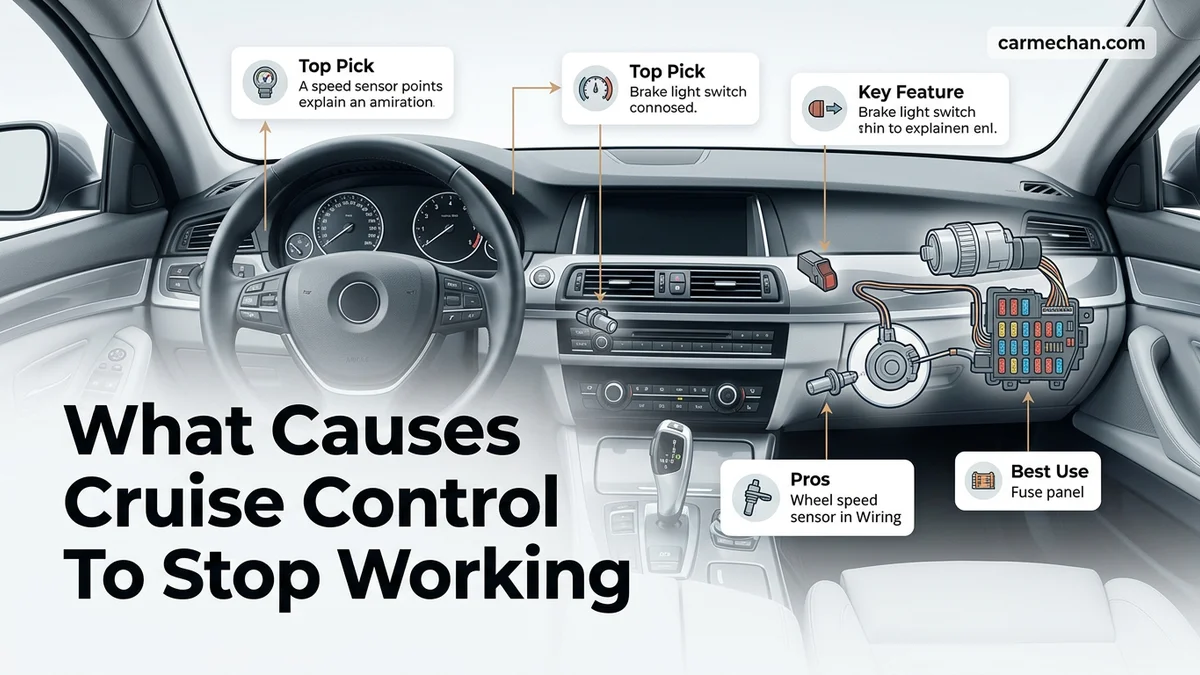
Common Culprits: What Causes Cruise Control to Stop Working
Electrical and Sensor Disruptions
The most frequent point of failure in 2026 cruise control systems is the brake pedal position switch. This switch serves a dual purpose: it activates your brake lights and sends a kill signal to the cruise control module. If this switch becomes misaligned or internal contacts corrode, the computer assumes your foot is resting on the brake, instantly disabling the system.

- Blown Fuses: Check the fuse box diagram for a dedicated cruise control fuse; if it is blown, the system loses all power.
- Speed Sensors: The vehicle speed sensor (VSS) provides the crucial data needed to maintain velocity; a faulty sensor often causes the system to hunt for speed or refuse to engage entirely.
- Clock Spring Failure: Since the cruise control buttons are located on your steering wheel, the clock spring maintains the electrical connection while the wheel turns. A broken ribbon cable inside this unit is a leading cause of unresponsive steering wheel controls.
Mechanical and Vacuum Systems
While many 2026 models utilize drive-by-wire electronic throttle control, some vehicles still rely on vacuum actuators to pull the throttle cable. A cracked vacuum line or a leaking actuator diaphragm will prevent the system from physically holding the throttle open, leading to an immediate speed drop after engagement.
Step-by-Step Diagnostic Procedures to Identify Failures
Testing the Brake Switch and Fuse Circuits
Begin your diagnosis by verifying the integrity of the electrical supply. A quick visual inspection of the fuse box can save hours of troubleshooting. Once you confirm the fuse is intact, focus on the brake switch located at the top of the pedal assembly.
- Locate the brake pedal switch under the dashboard.
- Ensure the plunger is fully depressed when the pedal is released.
- Check your brake lights; if they are stuck on or never illuminate, the switch is almost certainly your point of failure.
- Use a digital multimeter to test for continuity across the switch terminals while the pedal is in its rest position.
Validating Speed Sensor Signals
If your electrical path is clear, move to the data input side. A faulty speed sensor often generates a check engine light or an ABS warning, but not always. Use an OBD-II scanner capable of reading live data streams while the vehicle is moving. Observe the speed sensor output; if the displayed speed fluctuates or shows zero while you are driving, the sensor or its wiring harness needs replacement. In 2026 models, always check for corroded pins at the sensor connector, as road salt and moisture are common environmental threats that disrupt sensor voltage.
Proven DIY Methods to Fix Cruise Control Issues
Most cruise control failures in 2026 vehicles stem from simple electrical interruptions. Before scheduling a costly service appointment, follow these systematic troubleshooting steps to isolate the fault.

Step 1: Check the Fuse Box
The cruise control module relies on a dedicated fuse. If this circuit experiences a power surge, the fuse will blow to protect the electrical system.
- Consult your owner’s manual to locate the interior or engine bay fuse box diagram.
- Identify the fuse labeled “Cruise” or “CCS.”
- Pull the fuse using a plastic puller tool and inspect the metal filament inside.
- If the filament is broken or the plastic is charred, replace it with a fuse of the exact same amperage.
Step 2: Inspect Brake Light Switches
Modern safety protocols mandate that cruise control disengages immediately upon brake pedal input. A faulty or misaligned brake light switch is a common culprit.
- Observe your rear brake lights while a partner presses the pedal.
- If the lights fail to illuminate, the switch is likely defective and cannot send the “disengage” signal, causing the system to disable itself for safety.
- Check the switch mounting bracket under the dashboard for debris or loose hardware.
- Adjust the plunger mechanism if it appears stuck or misaligned.
What If It Still Doesn’t Work?
If basic diagnostics fail to restore functionality, the issue likely involves advanced electronic control units (ECU) or complex wiring harness integrity. When DIY attempts prove unsuccessful, follow these professional escalation steps:
- Perform a Diagnostic Trouble Code (DTC) Scan: Use an OBD-II scanner capable of reading manufacturer-specific codes, not just generic engine errors. Look for codes related to the steering wheel control module (SCCM) or the radar sensor unit.
- Inspect Clock Spring Integrity: If your steering wheel buttons are unresponsive, the clock spring—a ribbon cable connecting the wheel to the vehicle’s computer—may be frayed. Do not attempt to repair this yourself due to the risk of accidental airbag deployment.
- Seek Professional Diagnostics: Take the vehicle to a certified technician. Modern 2026 diagnostics utilize computerized software to pinpoint communication errors between the Powertrain Control Module (PCM) and the cruise control actuator.
- Budgeting for Repairs: Professional diagnostic fees typically range from $120 to $180. Depending on the complexity, a full repair—including labor and OEM components—can cost between $300 and $900.
Conclusion
Cruise control failure is often a symptom of minor electrical faults like blown fuses or misaligned sensors. According to verified research from the 2026 Automotive Service Excellence (ASE) guidelines, prompt attention to brake light functionality often resolves the majority of system lockouts. If software-level faults or sensor damage persist, consult an authorized technician to prevent compromised safety systems. Your immediate next step should be scanning the vehicle for stored diagnostic trouble codes to pinpoint the exact failure point.
❓ Frequently Asked Questions
How do I check if the brake pedal switch is the problem?
Check if your brake lights are stuck on or failing to turn on when you press the pedal. A faulty switch prevents the cruise control from engaging because the system believes the brakes are constantly applied.
Are wheel speed sensors a frequent cause of cruise failure?
Yes, modern cruise control systems rely on data from wheel speed sensors to maintain pace. If these sensors are dirty or faulty, the cruise system will disable itself as a safety measure.
What is a clock spring and why does it affect cruise control?
The clock spring is an electrical connector behind the steering wheel that allows buttons to function while the wheel turns. If it fails, the signal from your cruise control switches cannot reach the vehicle’s computer.
Can low vacuum pressure cause my cruise to fail?
In older vehicles, vacuum-actuated cruise systems require constant pressure to hold the throttle open. Cracks in the vacuum lines can cause the system to lose its grip and deactivate unexpectedly.
Does an illuminated Check Engine Light mean cruise won’t work?
Yes, most modern vehicles are programmed to disable cruise control if the engine computer detects a fault. The system shuts down to ensure your vehicle remains in a safe operating state until the engine issue is resolved.
Is it dangerous to drive if the cruise control isn’t working?
The cruise control is a convenience feature, not a safety-critical system for vehicle operation. However, if the failure is linked to ABS or ESC sensors, you should drive with caution and have the vehicle inspected immediately.