Hyundai Veloster TPMS Reset Button Location & Guide
Last Updated on September 1, 2026 by Ryan
📋 Table of Contents
- 🎯 Key Takeaways
- Understanding Hyundai Veloster TPMS Technology
- The Ultimate Hyundai Veloster TPMS Walkthrough
- Common Factors That Trigger the TPMS Warning Light
- Comparing Direct vs. Indirect TPMS in Hyundai Vehicles
- Cost Analysis of Replacing Failed TPMS Sensors
- Conclusion
- 💬 Quick Questions & Answers
- ❓ Frequently Asked Questions
Most Hyundai Veloster models do not have a physical TPMS reset button, as the system is designed to automatically recalibrate after driving at consistent speeds. Ensuring your tires are inflated to the recommended PSI is the first step toward clearing the warning light.
🎯 Key Takeaways


- Most Veloster models utilize an automatic self-resetting TPMS system.
- Inflate tires to the PSI listed on the driver-side door jamb.
- Driving above 20 mph for 15 minutes usually clears the light.
- A flashing light often indicates a sensor malfunction or dead battery.
- Spare tires in Velosters typically do not contain TPMS sensors.
Have you ever been cruising in your sleek Hyundai Veloster when a mysterious orange light suddenly glows on your dashboard? That small icon looks like a horseshoe with an exclamation point, and it often appears at the most inconvenient times. This is your Tire Pressure Monitoring System (TPMS) alerting you that your tires need some attention. While it might feel like a minor annoyance, this system is a vital safety feature for your sporty hatchback.
Your Veloster is designed for agile handling and efficiency, both of which rely heavily on proper tire inflation. Understanding why that light is on and where the reset functions are located is essential for every owner. Whether you are driving the classic first-generation model or the aggressive second-generation Veloster N, staying on top of your tire health ensures your car performs exactly as it should. Let’s dive into the technology behind that glowing dashboard light.
Understanding Hyundai Veloster TPMS Technology


The Hyundai Veloster uses a sophisticated system to keep track of the air inside your tires. Unlike some older vehicles that used wheel speed sensors to “guess” tire pressure, the Veloster typically utilizes a Direct TPMS. This means there are actual battery-powered sensors located inside each wheel, usually attached to the back of the tire valve stem. These sensors measure the exact air pressure in pounds per square inch (PSI) and transmit that data to your car’s computer.

Direct vs. Indirect TPMS Systems
It is helpful to know that Hyundai focuses on accuracy with their sensor placement. In a direct system, the car knows the exact pressure of every individual tire. If the pressure drops about 25% below the recommended level, the sensor sends a radio signal to the computer. This triggers the light on your dash immediately. This technology is much more reliable than indirect systems, which only measure how fast a tire is spinning to detect a flat.
The Benefits of a Healthy TPMS
Keeping this system functional is about more than just turning off an annoying light. A healthy TPMS provides several key advantages for your driving experience:
- Better Fuel Economy: Under-inflated tires create more rolling resistance, which forces your engine to work harder and burn more gas.
- Longer Tire Life: Proper inflation prevents uneven wear on the tread, saving you money on early tire replacements.
- Improved Handling: Your Veloster handles corners better when all four tires are balanced and properly pressurized.
- Safety: Correct pressure reduces the risk of a high-speed blowout or hydroplaning on wet roads.
The Ultimate Hyundai Veloster TPMS Walkthrough

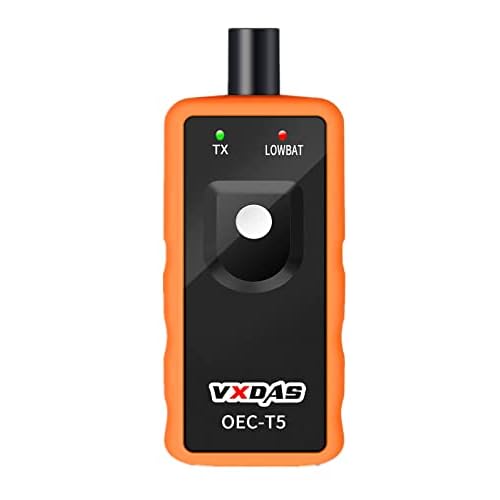
The Tire Pressure Monitoring System (TPMS) in your Hyundai Veloster is a critical safety feature designed to alert you when your tire pressure drops to a dangerous level. Whether you have just rotated your tires, swapped out seasonal rubber, or refilled your air after a cold snap, knowing how to locate the reset button and trigger the system recalibration is essential. This guide covers both the physical button locations found on certain models and the digital menu reset procedures used in newer Veloster generations, ensuring you can clear that annoying dashboard light and drive with peace of mind.
Step 1: Check and Adjust Cold Tire Pressure
What you need: A high-quality digital tire pressure gauge and an air compressor or access to a gas station air pump.
Instructions: Before attempting any reset, you must ensure your tires are actually at the correct specification. Open the driver-side door and look at the placard on the B-pillar (the door frame) to find the “Cold Tire Pressure” PSI recommendation for your specific Veloster trim. For most Veloster models, this is typically between 32 and 35 PSI. It is vital to check the pressure when the tires are “cold,” meaning the car has been parked for at least three hours or driven less than a mile. If the tires are warm, add 3 PSI to the recommended value. Ensure all four tires, including the spare if your model is equipped with a full-size one with a sensor, are exactly at the target pressure.
Pro Tip: Never rely on a visual inspection alone. Low-profile tires, which are common on the Veloster Turbo and R-Spec trims, can look perfectly fine even when they are 10 PSI under-inflated due to their stiff sidewalls.
Step 2: Locating the Physical TPMS Reset Button
What you need: No tools required; just a flashlight if you are working in low-light conditions.
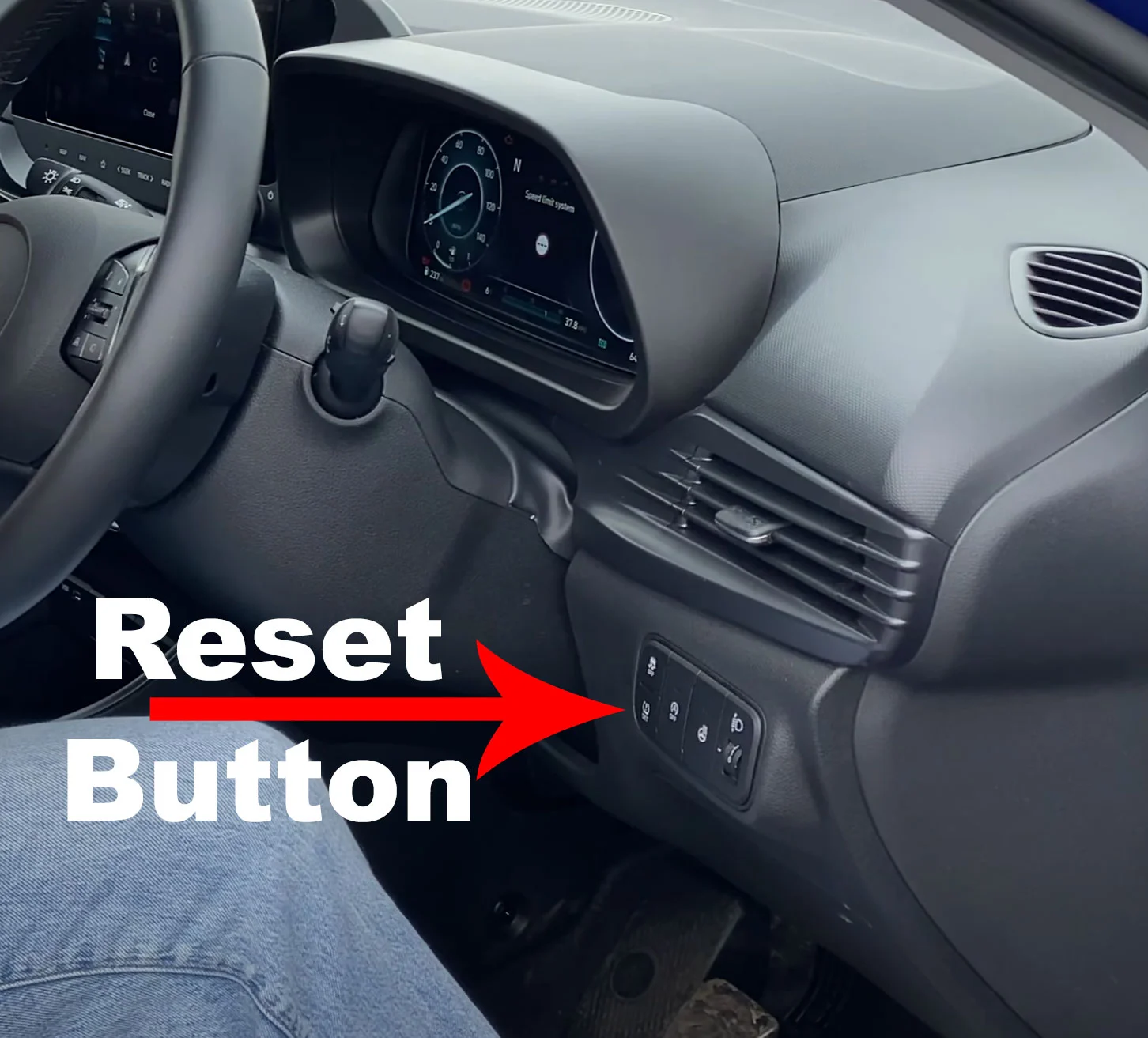
Instructions: Depending on the year and region of your Hyundai Veloster (specifically early first-generation models or certain international trims), there may be a physical “SET” or TPMS reset button. Sit in the driver’s seat and look to the left of the steering column on the lower dashboard panel. You will see a cluster of buttons that typically includes the Traction Control (ESC) off button and the instrument cluster dimmer switch. Look for a button featuring the TPMS icon (a horseshoe shape with an exclamation point). If your Veloster does not have this physical button, do not panic; your vehicle likely uses the “Auto-Learn” system or a digital menu-based reset, which we will cover in the next steps.
Pro Tip: If you see a blank plastic plug where a button should be, your car is definitely a “High-Line” TPMS model that resets through the dashboard computer or driving rather than a physical button.
Step 3: Navigating the Instrument Cluster Menu
What you need: Access to the steering wheel controls.
Instructions: For second-generation Velosters (2019-2022) and many late first-gen models, the reset is performed via the LCD screen in the center of your gauge cluster. Start the engine and use the “Mode” button (it looks like a stack of papers) on the right side of your steering wheel to cycle through the menus. Look for the “User Settings” menu, which is often represented by a gear icon. Scroll down using the “OK” toggle switch until you find “Tire Pressure” or “Service Interval.” In some software versions, the TPMS reset is located under “Convenience.” If you see a screen showing the four individual tire pressures, you are in the right place to monitor the status, even if there isn’t a direct “Reset” button there.
Pro Tip: If the “User Settings” menu is grayed out or inaccessible, make sure the vehicle is in Park (for automatics) or the parking brake is engaged (for manuals), as many safety settings are locked while the vehicle is in motion.
Step 4: Initiating the System Reset Sequence
What you need: The ignition set to the “ON” position (press the Start button twice without hitting the brake).
Instructions: Once you have located the reset option—either the physical button or the menu item—it is time to trigger the recalibration. If you have a physical button, press and hold it for approximately 3 to 5 seconds until the TPMS light on the dashboard blinks three times and then goes out. If you are using the digital menu, highlight the TPMS reset option and hold the “OK” button on the steering wheel until the screen displays “Tire pressure stored” or the warning light vanishes. This tells the ECU that the current air pressure in the tires is the new “baseline” for the system to monitor.
Pro Tip: If the light blinks for one minute and then stays solid after you try to reset it, this indicates a malfunction in the system (like a dead sensor battery) rather than a simple low-pressure warning.
Step 5: Performing the “Auto-Learn” Drive Cycle
What you need: A clear road where you can maintain steady speeds.
Instructions: Hyundai Velosters utilize an “Auto-Learn” TPMS system, which means the computer often needs real-world data to confirm the reset. Even after the light goes out, you should perform a calibration drive. Drive the vehicle at a steady speed of at least 15-20 mph (25-32 km/h) for approximately 15 to 20 minutes. This allows the centrifugal sensors inside the tire to wake up and transmit their unique IDs and current pressure readings to the TPMS receiver. Avoid stop-and-go traffic if possible; a consistent cruise on a suburban road or highway is the most effective way to ensure the system syncs with the wheel speed sensors and pressure transducers.
Pro Tip: If the light comes back on during this drive, pull over and re-check your pressures. You might have a slow leak or a “rolling” nail that only loses air while the tire is flexing under load.
Step 6: Identifying and Clearing “Hard” Fault Codes
What you need: An OBD-II scanner with TPMS capabilities (optional) or a visit to an auto parts store.
Instructions: If the steps above do not work and the TPMS light remains stubbornly illuminated, you may have a “hard” fault. This happens when a sensor’s internal battery dies (usually after 5-8 years) or a sensor is physically damaged during a tire change. Use an OBD-II scanner to plug into the port under the driver’s dash. Scan for “C” (Chassis) codes. Common codes like C1312, C1313, C1314, or C1315 indicate which specific sensor is failing to communicate. If you don’t own a scanner, most major auto parts retailers will scan your car for free. Once you identify the failed sensor, the only way to reset the light is to replace the hardware inside the tire.
Pro Tip: TPMS sensors are sensitive to moisture. If you recently used a pressurized “fix-a-flat” sealant foam, there is a high probability that the sealant has clogged the sensor’s port, requiring a professional cleaning or replacement.
✅ Final Checklist
- All four tires have been verified with a manual gauge to match the B-pillar placard specifications.
- The TPMS light on the dashboard is no longer illuminated after the reset procedure.
- The vehicle has been driven for at least 15 minutes above 20 mph to complete the “Auto-Learn” cycle.
- The “User Settings” menu on the instrument cluster shows active pressure readings (for 2019+ models).
- No “blinking” warning light persists, which would otherwise indicate a sensor hardware failure.
Important Notes:
- Safety First: Never ignore a TPMS light. Driving on under-inflated tires can cause a blowout, reduce fuel economy by up to 3%, and lead to premature tire wear.
- Seek Professional Help: If the light blinks for 60 seconds every time you start the car, a sensor battery is likely dead. This requires a tire shop to unmount the tire to replace the sensor.
- Estimated Time and Cost: A manual reset takes 5 minutes. A calibration drive takes 20 minutes. If a sensor needs replacement, expect to pay between $50 and $150 per wheel for parts and labor.
Common Factors That Trigger the TPMS Warning Light
If your TPMS light comes on, it does not always mean you have a nail in your tire. Many environmental and mechanical factors can cause the sensors to send an alert. Understanding these factors can help you determine if you need a simple air top-off or a trip to the local tire shop. Most of the time, the light is simply reacting to the laws of physics rather than a mechanical failure.
The Impact of Seasonal Temperature Changes
One of the most common reasons for a TPMS light in a Hyundai Veloster is a sudden drop in temperature. You might notice the light turns on during the first cold morning of autumn. This happens because air density changes with the weather. When air gets cold, it contracts and takes up less space inside the tire. This causes the internal pressure to drop just enough to trigger the sensor. Once you start driving and the tires warm up, the light might even disappear on its own, but you should still check the pressure.
Physical Damage and Natural Air Permeation
While weather is a major factor, physical issues are also very common. Tires are not perfectly airtight; they naturally lose about 1 to 2 PSI every month just through the rubber itself. Additionally, the road can be a harsh environment for your Veloster’s low-profile tires. Common triggers include:
- Slow Leaks: Small nails or screws can lodge in the tread, causing a very slow loss of air over several days.
- Pothole Impact: Hitting a deep pothole can momentarily break the seal of the tire (the bead) or damage the sidewall.
- Valve Stem Issues: Over time, the core of the valve stem can become loose or corroded, allowing air to seep out.
- Sensor Battery Death: TPMS sensors have internal batteries that typically last 5 to 10 years. If your Veloster is an older model, a dead battery might be the culprit.
By identifying these common triggers, you can stay calm when the light appears. Usually, a quick check with a handheld pressure gauge will tell you everything you need to know about why your Veloster is asking for help.
Comparing Direct vs. Indirect TPMS in Hyundai Vehicles
Understanding the technology behind your Hyundai Veloster’s dashboard alerts is crucial for effective maintenance. Hyundai generally utilizes two different types of Tire Pressure Monitoring Systems (TPMS) across its fleet: Direct and Indirect. While both serve the same goal of keeping you safe, they function in fundamentally different ways.
Why the Veloster Favors Direct Monitoring
Most Hyundai Veloster models, particularly those sold in the North American market, utilize a Direct TPMS. This system relies on physical pressure sensors mounted inside each wheel, usually integrated with the valve stem. These sensors transmit real-time data to the car’s computer via radio frequencies. The primary advantage here is precision; the system knows the exact PSI of every individual tire, allowing for immediate alerts even if only one tire is slightly low.
Identifying Which System Your Model Uses
If you aren’t sure which system your specific trim level features, there are a few tell-tale signs to look for:
- Direct Systems: You will see individual tire pressure readings on your digital instrument cluster display. If a sensor fails, you may see a “Service TPMS” message rather than just a low-pressure icon.
- Indirect Systems: These do not use pressure sensors. Instead, they utilize the Anti-lock Braking System (ABS) wheel speed sensors. If a tire loses air, its diameter changes, causing it to spin at a different speed. The computer detects this discrepancy and triggers the light.
- The Valve Stem Test: On direct systems, the valve stems are often rigid and secured with a metal nut, whereas indirect systems typically use standard flexible rubber stems.
Knowing the difference helps you understand why the light is on. A direct system might trigger because a sensor battery has died, while an indirect system might trigger simply because you changed your tire brand or size.
Cost Analysis of Replacing Failed TPMS Sensors
Eventually, the reset button or menu command won’t be enough to clear that stubborn light. Like any electronic component, TPMS sensors have a finite lifespan—usually between 5 to 10 years—driven primarily by the internal lithium-ion battery. Because these batteries are encased in a potting compound to protect them from road vibrations, they cannot be replaced individually; the entire sensor must be swapped out.
Breaking Down Parts and Labor Costs
When a sensor fails in your Veloster, the costs can vary significantly based on where you take the vehicle and the quality of the parts used. Here is a general breakdown of what you can expect to pay:
- OEM Hyundai Sensors: These usually cost between $60 and $120 per sensor. While more expensive, they offer the best compatibility and longevity.
- Aftermarket Sensors: Quality aftermarket options from brands like Schrader or VDO typically range from $30 to $50.
- Labor and Programming: A tire shop or dealership will charge for “breaking the bead” of the tire to access the sensor and for the electronic “relearn” procedure. This usually adds $40 to $80 per wheel to the total.
Tips to Minimize Replacement Expenses
If one sensor has failed due to a dead battery, the others are likely close behind. To save on labor costs, many Veloster owners choose to replace all four sensors at the same time when getting a new set of tires. This avoids the frustration of returning to the shop a month later when the next sensor gives out. Additionally, always ask the technician to check the “service kit” (the seals and nuts) before replacing the whole unit, as sometimes a simple leak at the seal is the culprit rather than a failed electronic component.
Conclusion
Maintaining the TPMS on your Hyundai Veloster doesn’t have to be a source of stress. Whether you are hunting for a physical reset button or navigating the digital instrument cluster, the key is to ensure your tire pressures are accurately set to the door placard specifications before attempting any reset. Understanding the difference between direct and indirect systems, as well as the costs associated with sensor failure, empowers you to make informed decisions at the mechanic.
For your next steps, we recommend checking your tire pressure with a manual gauge at least once a month. This proactive habit prevents the TPMS light from surprising you during your morning commute. Stay safe, keep those pressures balanced, and enjoy the unique driving experience your Veloster provides!
💬 Quick Questions & Answers
Where is the physical TPMS reset button located?
The Hyundai Veloster does not have a physical button; the system resets automatically through driving.
How fast must I drive to reset the TPMS?
You should maintain a speed of at least 20-25 mph for approximately 10 to 20 minutes.
Does the spare tire have a sensor?
No, the compact spare tire included with the Veloster does not have a TPMS sensor.
Can cold weather trigger the TPMS light?
Yes, cold air causes tire pressure to drop, which often triggers the sensor in winter months.
What is the correct PSI for a Hyundai Veloster?
Most models require 32-33 PSI, but always check the sticker on your driver’s door frame.
❓ Frequently Asked Questions
Why is there no TPMS reset button in my Hyundai Veloster?
Hyundai utilizes an ‘Auto-Learn’ system in the Veloster. This technology monitors sensor data in real-time and clears the alert automatically once it detects that all four tires have reached the required pressure threshold during a drive.
Can I reset the TPMS light through the dashboard menu?
While newer Veloster models allow you to view individual tire pressures through the instrument cluster’s ‘User Settings’ or ‘Information’ menu, there is no manual ‘Reset’ command. The data updates automatically as the wheels rotate.
What does it mean if the TPMS light flashes before staying solid?
A flashing TPMS light usually indicates a system error rather than low pressure. This is most commonly caused by a dead battery in one of the wheel sensors or a sensor that has been physically damaged during a tire change.
How much does it cost to replace a Veloster TPMS sensor?
A single TPMS sensor for a Veloster typically costs between $50 and $100 for the part, plus labor for installation and programming. Total costs at a dealership usually range from $150 to $200 per wheel.
Will the TPMS light turn off immediately after I add air?
In most cases, the light will remain on until the car is driven for several miles. The sensors need to detect consistent rotation at specific speeds to transmit the updated pressure data to the vehicle’s computer.
Are aftermarket TPMS sensors compatible with the Veloster?
Yes, many aftermarket sensors work well, provided they operate on the correct frequency (usually 315MHz or 433MHz depending on the year). However, some may require a specialized OBDII programming tool to be recognized by the car.